

Fear experienced in the face of an unusual event causes the body to give a stress response. The stress response can also lead to biological degradation. Stating that fear is contagious, Psychiatrist Prof. Dr. Nevzat Tarhan, said, “When one person gets scared, it spreads to others. The 'stop, think, act' rule applies the first moment one encounters a feared situation. We recommend this approach for fear, danger, and crisis situations. Furthermore, after mental preparation, exposure and virtual reality programs are among the treatment methods applied to help individuals overcome their fears,” he stated.
Content
The 'Stop, Think, Act' Rule in Combating Fear
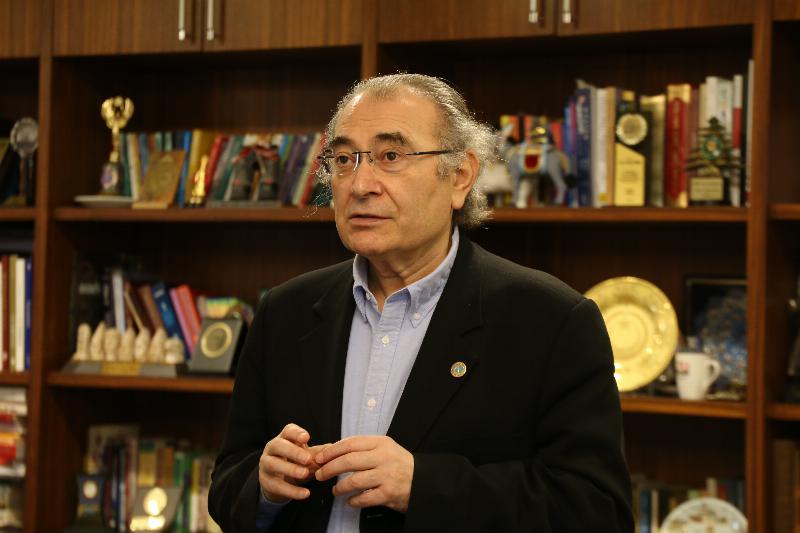
Üsküdar Üniversitesi Founding Rector, Psychiatrist Prof. Dr. Nevzat Tarhan, made important statements regarding the fears people experience and their solutions.
A small amount of fear is beneficial
Prof. Dr. Nevzat Tarhan stated that if there is preparation for danger, fear will remain at a proportionate level, adding, “In fact, a small amount of fear is beneficial, but excessive, disproportionate fears can paralyze a person. For this reason, fears are one of the biggest obstacles to development. For example, some people have a fear of novelty. Despite being very intelligent, they do not step outside their comfort zone due to this fear. Fears affect people,” he said.
Parents' panic frightens children
Tarhan said that having fear education is an advantage for children, adding, “But generally, they look to their parents. If parents are in a panic, children also start to fear because they don't know life. They do not yet have the ability to distinguish what is dangerous. Their perception of reality has not formed. They are learning about life, and events like earthquakes can be used as an opportunity to teach them something. This situation is an unforgettable experience in a child's life,” he said.
Taking precautions should become a skill
Prof. Dr. Nevzat Tarhan said, ‘The date of the Izmir earthquake, like August 17th, will not be easily forgotten,’ and added, “Taking precautions must turn into a skill. If, after the earthquake, homes had been evacuated and tents immediately occupied, and if the same behavior had continued until now, the child who calmly faced that trauma would later start to be afraid. There are children rescued from under the rubble who are very calm, with no fear at all. For example, we saw that baby Ayda, rescued from the rubble after 91 hours, was healthy,” he stated.
The brain secretes cortisol and endorphins
Tarhan, stating that the brain has a defense mechanism and secretes excessive cortisol during shock experiences and severe traumas, said, “The brain secretes endorphins along with cortisol. Endorphin is also a pain-relieving, relaxing hormone. Under its influence, the brain shuts itself down for protection against stimuli. Just as we cannot move our arm reflexively if it is broken, similarly, the brain blocks itself. This is a defense mechanism. This is something special created in our body's nature. The child was able to tolerate himself, breathe, and withstand thirst. This is in our biological nature. In such situations, if we let our body be after the brain receives oxygen, it will be more balanced. We disrupt our own bodies and nervous systems,” he said.
Fear causes the body's stress response
Prof. Dr. Nevzat Tarhan said, ‘During fear, our mouth dries, our heart beats fast, our blood pressure drops, we turn pale, our breathing quickens, and we faint,’ and continued: “There is a fight-or-flight response. At that moment, we give responses like flee or defend yourself, stand still, wait. It protects the body from physically and psychologically collapsing at that moment. This is a healthy response developed by our body. Of course, if this response lasts for a long time, it can raise blood pressure and clog arteries, and cause gastrointestinal contractions. When it becomes chronic, it leads to various soft tissue rheumatisms. There are chronic fears and stresses. Fear causes the body's stress response. The stress response can also lead to biological degradation. Our brain represents every organ. Our brain has a program. When we disrupt this program, all the muscles in the body contract and relax, and a disorganized activity emerges in the body. For this, just like managing our body, we need to be able to manage our own nervous system calmly.”
Some fears have a genetic dimension
Prof. Dr. Nevzat Tarhan said, ‘There is fear, and then there is fear of that fear. Fear is a healthy emotion; it protects a person in moments of short-term danger,’ and continued: “Imagine if people didn't have a fear of heights; everyone would fall off buildings like crazy. Fear of heights exists genetically. For example, someone who has never seen a snake being afraid of snakes is also a genetic fear. Some fears have a genetic dimension, but some fears are also learned fears. When someone experiences a fear, a shock, the circuits in the word-producing area of the brain burst. Due to excessive chemical secretion there, information flow is disrupted. The person starts to be unable to produce words; their tongue is tied. You teach that person to produce words from scratch, and they learn again. If you reject the person, they remain untreated. It is necessary to accept fears within reasonable limits as natural. We compile a fear inventory, investigating people's fears and what lies behind them. We look to see if there is any childhood trauma in the background that causes the fear.”
A person should not be confronted with their fears without being ready
Tarhan stated that a person with fears should not be confronted with them without the necessary preparations, saying, “For example, if there is a fear of swimming, the 'throw into water' approach should only be applied after mental preparation. If, after mental preparation and training, the person is still afraid, in such cases, the method called exposure is applied in a safe environment. Special simulation programs have been developed for this. Virtual reality programs are applied in the treatment of fear of heights, insects, open spaces, and public speaking. A virtual reality headset is put on the person, and they are placed in the same environment as the thing they fear in 3D, attempting to overcome their fear. People experience extreme panic even though they know that what is shown in that environment is not real. They say it's absurd, exaggerated, but they do it. Thus, a desensitization exercise is carried out,” he said.
Fear has a contagious quality
Prof. Dr. Nevzat Tarhan said, ‘Fear has a contagious quality. When one person gets scared, it spreads to others,’ and continued: “The 'stop, think, act' rule applies the first moment one encounters a feared situation. That is, one needs to stop. What is it? What isn't it? It needs to be understood. After that, action can be taken immediately by making a quick plan. There are people who act without thinking. People who were hasty, impatient, and hyperactive in childhood often exhibit behavior of acting without thinking; they are impulsive. They act without considering the consequences, do the first thing that comes to mind, and immediately believe the last thing they hear. These people are highly affected in moments of fear. In fact, when the 'Stop, Think, Act' rule is applied, they make fewer mistakes. If it's something they can control, they confront it; if it's something they cannot control, like a storm, they go to a corner and wait for it to pass. In such situations, fear is not confronted directly. What do you do when a fire breaks out? You cannot rush into it. First, it needs to be extinguished and then cooled, after which its cause should be investigated, and what can be done to prevent it from happening again should be explored. We recommend this approach for fear, danger, and crisis situations. It is an effective method.”
The fetal position is the most comfortable state for a human
Tarhan, describing the womb as a period of problem-free existence in human life, said, “The fetal position is the position in the mother's womb. In Arabic, the word 'cenin' comes from the root of 'paradise' (janna). That is the most comfortable state for a human. After that, problems begin, and in fear, people turn towards it. If you look at advanced schizophrenics, they just stay in a fetal position in a corner of the house. When scared, humanity does this. But if there is crisis preparedness, the 'stop, think' period passes more quickly,” he said.
Share
Update Date: February 26, 2026
Creation Date: November 10, 2020
Request a Call
Other News
- Social responsibility courses moved to the field
- Erasmus+ Orientation Week completed at Üsküdar
- Prof. Nevzat Tarhan: “Brain secretes ‘dark glue’ in social media lynchers!”
- Prof. Nevzat Tarhan: “Every segment of society should be able to say, ‘This constitution is my constitution!’”
- OHS releases guide for safe operation of industrial robots