

In the process that started with Russia’s invasion of Ukraine, alongside the armed hot war, a propaganda war is also being waged in media and social media. Experts emphasize that alongside traditional media, social media has also taken on an important role in this propaganda war, stating that the war between Russia and Ukraine has gone down in history as the first war broadcast live on social media. Experts advise social media users to be cautious when publishing news related to the war, and journalists to verify the accuracy of content and visuals coming from social media users before publication.
Content
The first war broadcast live on social media!
The war between Russia and Ukraine has gone down in history by being broadcast live on social media…
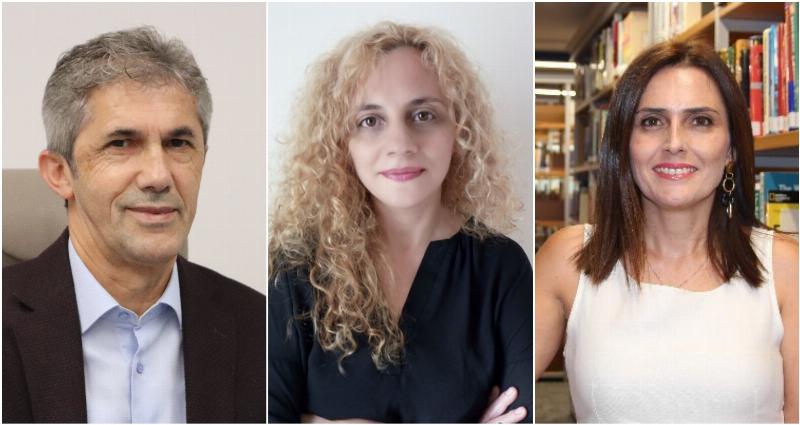
Üsküdar Üniversitesi Faculty of Communication, Head of Journalism Department Prof. Dr. Süleyman Irvan, Lecturer Assoc. Dr. Gül Esra Atalay and Lecturer Assoc. Dr. Bahar Muratoğlu Pehlivan made very important evaluations and shared their recommendations regarding the role of social media and traditional media in the war between Russia and Ukraine.
Prof. Dr. Süleyman Irvan: “The first war broadcast live on social media!”
Prof. Dr. Süleyman Irvan, describing Russia’s attempt to invade Ukraine as “the first war broadcast live on social media,” said, “We are experiencing an extremely important process in terms of journalism in this war. The war is virtually being broadcast live with images shared from the mobile phones of ordinary people whom we can define as witness journalists. In the 1991 Gulf War, CNN news channel managed to broadcast the war live via satellite connections, and this war went down in history as ‘the first war broadcast live on screen.’ The war in Ukraine is also characterized as the first war broadcast live on social media. In this latest war, social media has come to the fore significantly.”
Prof. Dr. Süleyman Irvan: “Social media provided communication opportunities for people in difficult situations.”
Emphasizing the need for caution regarding social media, Prof. Dr. Süleyman Irvan said, “Many misleading and propaganda-driven posts are being made on these platforms. On the other hand, we also see the positive aspects of social media. Ukrainians and foreigners living in Ukraine are sharing information about the situation in different cities of the country, both instantly conveying what is happening to the world and enabling aid for those in difficult situations. For example, if there were no communication possibilities through social media and mobile phones, there could have been widespread panic regarding the fate of Republic of Türkiye citizens in Ukraine. Thanks to social media, these people were able to make their voices heard and explain where they were and what their situation was. Thus, evacuation operations from the country can be carried out more easily.”
Prof. Dr. Süleyman Irvan: “Countries are also waging an intense propaganda war.”
Prof. Dr. Süleyman Irvan also evaluated the role of traditional media in the war as follows:
“Traditional media is taking on a more successful role in reporting on the war in Ukraine. The US had prevented journalists from acting independently during the Gulf War and implemented the practice of ‘embedded journalism.’ Journalists were forced to carry out their duties under heavy censorship. In Ukraine, however, media organizations are reporting more freely. On the other hand, it should not be forgotten that international media organizations broadcasting from Ukraine are reporting in an anti-invasion, pro-Ukrainian manner, which is an expected situation. It should also be reminded that the information conveyed is largely provided by Ukrainian authorities, and therefore, this information should be approached with skepticism. Ultimately, countries are also waging an intense propaganda war.”
Assoc. Dr. Gül Esra Atalay: “Sources making shares must be evaluated carefully”
Stating that sources sharing on social media in war conditions carry risks, Üsküdar Üniversitesi Faculty of Communication, Journalism Department Lecturer Assoc. Dr. Gül Esra Atalay made the following warnings:
“Every source sharing on social media must be evaluated carefully. It should be questioned whether the source has above-average knowledge or experience regarding the content, or derived from their expertise, profession, geographical location, or life experiences related to that topic or situation.”
Assoc. Dr. Gül Esra Atalay: “Caution should be exercised when sharing news on social media.”
Emphasizing that social media users should exercise maximum caution when sharing about the war on social media, Atalay said, “It might be good to wait for a while before sharing content/news obtained from social media. Especially in constantly changing, uncertain situations, the waiting period allows you to see any refutations, updates, or additions to the news. When it comes to getting news from a region whose language you do not know, acting cautiously and slowly to discern which local news sources are reliable, and researching available local sources on the web, will be useful.”
Assoc. Dr. Bahar Muratoğlu Pehlivan: “Journalists can use social media like a walkie-talkie.”
Üsküdar Üniversitesi Faculty of Communication, Journalism Department lecturer Assoc. Dr. Bahar Muratoğlu Pehlivan gave advice to journalists regarding posts from social media users:
“Journalists should not circulate content from social media users without verifying it. Verification steps such as visual verification, location verification, investigating profile authenticity, and content creation time should be applied. If the content is a photo or video, reaching the original uploader might also be important. Different content from the same location can be investigated. Journalists can use social media like a walkie-talkie to reach sources and verify information from different sources. More content may also be requested from the user who uploaded it, but in this case, the person’s safety must be prioritized, and it must be ensured that they are safe.”
Share
Update Date: February 28, 2026
Creation Date: March 01, 2022
Request a Call
Other News
- Social responsibility courses moved to the field
- Erasmus+ Orientation Week completed at Üsküdar
- Prof. Nevzat Tarhan: “Brain secretes ‘dark glue’ in social media lynchers!”
- Prof. Nevzat Tarhan: “Every segment of society should be able to say, ‘This constitution is my constitution!’”
- OHS releases guide for safe operation of industrial robots