

Highlighting the importance of personalized treatment, also known as “precision medicine,” especially in psychiatry, Psychiatrist Prof. Dr. Nevzat Tarhan, stated that they use methods involving many screenings such as neuropsychological screening, brain check-up, and stress check-up, adding, “There is a cost to doing this, but the most expensive treatment is ineffective treatment. Leaving a person without treatment is the most expensive treatment.” Prof. Dr. Nevzat Tarhan, stating that “the post-genomic era has begun,” said, “We are now deriving truths that we previously found through medical experience with scientific evidence. We are dealing with the medicine of the future.” Prof. Dr. Nevzat Tarhan said, “A single medication for everyone is no longer appropriate for this era. Therefore, we emphasize personalized treatment.”
Content
The era of one-size-fits-all medication in psychiatry is over!
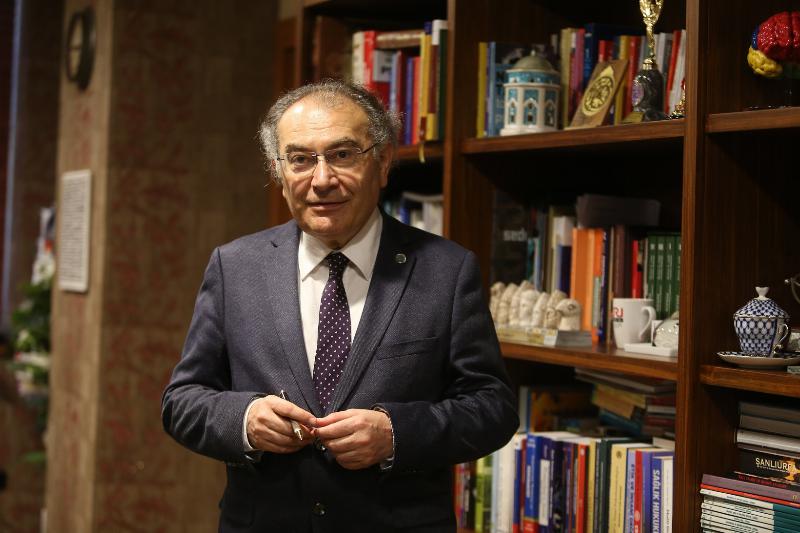
Üsküdar Üniversitesi Founding Rector, Psychiatrist Prof. Dr. Nevzat Tarhan, pointed out the importance of precision medicine and personalized treatment at the multidisciplinary scientific training meeting held weekly at NPİSTANBUL Brain Hospital. In his presentation titled “Precision Medicine, Personalized Treatment,” Prof. Dr. Nevzat Tarhan provided examples of the work done by the university and hospital in this field.
We started personalized treatment before the USA
Prof. Dr. Nevzat Tarhan stated that the concept of “precision medicine” was announced by US President Barack Obama in 2015, and added, “We also started personalized treatment before 2015. We established a personalized treatment center. Our starting point is the evidence-based medicine pyramid. We proceed from this. At the lowest step of the evidence-based medicine pyramid are studies, animal studies. Beyond the laboratory, there are results arising from ideas and opinions. Opinions emerge from clinical cases. After clinical cases, laboratories come into play. Now a new field has emerged: In silico studies, which are carried out on computers or through computer simulation, with mathematical modeling on computers. Computational psychiatry. In this study, also known as computational neuroscience, you take the person's data. According to this data, like a learning machine, as you upload personal information, it presents you with possible options and results. The computer can give us a clue related to diagnosis, something a human learns over decades through mental wisdom and life experience.”
Computers will make diagnoses in the coming periods
Prof. Dr. Nevzat Tarhan stated that very important developments will occur in the coming period in line with technological advancements, and that computers will make diagnoses in the future, saying, “We will enter the diagnosis, but a certain syndrome might not even cross our minds. We would have to spend a lot of time on it, but right now we will make medical records. We will write our possible preliminary diagnoses. Within that, the computer will present us with the probable diagnosis. This will become routine in 10 years.”
Precision medicine: Personalized treatment
Prof. Dr. Nevzat Tarhan stated that the concept of personalized treatment is seen as one ascends the upper steps of the evidence-based medicine pyramid, adding, “As you move upwards from the lower steps, single case series are formed. Then, case-controlled studies, randomized controlled studies, randomized controlled double-blind studies, and at this stage, meta-analyses emerge. These are studies with the highest level of evidence. These are the studies that we can summarize as personalized treatment, referred to as ‘precision medicine’ in Turkish.”
Leaving a person without treatment is the most expensive treatment
Prof. Dr. Nevzat Tarhan said, “There is a cost to doing this, but the most expensive treatment is ineffective treatment. We conduct neuropsychological screenings. We perform brain check-ups. We perform stress check-ups. We do many screenings. Some of our colleagues say this is very expensive, but we are not a primary care facility. We are not a secondary, but a tertiary hospital. In the first step, treatment is done minimally. In the second step, treatment is done optimally. In the third step, it is done maximally. Leaving a person without treatment is the most expensive treatment. You are causing people to live lost lives. Therefore, for their treatment, in our position and target areas here, we must provide maximum treatment.”
Therapeutic alliance with the patient creates a placebo effect
Prof. Dr. Nevzat Tarhan also touched upon the importance of correct communication between the mental health professional and the patient, saying, “We use a metaphor in treatment: if the mental health professional and the patient work together for the patient’s well-being, an alliance is established. The therapeutic relationship begins from the moment the healthcare professional and the patient first meet. Greeting the patient when they enter the room and seeing them off when they leave, all these are part of the therapeutic relationship. This therapeutic alliance is a neurophysiological event, it has a placebo effect. This situation creates attachment. It establishes a secure attachment between the patient and the physician. Because it creates secure attachment, secure attachment has a 40% placebo effect. You win 40% of the treatment when there is a trust relationship. The trust relationship between the patient, physician, and healthcare professional is very important for the permanence of the treatment. In other words, in precision treatment, not everything is robotization.”
Pharmacogenetics and personalized medicine entered our mission
Prof. Dr. Nevzat Tarhan, addressing the difference in the visions and missions of Üsküdar Üniversitesi and NPİSTANBUL Brain Hospital, said, “Vision is a person imagining and documenting what they can be. Mission is imagining and documenting what they can do. Therefore, we clarified our mission and vision. Some of these exist as vision. This is a vision foresight. Currently, pharmacogenetics and personalized medicine have entered our mission.”
Prof. Dr. Nevzat Tarhan, pointing out the importance of seeking biological evidence, said, “What kind of an organ is our brain? It is not just a chemical organ. Our brain is not just an electrical organ either. It is an electromagnetic organ. Wherever there is an electrical source, there is also a magnetic field. Therefore, it is an organ with a close cause-and-effect relationship in the quantum universe. Humans are relational beings.”
As physicians, we are like tailors, not ready-to-wear manufacturers
Prof. Dr. Nevzat Tarhan emphasized that the human brain is a digital entity and that the brain's database is important, stating, “If we can manage this database, information technologies, our database, then information technologies are important here. As physicians, we are now like tailors, not ready-to-wear manufacturers. This is also at the core of medicine. Not every physician treats like a ready-to-wear manufacturer. They treat like a tailor. That is why there is the concept of treatment according to the individual.”
Prof. Dr. Nevzat Tarhan noted that as scientific studies are carried out in depression and bipolar disorder under ethical conditions, the evidence will increase, adding, “What is important is that we can provide accurate information to the scientific flow. The second important leg in neuropsychiatry is drug blood level determination. This is the preliminary diagnosis of genetic polymorphism. This is more personalized according to genetic profiling. Genetic profiling gives personalized findings, but here you are doing phenotyping. That genotyping, this phenotyping. You look at the person's gene function and gene expression. What does this person's gene expression do? Is it a fast metabolizer or a slow metabolizer? You can determine this.”
Right drug, right dose, right path
Prof. Dr. Nevzat Tarhan emphasized that the principle of “Right drug, right dose, right path” is very important in precision medicine, stating, “This is especially present in the pharmacogenetic aspect of personalized treatment. Here, you give the pill, and people are affected differently. While 10 mg is too much for one person, it has no effect on another even if you give them much more. Being able to make this selection is important. A personalized treatment approach is also necessary for safety and effectiveness. Toxicity is also important. It is important from a toxicological perspective in addition to safety. It allows us to distinguish whether it benefits the patient and these groups. In terms of treatment response, it also shows whether a normal dose, low dose, or high dose responds to the individual.”
The post-genomic era has begun
Prof. Dr. Nevzat Tarhan said, “We can now derive truths that we previously found through medical experience with scientific evidence,” and continued:
“The purpose of the precision medicine approach is to teach the method of conducting scientific clinics through scientific means and how to disseminate it. Otherwise, people wander from doctor to doctor. I see this as scientific proof of our success. Therefore, the post-genomic era has begun. This means monitoring drug blood levels and clinical effects. The future of personalized treatment is quite important, even in autoimmune diseases. You use genetic tests using various methods. You use technology, you can classify drugs according to groups using various imaging methods. This is the medicine of the future. More personalized diagnosis. A single drug for everyone is no longer appropriate for this era. Therefore, we emphasize personalized treatment. In treatment, we have a pharmacogenetic identity. The drug blood level is a preliminary study of the person's genetic polymorphism. It increases the effectiveness of the treatment. It increases the safety of the treatment. It increases the therapeutic effect and reduces its cost. The most expensive treatment is ineffective treatment. Being able to find many correct paths and correct methods with a single drug is important.
We are dealing with the medicine of the future, not village medicine…
Prof. Dr. Nevzat Tarhan noted that medicine has three pillars: “Genetics, neural networks in the brain, and neurotechnology. NASA employs over 2,000 doctoral students in neuroscience. The concept of Neuralink emerged. Elon Musk is currently the richest person in the world and has built a trade of dreams. We are dealing with the medicine of the future, not village medicine.”
Share
Request a Call
Other News
- The book that read today's digital threats in 2014: Being a Conscious Family
- Experts warn: 'Instead of memorizing letters, teach pencil grip, scissor use, and coloring'
- School fear and school love both start in the family!
- Family is not merely transforming, it is being battered under a serious assault
- Artificial intelligence opens the door to early diagnosis in autism!