

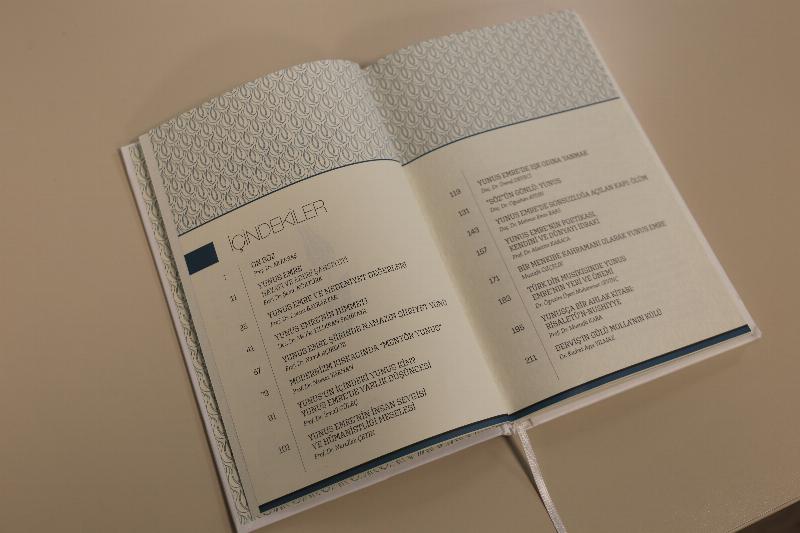
The Yunus Emre book, prepared by the Presidency of Religious Affairs and co-authored by Üsküdar Üniversitesi Founding Rector, Psychiatrist Prof. Dr. Nevzat Tarhan, has been released. The book, consisting of a preface and fifteen chapters, describes Yunus Emre's life, literary persona, and Sufi identity. Prof. Dr. Tarhan's chapter titled 'Mentor Yunus in the Grip of Modernism' is featured in the book, which has now met readers on shelves.
Content
The book “Yunus Emre,” co-authored by Tarhan, has been released
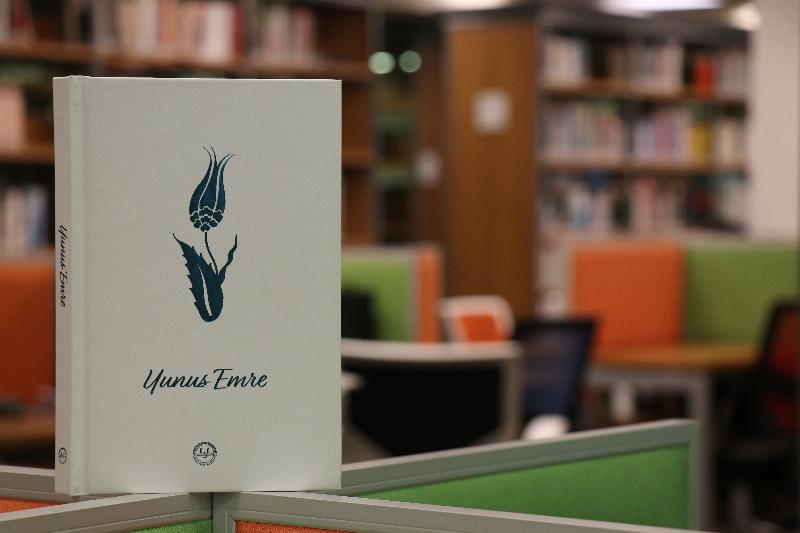
The Yunus Emre book, prepared by the Presidency of Religious Affairs, has been published with the contributions of highly esteemed individuals.
The work, with a preface written by the President of Religious Affairs Prof. Dr. Ali Erbaş, took its place on the shelves with the contributions of expert associate professors and professors in their fields.
Prof. Dr. Nevzat Tarhan's article, located in the fifth chapter of the book, met readers under the title 'Mentor Yunus in the Grip of Modernism'.
In the work, Tarhan emphasized Yunus Emre's character, which, unlike the points highlighted in the book, is open to innovation and takes risks alongside his dervish lifestyle; he stated: "Yunus Emre has a difference from other mystics. In Yunus, along with dervishhood, there is also a behavior of openness to innovation and risk-taking, stemming from Central Asia."
Tarhan, stating that there are many lessons to be learned from Yunus Emre in the age of modernism where human values have disappeared; he used the expressions: "In the 21st century, against the viruses of ego blindness, narcissism, arrogance, selfishness, hedonism, comfort-seeking, and the accompanying unhappiness and loneliness that surround humanity from all sides, there are very important messages from Yunus Emre, who underwent self-discipline and was an ambassador of tolerance and dialogue. The poems written by Yunus, who saw death as union and was a mentor of his time and today, tell us a lot..."
Tarhan stated that scholars like Yunus Emre and Mevlana are heirs of prophets, and that these individuals, in their poems, treated people's wounds using the method today called EMDR (Eye Movement Desensitization and Reprocessing) in psychology.
Tarhan explained: "Scholars are the heirs of prophets. They are tasked with conveying hearts that are inclined towards the world and matter, to meaning and to Allah. Therefore, Mevlana and Yunus treated our social wounds centuries ago by using methods similar to those we use in EMDR (Eye Movement Desensitization and Reprocessing, a psychotherapeutic approach)."
Tarhan stated that Yunus, through his poems, taught contemporary modern man the skill of living in the way of Allah.
Individuals wishing to walk towards this high goal can continue their lives in this direction by reading the Yunus Emre book published by the Presidency of Religious Affairs and Yunus's poems, taking mentorship from Yunus. The work, highlighting different characteristics of Yunus Emre with the contributions of many academicians, met readers on the shelves.
The full text of the article is as follows:
'MENTOR YUNUS' in the Grip of Modernism…
Yunus Emre has a difference from other mystics. In Yunus, alongside dervishhood, there is also a behavior of openness to innovation and risk-taking, stemming from Central Asia. Yunus has a restless nature. The fact that his tomb is located in many parts of Anatolia, such as Karaman, Malatya, Eskişehir, and even Azerbaijan, is an indicator of this. He traveled extensively, touched everywhere. He left his mark in many places…
Today, we need to understand Yunus Emre more than ever. Let's bring the fundamental ideas that made Mevlana Mevlana, and the fundamental ideas of Yunus Emre, to the present day. Let's dress them in today's attire. But let the person inside be Yunus, be Mevlana.
Modernism glorifies the world. Therefore, the most sacred value adopted by modernism is the ego. Unfortunately, for today's human, the largest organ has become the ego. Humanism also sanctifies the ego. As a result, people do not think of death. They always shy away from questioning and thinking about death, from confronting it… They try to be happy by ignoring death, and especially when death comes to mind, they turn to entertainment, consumption, and sometimes drugs, to cover up this reality. That is why what is presented to us as entertainment culture is, in another sense, a culture of escaping death. That wild music is actually the cry of the crisis of confronting death.
In the 21st century, against the viruses of ego blindness, narcissism, arrogance, selfishness, hedonism, comfort-seeking, and the accompanying unhappiness and loneliness that surround humanity from all sides, there are very important messages from Yunus Emre, who underwent self-discipline and was an ambassador of tolerance and dialogue. The poems written by Yunus, who saw death as union and was a mentor of his time and today, tell us a lot… While the modern age directs the individual towards severing the bond between man and creator, Yunus Emre, the philosopher of Positive Psychology, reminds us of and strengthens that forgotten bond between the creator and the created. For a social development and an atmosphere of peace, we need Yunus's discourses more than ever now.
Modernism, Severing Man's Connection with the Creator…
Modern man attaches more importance to how others see him and what the environment says than before. This makes it harder for a person to be alone with himself, to know himself.
Individuals with high logical intelligence grasp events better. Those with high emotional intelligence are aware of their own feelings and the feelings of others. Those with good social intelligence establish healthy relationships with society. And those with high conscientious intelligence can frame their relationships with creation and the universe in a healthier way.
Within all these relationships, modernism only highlights man's relationship with himself and his environment, disregarding the relationship established with the universe and the Creator. Thus, it severs man's connection with the universe. Unable to cope with the bombardment of messages from mass communication tools, man cannot reason about his own essence. He doesn't fully know what he is doing or why. He sees others as his source of approval. With the desire for appreciation, he shapes himself according to his perceived value in the eyes of others. At times, he makes expenditures that can be called wasteful, far beyond his basic needs. These expenditures do not contribute to society in general but help the individual feel “valuable” in the eyes of others.
Individuals with high conscientious intelligence, on the other hand, better grasp their relationship with the Creator, can see more wisdom in the reasons for their existence, and establish real relationships instead of spending time and money chasing false approvals.
Ego Blindness and the Disease of Grandeur
They found it in meekness
Whoever has manliness
They pushed him down the stairs
If he looks from high above
The heart wanders high
Constantly straying from the path
It seeps out onto the exterior
Whatever is within…
The old white-bearded master
Cannot know his state
Let him not exert himself for Hajj
If he breaks a heart
The deaf do not hear the word
They mistake night for day
Blind is the eye of the denier…
If there is arrogance within a person, it seeps out, and the person begins to wander in high places. They always look down on other people. Yet Yunus shows what a great mistake it is to break a heart, saying, “Let him not exert himself for Hajj / If he breaks a heart.”
A person whose conscience is not developed suffers from reality blindness. Even if the world is bright, their eye does not see. Breaking a heart blinds one's conscientious eye.
People who see themselves as superior also suffer from narcissistic blindness. Narcissists lack the ability for self-criticism. Even if what you're looking for is right in front of your eyes, if you think it's not there, you won't see it. This is similar to how narcissistic individuals cannot recognize their mistakes because they believe they have no flaws. This is actually a blindness created by prejudice. It is an illusion created by always seeing others as flawed.
The heart is the throne of Çalap (God)
Çalap looked into the heart
Wretched in both worlds
Whoever breaks a heart
Whatever you deem for yourself
Deem that for others too
The meaning of the four books
Is this, if there is any
If we consider the heart to be the throne of Allah, then breaking a heart seems equivalent to demolishing the Kaaba. The meaning of the four books also contains this. Yunus Emre thus gives us a lesson in humility against narcissism.
We knew those who came have passed
Those who settled have departed
Drank from the wine of love
Whoever perceives meaning
May Yunus not stray from the path
May he not stand in high places
Lest he see the grave and the bridge (Sirat)
If the beloved is the face…
One who drinks from the wine of love must not break hearts and must be humble. Such people do not forget the grave and the Sirat bridge.
The disease of grandeur can cause all of a person's efforts to be lost. The remedy for this disease is to confront death. The path to heaven passes through living in remembrance of death. Death has a side that tames and disciplines even pharaohs.
Death Adds Meaning to Life
My life, you deceived me
Oh, what shall I do with you, my life
You left me unable to stir
Oh, what shall I do with you, my life
My all, you were always
The soul within my soul
And you were my sultan
Oh, what shall I do with you, my life
One day I shall be without you
Become a meal for wolf, for bird
Rot and turn to earth
Oh, what shall I do with you, my life
Wretched Yunus, don't you know
Or do you not pay attention
Do you not remember the dead
Oh, what shall I do with you, my life
While modern man avoids confronting death, the theme of confronting death is present in many of Yunus Emre's poems. The pain of wasting one's life, which is humanity's greatest capital, is expressed. At the end of wrong choices, a lament is always heard.
One of the characteristics that distinguishes humans from other living beings is knowing that they will die. Humans cannot stop thinking about death. Animals can behave calmly because they do not know they will die. Large bulls awaiting slaughter wait their turn without stirring, but humans always have a thought and fear of death. The way to cope with this is to confront death.
As a being who questions the events he encounters, man reflects on the meaning of death. While questioning death and life, Yunus Emre states that if there were no death, life would be a burden to man. Because life brings troubles, burdens, and weariness to man.
Let's consider life as an examination period. When we are about to take an exam in life, we feel relieved thinking about what comes after the exam. The dream we create motivates us. We can concentrate on studying by thinking about the joy of passing the exam. Therefore, we tell young people who have trouble studying, “Remember why you are studying this subject.” It is likely that they too dream of having a profession and building a beautiful life for themselves. Their dreams give them the power to study.
Yunus also expresses that a challenging life gains value only through death. He states that the world is not an ultimate goal, but merely a temporary dwelling for the afterlife, a compulsory task. Man can endure the difficulties of this world only by aiming to attain a beautiful life after death. This poem advises one not to make one's life the primary goal, that death is not the end, and that the true homeland is reached after death.
One must view life as an asset and accept it in all its forms. Man should not forget that he is a traveler in this world. While modernism tells man that the deeper he delves into the world, the happier he will be, Yunus explains the exact opposite. While modernism remains helpless in the face of death, Yunus Emre points to what lies beyond death. There is no one on earth without worries. Yunus states that this tasteless and bland life can only be sweetened by the wine of death.
Can Dervishhood Exist with a High Ego?
I am a pious one among the people
The prayer beads never leave my hand
My tongue speaks wisdom
But my heart never accepts it
The diploma is around my neck
My obedience is with hypocrisy
I go to a different place
My eye does not watch my path
I am a pleasant dervish, yet I have no patience
Many invocations are on my tongue
What enters my ear
My inner self never hears
Those who see me kiss my hand
They look at my crown and robe
They assume of me
That I commit no sin whatsoever
Outwardly I worship
My conversation is pleasant, my obedience is agreeable
But when it comes to the inner market
It doesn't make a thousand-year adjustment (to its crookedness)
My outside is a dervish, my inside is empty
My tongue is sweet, my words are pleasant
But what I do
Even one who changes his religion would not do
Those who see me think me pious
They greet with shyness
If only I could snatch the deed
No hand can reach it
If I speak of wisdom
I become extremely hypocritical
To return to humility
Arrogance never leaves my heart
Yunus, your shortcomings
Present them to your Çalap (God)
His grace is abundant
He does not do what you did4
In this poem, Yunus Emre, though addressing himself, criticizes undeserved dervishhood. He states that while his tongue speaks wisdom, he does not give up deception, and the arrogance in his heart prevents him from finding peace. Narcissistic individuals, seeing themselves as flawless, believe they are worthy of all good things. They cannot be happy with small and ordinary things. They aim to change the world, not themselves.
Egocentrism has two characteristics: inability to be happy with small things, and trying to change the world instead of changing oneself.
In this poem, Yunus also speaks of superficial Islam. He refers to people whose outer appearance is like a dervish but whose inner world is empty. Even if such people have rules for life on their tongue, they do not apply these rules to their own lives. Because they cannot see the need for it. They are good, beautiful, correct, and even perfect in all their states. They feel so perfect that they think nothing is as absurd as submitting to the rules.
Yunus, your shortcomings
Present them to your Çalap (God)
His grace is abundant
He does not do what you did
These lines seem to be spoken to awaken man from ego blindness. Yunus gives us the lesson that man must first be honest with himself. A person who accepts his mistake has taken an important step on the path to overcoming that mistake. Since we have a Creator to whom we can present our state, we should take a step instead of wasting time by persisting in the same mistakes. Yunus tells us this from centuries ago.
Human Consciousness is Directed with Subliminal Information
Hayrettin Karaca, during a visit to the TEMA Foundation, showed an S-shaped pine tree and said, “These are seedlings we cultivate for people with little sense and much money.”
Items that make a person feel good and privileged simply because they or a limited number of people own them provide a narcissistic pleasure. Demands in this direction can also be read as an expression of narcissistic feelings. You may have seen that to satisfy these feelings alone, some people have the first letter of their name embroidered on the pocket of their shirts, and these shirts find buyers at exorbitant prices. This is a very simple sales technique that appeals to the ego. People with high egos can easily fall for these sales tricks.
In this era, subliminal perception methods can also direct people's behavior. The 25th frames, which our brain perceives but we cannot see while watching a movie, always give us a message. After such an application related to cola, the cola purchasing behavior of viewers who unconsciously received the “Drink cola” message increased by 57% during the intermission.
With this method, known as neuromarketing technique, the nervous system can mislead the brain, directing it in a fabricated way. Messages like “Visit here, buy this” can be embedded in music in shopping malls. Unethical and covert marketing ploys are an extension of capitalist ethics.
These examples show how technology is used as a tool to highlight man's selfish side. However, individuals who can constantly review their behavior, know their limits, and realize why they were sent into the world do not fall under the sway of such methods. This is wisdom, in fact. If a person knows himself, he can see both his own strength and what the other can do, develop strategies, and adopt the right behavior.
“The path is that which leads straight
The eye is that which sees the Truth
The man is he who stays humble
An eye that looks from high above is not…”
An Arrogant Person is Weak, Not Strong…
For a person to be arrogant, to look down, to see other people as second-class indicates that they are on the wrong path. Yunus Emre emphasizes that those who follow this path cannot reach the truth. Even if a person with a wrong map tries their best to reach the truth, they will go down the wrong path. An egocentric person who is arrogant, wants to be important and prioritized, cannot cope with the dangers they face because they cannot see their weaknesses. A person being arrogant harms themselves first.
Breaking someone else's heart and not caring is like a microbe entering the body. If a small pimple appears on your arm and you don't take it seriously to stop its progression, that pimple can affect even the lymph nodes. However, taking precautions when the problem is small often saves lives. Breaking a person's heart is exactly like this; it's like a virus entering the heart. Therefore, the moment we realize we've made a mistake, turning back from it, apologizing to the person we've harmed, winning their favor, and repenting cleanses the malignant accumulation within us. Disregarding our mistakes can lead to the heart completely decaying and darkening. Islam has therefore attributed great importance and sublimity to repentance.
First sins are usually small, perhaps a white lie. But does it matter if the cause of a fire is a large or small spark? Ultimately, both burn and turn to ash.
Even if it's small, goodness should not be underestimated, for you never know what and whom a small candle lit in the dark will illuminate. When hundreds of people light a small candle, darkness dissipates. Small things sometimes help win a war. As the ant was asked, “Where are you going?”, and it replied, “To the Kaaba.” “Even if I don't reach it, at least I will die in this cause.” Indeed, Yunus's perspective is necessary for social development and an atmosphere of peace.
States of a Selfish Person
Even if a selfish person sees their mistake, they may choose the easy way out and ignore it, or completely shift the responsibility onto others. However, this offers short-term relief. In the long run, things get even more difficult. Behind this attitude, besides selfishness, there is also deceitfulness.
Only truth opens the door to the room where beauties are gathered, while lies and hypocrisy open the door to the room where evils are accumulated. Lying is actually related to a person's lack of self-confidence and inability to confront themselves. In the long run, this isolates a person. Again, being in a state of distrust and enmity is an emotional state that can enable lies. A person who constantly feels under attack may legitimize lying.
A person with high feelings of enmity prioritizes their own ego. A person who is well-meaning, however, may forgo their ego for the sake of getting things done, so as not to waste time.
A person who stands in the right place has no need to fear enemies. There is a beautiful Azerbaijani proverb: “I walk straight, I have no business with the judge; I eat little, I have no business with the doctor.” A person who does not lie and does not play games to get their work done has less fear. Indeed, instead of dealing with enmity, one should focus on their own work, on what they believe to be right.
Yunus Emre says in one of his poems, “If rose and thorn are together, I see the rose; my hand does not reach for the thorn.” For a person to find peace, it is important not to stray from “good assumption.” Bad assumption serves no purpose other than to unsettle a person, and if intensified, to turn into serious suspicion and paranoia. One who finds their essence abandons bad assumption and respects everything that has been created. They do not forget the rights of even an ant.
For a person to achieve inner peace, they must become aware of the feelings of friendship and enmity within them. A wise person recognizes feelings of enmity and transforms them into good assumptions, and as their good assumptions increase, they attain tranquility and peace. We can call this the key to inner peace.
When establishing relationships with people, one must accept everyone as a friend unless proven otherwise. At the same time, it should not be forgotten that every good person has bad sides, and every person who seems bad also has good sides. Bediüzzaman means exactly this when he says that even if there are ninety-nine murderers on a ship of a hundred people, the ship cannot be sunk out of respect for that one person.
Other Paths Feel Narrow to One Who Aims for the Truth
In the continuation of the poem, Yunus Emre tells us that other paths feel narrow to a person who aims for the Truth. According to him, the goal is the guidance of the Quran and the companionship of the Truth.
Anything that deters a person from the path of Allah is alien to him, and one must distance themselves from them. He paints a portrait of a dervish who is not attached to anything other than the blessings deemed permissible by Allah. The word “dünya” (world) comes from the word “deni,” meaning low or base. The love of Allah suits a person's heart; placing the world there deviates a person from their path.
A person needs to create a pyramid of love. At the apex of this pyramid is what they love most. What is placed at the very top is sacred to that person. Yunus Emre's goal is to place the love of Allah at the very top of the pyramid.
In this era, the way to persuade people is to show that there is a small paradise within permissible actions, and a small hell within forbidden actions. Describing heaven as merely a beautiful place may not satisfy people. However, a person cannot find complete tranquility unless they remove the love of the world from their heart. Perhaps it would be more convincing to emphasize the necessity of abandoning the world not physically, but emotionally. Said Nursi says, “Why should the world be one of progress for everyone, but one of decline for Muslims?” Peace and tranquility can also exist within progress. The principle “Let it be in your hand, but not in your heart” appears here as a solution.
The Philosopher of Positive Psychology…
A dervish is a person who manages not to bear grudges and accepts strangers as friends. Individuals with such a spirit are generally accepting of people. Acceptance is also important for protective mental health. It is advised for mental health to accept a person as a friend unless one sees unfriendly behavior from them.
Viewing a newly met person as a potential friend and accepting that person is one of the fundamental tenets of positive psychology. The silence presented as a characteristic of dervishhood in the poem is also a finding of the science of happiness: dedicating quiet time to oneself. Developed countries have started experiencing the negative consequences of competition and fast-paced living earlier. In the West, values such as complementing each other's deficiencies, rather than competition, are now being recommended to people.
Another recommendation is the “stop-think-act” formula. A person needs silence and time to reflect on events within themselves. This means that the characteristics Yunus Emre mentioned as attributes of dervishhood centuries ago have now become recommendations of positive psychology. Therefore, we can call Yunus Emre the philosopher of positive psychology. Being able to be alone with oneself in silence, stopping and thinking, provides a person with the opportunity for self-criticism and leads to inner reckoning. Thus, self-awareness develops.
Being able to engage in inner reckoning, possessing self-awareness, not holding grudges against others, looking at strangers while considering their potential to be friends, not enemies…
In today's world, minimalist movements arise from such needs. People now want to escape the “earn-consume” cycle. As the cogs of the economy fuel the struggle among people, stress and anxiety increase, leaving no trace of peace. People's bodies and souls are now weary. Social bonds are weak. Perhaps in the coming years, social psychology will be discussed more than political debates. Depression, suicide, drug use, divorce, and loneliness are on the rise more than ever.
Research shows that lifestyle and poor eating habits cause more than half of diseases. Humanity is seeking the answer to the question, “How can I live more rightly?” Therefore, it is necessary to pause and reflect.
The Feeling of Enmity Harms a Person
Yunus Emre does not mean laziness with “miskinlik” (meekness), but rather being able to be happy with ordinary, simple things. He finds humans valuable simply for being human. If we desire enmity, he advises us to be enemies to the feeling of hatred. This understanding,
“If you want a friend, Allah suffices
If you want a companion, the Quran suffices
If you want wealth, contentment suffices
If you want an enemy, the self suffices
If you want advice, death suffices” appears as another elaboration of this principle.
Even what we might call negative human emotions can be channeled for good. The greatest harm to a person who harbors hatred is to themselves. There are five emotions that harm a person: hatred, loathing, anger, envy, and enmity. These emotions lead to the secretion of acidic chemicals in the brain, and the body immediately goes into a defensive position. Although this keeps the body alert in the short term, in the long term it causes high blood pressure, stomach ailments, and skin diseases. In other words, hatred and its related emotions also cause physical harm to a person.
If we have an enemy, we must be vigilant against them throughout our lives. This is a burden difficult to bear. The brain will always operate in a defensive position; in life, suspicion, not trust, will be the norm… However, trust is fundamental in human relationships. Suspicion is an emotion that is useful in exceptional circumstances.
A person who does not feel safe always spends their material and spiritual energy on defensive power. A person dominated by feelings of enmity cannot build any safe space in their life. This becomes a state that also affects one's sense of identity. In trauma therapy, people are advised to imagine a space where they feel peace and safety.
Also, psychologically, people always look for the enemy outside. This is partly related to a person's capacity for self-criticism. Those who try to see their own mistakes in the negative experiences they face resolve many problems more easily.
Yunus Emre Taught People Emotion Management Through the Language of Poetry
Yunus Emre taught people emotional expression. Poetry is one of the most beautiful tools for expressing emotions. Both Yunus and Mevlana had seen the desolate state of Anatolia, its decline, and were concerned about it. Just as Prophet Muhammad cried upon seeing people's rebellious behavior towards Allah...
Scholars are the heirs of prophets. They are tasked with conveying hearts that are inclined towards the world and matter, to meaning and to Allah. Yunus, too, discovers the beauty within unhappy, warring people amidst chaos and anger, and expresses it on their behalf through his poems. Those who read his poems find relief. Through this, feelings of hope are rekindled. Therefore, Mevlana and Yunus treated our social wounds centuries ago by using methods similar to those we use in EMDR.
With these approaches, Yunus Emre provides training in the skill of living on the path of Allah to contemporary modern man. He acts as a mentor, or life coach, for individuals striving for a high goal.
Share
Update Date: February 28, 2026
Creation Date: April 28, 2022
Request a Call
Other News
- The book that read today's digital threats in 2014: Being a Conscious Family
- Experts warn: 'Instead of memorizing letters, teach pencil grip, scissor use, and coloring'
- School fear and school love both start in the family!
- Family is not merely transforming, it is being battered under a serious assault
- Artificial intelligence opens the door to early diagnosis in autism!