

Psychiatrist Prof. Dr. Nevzat Tarhan emphasizes that saying no is a learned skill and points out that this skill should be acquired from an early age. Tarhan notes that a child growing up in a rule-based environment easily acquires this skill, and states that this skill plays a crucial role in protecting children from addiction and abuse. Prof. Dr. Nevzat Tarhan also warns that the fear of criticism or exclusion can hinder the development of this skill.
Content
The ability to say no can protect children from dangers
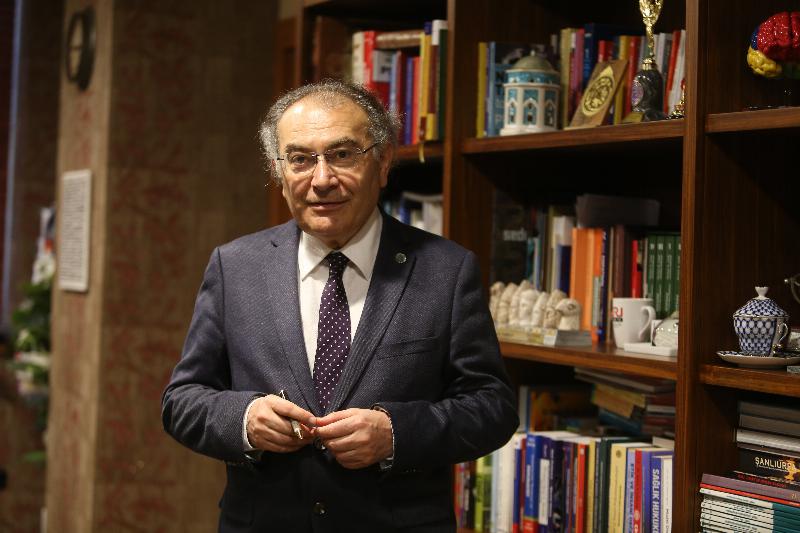
Üsküdar University Founding Rector Psychiatrist Prof. Dr. Nevzat Tarhan made evaluations regarding the ability to say no.
Prof. Dr. Nevzat Tarhan, pointing out that saying no is a skill and, unlike a talent, is learned later, said, “It is both a social and an internal skill. We learn this skill from childhood onwards. We can learn to say no or not to say no.”
Noting that there are many genetic studies related to the learning of this skill, Prof. Dr. Nevzat Tarhan stated, “In animals, boundaries related to saying no are genetically coded. An animal has its own security area as soon as it is born. They mark within their security area with urine. Animals such as felines, lions, tigers, and dogs see anyone who enters that area as an enemy. They remove them from that area. The relationships of animals with their kin and with strangers, and their responses to saying no, are different.”
Setting Boundaries is Learned Later
Prof. Dr. Nevzat Tarhan stated that unlike animals, human children learn these later, and added, “Genetically, humans do not have this trait. That is, other living beings are born having learned by nature, but because humans are born to learn, they acquire these within the family later on. In fact, the first sign of civilization is building a fence between oneself and a neighbor. That is, being able to define one's own boundaries and the boundaries of others. This is much more important from a social science perspective.”
Life is a Choice, Life is a Preference
Emphasizing that the ability to say no must be learned, Prof. Dr. Nevzat Tarhan said, “The environment in which a person grows up is important. Childhood traumas and experiences are important, as is whether that person is open to change and novelty. The same applies to whether a person is constantly developing themselves. Throughout life, people have to make decisions on many issues. In such situations, we make decisions like 'Yes, no, suitable, not suitable, safe, not safe.' We have a slogan: Life is a choice, life is a preference. In fact, life is a choice, life is a preference. Every minute, every second, we make dozens of preferences, dozens of decisions. It is not possible, nor correct, to say yes to every decision or no to every decision. What is important is to be selective and make the right decision.”
As We Grow, We Need to Write New Scenarios
Prof. Dr. Nevzat Tarhan noted that saying no is also the ability to protect the boundaries between one's own personal limits and the personal limits of others, and said, “It is the ability to protect a person's relationship boundaries. This skill can be developed. It is rewritten in new events, in new situations. We have life scenarios that we especially learned during childhood. There are experiences, there are many positive and negative life scenarios. After growing up, after adolescence, we need to rewrite many scenarios because new actors enter our lives. We rewrite them this way.”
Prof. Dr. Nevzat Tarhan noted that sometimes, in relationships with these actors, there can be a tendency to say yes to everything or no to everything in order to establish healthy relationships and communication, and pointed out the importance of establishing balance and managing stress in this regard.
The Ability to Say No is a Requirement of Stress Management
Noting that we are in an environment where stress is experienced much more today compared to 100-200 years ago, Prof. Dr. Nevzat Tarhan said, “The ability to say no is also a requirement of stress management. The ability to say no is a requirement for personality development. The inability to say no is weak in some people. Some people first say no to everything and then listen. In fact, for such people, saying no means 'give me some time.' These people also make many mistakes in communication. They are misunderstood. People avoid them. Such individuals become negative in communication and can lead to negative relationships.”
Individuals Not Raised in a Rule-Based Home Cannot Learn This Skill
Tarhan noted that people who say yes to everything do not stand by that yes after a while, and warned, “Someone who says yes to everything becomes an untrustworthy person. For this, a person needs to know how to live by rules and that life is a rule-based environment. A child growing up in a home without a rule-based environment cannot learn this skill. If the rule-based environment at home is not sufficient, if there is loose discipline, they still cannot learn. Or if there is a parent who allows everything, the child still cannot learn this skill. If one parent says yes to everything and the other says no to everything, the child still cannot learn this skill because they are raised with inconsistent discipline.”
Inability to Say No is Common in Cultures of Fear
Prof. Dr. Nevzat Tarhan noted that children in families with overly strict discipline also have low self-confidence, and said, “Children from such families become passive-aggressive children. They say yes but slyly do what they want. In other words, types who plot intrigues emerge. Unfortunately, as is the case in our culture, there are many individuals in cultures of fear who exhibit characteristics of being unable to say no. They say yes but behave differently. People with hidden agendas emerge, and we end up raising a child who exhibits unsafe behaviors.”
Prof. Dr. Nevzat Tarhan, pointing out the difficulties of living with untrustworthy people, said, “You cannot embark on a long journey with such people and cannot establish a secure relationship. Where there is no secure relationship, breakdowns and disintegrations in relationships occur frequently.”
Fear of Criticism Can Prevent Saying No
Prof. Dr. Nevzat Tarhan stated that there is usually an inventory of fears behind the inability to say no when it should be said, and said, “It can be difficult to say no due to those fears. For example, some people have a fear of criticism. A person who fears being criticized when they say no might say yes despite it not feeling right, with the concern of being perceived as 'an insensitive person, a team spirit spoiler, or a selfish person,' and in this situation, they cannot develop the method of saying no. There is a fear of criticism. Some people are terribly afraid of conflict. A dominant and overbearing person can easily intimidate, suppress, and control someone who has a phobic fear of conflict. However, a person needs to be able to successfully say no in difficult situations. Unless it's rude, one can say no to every behavior or every wrong. This needs to be known. It is important to be determined in acting with principles.”
Being Able to Say No to Wrongs is a Sign of Development
Prof. Dr. Nevzat Tarhan pointed out that the inability to say no is most often seen in addiction behaviors among young people, and warned, “In addiction, there is often peer pressure. During adolescence, friends become more important than family. In a peer setting, someone offers something, and the child cannot say no, and it starts from there. If they like it, they start to continue. Being able to say no to wrongs is a sign of development. A child who cannot say no to wrongs, a child who cannot easily discuss these at home, who cannot learn them, cannot say that substance use is wrong in an environment of false happiness outside, and cannot object and say no. In child abuse, the inability to say no also emerges as the biggest reason. The child cannot say no to abusive behavior that arises within various games.”
Prof. Dr. Nevzat Tarhan emphasized that children should be given education on personal space and privacy, and said, “When you teach this to a child, the child can say no when faced with such a danger and risk.”
Share
Update Date: February 28, 2026
Creation Date: November 20, 2021
Request a Call
Other News
- Social responsibility courses moved to the field
- Erasmus+ Orientation Week completed at Üsküdar
- Prof. Nevzat Tarhan: “Brain secretes ‘dark glue’ in social media lynchers!”
- Prof. Nevzat Tarhan: “Every segment of society should be able to say, ‘This constitution is my constitution!’”
- OHS releases guide for safe operation of industrial robots