

The evolution of media tools from past to present and the effects of media on youth were discussed at the "From Traditional to Digital Media and Youth Summit" organized by the Radio and Television Supreme Council (RTÜK). At the summit where Prof. Dr. Nevzat Tarhan participated as a speaker, Tarhan stated that teaching human values, which should be included in the education system, to the brain is no longer arbitrary but a necessity. Tarhan noted that children from families who use criticism and threats instead of appreciation, praise, and approval, turn to and are drawn into social media as a stress-reduction technique, adding that screens are the open door of the house.
Content
Tarhan: "Teaching human values is now a necessity!"
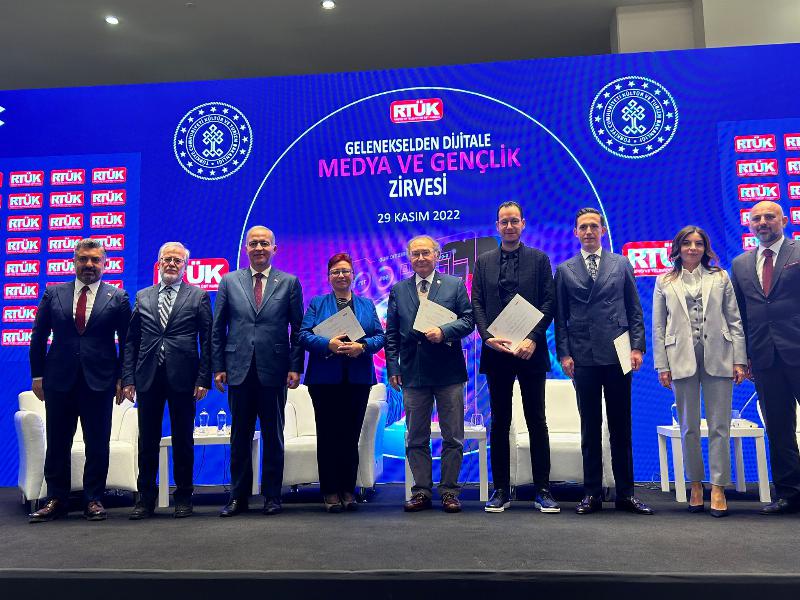
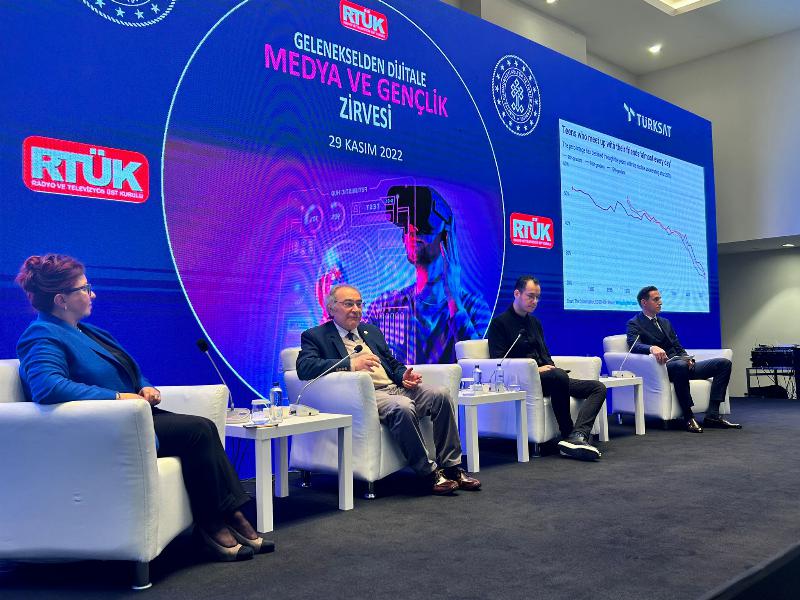
The "From Traditional to Digital Media and Youth Summit" organized by RTÜK at Hilton Maslak garnered significant interest. The first session of the program, which featured an opening speech by RTÜK President Ebubekir Şahin, was moderated by Prof. Dr. Edibe Sözen, Rector of Maltepe University. In addition to Prof. Dr. Nevzat Tarhan, Founding Rector of Üsküdar Üniversitesi, who participated as a speaker in the panel, Education Scientist Dr. Özgür Bolat, Head of the Department of Educational Sciences at Bahçeşehir Üniversitesi Assoc. Prof. Dr. Yavuz Samur, and Head of RTÜK Public Opinion Broadcast Research and Measurement Department Deniz Güler also participated as speakers.
Tarhan made striking evaluations in the context of 'The Psychology of the Digital World'.
Stating that how social media, which is both a threat and an opportunity for young people, should be used correctly needs to be considered, he said that technology, which he described as inherently neutral, would greatly facilitate one's life if used positively, otherwise it would negatively affect it.
Young people are moving away from face-to-face interactions and becoming lonelier…
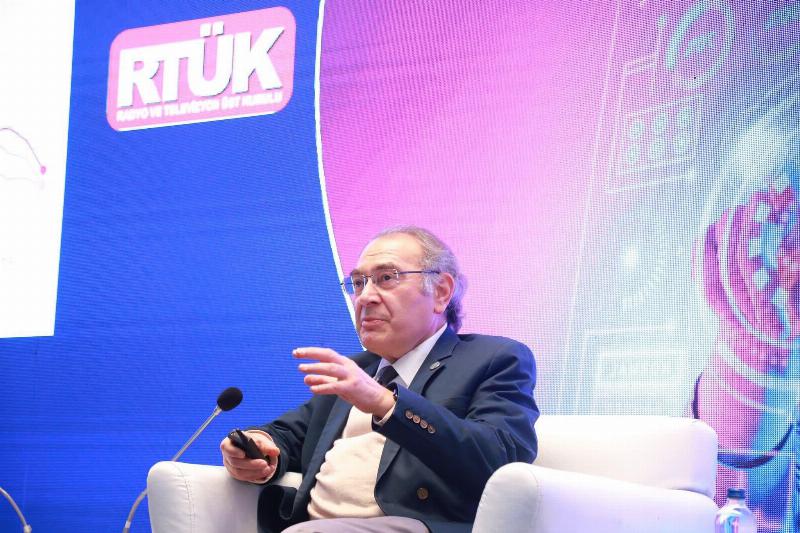
Referring to research conducted in this area in the USA and Europe, Tarhan stated that reports show high school-aged young people are becoming lonelier day by day, and the rate of face-to-face interaction between young people and their peers is gradually decreasing.
Referring to a study conducted jointly by Manchester University and the BBC in England, with over 55,000 participants, Prof. Dr. Nevzat Tarhan, noted that this study titled 'The Anatomy of Loneliness' is the largest-scale research in the world and made the following evaluations regarding the research: "The study results found the loneliness rate among those aged 16-24 to be 40 percent. In older ages, this rate is 27 percent. A reverse ratio to what was expected emerged. Usually, loneliness is expected to increase with age. All conventional wisdom has been broken. Youth and adolescence is a period of socialization. It is a period where one should feel both attached to family and free. During this period, young people feel lonely. This situation poses a risk for the future of humanity. These individuals will feel even lonelier 40-50 years later. Suicide rates are higher among these individuals."
Aiming to reduce crime rates with 'Positive Psychology'…
Tarhan stated that research conducted in the USA again shows happiness rates trending in the opposite direction despite the increase in per capita gross national product, and that the USA changed its educational philosophy as a precaution. Tarhan noted that Anadolu wisdom, which belongs to us, and Mevlana's teachings have been taken and systematized into positive science, taught as a positive psychology course in US schools, adding that the USA aims to transform the deteriorating social change, with annually increasing crime rates, in a positive direction.
Tarhan stated that Üsküdar Üniversitesi has been offering the positive psychology course, which began to be taught at Harvard in 2015 and Yale in 2018, as a credited course to its students continuously since 2013, and that at the end of the semester, they observed a 20% increase in students' emotional intelligence, and a significant improvement in their relationships with friends, family members, and their environment.
To be traditionalist or to be traditional?
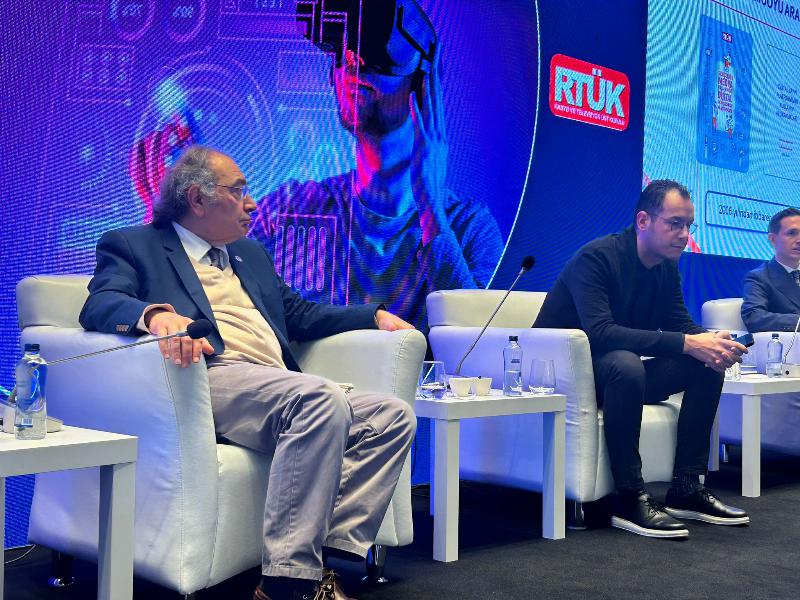
Tarhan stated that RTÜK organized an event with the very apt title 'From Traditional to Digital', and emphasized the need to correctly answer the question: to be a traditionalist or to be traditional? Tarhan said, "If we are to be traditionalists, we must raise children through pressure and threats, but if we are to be traditional, we need to modernize while preserving our values. We must learn this difference."
Young people should be their own leaders, their own captains…
Tarhan emphasized that social media has changed the ways the world interacts, and that this is a reality that must be accepted, and made the following evaluations:
"Will I be the subject or the object of social media? If I don't use social media, will it use me? It is very important that we teach this awareness to our youth. Because it changes our perception of reality, and what does changing our perception of reality mean? It means changing our perspective on events. If we cannot change our perspective on life and events, we will be carried away by the current. If we cannot change the current, we need to change our perspective, and for a young person, being their own captain is very important. This is the long-term solution here. To properly establish our child's philosophy of life; here, you see all parents say, 'May our child be intelligent, diligent.' Intelligent but lazy, intelligent but naughty, diligent but stupid — that's the wrong answer; we need a third, ideal parameter. That parameter is how a human being is raised, the philosophy of life, that parameter. In other words, we need to teach our child an ego ideal of raising a good person. We need to teach the ideal human type at a young age: someone who keeps their word, doesn't lie, doesn't only think of their own interests, works within society, tries to do things for the homeland, tries to do things for humanity."
Screens are the open door of the house…
Tarhan summarized the point digitalization has reached with a quote from one search engine's advertisement, "Our only rival is sleep," and drew attention to the importance of making the home a safe environment. Tarhan said that screens of smartphones, computers, etc., have become the open door of the house, stating, "Our home is no longer as safe as it used to be; it's not a refuge, not a fortress. Therefore, we need to work individually with children here; if parents are not affirmative or accepting, the child takes refuge in screens. You see there are always sarcastic, critical parenting styles at home. In families that use criticism and threats instead of appreciation, praise, and approval, children turn to social media as a stress-reduction technique and get carried away, losing themselves... When we cannot make the home a safe space, a healthy child does not grow up in that home. We look at children with social media addiction, substance addiction, they are children who lack peace at home. If the home is a warm nest, a safe space, children make mistakes but learn again. Therefore, the critical information here is to be able to provide a warm environment at home." He emphasized.
Teaching human values is no longer arbitrary but a necessity
At the end of his speech, Tarhan emphasized the need to make it a duty to uphold 24 golden values such as justice, honesty, compassion and mercy, transparency, courage, empathy and responsibility, trust and loyalty, shame, humility, cooperation, reconciliation, greeting, sincerity, forgiveness, generosity, self-sacrifice, gratitude, pluralism, participation, libertarianism, accountability, conciliation, innovativeness, and loyalty, and stated that these values should be included in the education system and taught in education faculties. Tarhan stated that if these are not taught, the brain cannot be educated, and noted that teaching human values to the brain is no longer arbitrary but has become a necessity.
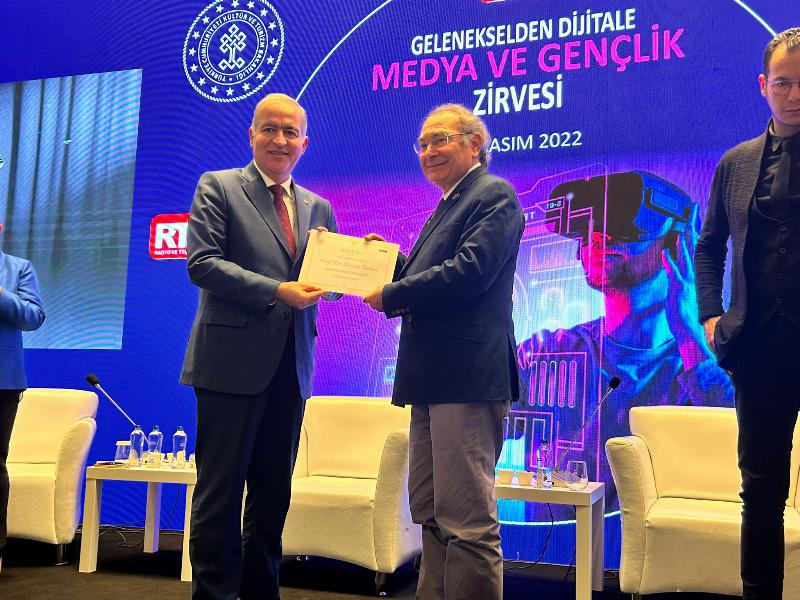
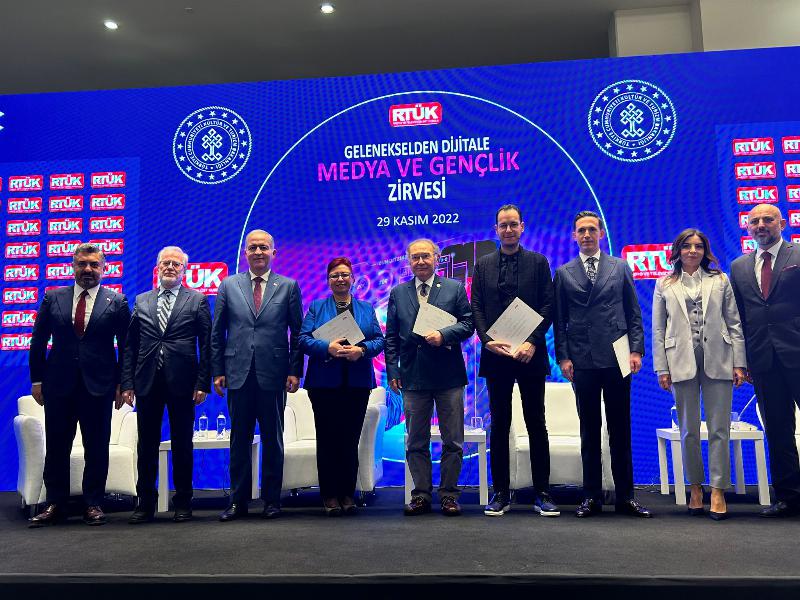
At the end of the program, a certificate of participation was presented to Prof. Dr. Nevzat Tarhan by RTÜK President Ebubekir Şahin.
Share
Update Date: February 26, 2026
Creation Date: November 29, 2022
Request a Call
Other News
- Prof. Nevzat Tarhan: “Those with a mental filter are not afraid of the digital”
- Artificial intelligence doesn't eliminate the translator, it transforms their expertise!
- Social responsibility courses moved to the field
- Erasmus+ Orientation Week completed at Üsküdar
- Prof. Nevzat Tarhan: “Brain secretes ‘dark glue’ in social media lynchers!”