

Üsküdar Üniversitesi Institute of Sufism Studies is holding its 2nd ‘Sufism Studies Graduate Student Symposium’. The program began with a morning session moderated by Prof. Dr. Elif Erhan, and opening speeches by Rector's Advisor Cemalnur Sargut, Mohammed Rustom from Carleton University, Canada, and our Founding Rector Prof. Dr. Nevzat Tarhan. The symposium will last two days, and 28 papers based on the work of Institute students will be presented.
Content
Tarhan: “Sufism teaches us two magical words”
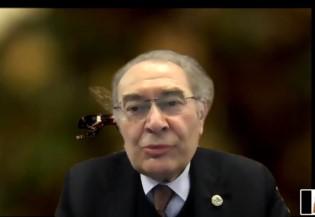
“Reading is a quest, the first step of searching”
Prof. Dr. Nevzat Tarhan, Founding Rector of Üsküdar Üniversitesi, who delivered the opening speech at the program, made evaluations on Sufism. “Sufism teaches us two magical words, one is patience and the other is gratitude. Enduring difficulties by looking at their source, and being content with small things and expressing gratitude when reflecting on what one possesses – these two words are essentially about self-discipline,” he said.
Tarhan stated, “The culture of Sufism means for a person to know themselves and to develop themselves. Human psychology is closely related to self-psychology. New fields have opened up in science regarding this. There are studies on topics such as 'How does the human mind work?' and 'What are the functions of the mind?' A human is born with a self and dies with that self. Humans do not come into the world as fully formed beings; they arrive prematurely, as if born early. Humans come into the world undeveloped. In the Holy Quran, the first verse revealed to Prophet Muhammad, the 'read' verse, is actually addressed to all of us through him. I view reading as a search; in other words, reading is actually a quest, the first step of searching. Reading is not just about reading known books, but also about reading the unseen book of the universe,” he said.
“Sufism teaches us two magical words”
Tarhan said: “Our brain has a characteristic; it doesn’t like comfort. In comfort, it becomes lazy and dull. Similarly, when a person falls into comfort, they become lazy and lose all their abilities. It is the same with civilizations; whenever they succumbed to comfort and luxury, they began to decline. When a person struts around in silks, thinking they will gain prestige, it actually means that the malicious emotions within their ego are deceiving them, and that we cannot manage the evil within us. All of us have a dormant trait within our lower self that always desires evil; it is important for us to recognize and correct this. Sufism teaches us two magical words: one is patience, the other is gratitude. Enduring difficulties by considering their source and accepting them, and being able to find contentment in small things and be thankful when reflecting on what one possesses – these two words are essentially self-discipline.”
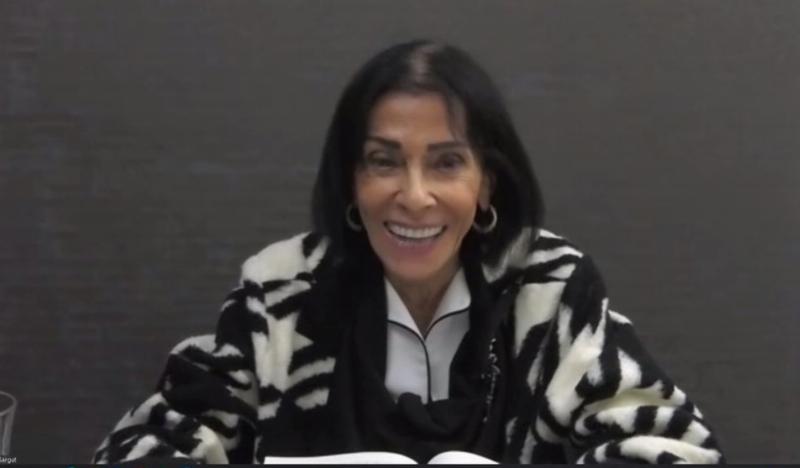
“Even if we know a hundred things, we need to know and learn the hundred and first”
Üsküdar Üniversitesi Rector's Advisor Cemalnur Sargut also made evaluations in the field of Sufism. Cemalnur Sargut said, “While possessing scholarly knowledge here, it is also important for individuals who have become human and prioritized humanity to be nurtured. It is important for each of them to learn and teach how Sufism can be lived out in their own profession. The children raised here have a great advantage: their ‘knowledge of humanity’. Therefore, you are the ones who will, tomorrow or the next day, teach Mevlana, Ibn Arabi, and their truths abroad, translating sharia with its inner meaning into Gnosis (Ariflik). Even if we know a hundred things, we need to know and learn the hundred and first,” she said.
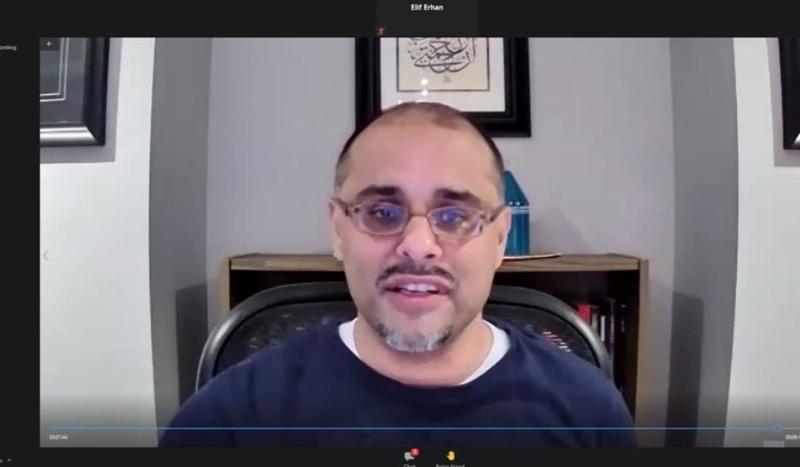
“The Institute is an excellent place”
Assoc. Prof. Dr. Rustom, one of the Institute's part-time faculty members, who is teaching the course “Sufi Metaphysics of Nature” in the graduate programs of the Institute of Sufism Studies this current Fall Semester, joined the program from Canada.
Assoc. Prof. Dr. Mohammed Rustom, stating that coming together at the symposium was a great opportunity, said, “Firstly, I can speak from my own experience at the institute – a course I taught in summer school and another I am teaching this semester. My experience here is that this institute is unparalleled in the world. This is especially so because of the way faith and science, academic work, come together in a very different dimension. Sufism, as a lived and realized spiritual tradition, is situated at the center of the studies and research here and is approached with great importance. Therefore, the efforts of the institute are very much in line with the needs of our time. So, what does the institute do? It carries Sufism studies from the past to the present. Texts in different languages such as Persian, Arabic, and Ottoman Turkish are examined, spanning from traditional to contemporary literature. It expresses ancient, traditional discourses in forms that will be meaningful for contemporary people. I recall this famous saying by Seyyed Hossein Nasr: there is nothing more timely than the timeless. Sufism, then, is the discovery of the timeless divine essence.
Of course, there is much to be studied, and these topics need to be approached from many disciplines: anthropological, philosophical, psychological, and more. But no matter which discipline we belong to, the Sufi perspective will still be very important, because the insights of this tradition will serve as a lens to enrich our perspective in our research across different fields. I would like to quote a saying by the French philosopher and Islamic scholar Henry Corbin: 'The worldly person is a product of their time. The spiritual person, however, creates their own time.' I hope that we will not be among those driven by the world, enslaved by its promises that are not much at all. Because this stance will determine the course of our entire lives and our interests. Let us show the courage to advance on the path inherited from our ancestors, from our spiritual forefathers, extending from the beginning of time to today; let us be brave in this sense. This will shape our path and method, and reward us with pockets of blessings and time, which will enable us to open up, expand, and encompass all other times within ourselves. Hopefully, this initiative of the institute will be an example of timelessness and connect us with the timeless,” he concluded.
Share
Update Date: February 27, 2026
Creation Date: December 25, 2020
Request a Call
Other News
- Cooperation protocol signed between Üsküdar University and Şerife Bacı Foundation
- Be careful about the thought, “It’s just once, nothing will happen”!
- Üsküdar University became a member of the International Association of Universities (IAU)!
- Prof. Nevzat Tarhan: “Protecting a child is not just about putting an obstacle in front of them on the screen!”
- Prof. Deniz Ülke Kaynak: “We are still in the conflict management phase!”