

Highlighting the importance of a loving approach to children within the home, Psychiatrist Prof. Dr. Nevzat Tarhan stated that parents do not have the duty to force children to do good and beautiful things. Noting that educating children through fear and adopting an authoritarian attitude can lead to various problems, Prof. Dr. Nevzat Tarhan said that today's parents should guide their children through persuasion, conviction, and love.
Content
Tarhan: “Children should be guided through persuasion, conviction, and love”
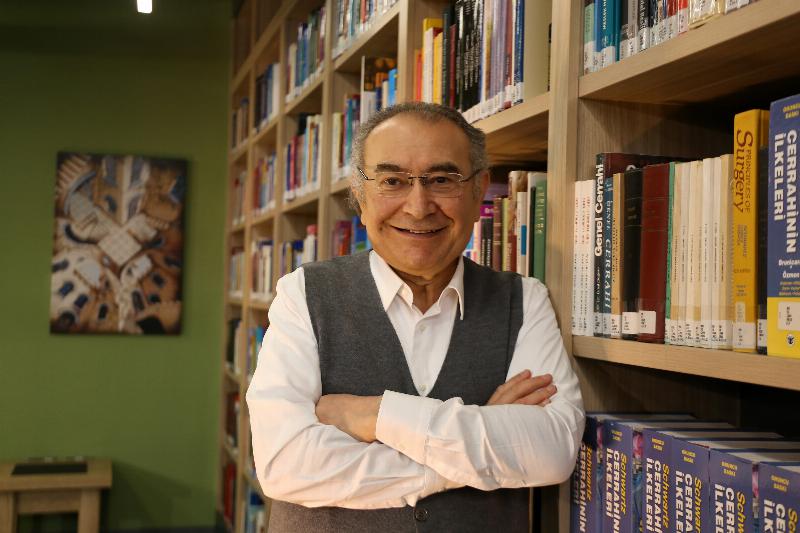
Üsküdar Üniversitesi Founding Rector, Psychiatrist Prof. Dr. Nevzat Tarhan made evaluations regarding the approach to children in the Marriage School program broadcast on Akra FM.
Humanity discovered the family as a safe haven
Prof. Dr. Nevzat Tarhan noted that the family is one of humanity's most important discoveries, stating, “Mating is biological, but family is cultural. Life is dangerous. For instance, in the forest, a person might go hungry, but when sleeping, they sleep in an enclosed area, a tent. Women, men, and children all feel safe in such an area. Humanity discovered safe havens like the family.”
Prof. Dr. Nevzat Tarhan noted that modernism destroyed the family's safe haven, stating, “Modernism destroyed it by encouraging selfishness under the guise of individualism. As a result, we are facing a global epidemic like loneliness. Behind the increase in suicides, loneliness, and incidents of violence lies a weak family. The family is a culturally constructed institution in humanity and the smallest safe haven.”
If the family collapses, it becomes social cancer
Prof. Dr. Nevzat Tarhan stated that what a cell is to the body, the family is to society. “When you destroy a cell, you get cancer. When you destroy the family, you get social cancer. In other living creatures, the first generation lives together, then they drive out the second generation. Lions do not form herds. When a second generation emerges, it is driven out. Cats are similar. When their offspring grow up, they are driven out by their mothers. Wolves and ants are not like that. They are genetically different and can form colonies.”
Oppressive attitude causes harm
Tarhan noted that the institution of the family has greatly deteriorated, stating that communication and relationship problems among family members are effective in this deterioration. Prof. Dr. Nevzat Tarhan, noting that educating children through fear and an oppressive attitude can lead to problems, said the following:
“One day, a religious conservative family brought their child to me. A 15-year-old girl wearing a headscar wanted to be both homosexual and atheist. Her family brought her, asking, ‘This child wants to take off her headscar, why is she doing this, is she ill?’ We investigated and conducted all tests. She didn't have a severe illness, but she had situational depression. After that, we examined her personality development and behavioral development. The child had entered adolescence, was a hafiz (one who has memorized the entire Qur'an), and was currently studying at an Imam Hatip school. The child told her mother, ‘I want to be free.’ Freedom is inherent in human nature. Freedom is the legal fundamental, the constitution of this era. No project undertaken by opposing freedom will succeed.
Negative consequences of prohibitionist education…
The parents raised the child in an overly authoritarian manner, providing education through fear rather than love. The discipline enforced through fear in the family created a reverse identity feeling in the child. The three words the family used were ‘shameful, forbidden, sinful’. The parents said, ‘Don't do this, it's shameful.’ The child replied, ‘What do I care? I want to be free, I don't accept shame, others shaming me is not important to me at all.’ The child drew this line. Second, the parents said, ‘Forbidden.’ The child said, ‘This is your prohibition, I don't have to obey your prohibition.’ The parents said, ‘Sinful.’ The child researched sin. He went to a religious teacher, who said, ‘You cannot force a person to be religious. But you can forcibly keep a Muslim within Islam.’ This is our traditional understanding of Islam. Upon this, the child said, ‘I am leaving the religion.’ This family didn't understand this child. There are many similar examples.”
Should be explained with love, not fear
Emphasizing the importance of parents having a loving approach towards their children, Prof. Dr. Nevzat Tarhan said, “Parents are natural guardians until the age of 18. In Islam, the duty of the mother and father is to warn. We do not have the duty to force a child to do good and beautiful things. Is it present in the life of Prophet Muhammad? When explaining Islam, he always proceeded with formulas of explaining through love, not fear. This is the Prophetic style. After the Messenger of Allah, we mistakenly perceive the oppressive system of Mesopotamian culture as Islam. That is not Islam, it is not the Prophetic style. People did not question the matter, and because they could not manage another alternative, human rule came down from above with a top-down discipline until today. There have been those who opposed it, like Omar Khayyam. This culture of despotism is Mesopotamian culture. It does not originate from the Qur'an and the Messenger of Allah. Insisting on the culture of despotism today means making Islam unlivable.”
One should act through persuasion, conviction, and love
Stating that today's parents should act towards their children through persuasion, conviction, and love, Prof. Dr. Nevzat Tarhan said the following:
“Persuasion, conviction, and love start from the family. Persuasion, conviction, love. When you do these three, rest assured that child will immediately turn around. They are actually a good child. Many parents have given their children many beautiful things and provided many contributions, but because of the traditional understanding created by fear, children are slipping away from us. The reason we are losing young people right now is the culture of fear. It is Muslims normalizing the culture of fear. The magic here is for the child to love the family, love the home, and see it as a sanctuary. Smart parents are those who make the home safe. If a child feels like they are coming to a court when they come home, that is an area of fear, not love. If you turn that home into a courtroom, that child will not come home and will escape at the first opportunity.”
Social capital multiplies with cooperation and empathy
Prof. Dr. Nevzat Tarhan noted that parents should turn that house into a warm home, saying, “That is why holidays are very important. Just as there is financial capital in resource management, there is social capital. There is social psychological capital, which is the richness of values in a person's inner world. The richness of values in society is called social capital. The social capital of the West is very weak, crawling on the ground. The East is very rich in social capital, but it is slowly losing it. This is true not only in Islamic geography but also in the Far East and India. Social capital multiplies with cooperation and empathy.”
Humanity needs an Eastern enlightenment
Prof. Dr. Nevzat Tarhan noted that humanity today needs an Eastern enlightenment, stating, “Social intelligence, emotional intelligence will be where social capital is, so you can spend it. The ability to establish cooperation, teamwork, is a 21st-century skill. All management sciences accept it as a 21st-century skill. Holidays are the strongest value of social capital. They are the areas where social capital is best maintained and sustained.”
Beautiful memories are not forgotten
Prof. Dr. Nevzat Tarhan noted that personality is formed through behavioral learning, experiences, stories, traumas, and resolving traumas, stating, “The child forgets most of the small stories they experienced with their mother and father, but you see that they have become seeds in their personality. When they grow up, trees can emerge from those seeds. Beautiful moments experienced in childhood are not forgotten. Because events are not forgotten, there is not only information but also emotion within the events. There is not only intellectual information. There is also emotional information. When both combine, a person does not remember much information, but remembers what they have experienced. Confucius has a beautiful saying. He says, ‘People say, ‘I heard, I forgot; I saw, I remembered; I experienced, I learned.'' But when a person experiences it, it becomes permanent. That is why at the top of the learning pyramid there is ‘learning by experience.’ There is ‘learning by telling and transferring to others.’ At the very top, there is ‘permanent learning.’ At the bottom, there is only ‘listening.’ It's like reading and writing; it passes.”
New life scenarios need to be written
Prof. Dr. Nevzat Tarhan noted that in marital life, parties should leave behind their pre-marital life scenarios and write new ones, stating, “All of us have scenarios, big and small, in our lives. After getting married, a person moves from one family into another. There, they try to continue the scenarios they learned in their own childhood exactly as they were. However, continuing them is not correct. Because once you establish a family, since the actors have changed, you need to rewrite the scenario according to the new situation. Stubborn people say, ‘I got married, you must be like my father.’ They say, ‘My father was a good person. You be like him.’ They say, ‘My mother was a good person, you be like her.’ When this happens, there is rigidity. Such a marriage won't work anyway. If there is flexibility of thought, if they have the ability to rewrite the scenario, they can succeed. Because a new family is being built. A new unit and a free space are being constructed.”
Prof. Dr. Nevzat Tarhan stated that two-thirds of the workers in Silicon Valley, which sustains the West, are immigrants, saying, “What sustains the West are those who come from the other side of the world. They work. But after a while, cultural influence will begin. Demographic changes will begin. The West has to find a solution here. Against this, it does not want to lose control with global capital. The concern of global capital is not to become richer, but to gain more dominance. That is why anti-family policies are being produced to reduce the population of developing countries. We should not buy into these policies. The greatest responsibility in the face of these policies lies with those who play dead.”
Random acts of kindness and greetings beautify the world
Prof. Dr. Nevzat Tarhan noted that mindfulness training is gaining importance worldwide, stating, “There is training used in positive psychology and translated into Turkish as 'conscious awareness.' There, training is given to greet at least three people a day. The advice is given to ‘buy a gift for someone who has done you a favor in the past and thank them.’ When a person does these things, such a change occurs in their life that their life becomes much more beautiful. Both sides feel good.”
Culture of solidarity is our greatest wealth
Prof. Dr. Nevzat Tarhan also noted that holidays provide this, saying, “When you treat your acquaintances and neighbors well, what happens? Social enrichment occurs. A sense of social trust emerges. Children grow up comfortably in an environment without experiencing evil. The solidarity among the children of uncles, paternal aunts, and maternal aunts is the greatest wealth of our culture.”
Tablets meet families' greatest need for siblings…
Prof. Dr. Nevzat Tarhan stated that if these relationships weaken, the child becomes isolated, saying, “The child remains alone in the virtual world on social media. However, if there were children of uncles, paternal aunts, and maternal aunts, and if the child played with them occasionally, went here and there, and traveled, the child would not be exposed to the dangers of social media as much. What we emphasize here is increasing social contact. Tablets meet families' greatest need for siblings. They give the child a tablet, called a 'cheap babysitter'. The child plays with it all day but learns nothing. Delayed speech, called clip syndrome, emerges. The child is 4 years old and still cannot speak. We see that they have a tablet or phone in their hand, or are watching clips on TV. For this reason, we do not recommend contact with smart devices until the age of 3.”
Share
Update Date: March 01, 2026
Creation Date: July 28, 2022
Request a Call
Other News
- The book that read today's digital threats in 2014: Being a Conscious Family
- Experts warn: 'Instead of memorizing letters, teach pencil grip, scissor use, and coloring'
- School fear and school love both start in the family!
- Family is not merely transforming, it is being battered under a serious assault
- Artificial intelligence opens the door to early diagnosis in autism!