

The 'International Women's Day Symposium' was organized by the Department of Midwifery, Faculty of Health Sciences, Üsküdar Üniversitesi. The opening speeches of the online symposium were delivered by Üsküdar Üniversitesi Founding Rector Prof. Dr. Nevzat Tarhan and Head of the Department of Midwifery, Faculty of Health Sciences, Prof. Dr. Güler Cimete. The symposium, which focused on 'Violence Against Women' with the slogan 'See, Hear, Care, Empower,' was held in two sessions.
Content
Symposium Held Within the Scope of March 8 International Women's Day
While Prof. Dr. Özen Kulakaç, Hazal Hartavi, Sevcan Kuyumcu, and Lawyer Birsen Baş Topaloğlu took part in the 1st Session of the International Women's Day Symposium, Dr. Lecturer Semra Baripoğlu participated in the 2nd session, and Ayşegül Güder and Kübra Daştan participated as speakers in the 3rd session.
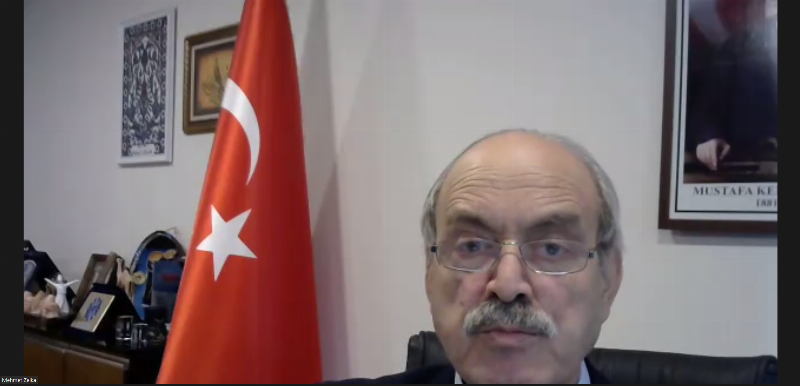
Prof. Dr. Mehmet Zelka; “As the understanding of rights and justice weakens in the world, violence against women increases”
Üsküdar Üniversitesi Acting Rector Prof. Dr. Mehmet Zelka, speaking about the impact of violence against women on society, stated: “When we look at world statistics, research shows that 736 million women have been subjected to violence. However, this situation is not a matter affecting only 736 million people. These are members of families, individuals of society. Some studies show that as the level of education increases and the economic level develops, the rate of violence decreases. In the 18th century, women faced such serious discrimination that it would take volumes of work to reveal it. This violence began much earlier than 1857. Therefore, as the understanding of rights and justice weakens in the world, violence against women increases.”
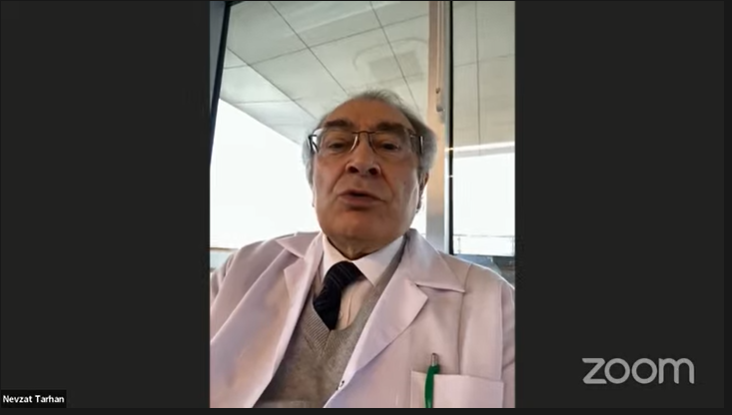
Prof. Dr. Nevzat Tarhan; “Without mental transformation, there is no social transformation”
Üsküdar Üniversitesi Founding Rector, Psychiatrist Prof. Dr. Nevzat Tarhan, stating that the rate of violence against women is linked to the cultural structure of society, said: “In the 1960s, the women's liberation movement began. Especially after the beginning of World War II, sexism became very prominent. The prejudices brought by patriarchal culture regarding sexism formed the biggest obstacle in societies. In that obstacle, without mental transformation, there is no social transformation. That's why transformation in minds is necessary. Because this is social awareness. Social awareness is important for individual awareness to come to the forefront. This is a topic related to global women's rights and the women's liberation movement. I first noticed it coming to the agenda in Turkey in the 2000s. In the 2000s, a strong wind of freedom was blowing worldwide. Of course, this also affects social life, family life, and human relationships. In fact, it affects all of life. Following this, we realized that the patriarchal culture in Turkey increased incidents of violence against women and was a social obstacle in Turkey's modernization process.”
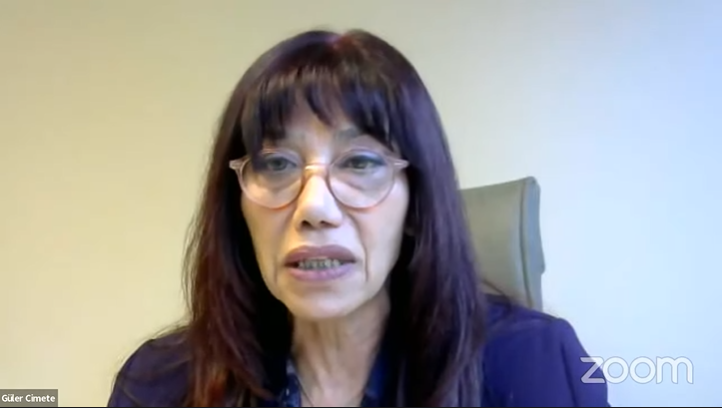
Prof. Dr. Güler Cimete; “Domestic violence and violence against women also affect children”
Prof. Dr. Güler Cimete, explaining the impact of violence on family communication and children through statistics, said: “Between January 1 and February 28, 98 women in our country were subjected to violence and lost their lives. Violence negatively affects women physically, and its ultimate consequences are death, disability, and various diseases. Domestic violence and violence against women also affect children. Therefore, we cannot say that 'only women are affected on their own.' Children's mental health, physical health, and violence against women can similarly be directed at children. They too can experience or witness violence. This situation also negatively impacts them psychologically.”

Prof. Dr. Arif Aktuğ Ertekin; “I believe education is the biggest factor in changing tradition”
Üsküdar Üniversitesi Faculty of Health Sciences Dean Prof. Dr. Arif Aktuğ Ertekin, emphasizing that International Women's Day should be on the agenda every day, not just one day, stated that violence against women is a universal problem. Ertekin said: “The fact that International Women's Day is not talked about enough in the world is not just a problem for developing or underdeveloped countries. It is not easy to correct this fundamentally all at once. Even before Christ, we can see that this societal view between women and men was different. Our country also has a very different perspective on this issue. After the establishment of the Republic, while this concept did not exist in many countries around the world, many approaches were exhibited, both in law and in practice, so that women could reach their rightful place in society. I believe this will be further developed in the future. And I think the best way to do this is through education, which is the biggest factor in changing culture and tradition.”
Share
Update Date: February 28, 2026
Creation Date: March 09, 2022
Request a Call
Other News
- Experts warn: 'Instead of memorizing letters, teach pencil grip, scissor use, and coloring'
- School fear and school love both start in the family!
- Family is not merely transforming, it is being battered under a serious assault
- Artificial intelligence opens the door to early diagnosis in autism!
- Artificial intelligence doesn't end engineering, it transforms it!