

The Sufism Studies III. International Graduate Summer School concluded with a closing panel and a final lecture on Sunday, August 8, 2021, after a seven-day intensive course program. This year, graduate-level courses were delivered by 16 distinguished researchers from Turkey and abroad, under the coordination of Asst. Prof. Dr. Cangüzel Güner Zülfikar. A total of 80 students followed the program, 41 of whom were from the Institute of Sufism Studies. The summer school, closely followed by international students and researchers working on Islam, especially in the field of Sufism, saw participation from Japan, America, and Germany. Graduate students had the opportunity to take the master's/doctoral course titled “Sufism Studies Seminars” for credit as part of the summer school. The assignments for the course will be evaluated by Asst. Prof. Dr. Cangüzel Güner Zülfikar and Prof. Dr. Omid Safi (Duke University).
Content
Sufism Studies III. International Graduate Summer School Concludes
The Summer School seminars began with a seminar titled “Problems in the Historical Definition of Sufism” by Prof. Dr. Carl Ernst, one of the leading authorities in the field of humanities. Cemalnur Sargut, one of the Rector's Advisors of Üsküdar Üniversitesi, gave a lecture on “Adab” (etiquette), considered one of the definitions of Sufism. In courses where the Institute of Sufism Studies, as the host, prioritized works from the Seljuk and Ottoman Periods and Turkish studies, Prof. Dr. Reşat Öngören discussed “Sufi Thought in Seljuk and Ottoman Anatolia,” and Prof. Dr. Emine Yeniterzi covered “Âşık Paşa's 'Garîb-nâme.'”
The Institute of Sufism Studies also featured the works of its graduate students during this summer school. Two theses supervised by Asst. Prof. Dr. Dilek Güldütuna, Ebru Arslan's “Contributions of Sufi Education to Today's Business World and Employees” and Nazlı Kayahan's “The Concept of 'hayât-ı tayyibe' in the Works of Kenân Rifâî,” were presented as seminars, along with Asst. Prof. Dr. Güldütuna's evaluations.
Dr. Arzu Eylül Yalçınkaya, with her work “The Call for Tawhid / Unity in Yunus Emre's Poems,” and Asst. Prof. Dr. Omneya Ayad, with her studies “Ibn al-Farid and the Spiritual Quest for Divine Love: 'Qasidat al-Ta'iyya'” and “Niyazi Mısri and the Concept of Faqr: Meva'idü’l-irfan ve eva'idü’l-ihsan,” continued to trace the imprints of Sufism in the cultural geography of the Seljuk and Ottoman periods.
The lectures on this topic concluded with a seminar titled “Ottoman Followers of Ibn Arabi” by Prof. Dr. Mahmud Erol Kılıç, former Rector's Advisor of our University, Ambassador, and Director General of IRCICA, in which he explained Ottoman Sufi thought through the tradition of commentary.
Prof. Dr. Ebrahim Moosa (Notre Dame University) from America gave lectures on “Ghazali and Knowing Oneself,” Prof. Dr. Omid Safi (Duke University) on “The Heart of the Quran” and “Hz. Harakani,” and Dr. Tehseen Thaver (Princeton University) on “Sufism and the Quran.” Assoc. Prof. Dr. Rick Colby covered early Sufi teachings in fundamental Arabic sources regarding “The Spiritual Meaning of Prophet Muhammad's Mi'raj” from the Andalusian period. Prof. Dr. Yasmin Saikia addressed the Indian subcontinent with her seminar “Peace as an Islamic Value from the Perspectives of Hz. Nizamuddin, Sayyid Ahmad Khan, and Mawlana Wahiduddin.” Assoc. Prof. Dr. Mamarame Seck (Cheikh Anta Diop University), with her work titled “Styles and Functions of Sufi Narratives in Senegal,” discussed Sufism as experienced in the African geography. Prof. Dr. Yasushi Tonaga, whom the Institute knew well from joint projects with Kyoto University, presented his developed theory and studies approaching the subject with an anthropological model in his work titled “Three-Dimensional Theory of Sufism.”
Closing panel held…
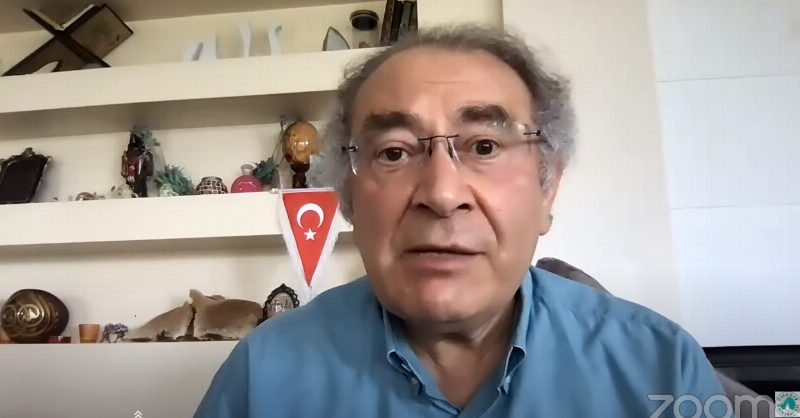
During the Closing Panel, under the moderation of Summer School coordinator Asst. Prof. Dr. Cangüzel Güner Zülfikar, the results and impacts of the intensive course program, held annually, were evaluated. The panel, with opening speeches by Cemalnur Sargut, one of the Rector's Advisors, and Prof. Dr. Nevzat Tarhan, Chairman of the Board of Trustees and Founding Rector of Üsküdar Üniversitesi, was held in a workshop format where feedback was gathered about the program that facilitated mutual interaction among the Institute of Sufism Studies' lecturers, guest lecturers from abroad, and all registered students.
Prof. Dr. Nevzat Tarhan: “It is necessary to give new answers to old questions”
Prof. Dr. Tarhan, stating that existential philosophy has influenced the Western world and speaking of the movement to make people forget God and sacralize humanity in the name of science, said, “Albert Camus states, 'the search for meaning in the universe has no meaning.' In such a situation, it is necessary to give new answers to old questions. When we give old answers to old questions, the Western mind strongly objects to answers that are not at the level of evidence. The way to convince the Western mind is to provide answers at the level of evidence.”
Prof. Dr. Nevzat Tarhan: “Sufism is the union of Quranic morality with knowledge and wisdom”
Evaluating the science of Sufism through 21st-century skills, Prof. Dr. Tarhan said, “Sufism emphasizes the human feeling of gratitude. Gratitude and reconciliation are emphasized. Happiness, he says, is not just making oneself happy, but also being happy by making others happy. Sufism is the definition of Quranic morality. Nothing else. Sufism is the union of knowledge and wisdom. That wisdom, Anatolian wisdom, has been scientifically confirmed. Humans are connective beings, relational beings. There is a mind above our brain. They also call it the quantum brain. This is connected to the entire universe, not disconnected; quantum consciousness is completely relational. In connectivity, a person's three relationships are very important. First, the human's connection with the environment: social, family, etc. Second, the connection with oneself. And third, the connection with the Creator. If a person can unite these three connections, it means they have the right compass on their life journey.” Prof. Dr. Tarhan continued his words by saying, “Now there are third-wave psychotherapies in psychology. There are 'mindfulness'-based approaches that enable self-discovery, encourage an inner journey of exploration, and promote the development of 21st-century skills.”
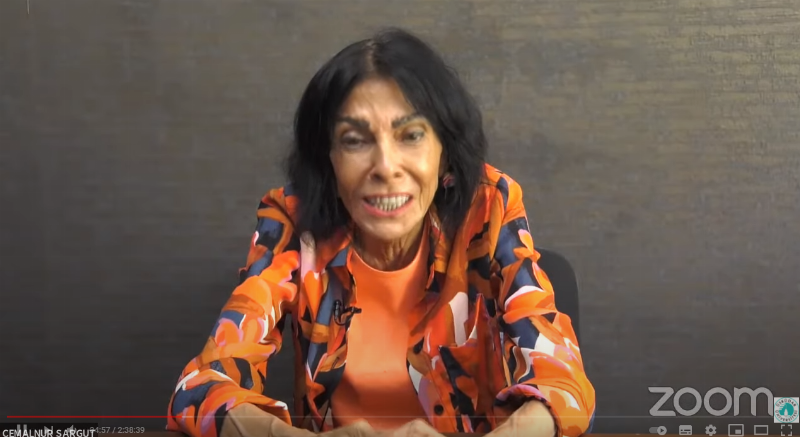
Cemalnur Sargut: “Adab is to ‘see’ Allah, to know Him everywhere, and to work for Allah, not for people.”
Cemalnur Sargut, Rector's Advisor of Üsküdar Üniversitesi, stated, “One meaning of Adab is service. The table invited with Adab, according to the Prophet's hadith, is the Quran; adhering to and respecting it is adhering to and respecting the Quran. We know there is much to be learned from this. We know that this is a feast table bestowed by Allah. Therefore, Adab is to see Allah, to know Him everywhere, and to work for Him. It is to work for Allah, not for people.”

Assoc. Prof. Dr. Rick Colby: “I learned a lot by making sense of the negativities I experienced.”
Assoc. Prof. Dr. Rick Colby, who joined the panel live from Oregon with a 12-hour time difference, emphasized that Sufism changed his perspective on life events: “During the lectures we held at the Institute, very good questions were asked by the students. The questions allowed me to see the texts I read differently. On the day I gave my presentation, I opened a book and saw things about the Mi'raj of our Prophet that I had not noticed before. And I realized once again that I am always a student, learning from each of you. I saw things that opened my eyes and my heart, and I sincerely believe that there is great blessing flowing to us from here, from these studies.”
Assoc. Prof. Dr. Mamarame Seck: “Sufi belief is a process that opens the way to being close to Allah.”
Assoc. Prof. Dr. Mamarame Seck, who participated live in the panel from Senegal, said, “Sufi belief is a process that opens the way to being close to Allah, and when you do this, in this world, your heart, your emotions, your deeds are solely for Allah. As a Sufi, you love everything. You love your country, its people; you work for your country to be in peace and to develop. While doing this, you harm no one, and you love your neighbors and all of humanity. I believe this is the lesson that needs to be taught to the whole world.”
Prof. Dr. Reşat Öngören: “Our failure to reach (the destination) is due to our lack of method…”
Prof. Dr. Reşat Öngören, a faculty member at the Institute of Sufism Studies, emphasizing that Sufism will be a solution for the whole world, said, “For a week, we experienced a festival of knowledge and spirituality. I would like to briefly present the impressions it left on me. Fifteen lecturers, our esteemed professors from various geographies ranging from Japan to America to Africa... I saw that all these professors share a unity of heart. Everyone has humility and dedication. Moreover, there is a unity of purpose. Academically, we also see a unity of etiquette. This is very impressive. All our professors presented their knowledge on the Sufi method (usul). There can be no arrival (vusul) without method (usul). Unfortunately, without unity in method, the goal cannot be reached. When we achieve this method, our arrival will also become easier. In this sense, I am grateful to the Institute; this Institute will establish unity in method. From here, I feel as if unity in method will lead to an easier attainment. I completely agree with Rick Colby. I learned many things here through my students' questions. The students of this Institute are very high quality. We state that our Institute conducts interdisciplinary studies in the field of Sufism, unlike the departments of Theology and Literature. We are not speaking abstractly here; we have very effective examples presented within this program, and their numbers will increase.”
Prof. Dr. Emine Yeniterzi: “Sufism is finding ease, festivity, and joy in the heart during times of difficulty and tribulation.”
Prof. Dr. Emine Yeniterzi said, “Every difficulty comes with ease. When a great master was asked 'What is Sufism?', he replied, 'it is finding ease, festivity, and joy in the heart during times of difficulty and tribulation.' In these difficult times for our country and the world, the timing and location of this summer school, everything has a meaning. There must be a wisdom in our being together here amidst all these problems. May Allah grant us all this understanding.”
Prof. Dr. Yasushi Tonaga, who participated in the panel from Japan, expressed his gratitude primarily to the administrators and lecturers of the Institute of Sufism Studies, to Cemalnur Sargut for her efforts in the field of Sufism both in Turkey and internationally, and to Üsküdar Üniversitesi Founding Rector Nevzat Tarhan for providing them with this opportunity. He stated that this summer school, held annually in Istanbul, offers a great opportunity for all researchers and students working and studying in the field of Islamic studies, particularly Sufism.
At the closing panel, Asst. Prof. Dr. Dilek Güldütuna expressed her views: “Our summer school brings together lecturers from different scientific traditions with their works on various topics. Science is a dynamic phenomenon; even if it has general rules, it can have different expressions according to different cultures. Especially in our field, there are differences between explaining Sufism in Turkey, and explaining it in America, Japan, or Senegal. Since the addressed societies and cultures are different, we see a translation activity and that the essence is one - a unity of method. This unity in diversity and our ability to experience these is a great enrichment and eye-opener for all of us. We eagerly await our summer school every year. Due to the structure of our Institute, we have the opportunity to work with colleagues from different branches. When we use their topics and different perspectives together with the lens of Sufism, we see the formation of many new connection points.”
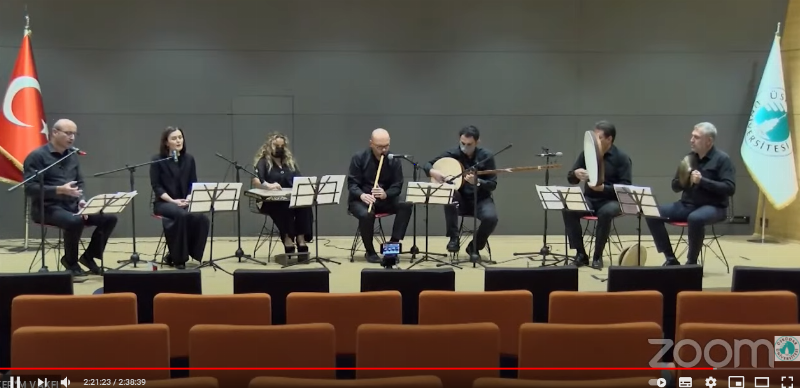
Dr. Kazunori Matsuda took the floor representing international students at the panel. Dr. Matsuda, participating in the panel from the Embassy of Japan in Karachi, Pakistan, spoke about the importance of the topics covered in the Summer School for Sufism researchers. He emphasized the importance of translating the texts examined in the courses into Japanese. This was followed by feedback from the Institute's graduate students. The panel concluded with the 2021 Summer School Lâ Edrî Sufi Music Concert, directed by Prof. Dr. Vasfi Emre Ömürlü and filmed at Üsküdar Üniversitesi Nermin Tarhan Hall.
The Summer School program concluded with the closing lecture delivered by Asst. Prof. Dr. Cangüzel Güner Zülfikar for the summer school students.
Share
Request a Call
Other News
- The book that read today's digital threats in 2014: Being a Conscious Family
- Experts warn: 'Instead of memorizing letters, teach pencil grip, scissor use, and coloring'
- School fear and school love both start in the family!
- Family is not merely transforming, it is being battered under a serious assault
- Artificial intelligence opens the door to early diagnosis in autism!