

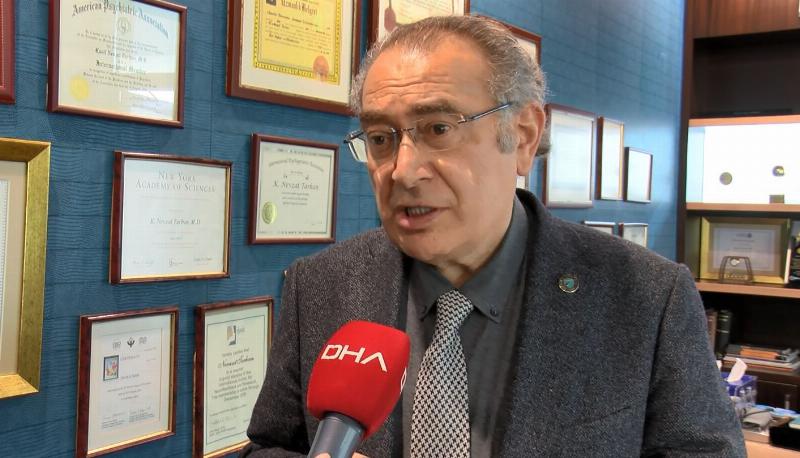
Motorcycle riders almost compete with each other for likes by sharing their speed and dangerous driving videos on social media groups. Experts state that the click war on social media is starting to become a significant cause of accidents. Most recently, 28-year-old Vedat Aydın lost his life in an accident while recording a video with a helmet camera, traveling at 297 kilometers per hour. Psychiatrist Prof. Dr. Nevzat Tarhan said, "They display themselves by speeding on motorcycles in this way. When they show the speed they achieve to those around them, they receive likes and applause. They become individuals who feed on likes and applause. Social media makes such risky behaviors easier to experience. The expectation of getting likes on social media pushes individuals to take greater risks."
Content
Speed Race on Social Media Brings Accidents
Recently, motorcycle rider Vedat Aydın, who reached a speed of 297 kilometers per hour on the Northern Marmara Highway, lost his life after crashing into barriers. Vedat Aydın's last moments were captured on his helmet camera. In that recording, it was noted that Vedat Aydın focused his helmet camera on the speed indicator. This raised the question: 'Is the reason motorcycle riders reach such high speeds to make social media posts?' There are countless videos on social media of many motorcycle riders exceeding 200 km/h.
Social Media Makes Risky Actions Easier to Experience
Psychiatrist Prof. Dr. Nevzat Tarhan said, "There is a gene related to risk-taking behavior in humans. In some individuals, the length of this gene is greater. These individuals are usually hyperactive. People with high risk-taking behavior love risk. When they take risks, their brains release excessive adrenaline and dopamine. For them, this is an incredibly pleasurable situation. They display themselves by speeding on motorcycles in this way. When they show the speed they achieve to those around them, they receive likes and applause. They become individuals who feed on likes and applause. Social media makes such risky behaviors easier to experience. The expectation of getting likes on social media pushes individuals to take greater risks. Those who like these types of videos, if it were their own mother, father, or child, would say, 'Oh, what are you doing?' but when they watch someone else, they think of their own pleasure at that moment. They satisfy their own adventurous impulse through others."
Share
Request a Call
Other News
- Prof. Nevzat Tarhan: “Those with a mental filter are not afraid of the digital”
- Artificial intelligence doesn't eliminate the translator, it transforms their expertise!
- Social responsibility courses moved to the field
- Erasmus+ Orientation Week completed at Üsküdar
- Prof. Nevzat Tarhan: “Brain secretes ‘dark glue’ in social media lynchers!”