

Noting that societal recovery after disasters like earthquakes is only possible by strengthening social ties, Psychiatrist Prof. Dr. Nevzat Tarhan draws attention to the healing power of social solidarity. Prof. Dr. Nevzat Tarhan, who stated, “The earthquake taught us one thing: goodness prevails,” touched upon the positive effects of the spirit of unity that emerged throughout society. Tarhan, who said, “We need goodness,” emphasized the importance of coming together, especially in healing the wounds of children and young people affected by the earthquake.
Content
Social solidarity heals…
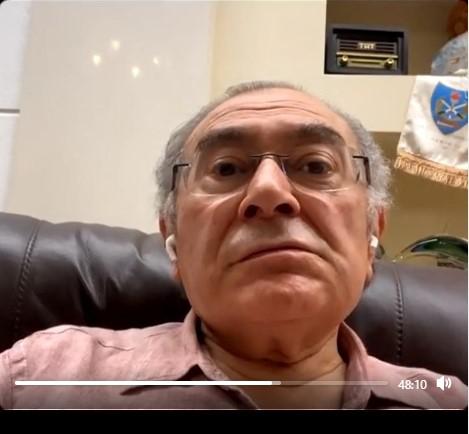
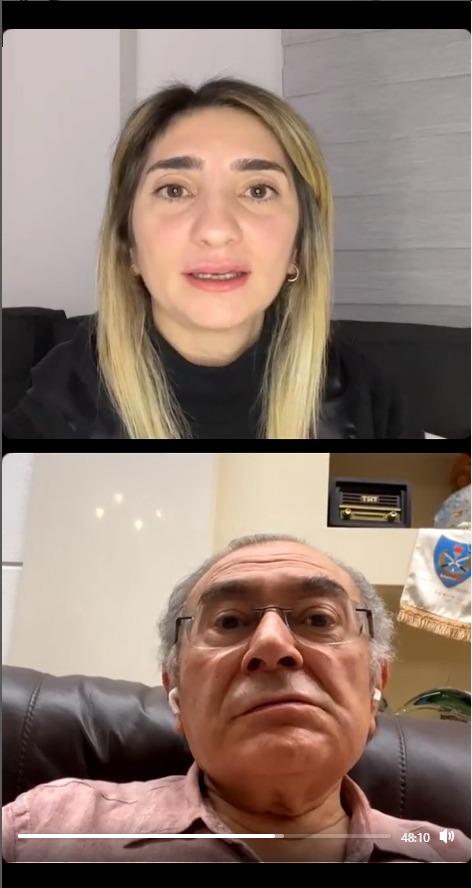
Üsküdar Üniversitesi Founding Rector, Psychiatrist Prof. Dr. Nevzat Tarhan, speaking on an Instagram live broadcast with journalist Didem Seymen, emphasized the importance of social solidarity in crisis situations like earthquakes, stating that it is crucial to ensure that young people and children, in particular, return to normalcy.
Aid mobilization occurred after the earthquake
Prof. Dr. Nevzat Tarhan stated that immediately after the Kahramanmaraş earthquakes, an aid mobilization took place in our country and around the world, saying, “In the first days of the earthquake, we witnessed aid going to the earthquake region across society, and a country-wide aid mobilization. Roads were blocked with truck queues due to the aid. We saw aid coming from every corner of the world, from Azerbaijan, Kazakhstan, Israel, China, and particularly search and rescue teams arriving from many countries around the world.”
The earthquake taught that goodness prevails
Prof. Dr. Nevzat Tarhan, who stated, “The earthquake taught us one thing: goodness prevails,” touched upon the positive effects of the spirit of unity that emerged throughout society. Prof. Dr. Nevzat Tarhan added, “We need goodness. It is not a time to fight with each other. Most of humanity reacted benevolently. There are also those who reacted malevolently, but they are exceptions. We should not dwell on them. Radical types always exist. There is no need to engage in conversation with them. The vast majority of the world showed benevolent behavior. This is an opportunity for the world to become better. Before the earthquake, there was such tension that they were almost going to push Turkey into war. Qur'an burnings, as if an operation against Syria was imminent. As if an operation against Greece was imminent... These suddenly dropped from the agenda.”
Meeting basic needs should be the priority
Stating that the earthquake disaster caused immense losses and great pain in the 10 provinces affected by the earthquake, Prof. Dr. Nevzat Tarhan said, “This is immense pain and a huge shock. We are currently experiencing a shock period. This shock period will pass. There will be a certain cooling down. In the earthquake regions, our primary goal and priority should be to meet the needs of the people there. The basic needs of the survivors must be met. The state's efforts are currently focused there. Attempts are being made to ensure they are not left alone.”
It is necessary to return to normalcy quickly
Emphasizing that the grief and mourning response should not turn into an unresolved trauma response, Prof. Dr. Nevzat Tarhan stated, “Grief becoming complicated grief means not being able to resolve the grief. One part of the brain forgets the grief, and another part does not. The person continues that grief. In this way, they cannot normalize. Therefore, this trauma needs to turn into a resolved trauma. To prevent incomplete grief, it is absolutely necessary to return to normalcy quickly.” he advised.
Grief should be miniaturized
Emphasizing the importance of miniaturizing the events related to the Kahramanmaraş earthquakes and not mummifying them, Prof. Dr. Nevzat Tarhan underlined that grief must be experienced, stating:
“When we mummify, the pain continues exactly the same. When we mummify, grief does not end. It perpetuates the grief. A person preserves a deceased loved one as they were. This is mummification. Then the grief continues. They cannot return to normal life. It is necessary to miniaturize grief, create a memory, store it, make a corner for it, and return to normal life. If we cannot do this, grief turns into complicated grief. Depression mixes with grief. In the initial period of grief, it is necessary to accept the pain. Denying and ignoring it prolongs the pain even more. It turns into complicated grief. The person believes they have not died. They wait every day. They think the deceased is coming every time the door rings. If we do not take a person to the funeral during the grieving period, thinking ‘let them not be sad,’ they cannot complete their grief. Therefore, we all need to experience the pain of grief by being sad and crying. Even kindergarten children are taught that the fish in the aquarium will die. If we don't teach this, the child cannot learn the realities of life. A child raised like a greenhouse flower breaks at the first storm. Life is a mixture of bitter and sweet things.”
Social support helps in quick recovery from grief
Emphasizing the great importance of social support in such situations, Prof. Dr. Nevzat Tarhan said, “Creating a safe space and instilling the feeling of ‘You are safe’ by meeting a person's basic needs is very important. It is important to be able to convey the feeling to the person that ‘My spouse, friends, relatives, institutions are with me.’ When we can provide this feeling, the person exits the grieving period quickly. They accept the pain. They rebuild a life, but it will never be the same as before. It is not very realistic to expect people living in that region to be the same people they once were.”
Earthquake-affected children should be with people they trust
Prof. Dr. Nevzat Tarhan also issued warnings about the correct approach to children in the earthquake region, stating, “Since children have not fully learned the sense of reality, they may misunderstand excessive attention. For earthquake-affected children, it is important for them to be with people they are accustomed to and trust. We recommend keeping children away from cameras as much as possible. ”
Social ties are very important
Stating that the most important thing for a child is to be loved and to play, Prof. Dr. Nevzat Tarhan said, “For children, play is the most serious business. It is important for the child to play safely during this period. The best game is being able to spend more time with their mother and father. Play is an opportunity to spend time with parents. It is an opportunity for the child to develop their bond with their parents. For a child and a baby, the happiest moment is when they hug their mother. In such situations, people relax when they take refuge in a spiritual power, or in their mother or father. Humans are relational beings. They are not created to live alone. In such situations, social ties are very important, social support is very important. Right now, providing social support to people is sufficient. That is the most important need.”
Education and normalization must return quickly
Pointing out the importance of socialization for university students as well, Prof. Dr. Nevzat Tarhan said, “When there is social contact at university, the greatest gain is university culture. It is called social media, but it is virtual media, not social. True social interaction is being able to sit in the same environment and talk with eye contact, to touch, to sit together and drink tea, to chat. Taking this away from young people is a second trauma. Let's not take this away from young people. We had just started to heal the wounds of the pandemic period. Especially among adolescents and children, we encountered so many clinical cases that, to a degree I had never seen in my life, adolescents experienced psychological breakdowns requiring hospitalization during this period. Trauma occurred due to constantly being at home and continuously exposed to social media. Returning to the same thing does not comply with scientific truths. Therefore, education and normalization must return quickly. Scientific predictions are in this direction. We need to find a way for this. We need to find other solutions. We need to find solutions that will normalize society.”
Post-traumatic growth can emerge
Noting that individuals can also learn lessons from disasters, crises, and trauma situations like earthquakes, Prof. Dr. Nevzat Tarhan said, “We call this post-traumatic growth. There is a post-traumatic growth scale. Individuals who have been administered this scale report feedback such as ‘I spend more time with my children,’ ‘I spend more time with my family,’ ‘I feel the need to help people more,’ ‘I started to give more importance to spiritual values’ in similar situations. Lessons need to be learned from such events. People need to think about how to make the world a better place and fulfill their duties. They ask Mother Teresa: ‘How can the world become a better place to live?’ She replies: ‘By doing good, one-on-one.’”
If you don't follow science, you pay the price!
Prof. Dr. Nevzat Tarhan stated that everyone should learn the necessary lessons from the earthquake disaster, saying, “We are not masters of nature. We cannot solve the secrets of the universe with five senses. There are things humans can control, and things they cannot. There are things within their power and things beyond their power. This event is something beyond our power. Things we could control existed before. We did not listen to scientists. There are municipalities that listened to the warnings of scientists during the 1999 Gölcük earthquake and today. Their buildings did not collapse. Because they were built according to science. If you don't comply with science, you pay the price. It is necessary to act with scientific soundness.”
We need to maintain empathy and solidarity
Stating that there is much more to be done in the earthquake region for a longer period, Prof. Dr. Nevzat Tarhan said, “Firstly, we must continue the empathy and solidarity we showed immediately after the earthquake. Let's not generalize by looking at bad examples and break our motivation. Let's continue good behaviors and definitely not fall into despair. This society has overcome many great perils and will overcome this one too. Therefore, the most important thing right now is not to experience anxiety about our future. The feeling of hope is important, being in social support services is important. If disadvantaged people are currently trying to overcome this process by not rebelling, by enduring, by persevering, then those who are not in the earthquake region must also pass this test by helping them. We are also going through a test of humanity. Helping them, sharing what we have, is our test. Let's look at it this way. Instead of saying ‘Thank God we weren't there,’ we should be able to say ‘My test is to help them, what is my role in this?’ If we act this way, Turkey will be better, and the world will be more livable.”
Share
Update Date: March 01, 2026
Creation Date: February 20, 2023
Request a Call
Other News
- Experts warn: 'Instead of memorizing letters, teach pencil grip, scissor use, and coloring'
- School fear and school love both start in the family!
- Family is not merely transforming, it is being battered under a serious assault
- Artificial intelligence opens the door to early diagnosis in autism!
- Artificial intelligence doesn't end engineering, it transforms it!