

Üsküdar University Founding Rector, Psychiatrist Prof. Dr. Nevzat Tarhan, addressed the topic of “Silent Kindness” this week in his Hürriyet Aile column.
Content
Silent Kindness is Two-Way Goodness
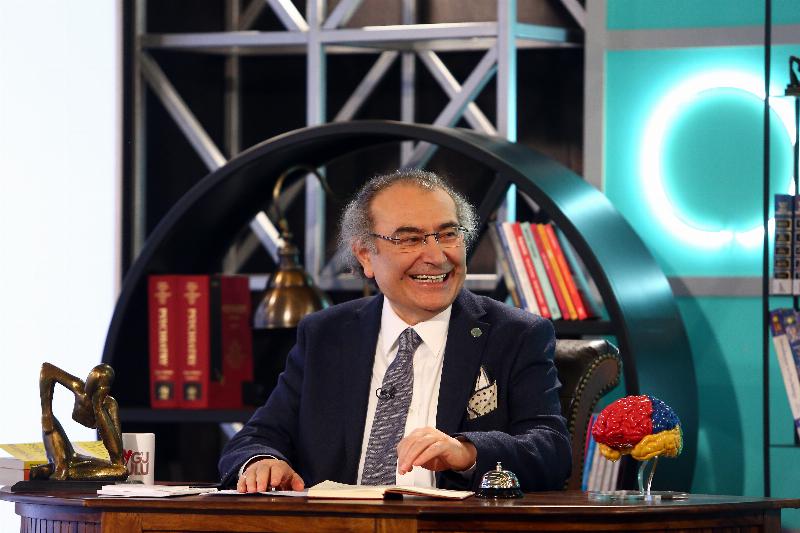
Goodness must constantly be active and in action. As the need for a more beautiful and meaningful world increases, the value of the concept of goodness is better understood, and its importance comes to the forefront. Silent acts of kindness become beneficial for both those who perform them and those who receive them. In silent goodness, there is the unseen kindness of the person. It is a system where the doer of good is unknown, and the recipient is also unaware. It is not one-sided but two-way goodness, and this is the ideal. Silent goodness is the highest quality and supreme form of goodness. Goodness must constantly be active and in action. When goodness is not done, evil spreads spontaneously.
To understand goodness, one must also clearly know the boundary between evil and good. The concept of good and evil also resembles the law of entropy, which is the second law of thermodynamics. According to the law of entropy, the universe is moving from order to disorder. The universe is gradually cooling. Since the universe is gradually cooling, at this rate, there will be heat death in the universe. The universe is constantly heated by warmth. Our orbit is heated by the sun, the Milky Way, and stars. When it's not heated, it cools down, which is why it needs to be continuously heated. Light and darkness are the same way. When there is no light, we call it darkness; if there is no warmth, we call it coldness. Similarly, when there is no goodness, we call it evil. In fact, there is no such thing as evil. There is the absence of goodness. There is no such thing as darkness; there is the absence of light. There is no such thing as cold; there is the absence of warmth. Goodness must constantly be active and in action. When goodness is not done, evil spreads spontaneously. When goodness is absent, evil is directly activated.
Modernism changed the concept of goodness and reduced it to two impasses: ‘If you don’t like it, it’s bad; if you like it, it’s good. If it suits your interest, it’s good; if it doesn’t suit your interest, it’s bad.’ This is what modernism currently teaches us. The concept of good and evil taught to us by Western culture has been reduced to this. There is no justice; it encourages competition. It encouraged this for competition, for the powerful to prevail, and for production to increase. When it was encouraged, production increased, but people became unhappy.
Silent Goodness Holds Great Importance
It is now moving towards a self-centered and Western-centric world. It has also reduced the concepts of goodness, evil, and morality to this. In the coming years, a serious moral confusion may be experienced. Because we have changed the concepts of good and evil with modernism. Accountability among people has decreased. The question ‘Why should a person do good?’ can be asked. Unfortunately, the world is moving in that direction. This situation is related to the prominence of hedonism and the changing concepts of good and evil. The concepts of good and evil are changing in this context. Therefore, silent goodness holds great importance.
Silent Goodness Contains Unseen Kindness
Silent goodness is the highest quality and supreme form of goodness. In silent goodness, there is the unseen kindness of the person. It is a system where the doer of good is unknown, and the recipient is also unaware. It is not one-sided, but a two-sided act, and this is the ideal. In our culture, there have been charity stones where citizens would leave certain things, and those in need would take what they required. This practice still exists in Anatolia. Some people take the grocery store's ledger, and the debt is paid off, but it's not clear by whom. It's also not clear who received the good deed. This is two-way goodness and truly silent goodness.
There Should Be No Expectation of Reciprocity in Goodness
Sometimes, if a person knows whom they have helped, feelings of pride and arrogance can arise within them. In the case of silent goodness, this risk is eliminated. We call it selfless goodness, not calculated goodness. Calculated goodness involves self-interest. Like ‘if I give you a chicken, you give me a goose.’ This is not goodness. Goodness done with an expectation of reciprocity is a kind of usury because you expect a profit from it, but silent goodness or random acts of kindness are not usury.
The Western World Teaches Silent Goodness
The Western world has now understood the value of the concept of goodness, especially silent goodness. They give social responsibility project lessons to high school students. A student goes to an elderly care home. They ask the student to serve there for a week and report on it. Or they ask them to help with cleaning in an area and report on it. They ask them to go to a children's care home and help there. This is Anatolian wisdom and the teaching of the Holy Quran. This is already the universal understanding of prophetic morality. Abandoning this is moving away from light into darkness. It is moving away from goodness into evil. If evil in society rises to 50 percent, chaos will ensue. Currently, it has exceeded the rates of 5 to 10 percent.
Good and Evil are Learned in the Family
The concepts of good and evil are also learned in the family. The world becomes a livable place thanks to good deeds. We first understand the concepts of good and evil from our mother, then from our father. It is especially important in childhood. It is very important for the family and school to encourage goodness.
Share
Update Date: March 01, 2026
Creation Date: November 09, 2022
Request a Call
Other News
- The book that read today's digital threats in 2014: Being a Conscious Family
- Experts warn: 'Instead of memorizing letters, teach pencil grip, scissor use, and coloring'
- School fear and school love both start in the family!
- Family is not merely transforming, it is being battered under a serious assault
- Artificial intelligence opens the door to early diagnosis in autism!