

Experts, stating that secondary trauma is experienced in children due to the earthquake, point out that preparing for an earthquake can be effective in reducing earthquake fear in children. Tarhan states that if we do not teach our children what to do in possible earthquake situations, children may panic, emphasizing the importance of being realistic rather than avoiding the earthquake agenda, and explaining the earthquake in an age-appropriate manner to the child. He also provides important advice to prevent earthquake news and images from harming children.
Content
Secondary trauma effect in children!
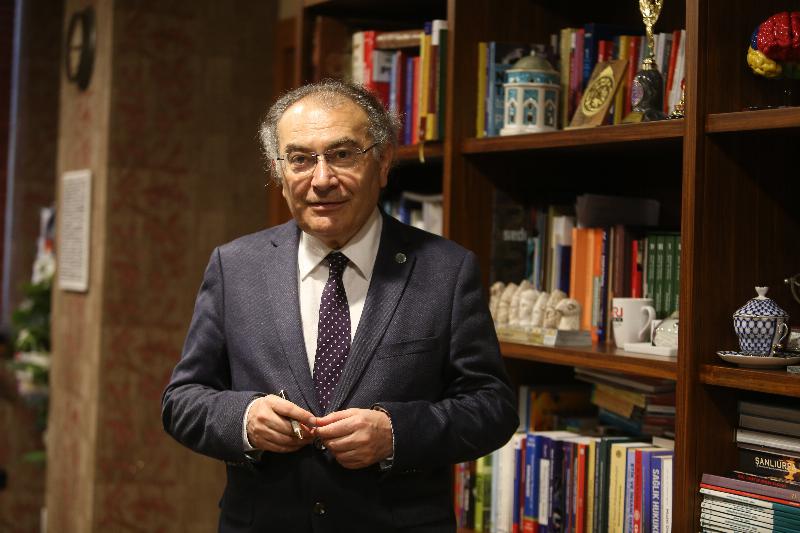
Üsküdar Üniversitesi Founding Rector, Psychiatrist Prof. Dr. Nevzat Tarhan, made evaluations regarding earthquake traumas developing in children and coping methods.
Children observe adults
Prof. Dr. Nevzat Tarhan pointed out that in traumatic situations like earthquakes, children observe their parents, saying, “When adults experience earthquake fear and there is a tremor, they fall into great terror. Children, in such situations, observe their elders. They particularly look at the people they trust. They watch with side glances. If adults are calm, meaning they act consciously about the earthquake, for example, if they know and apply 'drop, cover, and hold on' behaviors, children immediately do the same.”
Parents' calmness dispels children's fears
Prof. Dr. Nevzat Tarhan noted that preschool children cannot make sense of what they experience because their abstract thinking is not yet developed, stating, “When they experience such events, they need reference figures to understand the situation. These reference figures are people they have known and trusted before. In such situations, the calmness of the mother, father, or their caregivers, being protective and embracing towards the children, has a fear-reducing effect on children. Even older children who hadn't thought about this issue before have now started to learn about it.”
Preparing for an earthquake is important
Emphasizing the importance of being prepared for an earthquake, Prof. Dr. Nevzat Tarhan said, “Preparing for an earthquake is like preparing for a crisis. If a person is prepared for a crisis, they immediately act accordingly during the crisis, managing and overcoming it easily because they were prepared. That's why there is risk management in crises. If the risk is identified and then managed, measures are taken when the crisis comes. A person being prepared beforehand prevents this. Right now, if we don't teach our children what to do when an earthquake happens, the child will panic. It's not necessary for them to be in the affected region; children in Türkiye are currently experiencing secondary trauma.”
Uncertainty is what causes fear
Emphasizing the importance of being prepared for an earthquake in overcoming earthquake fear, Prof. Dr. Nevzat Tarhan warned, “These days, all mothers are telling their children who to call and where to meet in the event of an earthquake. School administrations are taking precautions. They provide information like, ‘In a possible earthquake situation, we will do this, we will take these measures, our assembly area is here.’ Everyone has now started developing written rules, which is actually a good thing. If we have moved to written rules, there will be no uncertainty; what causes fear here is uncertainty.”
Avoiding the earthquake agenda is not realistic
Emphasizing that it is not realistic to shield or keep children away from earthquake-related issues at the moment, Prof. Dr. Nevzat Tarhan said, “It's impossible for children not to hear about it. At the very least, they will hear it from their friends or certainly see it when they access a smartphone. Therefore, it's not about not making them hear it, but about explaining it in an age-appropriate manner. Earthquakes are a reality of our lives; 70% of Türkiye is in an earthquake zone. We will take precautions against such a possibility. When we raise awareness by saying, 'It's not the earthquake that kills, but non-earthquake-resistant structures,' the things we can control are preparation, and what we cannot control is after the earthquake has started. If a person is prepared, they will experience fear at a minimum, not a maximum, during the 1-2 minutes of the earthquake. I even say, let's teach a preschool child that a fish in an aquarium will die, independently of an earthquake. If we don't teach them, when the fish dies, the child will experience trauma with 10 times the intensity, but if they know that it will also age, that it has a lifespan, and will die when its time comes, they will be sad, but with an intensity of one.”
Should be seen as an opportunity for resilience training
Noting that the earthquake is an opportunity to provide resilience training to children, Prof. Dr. Nevzat Tarhan said, “Life's path is not always through rose gardens filled with flowers. On this path, there are stones, obstacles, and pitfalls. We need to prepare children for all of these; when we don't, children cannot act autonomously, and they become children with low resilience. They fall into depression from minor stress, and their mental health deteriorates. This earthquake is an opportunity to provide resilience training to our children; we even call these situations 'opportunity education.' It's necessary to share not only the comfort zones of life with children but also its responsibilities and difficulties. This period is an opportunity to share and mature our children. Past generations matured in scarcity, while current generations mature in abundance. Therefore, they expect everything to go well and nothing bad to happen, but this is an unrealistic expectation. The earthquake and the pandemic showed us a somewhat harsh face of life, its painful and challenging side, which is why we call these 'developmental traumas' for our children.”
Information should be given in an age-appropriate manner
Prof. Dr. Nevzat Tarhan stated that especially when giving children information about death, it is necessary to avoid providing age-inappropriate information, warning, “It is important not to tell children things that are not suitable for their age group, and not to narrate terrifying, horrifying stories. There is no single correct approach. It varies according to the child's background and level. It is necessary to talk to the child not in a formal 'sit down and talk' manner, but like a travel companion, having a conversation.”
Time limits should be set, children should not be allowed to watch news alone!
Prof. Dr. Nevzat Tarhan stated that during this period, especially when following earthquake-related news and developments, time limits must be set, warning, “Instead of not watching the news at all, a specific daily duration should be set for monitoring. We should make an agreement, for example, to watch earthquake-related news for half an hour. If the child is preschool-aged, they should not watch earthquake news alone; they should watch it under parental supervision. If a child is alone, they may not be able to make sense of it, and seeing people crying or trapped under rubble can make the child feel unsafe.”
Mental preparation should be made before sad news
Prof. Dr. Nevzat Tarhan noted that the approach to a child who has lost loved ones must also be correct, warning, “There is a proper way to deliver bad news. Even when a loved one is ill and bad news must be delivered, the child needs to be mentally prepared. If bad news is to be given to a child, such as the death of a relative, the information should be provided appropriately. In such situations, topics related to it are first introduced, and the news should be conveyed through a conversation, mentally preparing the child by discussing what death is and isn't. Such news should not be delivered abruptly.”
Share
Update Date: March 01, 2026
Creation Date: March 01, 2023
Request a Call
Other News
- The book that read today's digital threats in 2014: Being a Conscious Family
- Experts warn: 'Instead of memorizing letters, teach pencil grip, scissor use, and coloring'
- School fear and school love both start in the family!
- Family is not merely transforming, it is being battered under a serious assault
- Artificial intelligence opens the door to early diagnosis in autism!