

The Balkans and Middle East Brain Initiative Summit was held between July 1-2-3 by Üsküdar Üniversitesi and the Society for Brain Mapping and Therapeutics (SBMT). At the end of the summit, where nearly 50 scientists from countries like the USA, UK, Indonesia, Egypt, and Iran, who conduct global research on brain mapping, discussed the latest developments in brain diseases and treatments, a 20-point international agreement was signed. The international delegation called on policymakers to formulate brain health, disorder, and wellness policies based on scientific data.
Content
Scientists signed a 20-point international agreement for brain health.
SDG tags related to the news



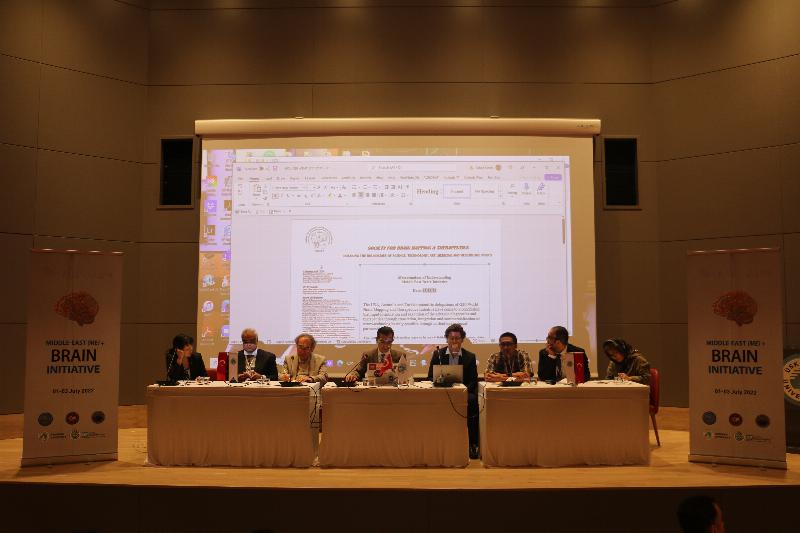
Üsküdar Üniversitesi NP Health Campus hosted an important summit for three days at the Balkans and Middle East Brain Initiative Summit with the aim of establishing a regional consortium on brain, spinal, and mental health. The summit, which addressed neurological disorders, brain surgery, neurology, neuroradiology, psychiatry, neurotechnology, neuroengineering, and related policies in the Balkans and the Middle East, brought together scientists from distinguished universities in Turkey and various countries around the world.
Agreement Reached on 20 Points
At the end of the very productive summit, which was also broadcast live on Üsküdar Üniversitesi TV and Üsküdar Üniversitesi official Youtube channel, a 20-point international agreement was signed, capable of developing interdisciplinary collaborations between countries on 20 strategic points.
The agreement included the following statements:
The US, European, Middle Eastern, and Indonesian delegations of the N20 Initiative have agreed on the following 20 points regarding the acceleration and implementation of neuro-diagnostics and treatments through the transformation, sharing, integration, and commercialization of neurotechnologies, which can be achieved through an international partnership.
The international delegation, in good faith, agrees to share resources, data, information, technology, and training programs through a well-defined and protected intellectual property system, capable of developing interdisciplinary collaborations between countries on the following 20 strategic points:
1- To follow a consortium approach to studying the human brain in the ME + Brain and N20 Initiatives, as well as to define multilateral mutually beneficial projects,
2- To conduct training courses for primary healthcare professionals for the early detection of neuropsychiatric/neurodegenerative disorders/AD and dementia,
3- To harmonize policies related to the Middle East and Global/N20 / standardization of data sharing, allocation, and usage, and to create predictive, preventive, diagnostic, and prognostic foresight models,
4- To prioritize the neuro-economic assessment of the future impact of predictive, preventive, diagnostic, and prognostic measures for brain / mental / spinal disorders in the Middle East, Balkans, and North Africa,
5- To facilitate the translation, integration, and commercialization of innovation and research-based neuro-technologies,
6- To organize K-12 education (bio-behavioral courses) to raise awareness about brain and behavioral health in individuals,
7- To establish the integration of a regional database connecting big data, biobanks, and clinics in the region for neuro-psychiatric/spinal disorders in the Middle East, in accordance with local and regional regulations,
8- To adopt a patient-centered and inclusive approach for research, education, advocacy, and innovation for neuro-psychiatric/spinal disorders,
9- To educate the public about 'brain' awareness, for example, by utilizing techniques such as breath-based meditation and psychological resilience,
10- To create and implement cost-effective and non-invasive neuro-screening (brain, behavior, and mental health) methods,
11- To integrate N20/ME+ regulations and guidelines regarding clinical trials, telehealth, and drug/device combination discovery and development,
12- To establish global partnerships and new funding schemes for N20 initiatives (basic and clinical science) among academics, medical associations, education, government, industry, for-profit, and non-profit organizations,
13- To involve global organizations such as WHO, NIH, World Bank, National Funding Agencies, IMF, World Economic Forum, UNESCO, IFC, and UN, industry leaders, parliaments, and the US Congress and the White House in the policies developed by the N20/ME+ initiative,
14- To address underrepresented minorities and underserved communities/clinics and projects in cooperation with regional, local government, and NGOs, as well as the global organizations mentioned in Article 13, to promote quality and equity of care,
15- To expand the ME+ Initiative to North Africa and the Balkans,
16- To establish strategic cooperation between grassroots and governmental agencies to facilitate the above guidelines,
17- To address the mental health needs of caregivers and care providers,
18- To develop and expand the Women in Neuroscience Group (WING) to educate and train the next generation of women scientists in the region,
19- To address the neuro-psychiatric needs of the elderly and children,
20- To perpetuate the partnership for the above objectives.
Priority Agenda:
A) India Brain Initiative, October 12-15, 2022
B) N20 in Indonesia, November 12-14, 2022
C) To prepare a follow-up report for the N20/ME+ initiative
D) To decide the date and location of the second annual ME+ summit
The international delegation calls on policymakers to formulate brain health, disorder, and wellness policies based on scientific data.”
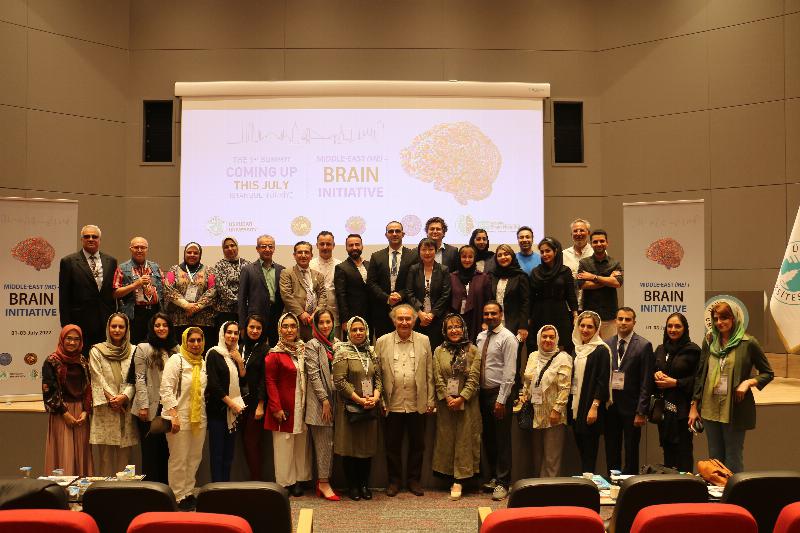
Certificates were also presented to participants…
At the summit where the 20-point agreement was signed, certificates were also presented to the participants.
Share
Update Date: March 01, 2026
Creation Date: July 06, 2022
Request a Call
Other News
- Social responsibility courses moved to the field
- Erasmus+ Orientation Week completed at Üsküdar
- Prof. Nevzat Tarhan: “Brain secretes ‘dark glue’ in social media lynchers!”
- Prof. Nevzat Tarhan: “Every segment of society should be able to say, ‘This constitution is my constitution!’”
- OHS releases guide for safe operation of industrial robots