

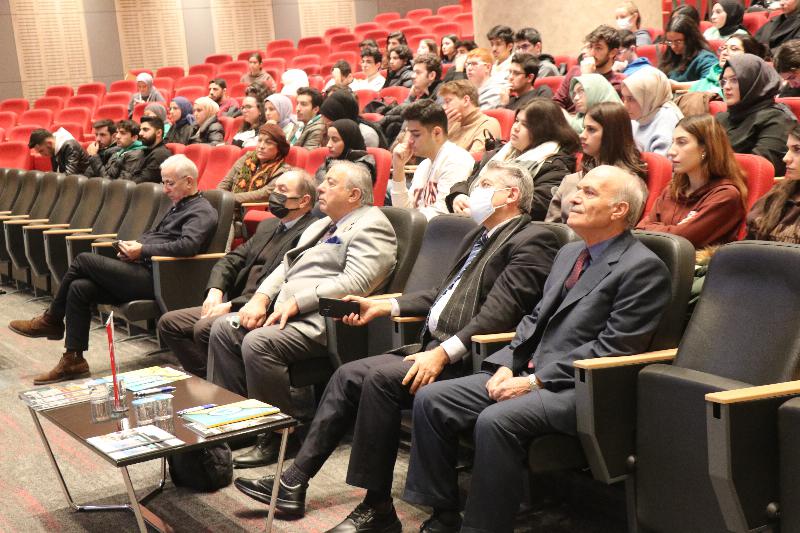
The seminar titled 'Change and New Trends in Medical Education,' organized by Üsküdar Üniversitesi Faculty of Health Sciences within the scope of the University Culture Course, was held in the Ibn-i Sina Auditorium. The opening speech and moderation of the seminar were delivered by Prof. Dr. Hikmet Koçak, Vice Rector of Üsküdar Üniversitesi and Head of the Department of Cardiovascular Surgery at the Faculty of Medicine.
Content
Science Board Member Prof. Dr. Recep Öztürk Meets Healthcare Professionals in Üsküdar
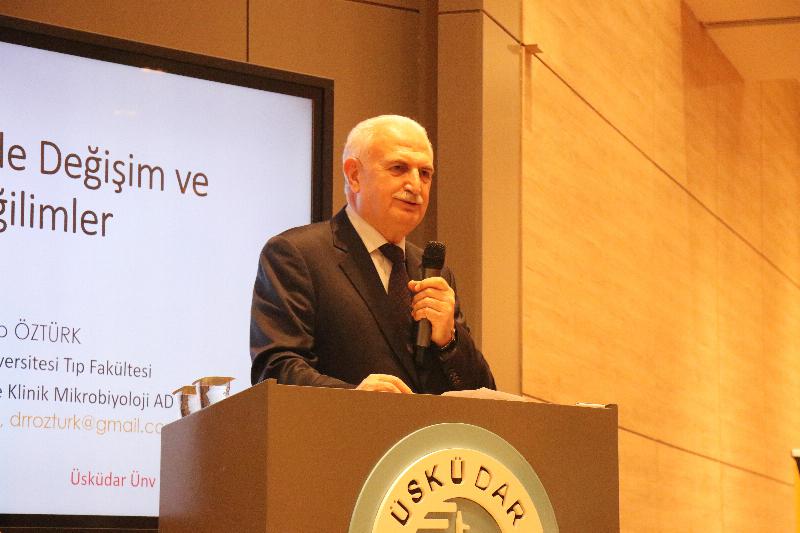
Prof. Dr. Recep Öztürk, Advisor to the Rector of Istanbul Medipol University, Head of the Department of Infectious Diseases and Clinical Microbiology at the Faculty of Medicine, and also a member of the Ministry of Health Science Board, attended the seminar as a guest.
Prof. Dr. Hikmet Koçak: “Investment in health is not a waste”
Prof. Dr. Hikmet Koçak, Vice Rector of Üsküdar Üniversitesi and Head of the Department of Cardiovascular Surgery at the Faculty of Medicine, emphasizing the importance of staying current in medicine and discussing the responsibilities of teachers and students in the healthcare field, stated, “Health is a matter that concerns us all. Investment in health is not a waste. As the future generations who will practice healthcare, you need to be trained in the best possible way, and you need to follow current developments closely. Hippocrates has a saying: 'First, do no harm.' We should not misunderstand this saying. Not doing harm does not mean not touching the patient. If a patient comes to you and you distance yourself from them due to lack of knowledge or self-distrust, that too is doing harm. Therefore, our duty is to train you in the best possible way and make you a part of the healthcare army. Your duty is to learn knowledge in the best way and to become courageous physicians who are confident and know what they are doing. As with all fields of education, there are current changes in medicine. We must not miss this train. If you stick with what you learn today, you will have learned incompletely tomorrow. If we had stayed fixed with what we learned years ago, we would be far behind today. Therefore, you need to constantly research and learn.”
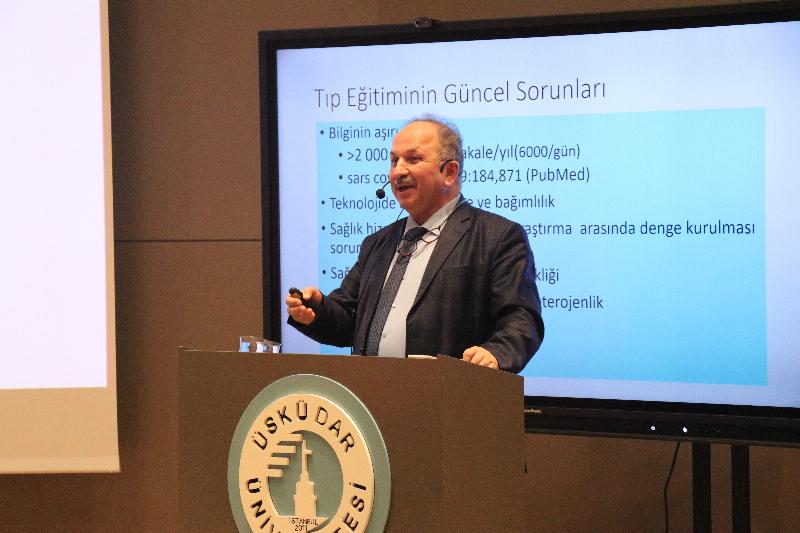
Prof. Dr. Recep Öztürk: “We will constantly update ourselves”
Prof. Dr. Recep Öztürk, a member of the Ministry of Health Science Board, emphasized that there are changes in medical education with developing technology: “If we look at the cornerstones of medical education today, it requires a quality and dedicated workforce. The quality, interest, and dedication of both the person providing and the person receiving the education are very important. Significant infrastructure and technological equipment are crucial. Because we are in a field where change and innovation are most prevalent. Knowledge changes, approaches and technology change. Managing change here is an art. When evaluating medical education, it should be assessed from a holistic perspective. It is necessary to interpret the relationships between the components well. The entire world is discussing medical education problems. Each country has its unique issues. Especially with developing technology, the increasing complexity and costliness of education and patient care exacerbate these problems. We will constantly update ourselves, but despite that, we must always think that what we don't know is far greater than what we do know. Today, we talk about change, but without values, others are not of great importance. We will first establish values,” he said.
Prof. Dr. Recep Öztürk: “Medicine is an art dedicated to humanity”
Öztürk, dwelling on the personal qualities a physician should possess, said: “A virtuous physician is competent in their field, updates themselves, synthesizes the old and the new, and possesses high moral qualities filled with love, compassion, and respect for humanity. We can describe such a personality as one who applies the indispensable values of our civilization, practices science, shows respect to their mentors, regards colleagues as siblings, is humble, sincere, content, loyal, patient, does not discriminate against patients for any reason, can read their patients' eyes, can let their patients read their eyes, can empathize and put themselves in their patient's shoes, can establish honest communication, is unprejudiced and attentive to rules of courtesy and manners – in short, a personality committed to the values conveyed by our mentors as deontological rules. If we have a deficiency in our behavior towards the patient, knowledge and skill are not important at all there. Of course, if knowledge is zero, the others are also useless for medicine. We must do things to improve all these aspects from scratch. Therefore, humanities in medicine must definitely be included in our curriculum. We must establish a relationship between medical history, medical humanity, medical anthropology, and art. Because medicine is an art dedicated to humanity,” he concluded.
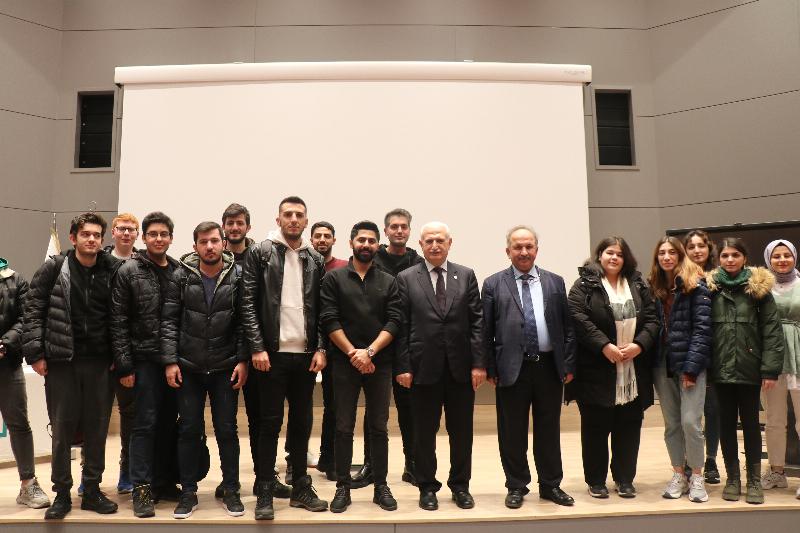
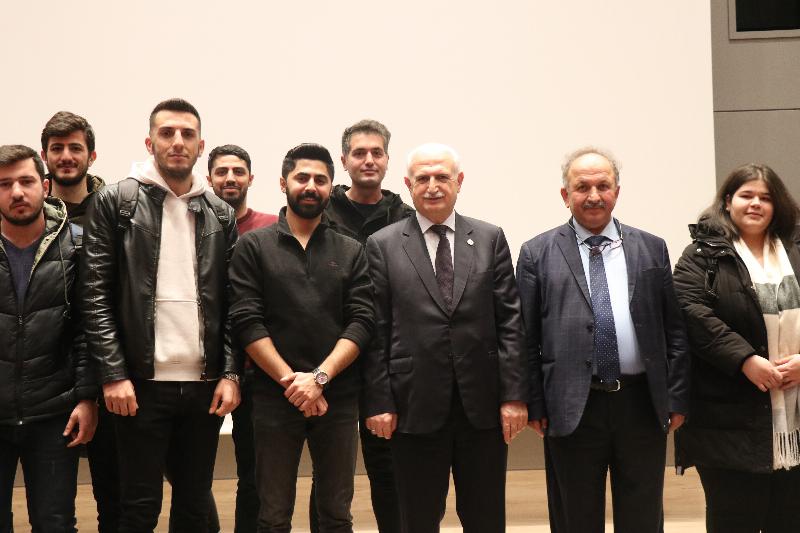
The seminar concluded with a group photo session after students' questions were answered.
Share
Update Date: March 01, 2026
Creation Date: January 06, 2023
Request a Call
Other News
- The book that read today's digital threats in 2014: Being a Conscious Family
- Experts warn: 'Instead of memorizing letters, teach pencil grip, scissor use, and coloring'
- School fear and school love both start in the family!
- Family is not merely transforming, it is being battered under a serious assault
- Artificial intelligence opens the door to early diagnosis in autism!