

Russian literature and culture were discussed from many aspects over 2 days at the event held at Üsküdar Üniversitesi. Speakers, including prominent figures such as poet and writer Ataol Behramoğlu, Russian House Director Aleksandr Solniçenko, translator Uğur Büke, and screenwriter-director Alp Armutlu, drew attention to the social, cultural, and artistic similarities between Russia and Turkey. While writer Behramoğlu stated, “While studying Russian Literature, I came across the magnificent relations with Turks,” Russian House Director Assoc. Prof. Dr. Aleksandr Sotniçenko said, “Together with Turkey, we will solve the Eurasian problems.”
Content
‘Russian Literature and Culture Days’ seminar held in Üsküdar
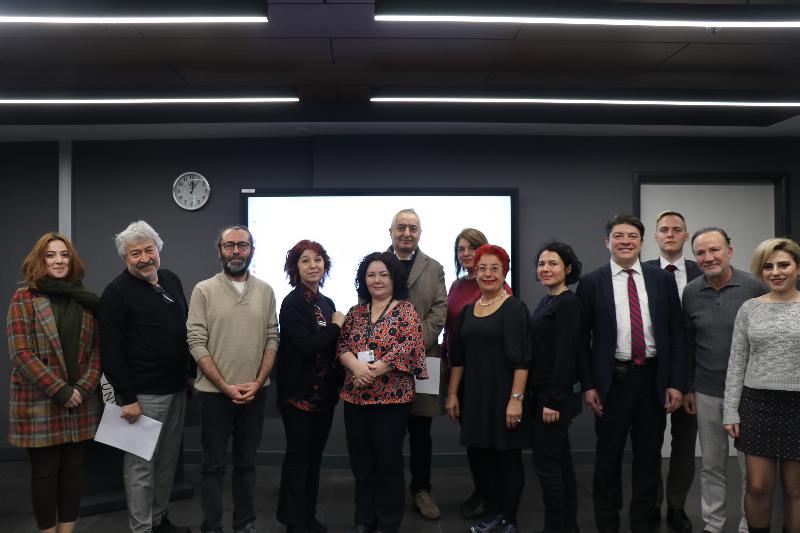
Russian House Director Assoc. Prof. Dr. Aleksandr Sotniçenko: “We will solve Eurasian problems together.”
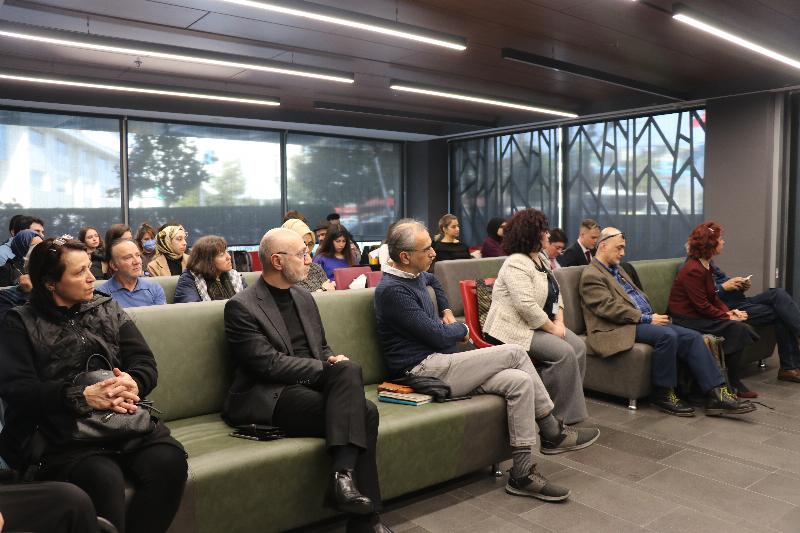
Attendance was very high for the two-day seminar on ‘Russian Literature and Culture Days,’ organized by the Faculty of Humanities and Social Sciences as part of the University Culture course.
The seminar was held at the South Campus, moderated by Prof. Dr. Havva Kök Arslan, Head of the Political Science and International Relations Department at the Faculty of Humanities and Social Sciences (İTBF) and also Director of the PPM (Political Psychology Application and Research Center); Assoc. Prof. Dr. Feride Zeynep Güder, a faculty member of the English Translation and Interpreting Department at İTBF and Deputy Director of PPM; and Güler Kalay, Deputy Director of PPM.
On the first day of the seminar, Turkish poet and writer Ataol Behramoğlu, screenwriter and producer of the book and documentary “Umudun Yolu” (The Path of Hope) Alp Armutlu, and Üsküdar Üniversitesi Faculty of Communication Lecturer Journalist Gökhan Karakaş participated as speakers. The opening speeches of the seminar were delivered by Prof. Dr. Havva Kök Arslan and Üsküdar Üniversitesi Vice-Rector Prof. Dr. Muhsin Konuk.
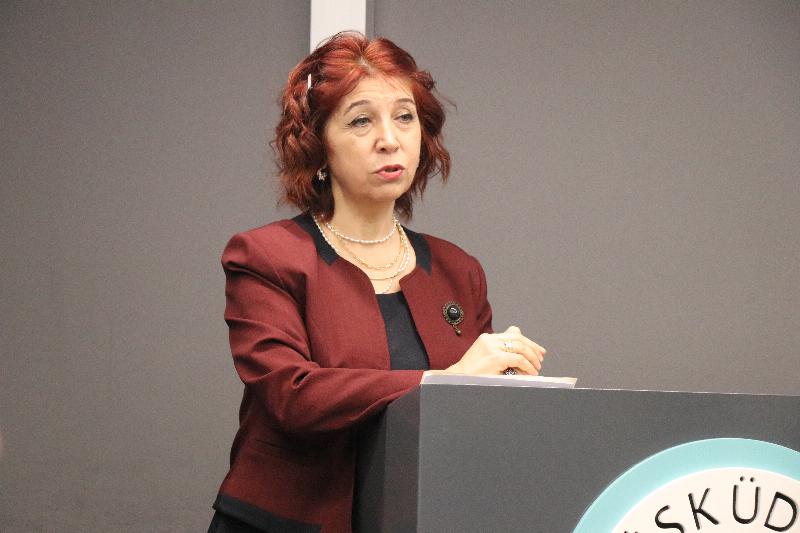
Prof. Dr. Havva Kök Arslan: “We lived in peace for 300 years”
Prof. Dr. Havva Kök Arslan stated that Russian Culture and Turkish culture have influenced each other: “We had been thinking about this program for a very long time, and we are very excited to realize it today. Looking at Russia-Turkey relations and culture, it was both good timing and a time when everyone was questioning, but we are happy to have held this program. As an International Relations researcher, when we look at Russian-Turkish history, there is much talk of wars since 1074, that is, since we lost Crimea, but in fact, in over 300 years of history, we haven't actually fought that much. We actually fought for 11 years. We lived in peace for the remaining 300 years. It's not that much when we look at other countries in European history. Ultimately, when we look at the collapse of the Russian Empire and the Ottoman Empire, they almost perfectly coincided. If we consider our births as both the Soviet Union and the Republic of Turkey, our births occurred on very similar dates. The aid of the Soviet Union in the Battle of Çanakkale was very critical. As neighbors, we have also influenced each other culturally. Russian Culture, in particular, has been greatly influenced by Turkish Culture. This is because they lived in close proximity with both the Ottoman Empire and the Asian Turkic peoples. Today, we have gathered here to discuss how much Russian culture has influenced Turkish culture.”
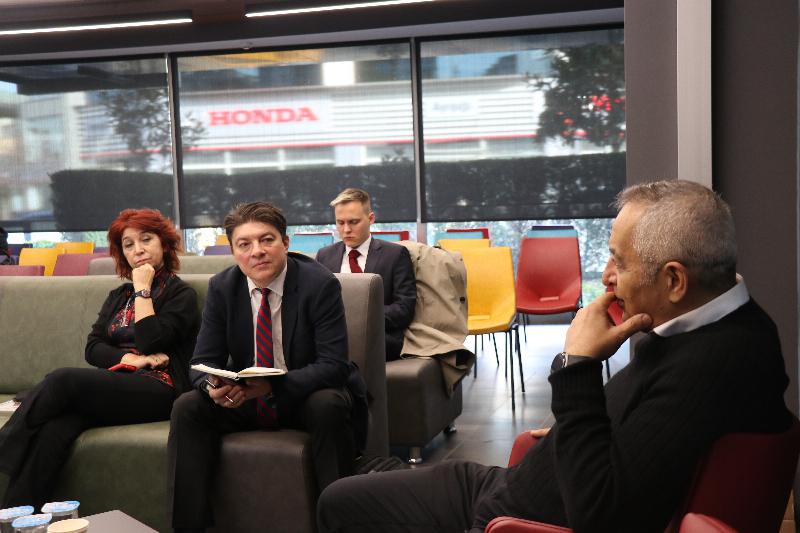
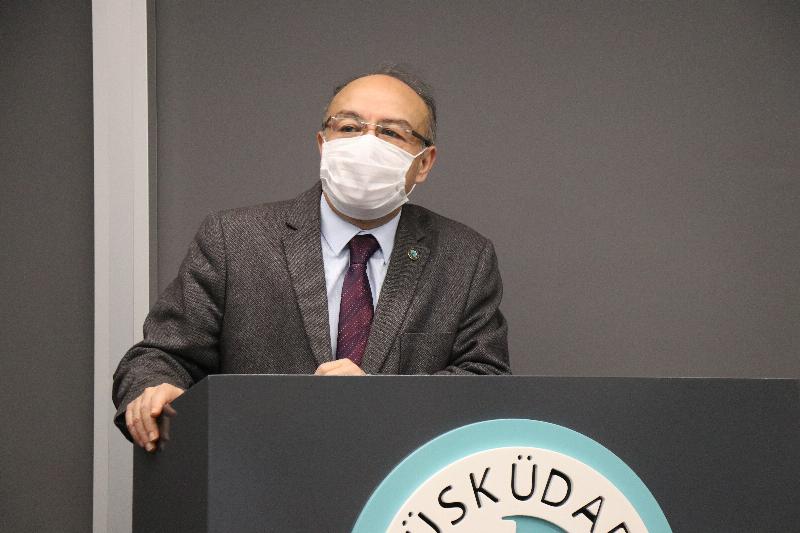
Prof. Dr. Muhsin Konuk: “Our goal is to open a Russia Studies Center in Üsküdar”
Prof. Dr. Muhsin Konuk stated that nations need to unite for states to have close relations: “There is such a serious relationship between Russia and Turkey that in these relations, let's forget about fighting and war. We believe that the Yunus Emre Institute and the Russian House should jointly establish bridges of Civilizations and Cultures, and through these bridges, the rights of the two nations should merge even more. I am honored that this meeting was held specifically at Üsküdar Üniversitesi. Our goal is to open a Russia Studies Center at our university as soon as possible. I believe that this center will also undertake very successful works. In interstate relations, if there are no cultural ties, if nations and peoples do not unite with each other, interstate relations do not last very long either. I hope this meeting will be a concrete step, and I thank you all.”
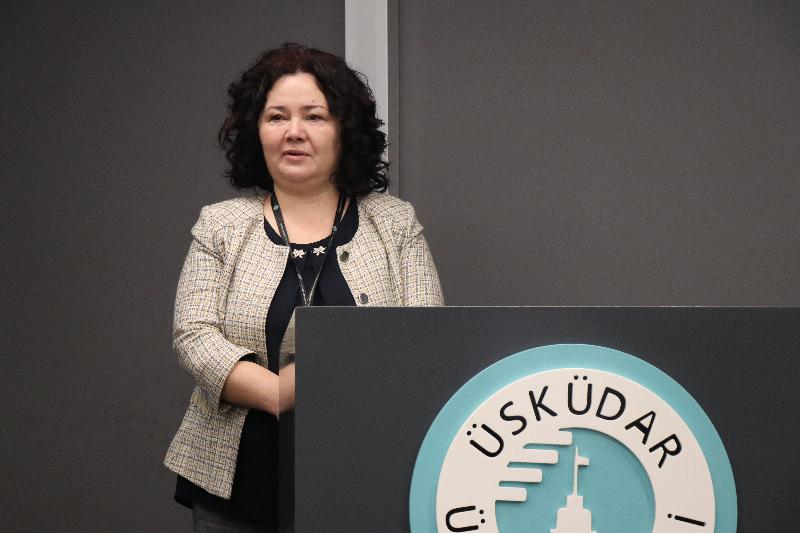
Dr. Güler Kalay: “Political culture is very important in nation-state relations”
Kalay stated that Russian and Turkish Cultures are based on close relations: “As the PPM Center, we felt the need for such an event because, as we all know, political culture is very important in the relations between nations and states. The language and socio-cultural structure of societies are extremely important in the formation of political culture. In our relationship, which began centuries ago as Turkish and Russian societies, the mutual structure of these cultures are very important factors in our state traditions. For this purpose, as the Political Psychology Center, we wanted to introduce Russia, our very close neighbor with whom we have very close political and sociological relations, with its literature and theater. That is why we organized this event.”
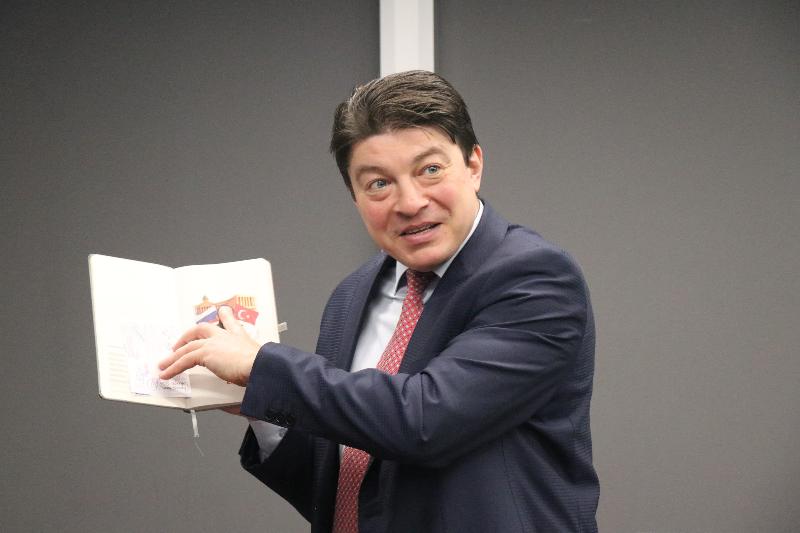
Russian House Director Aleksandr Sotniçenko: “We fought against imperialism together”
Assoc. Prof. Dr. Aleksandr Sotniçenko, Director of the Russian House, spoke about the projects they undertook for Turkey-Russia relations and stated that it is possible to live in an environment of peace: “We had projects. One of our projects is about Dostoevsky's book. 2021 was Dostoevsky’s 200th birthday. We organized a ceremony in Eskişehir together with Ataol Behramoğlu. We carried out works there such as theater and music. This year, we undertook a project because it is the 100th anniversary of the Republic of Turkey. As two independent states, Russia and Turkey, we signed the Moscow Agreement. This is a fraternity agreement. We fought against imperialism together. This will be a symbol of Russia and Turkey's cooperation. We need to know this. Voroshilov was very famous because there are gifts from Voroshilov to Mustafa Kemal Atatürk. This year will be Voroshilov’s 90th anniversary. As the Russian House, we want to hold a large exhibition in Ankara. If we also consider Iran; as three independent states, we want to be independent. Together, we will solve the Eurasian problems. I hope we will solve the Syrian problem soonest. If there are other problems in the Caucasus, Azerbaijan, Armenia, we can do it all together. Because we live in Eurasia. There is no need for war. Refugees came, and this is not important to us. I hope that as Russia and Turkey, we want to solve the most important problem.”
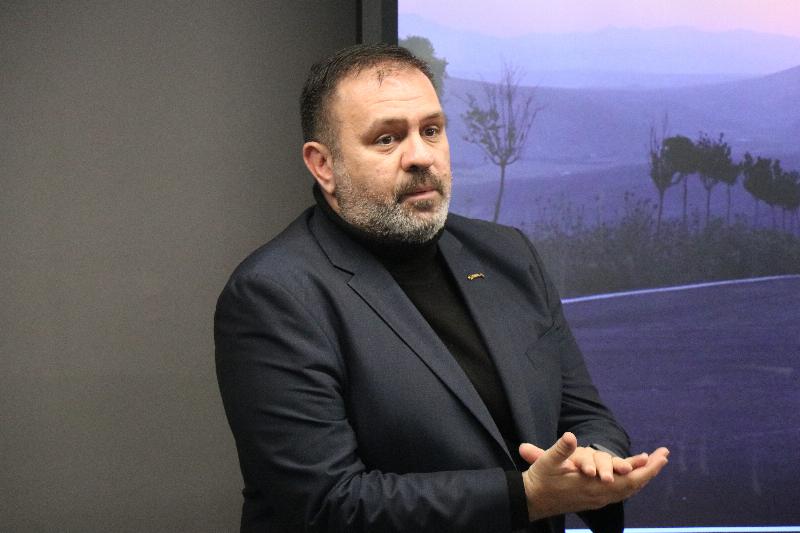
Alp Armutlu: “We will broadcast ‘The Path of Hope’ documentary in Moscow”
Alp Armutlu, describing the genesis of his written and directed documentary “Umudun Yolu” (The Path of Hope): “The documentary 'The Path of Hope' tells the contribution of Anatolian women to the Turkish War of Independence with their oxcarts along the 344 km route between İnebolu and Ankara. Taking advantage of the pandemic period, I penned the book 'Umudun Yolu.' Later, with the support of businessmen who read this book, I turned 'Umudun Yolu' into a documentary. The name and design of 'Umudun Yolu' belong to my wife, İnci Armutlu. Together with Aleksandr Solniçenko, the Director of the Russian House, who also appeared as an actor in the documentary, we will most likely work on its screening on TV channels or in cinemas in Moscow. Using an oxcart for 344 km is not easy. Don't worry about this, because no woman started from İnebolu and came directly to Ankara. They made it into a 40 or 50 km relay race.”
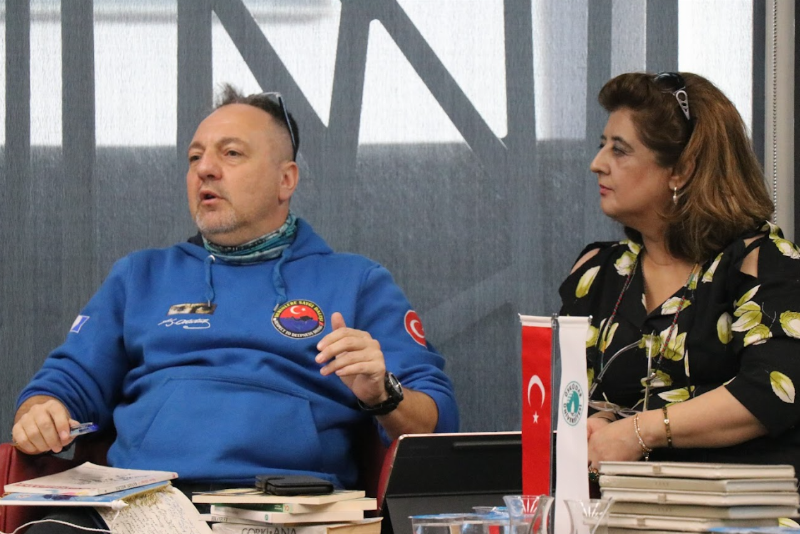
Journalist Gökhan Karakaş: “Weapons from Soviet Russia ensured the victory of the War of Independence”
Karakaş, who joined “The Path of Hope” documentary and expressed his gratitude to Alp Armutlu, stating that the War of Independence was won under difficult conditions: “I also joined Alp Armutlu's project. We are two friends who come from the culture of Kuvâ-yi Milliye and are followers of Atatürk's revolutions. I am grateful to him for inviting me. I am happy to be part of this project. I want to underline that everything started with Atatürk's letter to Soviet Russia on April 26, 1920. If that letter hadn't existed, Alp and I might not be here today. Perhaps Turkey wouldn't exist either. Because the weapons from Soviet Russia ensured the victory of the War of Independence. This war was won by delivering weapons from Soviet Russia to Anatolia. We have no information on how much aid in weapons was provided. Unfortunately, there is no academic study on this. Alp taught me that the documentary 'Umudun Yolu' means 'Independence Road'. The 344 km road from İnebolu to Polatlı needs to be known. The naval capacity of the occupation forces was 350 thousand tons. The Turkish Kuvâ-yi Milliye navy was approximately 60 thousand. There is such a big difference. We are talking about 8-10 sailboats defying an imperialist giant. What a defiance. What a challenge. We defied it and won. Young people should be given homework on this. They should go and camp on the Independence Road. Set up tents. Make a fire. Alp and I will do this this year. We will walk the entire route. This should be a homework. It should be a graduation thesis. This topic should be researched. If researched, we will have clearer information on how the War of Independence was won.”
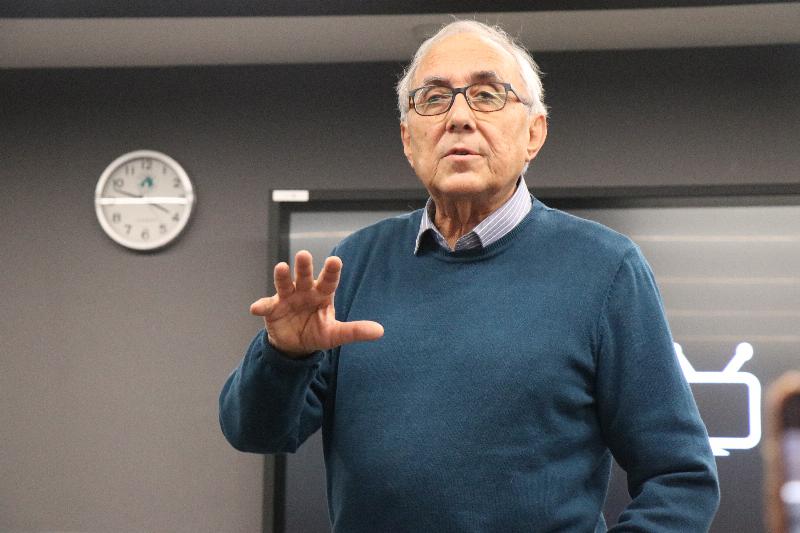
Ataol Behramoğlu: “While studying Russian Literature, I came across the magnificent relations with Turks”
Behramoğlu, speaking about Russian and Turkish culture during his discussion on Russian literature: “We need to know the history of our War of Independence by heart. That’s not so easy. We must memorize it. We need to know by heart everything that happened from May 19, 1919, through April 23, 1920, up until the Republic, whose 100th anniversary we are celebrating. If we had lost at Sakarya, there would be no Turkey and no Turkish today. Nothing would exist. That’s why we must know these by heart. Our existence lies beneath that success in the War of Independence. Russia’s help is a significant event. I also tried to tell it in my own way in 'Mustafa Suphi Destanı' (Epic of Mustafa Suphi). The starting date of Russian Literature dates back to the 11th century. The Russians’ acceptance of Christianity and the Turks’ acceptance of Islam occurred at roughly the same time during that period. While studying Russian Literature, I always found that their relations with Turks were magnificent. In fact, Russian and Turkish are two languages intertwined with each other. The themes are similar too. They show the 15th-century Ottoman Sultan as an example to the 16th-century Russian Prince. How is it that while the 15th-century Ottoman Sultan was shown as an example in the 16th century, Russia rapidly gained ground, and Turkey fell behind by 100 or 200 years? The reason for this is that the first book in Russia was printed in 1564. This was delayed in Turkey. The Academy of Sciences was founded in Russia in 1725. When we adopted the printing press in 1720, the Russians founded the Academy of Sciences in 1725. In Russia, there was a terrible system of serfdom from the 11th century to the 19th century. Peasants had no rights whatsoever. I observed these with astonishment while studying Russian literature. The answer to why 19th-century Russian literature is more populist than French or English literature is the story of serfdom. Most writers played with peasant children on the farms. When they started becoming writers afterward, they began to understand the injustices. In 1812, Russia was invaded by Napoleon. Russian officers entered Paris. They fought shoulder to shoulder with the children of the people. They fought with those peasant children and got to know the people much better there. Therefore, Russian literature is a populist literature.”
Following the closing speech by writer Ataol Behramoğlu, Prof. Dr. Havva Kök Arslan presented certificates of appreciation to the speakers. The first session of the Russian Literature and Culture Days concluded after a group photo shoot.
Üsküdar Üniversitesi Faculty of Humanities and Social Sciences tarafından Üniversite Kültürü dersi kapsamında düzenlenen ‘Rus Edebiyatı ve Kültürü Günleri’ konulu seminerin ikinci oturumunda yine alanında önemli isimler yer aldı. PPM Deputy Director Dr. Güler Kalay moderatörlüğünde gerçekleştirilen seminerin ikinci gününe konuşmacı olarak Alfa Yayınları General Publishing Manager Mustafa Küpüşoğlu, Translator Uğur Büke, and Theater Director Musa Arslanali participated as speakers.
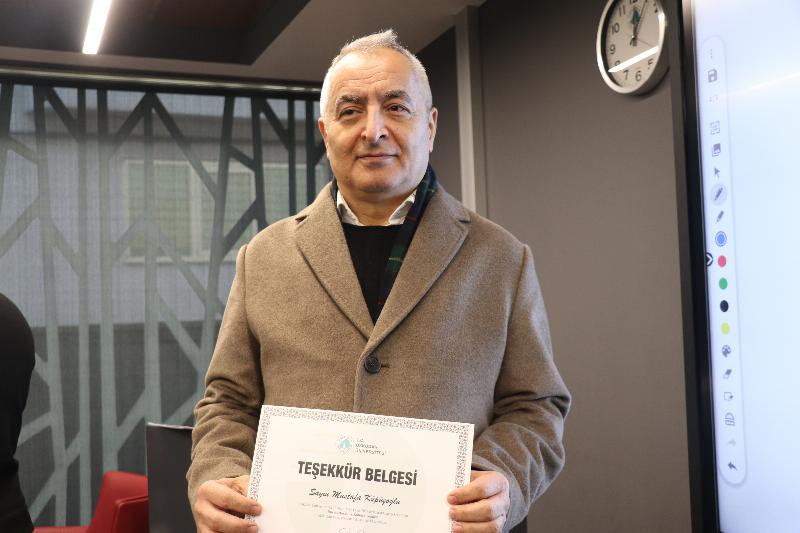
Mustafa Küpüşoğlu: “Russia and Turkey are similar in modernization”
Mustafa Küpüşoğlu, addressing why he primarily focuses on Russian works: “Alfa is a very large publishing house. It publishes many books. It is also a mainstream publishing house, naturally showing special interest in classics. My preference is to primarily focus on Russian works among the classics. I believe the Turkish literary world is very fond of Russian classics. Because when we say classics, the first country that comes to mind for us is Russian classics. I think the modernization process is very similar for both countries. Their literature has many common aspects parallel to this modernization. Turkish and Russian readers like to read literature somewhat alongside politics. Political tensions, economic ups and downs in the environment push readers towards classic books. It’s actually a psychological inclination. There is also an interest in Turkish literature in Russia. There was an Orhan Pamuk craze for a while.”
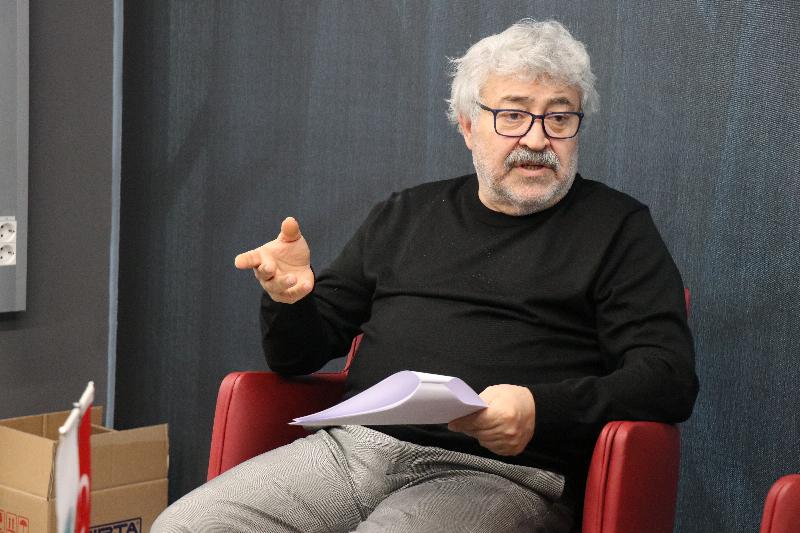
Translator Uğur Büke: “Chekhov is a different personality, both personally and literarily”
Uğur Büke, commenting on Chekhov's works: “Chekhov has a distinct place in Russian Literature. Because Chekhov is a different personality, both personally and literarily. His worldview is very different. He does not resemble other writers at all. Generally, 99% of the writers we can now call classics come from the noble class. They write because they have all the time in the world. This includes Tolstoy. Chekhov’s grandfather was a serf. Therefore, alongside Chekhov and Dostoevsky, a different literature emerges outside of these. Of course, there is a worldview shaped by poverty and the impact of the education he received. Chekhov becomes a doctor. But still, money is not enough, and he starts writing short stories. He continues that way. Especially in the 1880s, he captures the changes in society. He is a writer who can observe his surroundings very well. The fundamental reflection of daily life is in all of Chekhov’s plays. He has 15 major plays. Almost all of them are performed all over the world. His stage is very natural and clear.”
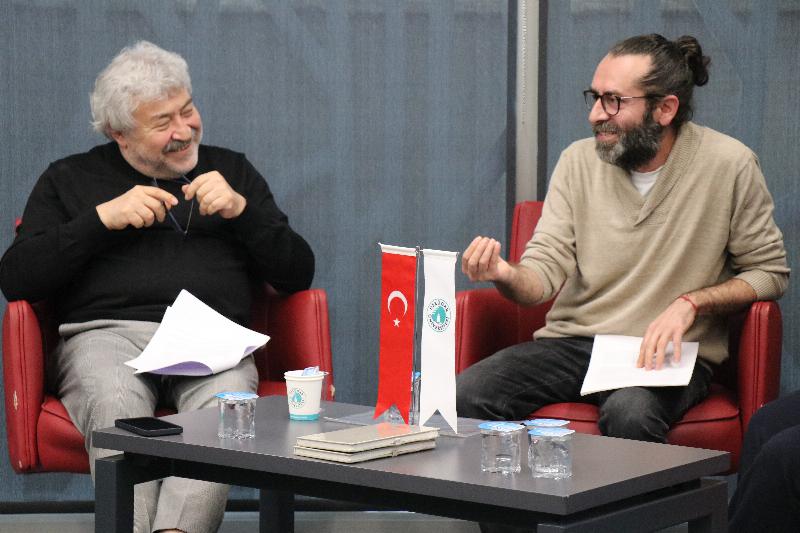
Theater Director Musa Arslanali: “The moment we overcome that small-town malaise, Turkey will advance much further”
Musa Arslanali, speaking about the dramatic structure in Chekhov's works: “Chekhov is a classic because he reflects today. Even when we read him 300 years later, we find something relevant to today. In theater, when a text is very long, we cut certain parts. But you cannot do this with Chekhov. He has built it with such a solid dramatic structure in terms of language that if you drop a single word, it feels as if the entire structure will collapse. The characters are generally the same. A small town and the malaise there, the negativity created by the transition period for people, and the thought of how to move on to something new. We always see modernization in Chekhov. For example, the train metaphor is always present. That train tries to convey the idea, ‘One day we will leave this small town.’ But unfortunately, they cannot. In that small world, they usually devour each other. Chekhov constantly creates a love triangle in his plays. These are always hopeless loves. We see examples of absurd theater. That continuity, the conversations, stagnant dialogues, constant drinking, and a state of hopelessness are observed. In our society too, there is a constant state of worrying. I have always likened the family I grew up in to the world Chekhov created. I think we are experiencing this problem in Turkey, just as Chekhov depicted. The moment we overcome that small-town malaise, Turkey will advance much further.”
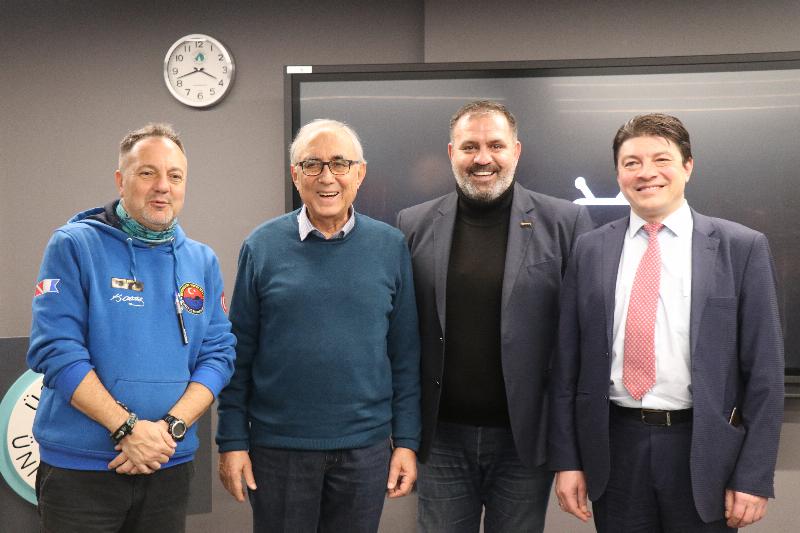
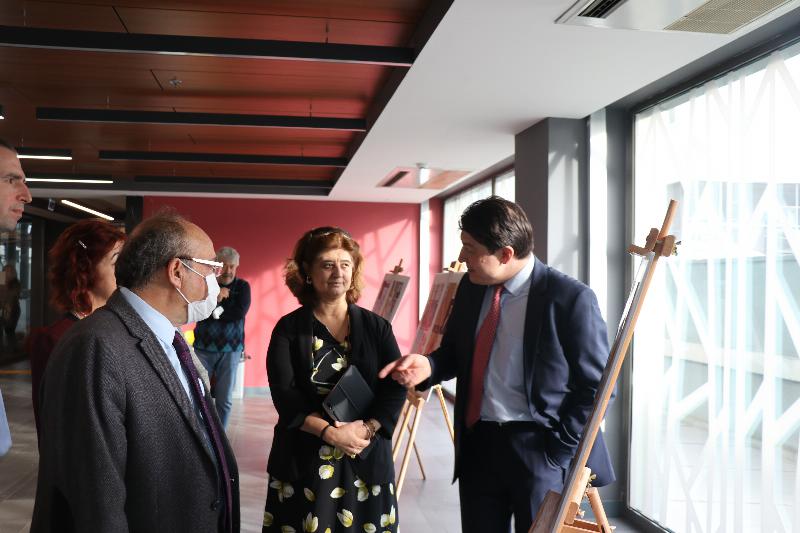
The seminar, which attracted intense interest and participation from important figures, concluded with Dr. Güler Kalay presenting certificates of appreciation to the participants and a group photo session. Following the seminar, the Russian Classical Writers Art Exhibition was visited.
Share
Update Date: March 01, 2026
Creation Date: January 20, 2023
Request a Call
Other News
- Social responsibility courses moved to the field
- Erasmus+ Orientation Week completed at Üsküdar
- Prof. Nevzat Tarhan: “Brain secretes ‘dark glue’ in social media lynchers!”
- Prof. Nevzat Tarhan: “Every segment of society should be able to say, ‘This constitution is my constitution!’”
- OHS releases guide for safe operation of industrial robots