

Although the European Union was established to make the pains of World War II forgotten, Russia's declaration of war to invade Ukraine has revived traumas. Experts point out that the European Union has provided arms aid to a country at war for the first time in its history, stating that there will be very serious changes in the EU in the future.
Content
Russia's Invasion Revived Traumas!
Can Ukraine become an EU member?
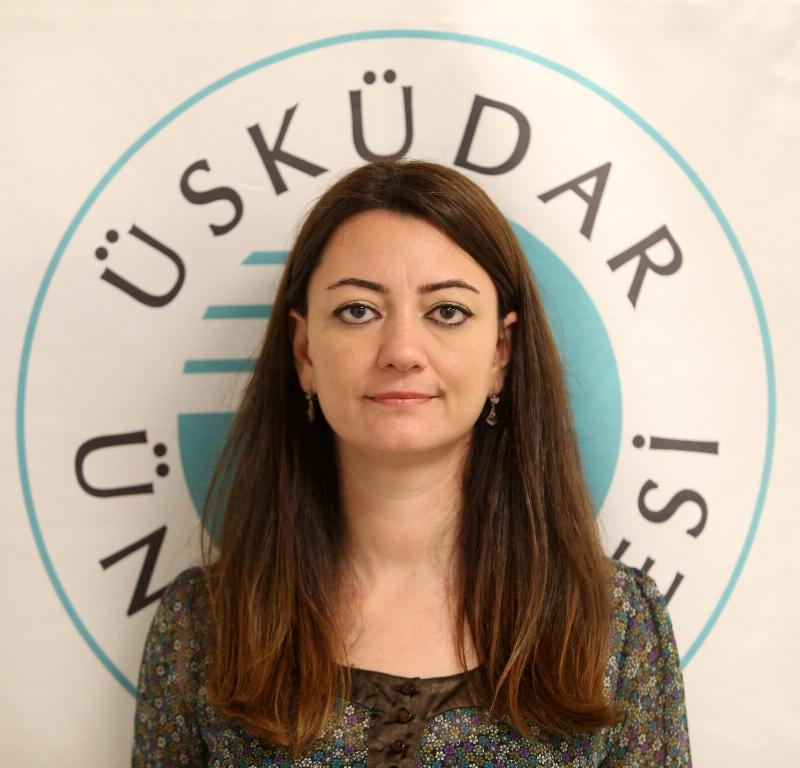
Assoc. Prof. Nergiz Özkural Köroğlu, faculty member at Üsküdar Üniversitesi Faculty of Humanities and Social Sciences, Department of Political Science and International Relations, made evaluations regarding Ukraine's EU membership process, which is currently in a hot war with Russia.
Russia's invasion revived traumas
Assoc. Prof. Nergiz Özkural Köroğlu stated that the European Union was actually established to ensure peace, adding, “The European Union was founded to make all the sufferings of World War II forgotten and to overcome traumas. A climate of peace was created, but with Russia's invasion, traumas were revived. As a result, a climate of fear emerged with questions like 'Will war happen again in Europe?'”
Can Ukraine become an EU member?
Assoc. Prof. Nergiz Özkural Köroğlu reminded that the European Union has a very cumbersome bureaucratic structure and continued his words as follows:
“Not immediately within two or three days, but after these conflicts cease, an EU membership perspective could be offered to Ukraine for the first time. After the conflicts stop, EU candidate status could be granted. From this point, two options can be considered. The first option is that an 'open-ended' negotiation process, similar to the one Turkey has been conducting, could be initiated with Ukraine and continued for many years. The second option is to present a new European Union model, based on flexible integration models like intertwined circles centered around France and Germany, where Ukraine is positioned in more outer circles, with fewer powers, participating in some policies but not others. This can also be considered a possibility.”
A large part of the Ukrainian people do not want Russian influence
Emphasizing that Ukraine is a country caught between Europe and Russia, Assoc. Prof. Nergiz Özkural Köroğlu said, “We can also describe Ukraine as a buffer state. We can say that the western part of Ukraine, especially the former Galicia region, is entirely a part of Europe with its historical, cultural, and architectural structure. The spoken language is Ukrainian. Additionally, we see the dominance of the Uniate Church, which is under the influence of the Catholic Church, in the western part. In the eastern part of the country, Orthodox Churches are dominant. Since the collapse of the USSR, we have seen the EU trying to convey European identity norms, understanding, and values to Ukraine. In the 2004 Orange Revolution, the people, especially in the Western part, took to the streets. They gave the message, 'We want to be a part of the European Union.' In the Maidan Revolution of 2013-2014, the people again took to the streets saying, 'We want the Partnership Agreement to be signed, we do not want Russia's influence.' We observe that Western Ukraine has long been Europeanized, while the Russification effect still continues in the East. There is a conflict of identity here.”
The European Union's perspective did not satisfy Ukraine
Assoc. Prof. Nergiz Özkural Köroğlu stated that Ukraine has long wanted to join the European Union, adding, “However, the European Union never offered this perspective. With the European Neighbourhood Policy, they presented a perspective of strengthening cooperation since 2004. But this situation never satisfied Ukraine and created complete disappointment. Because they genuinely wanted to become members. Perhaps the European Union also made mistakes here. I believe the EU should have approached Ukraine with much different policies.”
European Union provides arms aid to a country for the first time
Assoc. Prof. Nergiz Özkural Köroğlu pointed out that for the first time in its history, the European Union is providing arms aid to a country at war, stating, “This is a very important point. The EU does not have its own army and secures its defense under the NATO umbrella. It has been trying to develop a common foreign and security policy for so long but has not been able to reach the stage of establishing a serious army. That's why, during wartime, there can be different ideas among states regarding foreign and security policies. Is EU membership something that will 100% protect Ukraine in terms of security without being a NATO member? This is also a debatable topic. If it becomes a member of the European Union, of course, this will create an important psychological breaking point for Russia. However, with Donetsk and Luhansk having declared independence in Ukraine, with Russia likely to occupy other cities and recognize their independence at the end of this war, and with the government in Ukraine also likely to be replaced by a pro-Russian administration, how and in what way Ukraine can integrate into the EU is also a mystery. ”
Serious transformations will occur in the European Union
Assoc. Prof. Nergiz Özkural Köroğlu said that the war revived traumas and continued his words as follows:
“Russia also threatened Sweden and Finland, saying, 'If you join NATO, you are our next target.' Europe has reservations about security from Russia because they do not have their own armies. They want to prevent this.
As you know, after Brexit, with the UK's departure, it was debated 'what will be the future of the European Union?' The European Union faced very serious crises due to issues such as Turkey's initiation of negotiations, the 2008 Euro crisis, the Arab Spring after 2010, the Syrian war, and the refugee crisis. Its future became highly debatable. After Covid, the Ukraine war also began. From now on, we will definitely see very serious transformations in Europe. Perhaps they will try to develop their security policy. If the EU implements flexible integration models and discusses Ukraine's membership status in this context, such a membership perspective could also be offered to Turkey. To what extent Turkey would be satisfied with this is unknown, but we will see a new European Union hereafter.”
Ukraine's EU accession process may be prolonged
Assoc. Prof. Nergiz Özkural Köroğlu stated that Volodymyr Zelensky is a pro-European Union leader and continued his words as follows:
“But if we look at the people or the internal situation, there are still separatists, conflicts, and regions that have declared independence. Western Ukraine and the administration very seriously want to join the European Union, but if we look at the internal situation of the country, it is possible to say that the situation is a bit more complicated. As Turks, we probably know best how intricate the EU negotiation process is. Because there are 35 negotiation chapters. Before negotiations begin, the country must be granted 'candidate status.' For this, the Copenhagen Criteria must also be met by the country. There is also a unanimity procedure to start negotiations. 27 countries must say yes. Even if negotiations begin, the opening and closing of each chapter also occur by unanimity. As in Turkey's negotiations, some chapters can also be vetoed by some countries. Completing 35 chapters is quite a long process. Therefore, according to the current agreements of the European Union, this process can be very prolonged and take years. The data we have shows this. However, as I mentioned before, the EU is a structure open to changes.”
Share
Update Date: February 28, 2026
Creation Date: March 03, 2022
Request a Call
Other News
- Social responsibility courses moved to the field
- Erasmus+ Orientation Week completed at Üsküdar
- Prof. Nevzat Tarhan: “Brain secretes ‘dark glue’ in social media lynchers!”
- Prof. Nevzat Tarhan: “Every segment of society should be able to say, ‘This constitution is my constitution!’”
- OHS releases guide for safe operation of industrial robots