

Professor Dr. Ali Arslan from Kocaeli Üniversitesi was the November guest for the monthly talks organized by the Risale-i Nur Research Platform (RİNAP). At the event, moderated by Üsküdar Üniversitesi Dr. Lecturer Erhan Bektaş, discussions were held under the title 'Transition from Legitimacy to Republic and the Stance of the Ulema.' At the event, also attended by Üsküdar Üniversitesi Founding Rector Psychiatrist Prof. Dr. Nevzat Tarhan, Tarhan drew attention to the developments in the late Ottoman period and stated that madrasahs could not grasp the spirit of the time.
Content
RİNAP's Topic This Month Was 'Transition from Legitimacy to Republic and the Stance of the Ulema'
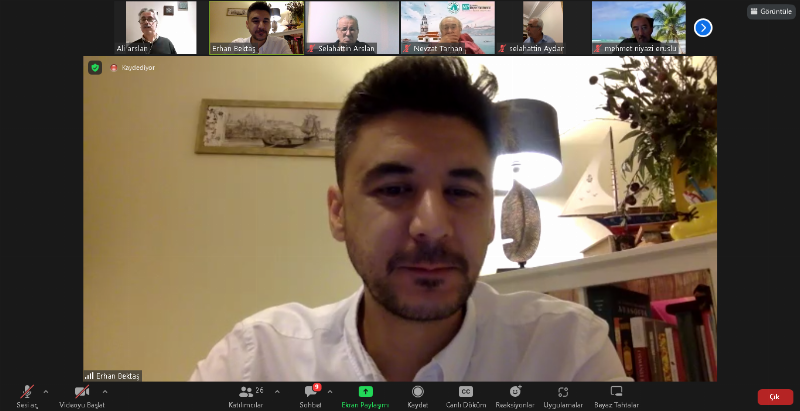
Prof. Dr. Ali Arslan: 'There are parts of historical writing that need to be changed'
Prof. Dr. Ali Arslan was this month's guest at the online event organized by RİNAP. Arslan, who made evaluations under the title 'Transition from Legitimacy to Republic and the Stance of the Ulema,' touched upon the developments in the late Ottoman period. Arslan stated: 'Namık Kemal had no madrasah education, but he had a serious Islamic education. One point incorrectly written in our history is that patriotism is perceived as nationalism and linked to race. Namık Kemal's poems, written as a national poet, are perceived as (expressions of) nationality. Namık Kemal's understanding of the Republic later became an important step in the transition to the Republic. It would also form the basis for the establishment of the parliament and the transition to constitutional rule. Those who adopted Namık Kemal's views absolutely wanted a parliament, but they also advocated for Sharia law. The subsequent division of the Committee of Union and Progress (İttihat ve Terakki) stems from this. They tell us, 'Mustafa Sabri was the Sheikh al-Islam, so they were against the National Struggle, they were pro-British, they were monarchists, they were anti-constitutionalist, which equals anti-Republican.' This historical writing needs to be changed. The greatest duty of us historians is to treat each person individually and even separate their periods.'
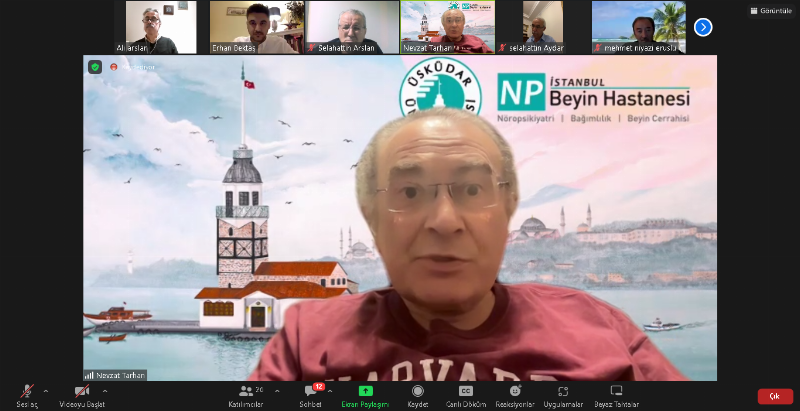
Prof. Dr. Nevzat Tarhan: 'Madrasahs could not grasp the spirit of the time'
Prof. Dr. Tarhan, who attended the organized event, shared insights about the developments in the late Ottoman period and the Republican era. Tarhan said: 'There's something I'm curious about: Abdülhamid II established the Mekteb-i Harbiye-i Şahane (Imperial Military Academy). He trained students, but the young generation he trained overthrew him. Two types of people were being educated: one focused on religious education, and the other on Western education. They became like rivals. It's as if Abdülhamid couldn't implement this reform because the madrasahs couldn't grasp the spirit of the time.'
Share
Update Date: March 01, 2026
Creation Date: November 04, 2022
Request a Call
Other News
- The book that read today's digital threats in 2014: Being a Conscious Family
- Experts warn: 'Instead of memorizing letters, teach pencil grip, scissor use, and coloring'
- School fear and school love both start in the family!
- Family is not merely transforming, it is being battered under a serious assault
- Artificial intelligence opens the door to early diagnosis in autism!