

Üsküdar University Department of Social Services organized an event titled 'The Role of Civil Administration in the Provision of Social Services', moderated by Üsküdar University Head of Social Services Department Assoc. Dr. İsmail Barış. The guest was Retired Deputy Governor Mehmet Seyman. Seymen, who provided information on the importance of social services, said: 'In my opinion, in all states with the characteristics of a democratic, secular, and social state of law, the most important duty and service area that the state is obliged to carry out towards its citizens is the field of social services. Because the way these services are provided demonstrates the state's respect for the human rights of its citizens.'
Content
Retired Deputy Governor Seymen: "Social Services are the Most Important Duty and Service Area of States"
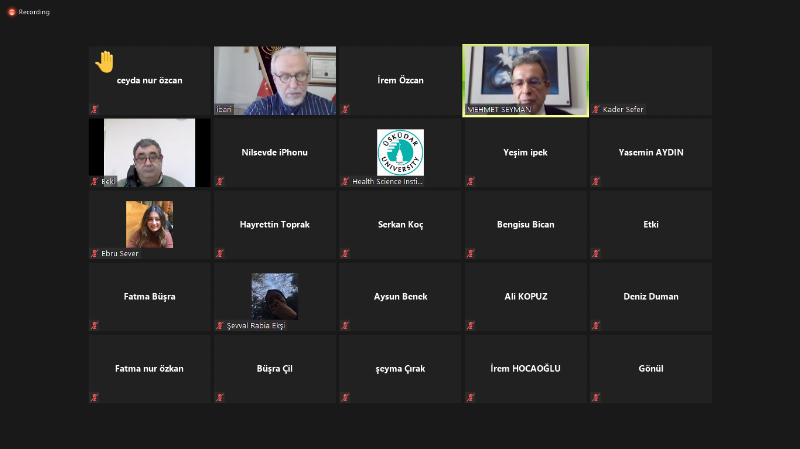
Mehmet Seymen, stating that the most difficult area among the services all states must provide to their citizens is social services, said: 'Even Article 2 of the Constitution of the Republic of Turkey defines the importance of the field our youth will be involved in tomorrow. This social state, as expressed in our Constitution, fulfills its duties and responsibilities through administrative bodies. The civil administration is an organization established to carry out the duties and services that need to be provided to families, children, disabled, elderly, and other individuals who need protection, care, and assistance, as listed in ministerial orders, and it ensures, oversees, and supervises the fulfillment of these social service duties and responsibilities.'
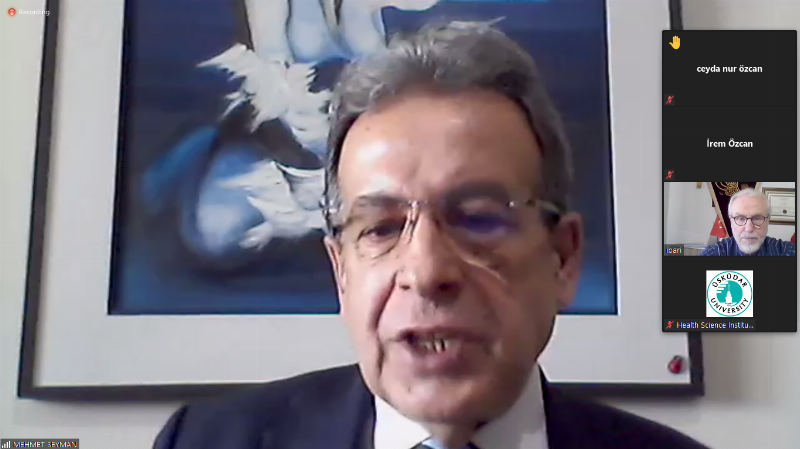
'I am honored to have contributed to the protection of children'
Seyhan continued his words as follows:
'Article 6 of Law No. 5395 on Child Protection imposes a special notification obligation on governors and district governors, in addition to the obligations it brings to other institutions, organizations, and public officials. This is another obligation I am always honored to have contributed to. Children in need of protection and children for whom immediate protective measures are deemed necessary, when there is a need for them to be urgently taken under the protection of one of the social service institutions before a court decision is made, are placed under state protection through the Provincial Directorate of Social Services, with the approval of the governor, until a court decision is obtained. Similarly, Article 3 of Law No. 6284 on the Protection of the Family and Prevention of Violence Against Women states that the measures listed in this law will be decided by the civil administrative authority. To effectively prevent domestic violence against women, this authority to take measures has also been given to law enforcement officers in urgent cases. Law enforcement officers immediately take these measures related to women, but an application is made to district governors and governors within the first business day thereafter.'
'Social services are the most important duty and service area of states towards their citizens'
Seymen, emphasizing the importance of the role of civil administrative authorities in facilitating the provision of social services, said: 'This is a dimension that young people, in particular, should know. In my opinion, in all states with the characteristics of a democratic, secular, and social state of law, the most important duty and service area that the state is obliged to carry out towards its citizens is the field of social services. Because the way these services are provided demonstrates the state's respect for the human rights of its citizens.'
'Never neglect to have the state on your side in your area of duty'
Seyman, giving advice to those who will work in the field of social services in the future, said: 'Never neglect to have the state on your side in your area of duty. Since the duties you will carry out require cooperation and support from other institutions and organizations, the highest authority in the province that will provide you with the support of these institutions and organizations is the governor, and in the district, it is the district governor.'
'Learn the legal provisions of your duty'
Seymen, also touching upon the relationship between discipline and investigation, said: 'Over the years, when we encountered our young civil servant colleagues for committing any disciplinary offense, we saw that they were unaware of the incident, became very upset when the procedure came before them in writing, and even felt crushed and rebelled when it resulted in a punishment. My advice to my young colleagues is to learn the legal provisions that regulate your area of duty, your duty, and your position, and do not ignore them. Although a civil servant may not know all the provisions of Law No. 657 on Civil Servants, they should know the provision regulating the conditions for being a civil servant, the provisions related to the personal rights of civil servants, and the provisions related to the discipline of civil servants. It's not much, perhaps 8-10 articles in total. You must review these occasionally to know what you might face in the future due to an action. This is a disciplinary relationship. After all, you are in a position you entered through an exam, appointed by the state. Your life will not continue without rules and irresponsibly. This service relationship will continue with certain rules that bind you. If you do not comply with these rules, it becomes arbitrary, and certain criminal acts emerge.' He concluded his words.
Share
Update Date: February 27, 2026
Creation Date: May 07, 2021
Request a Call
Other News
- The book that read today's digital threats in 2014: Being a Conscious Family
- Experts warn: 'Instead of memorizing letters, teach pencil grip, scissor use, and coloring'
- School fear and school love both start in the family!
- Family is not merely transforming, it is being battered under a serious assault
- Artificial intelligence opens the door to early diagnosis in autism!