

A seminar titled “Rating Measurement System in Turkey” was held by the Radio Television and Cinema Department of Üsküdar University Faculty of Communication. Dursun Güleryüz, Founding General Manager of Television Audience Research, participated as a speaker in the seminar held at Duha Beker Conference Hall, South Campus.
Content
Rating Measurement System in Turkey Discussed
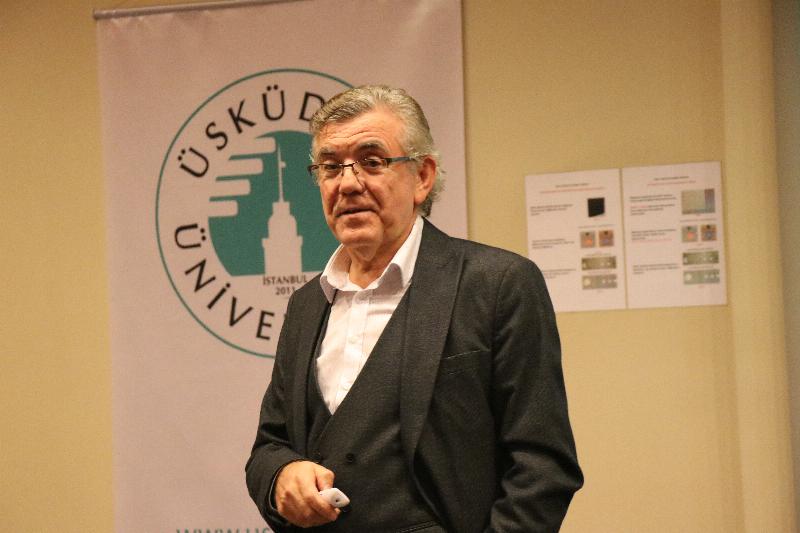
The seminar, held as part of the university culture course in the Duha Beker Conference Hall, attracted great interest from students.
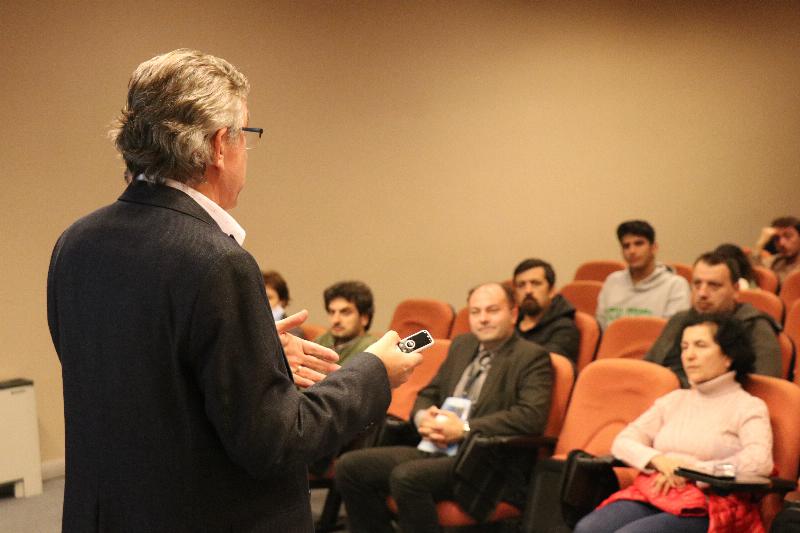
“We are in a good position according to world statistics”
Dursun Güleryüz, Founding General Manager of Television Audience Research, provided information about rating measurement and evaluated why ratings are conducted: “There are certain conditions for rating measurement. We measure the population aged five and above, with a maximum of one television in their household. If there is no television in a household, there is no chance of it being included in the measurement. The universe size formed by the group with one television in their home is 58 million 367 thousand people and 17 million 728 households in Turkey. We represent these with 4,272 people. India and China are countries with large populations. In these two countries, of course, the number of panel households is high. The representative number, which we call 4,000 in Turkey, is 48,000 in India. Our population is similar to Italy’s. While the number of people living in a single household is high in Turkey, this number is lower in Italy and Europe, so their number of households is slightly higher; however, despite this, our panel household number of 4,000 is around 17,000 in Italy. The reason for this is that Italy's measurement system is very old and they have very scattered settlements. We are in a good position according to world statistics. During TİAK’s period, it was around 2,000, and we increased it to 4,000. We primarily conduct these measurements for advertisers and broadcasters. Broadcasters are organizations that are both measured and benefit from the measurement results. We also do these for advertisers. By advertisers here, I don't mean media planning companies or advertising agencies. I mean media planning companies that decide on behalf of the advertiser where, how many times, and for how long an advertisement will be broadcast. We carry out these measurements for these three structures.”
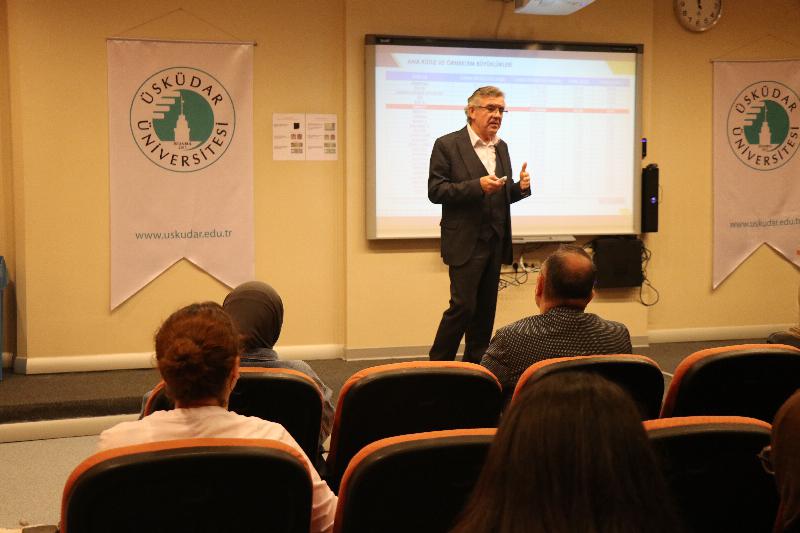
“We are evolving towards a world where broadcasts can be watched at any desired time”
Dursun Güleryüz provided information about the changing nature of traditional television broadcasting over time. Güleryüz stated: “We are now evolving towards a world where broadcasts can be watched at any desired time and place, rather than being tied to a broadcast schedule. The classic television viewer turns on the TV in the morning and adheres only to the broadcast schedule. However, now the viewer cannot understand this flow at all. The viewer says, ‘I am not in the mood to watch the news right now; I need to watch my series,’ and can watch their missed series on a tablet or phone. As a result, this content is consumed. We are also in pursuit of measuring this.”
“Women watch more television than men”
Referring to television viewing rates, Güleryüz said: “In Turkey in 2021, the average per capita television viewing was 4 hours and 8 minutes. When we look at households, the daily television viewing time is approximately 7 hours. But it is not the highest viewing time in the world. Here, there are differences based on age, socio-economic status, and households. Although television viewing rates are generally low in summer, July is the month with the least television viewing. January emerged as the month with the most television viewing in 2021. When we look at gender, we see that women watch more television. When we look at status, the lowest socio-economic status group watches more. Since those over 55 spend more time at home, when we look at viewer rates by age, we see mostly viewers over 55. Non-working individuals naturally watch more compared to working individuals.”
Share
Update Date: February 26, 2026
Creation Date: November 15, 2022
Request a Call
Other News
- The book that read today's digital threats in 2014: Being a Conscious Family
- Experts warn: 'Instead of memorizing letters, teach pencil grip, scissor use, and coloring'
- School fear and school love both start in the family!
- Family is not merely transforming, it is being battered under a serious assault
- Artificial intelligence opens the door to early diagnosis in autism!