

Üsküdar Üniversitesi Vocational School of Health Services organized a conference on ‘Psychosocial Dimensions of Intensive Care’. At the online conference held within the scope of the University Culture course, Lecturer Büşra Ecem Kumru, Head of the Home Patient Care Program at Üsküdar Üniversitesi Vocational School of Health Services, gave her presentation. Kumru started her speech by providing information about intensive care units and discussed the effects of stressors in these units on patient psychology.
Content
Psychosocial Dimensions of Intensive Care Discussed
“Patients in intensive care units can feel immobile or restricted after invasive developments”
Lecturer Büşra Ecem Kumru, explaining the stressors in intensive care units under certain categories, said; “There are multiple stressors in intensive care units. The insertion of oral or nasal tubes and the use of ventilators cause pain and discomfort in the patient. In addition, hunger, thirst, and sleep deprivation caused by the sounds of devices in intensive care units are among the physiological stressors. Patients in intensive care units can feel immobile or restricted after invasive developments. During hourly follow-ups, patients are frequently examined and touched. Difficulty in communication, loss of control, and missing one's spouse and family are also factors, as only first-degree relatives are allowed into intensive care units at specific times. Environmental stressors include things like the room being too hot or too cold, or uncomfortable beds. Constant light and noise are important environmental stressors. Unpleasant odors, sounds, and hums can also be included. Furthermore, curtain systems are generally used in intensive care units. Even if there are room systems instead of curtain systems, these are in glass-enclosed environments. This leads to a lack of privacy for patients.”
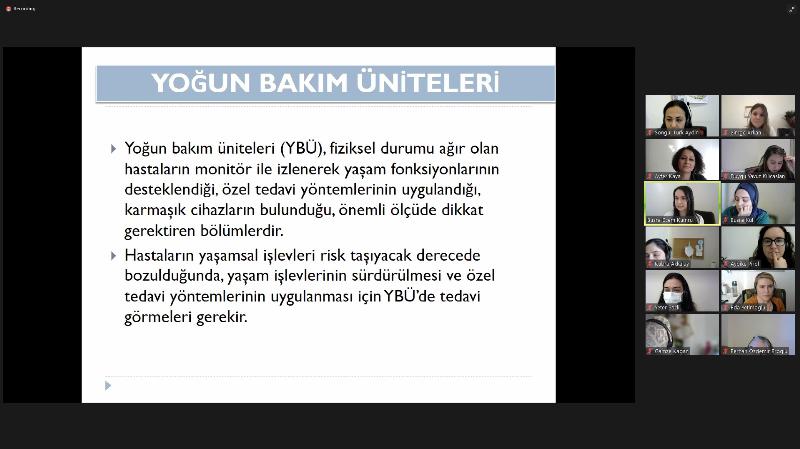
“Intensive care units are the most complex areas of patient care”
Lecturer Büşra Ecem Kumru, providing information about the functioning of intensive care units, stated; “Intensive care units are demanding units where patients with severe physical conditions are continuously monitored, vital functions are supported, and special treatment methods are used. Patients are admitted to intensive care units when their vital functions deteriorate to a life-threatening degree. These units are important places for patients to maintain their vital functions and for special treatment methods to be used more effectively. In intensive care units, patients are divided into two categories: adults and children. Their vital functions are monitored 24 hours a day. Therefore, intensive care units are areas where patient care is most complex and requires rapid intervention. Work is carried out hand-in-hand with technology. The diversity of the treatment and care applied, the presence of complex devices, the intensity, and environmental factors are key elements that make the job difficult for those working there.”
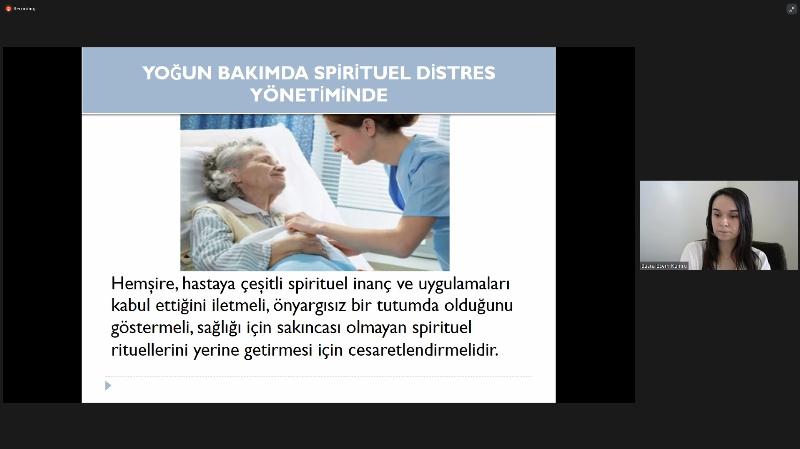
“Patients in intensive care units respond to anxiety and frustration with anger”
Lecturer Büşra Ecem Kumru, discussing the possible causes of anger problems frequently observed in intensive care patients, said; “Anger is actually an optional form of defense against perceived potential harm and threat. The feeling of inadequacy arising from the patient's existing condition due to losses or illnesses can affect the anger problem and cause changes in their perception. Due to disfigurement resulting from amputation or loss of limbs in body functions, they may lose control as anger increases. As a result of these and many other factors, patients in intensive care units respond to anxiety and frustration with anger.”
Share
Update Date: February 28, 2026
Creation Date: April 08, 2022