

At the Symposium on the Dissemination of Protective, Preventive, and Supportive Child Development Services in the Field of Health, organized in collaboration with Üsküdar Üniversitesi and the Child Development and Educators Association, expert names in the field emphasized the importance of child development and drew attention to shortcomings in this area. Üsküdar Üniversitesi Founding Rector Prof. Dr. Nevzat Tarhan, stating that health policies neglecting the periods of a child's development miss a lot, warned, “Traditionally, our family ties are strong. We are a society that values children, but in recent years, our household fragility has increased significantly. In the last 20 years, 5-person households decreased, and 1-person households increased. In 20-30 years, we will be a society dealing more with child mental health problems.” Tarhan, noting that adolescent depression peaked in the US due to the pandemic and social media, and that these children are lost cases for the future, said, “Therefore, it is absolutely necessary to give importance to childhood and adolescence. For this, it is necessary to train specialized personnel.”
Content
Protective, Preventive, and Supportive Child Development Examined…
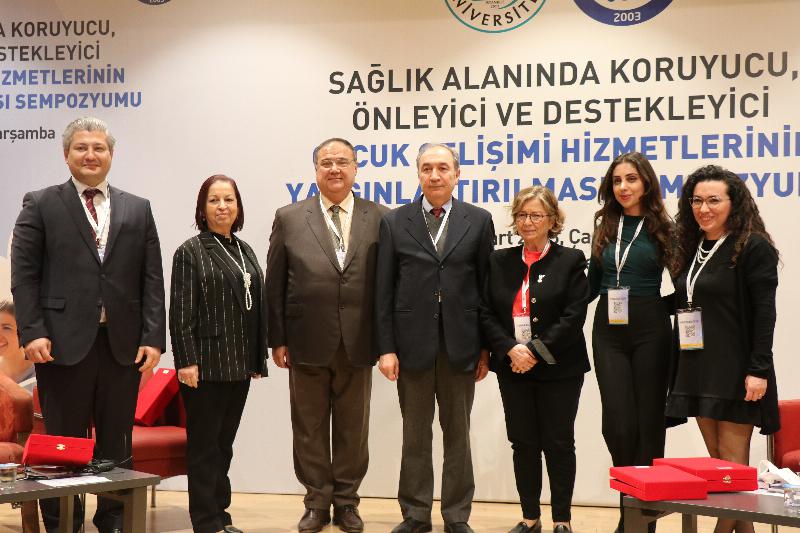
At the Symposium on the Dissemination of Protective, Preventive, and Supportive Child Development Services in the Field of Health, held at Üsküdar Üniversitesi Central Campus Nermin Tarhan Conference Hall, the importance of child development was emphasized, and the need to expand protective, preventive, and supportive services in this area was underlined.
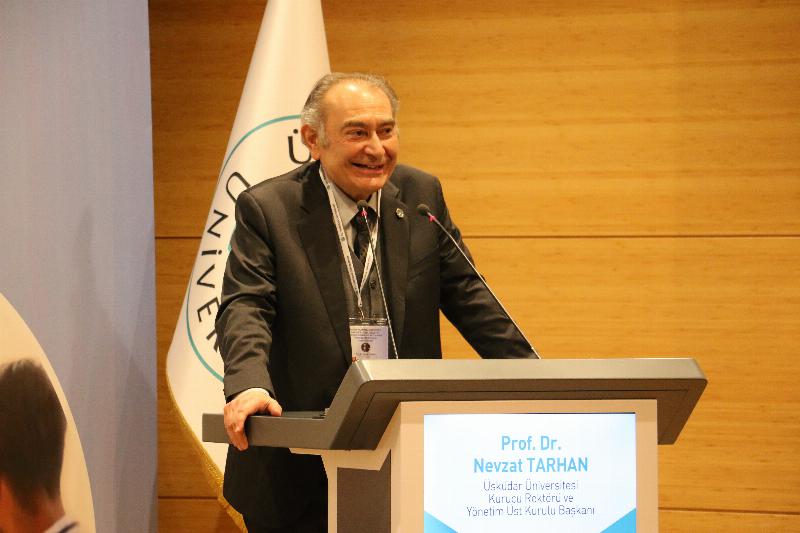
Prof. Dr. Nevzat Tarhan: “Day-to-day decisions lead to loss of time and energy”
Üsküdar Üniversitesi Founding Rector, Psychiatrist Prof. Dr. Nevzat Tarhan, stating that some issues are neglected in the medium and long term, said, “When one tries to progress with day-to-day and sudden decisions, looking back, it can be seen that there is actually a loss of energy and time. However, during decision-making, there is a strategic thinking skill. In this skill, a strategic goal is determined, and a plan is made according to this goal. Beforehand, a person knows their own weaknesses and strengths. According to the determined strategic goal, short, medium, and long-term plans are made, a roadmap is drawn, and progress is made in this way. Managing the process in this way is our most important mental skill in strategic goal setting. This is like a person acting in accordance with how they want to be known and remembered at the end of their life, thinking from the very beginning. If a ship sets sail without knowing where it is going, events will drag it along. If it knows where it is going, it controls the events. A person without a goal also becomes an object of events, remaining under the influence of powerful individuals and everything else.”
Prof. Dr. Nevzat Tarhan: “Humans are born premature in terms of psychological and nervous systems”
Prof. Dr. Nevzat Tarhan stated that the human child is born premature in terms of psychological and nervous systems, saying, “When we look at a duck, we can see it walking as soon as it hatches from the egg. However, humans start walking 1 year after birth, can live independently from the age of 12, and enter adolescence after the age of 15. The mind develops through social learning. There are two periods in this mental development process. The first is the period between 0-3 years when the brain is blooming everywhere. This period is like everything blooming in spring. The second blooming occurs in the frontal region of the brain, which we define as the brain's command center. During that period, synapses seriously spread in the frontal region of the brain, and cell migrations begin. This also lasts 2-3 years. If adolescents can benefit from good parental guidance during adolescence, they can also manage the blooming process well. Similarly, a child between 0-3 years, if they feel safe and have good social relationships, can prune the synapses in their brain correctly. Even the brain's responses to whether a child is loved or not can be managed.”
Prof. Dr. Nevzat Tarhan: “Emotional abuse affects a child more than physical abuse”
Prof. Dr. Nevzat Tarhan, stating that the foundations of personality are laid in childhood, continued his words as follows: “In psychiatry, a childhood trauma scale is used. We apply this scale in almost 90 percent of cases. The scale includes extremely important issues such as physical abuse, physical neglect, emotional abuse, emotional neglect, and sexual abuse. Emotionally neglecting and abusing a child affects them more than physically abusing them. When a child is physically abused, they at least think that their parents are aware of their existence. All these neglects and abuses occur in early childhood, but most mothers and fathers are unaware of this. Fortunately, mothers are given the oxytocin hormone by God in creation, which establishes bonding with the child. This is secreted most in mothers who breastfeed their children. Oxytocin creates a serious bond between mother and child. Breastfeeding mothers are naturally compassionate towards their children. For example, if a mother falls ill after breastfeeding her baby for the first 6 months, and that baby continues to be breastfed by a healthy mother with healthy milk, the mRNAs and RNA repair genetic elements from the first 6 months can be corrected with the healthy mother's milk. New scientific developments are in this direction.”
Prof. Dr. Nevzat Tarhan: “One should not become a child development specialist through distance learning”
Prof. Dr. Nevzat Tarhan, stating that health policies neglecting the periods of a child's upbringing miss a lot, said, “Traditionally, our family ties are strong. We are a society that values children, but in recent years, our household fragility has increased significantly. In the last 20 years, 5-person households decreased, and 1-person households increased. In 20-30 years, we will be a society dealing more with child mental health problems. In the US, after 2012, especially with the impact of the pandemic and social media, childhood and adolescent depression peaked. These children are lost cases for the future; they could also become criminal elements later on. Therefore, it is absolutely necessary to give importance to childhood and adolescence. For this, it is necessary to train specialized personnel. Especially child development specialists are trained who do not even know how to hold a child, learning only from books in open education. They cannot be child development specialists; they can only be candidates.”
Prof. Dr. Nevzat Tarhan: “Triple protection is neglected in Turkey”
Prof. Dr. Nevzat Tarhan stated that there are primary, secondary, and tertiary protections in medicine and concluded his words as follows: “Primary protection involves educating the general public to prevent them from getting sick. The most important thing is to strive for people not to fall ill. This is the most crucial aspect. In most polyclinic patients, 60-80 percent of them show errors in diet and lifestyle. The moment these are corrected, many diseases will disappear. Preventive health is important in psychiatry as well as in general medicine. The second is preventive protection. It is a protection system based on working to prevent individuals in risk groups from getting sick, and it requires a bit more expertise. Early diagnosis comes to the forefront here. Tertiary protection, on the other hand, aims to prevent the recurrence of illness in someone who has experienced trauma or illness. This triple protection is largely neglected in Turkey. We have strived greatly in the field of psychiatric diseases for years, made applications, but have not yet reached a certain point. Even Iran has a tertiary protection rehabilitation center for addiction, but we do not. Treating and discharging an addiction patient is not beneficial. At this point, tertiary protection is essential. In developed countries, addicted individuals stay in rehabilitation centers for 3-6 months, and some things are rebuilt there. It should also be in our country; any point at which we turn back from harm is a gain.”
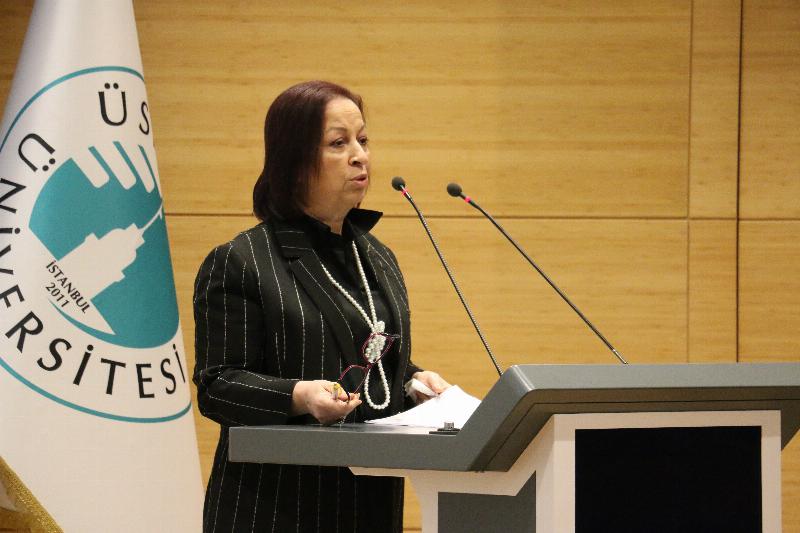
Halide İncekara: “We must eliminate the causes that lead to negative outcomes”
Halide İncekara, Advisor to the Rector of Üsküdar Üniversitesi, emphasized the great importance of discussing children, saying, “If we want to talk about strong individuals, society, and state, we must evaluate children. When I look at society, I see that the cause of every outcome I complain about is children whom we could not reach in time. We talked about lost children, children whose talents were undiscovered, children who were subjected to violence or who perpetrated violence. We left those children and their families alone. A child we couldn't reach at 7 will lead to a process at 30 or 40 where you will discuss the consequences, and your court expenses and health costs will increase. When we eliminate the causes that produce these outcomes, our country's financial burden will decrease, and we will have a young, dynamic, sensitive, self-confident society with reduced health costs and increased success levels, and at the same time, a strong country.”
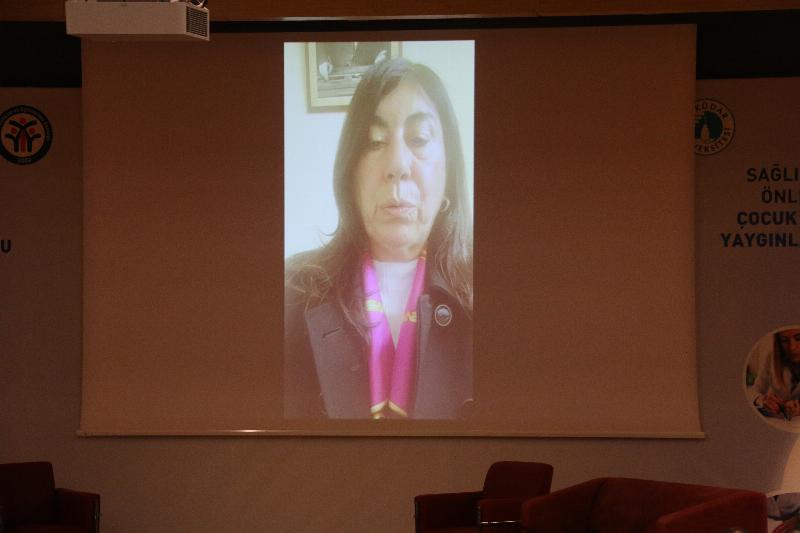
Dr. Zülfiye Füsun Kümet: “The health status of our infants and children is closely monitored”
Dr. Zülfiye Füsun Kümet, Member of the Presidential Food and Health Policies Board, stated in her video message sent to the symposium, “In our country, the health status of our children is closely monitored and necessary measures are taken through practices such as screening programs for newborns for vision, hearing, developmental hip dysplasia, metabolic diseases, and also screening programs for preschool and school-aged children, established to monitor the frequency and causes of infant deaths. Similarly, the healthy development of our infants, children, and adolescents is very strictly monitored through many development monitoring and evaluation programs.”
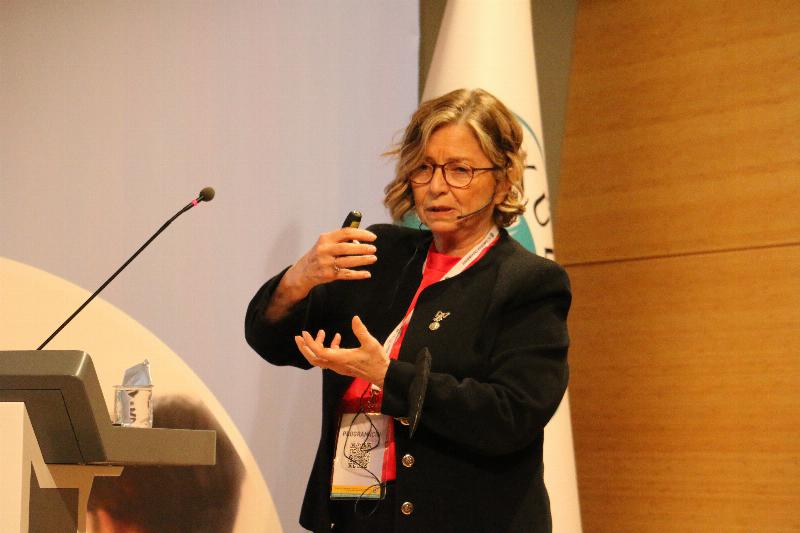
Prof. Dr. Nurper Ülküer: “We have a program that will set an example”
Prof. Dr. Nurper Ülküer, Head of the Child Development Department at Üsküdar Üniversitesi Faculty of Health Sciences, stated that they see child development services in our country as an important part of both protective, preventive, and supportive, as well as curative health services, and that they are very proud of this. Ülküer said, “Looking at international platforms, I cannot find another program in any country that emphasizes a holistic approach in the field of child development as much as ours, training equipped child development specialists from health to nutrition. We have a program that will set an example. We are also obligated to disseminate and promote this program. We will set an example”
Prof. Dr. Nurper Ülküer: “The period when the window of opportunity is open is 3-4 years of age”
Following the opening speeches, the symposium, consisting of two sessions, commenced. In the first session titled “Child Development in Primary Health Care Services,” Prof. Dr. Nurper Ülküer, in her presentation titled “Child Development within the Framework of Developmental Care Practices,” emphasized that the period between 0-3 years is a very important period for the child's development and future.
Ülküer stated that scientific studies point to childhood as crucial for a child to have a healthy future, saying, “If we are to support a child's development and societal progress, we need to provide a developmental care environment starting from the earliest possible age.” Noting that a significant part of brain development occurs by age 7, Ülküer added, “We are talking about the period when the so-called window of opportunity is most open. Hearing and vision begin before birth. The period when the window of opportunity is open is 3-4 years of age. During this period, we need to carry out studies focused on child development.”
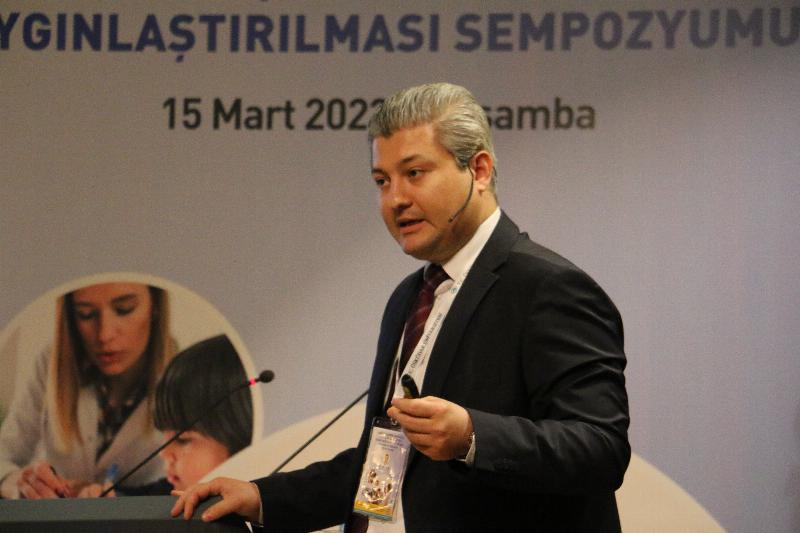
Dr. Yusuf Taşçı: “The number of Child Development Specialists should be increased”
Üsküdar District Health Director Dr. Yusuf Taşçı, in his speech titled “Child Development Monitoring and Support Studies in Family Health Centers (ASM),” provided information on the work carried out in Family Health Centers. Taşçı stated that there are 28 Life Health Centers in 38 districts of Istanbul and that 10 Child Development specialists are working in Istanbul, emphasizing that this number needs to be significantly increased. He noted that nurses working in Family Health Centers, like family physicians, establish a relationship with the mother from the beginning of pregnancy, provide breastfeeding counseling during the postpartum period, and invite them for vaccinations.
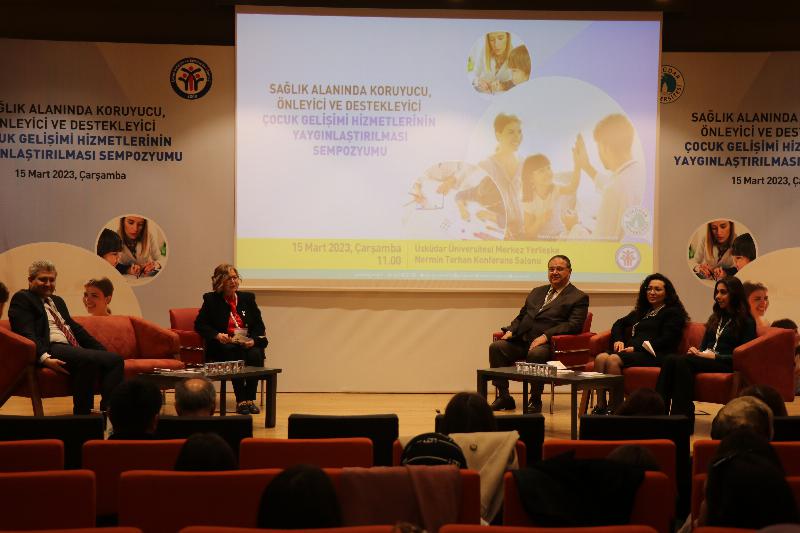
Problems in the field of child development were discussed
In the session where Assoc. Prof. Dr. Ayten Doğan Keskin from Health Sciences University Gülhane Faculty of Health Sciences participated with her presentation titled “Developmental Monitoring, Evaluation, and Support Studies in Primary Health Care Services,” Prof. Dr. Süleyman Görpelioğlu, Vice President of the Turkish Association of Family Physicians, also touched upon the challenges faced by family physicians in his presentation titled “Child Development and Monitoring Studies in Family Medicine.” Child Development Specialist Tuğçe Yorulmaz, in her presentation “Child Development Practices in Healthy Life Centers,” drew attention to the problems encountered in the field.
In the second session, child development was addressed from different perspectives
Prof. Dr. Aktuğ Ertekin, Dean of Üsküdar Üniversitesi Faculty of Health Sciences, chaired the afternoon's second session of the symposium, whose opening speeches were broadcast live on Üsküdar Üniversitesi ÜÜ TV and Üsküdar Üniversitesi's official YouTube account, titled “Child Development Legislation and Current Practices in Secondary and Tertiary Health Care Services.”
Prof. Dr. Hale Dere Çiftçi, Head of the Child Development Department at Arel Üniversitesi Faculty of Health Sciences, gave a speech titled “Child Development Studies in Hospitals,” Dr. Yasemin Yılmazer, Child Development Specialist from Ankara City Hospital, spoke on “Responsibilities of Child Development Specialists in the Maraş Earthquake and Similar Disaster Situations,” and Prof. Dr. Necate Baykoç, Founder of Science and Art Centers, gave a speech titled “Contribution of Hospital Schools to Child Development.”
The symposium concluded with the closing and evaluation speech by Dr. Demet Gülaldı, Faculty Member of the Üsküdar Üniversitesi Child Development Department.
Share
Request a Call
Other News
- Prof. Nevzat Tarhan: “Those with a mental filter are not afraid of the digital”
- Artificial intelligence doesn't eliminate the translator, it transforms their expertise!
- Social responsibility courses moved to the field
- Erasmus+ Orientation Week completed at Üsküdar
- Prof. Nevzat Tarhan: “Brain secretes ‘dark glue’ in social media lynchers!”