

The opening ceremony of the 'Reading University-Reading High School Project', carried out by Üsküdar University, Üsküdar District National Education Directorate, and Haydi Tut Elimi Rehabilitation Education and Assistance Association under the Youth Projects Support Program supported by the Ministry of Youth and Sports, was held online. Prof. Dr. Nevzat Tarhan, Founding Rector of Üsküdar University and psychiatrist, stated that the memorize-recite method distances individuals from analytical thinking, adding, "We need to teach this to children, but the biggest obstacle is the exam system. The system raises children to be 'test children'. The test system is poisoning us. The most important thing that dulls the habit of reading books in Turkey is the fact that the test system is the only measure. Thus, young people are growing up without using their ability to comprehend what they read, read long texts, think deeply, and make interpretations." Tarhan said that Üsküdar University will also donate books to schools in Üsküdar that do not have books or libraries.
Content
Prof. Dr. Tarhan’s “Test Child” Metaphor
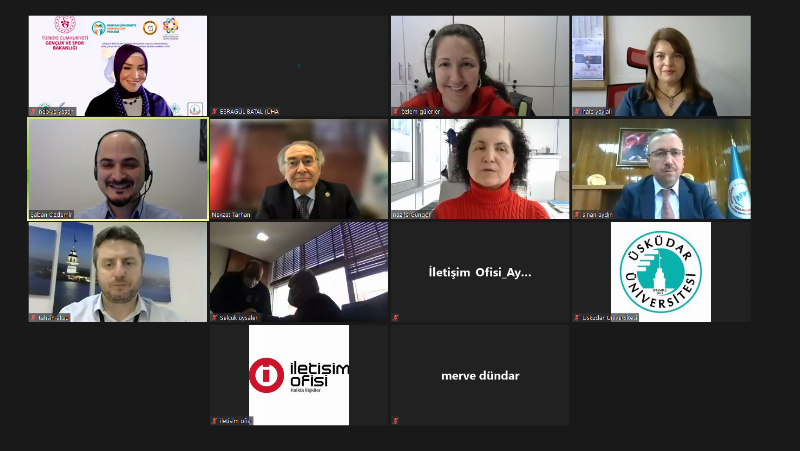
The launch of the 'Reading University-Reading High School Project' was held during an online ceremony organized under pandemic conditions. The one-year project will involve 80 young people: 40 high school students studying at the Üsküdar Ahmet Yüksel Özemre Science and Arts Center and 40 university students studying in various departments at Üsküdar University. The project aims to increase young people's reading habits, contribute to the spread of book reading and library culture, support the cultural, personal, and social development of young people, develop their capacity to work together harmoniously around a common goal, and encourage their participation in volunteer activities.
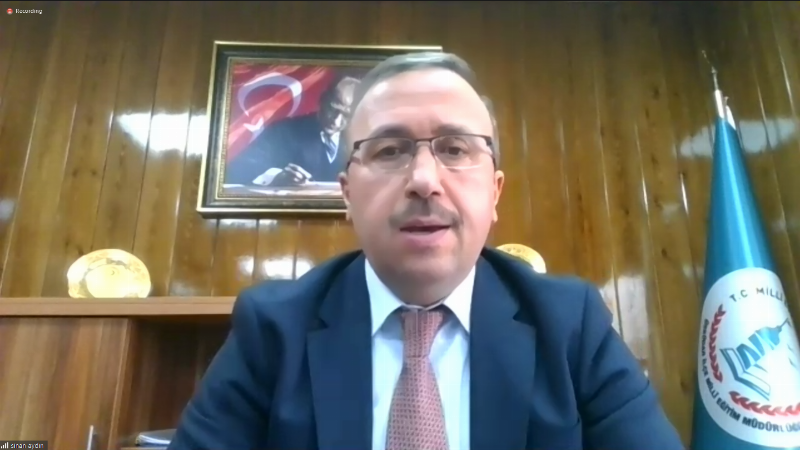
Üsküdar District National Education Director Sinan Aydın: "We identified schools without books and libraries."
Üsküdar District Director of National Education Sinan Aydın expressed his satisfaction with participating in the project and gave examples from the research results on reading habits. Sinan Aydın said, "Based on the research conducted on the subject and the data obtained, some factors that are effective in the formation of reading habits among students have been identified. These include the absence of libraries in homes and insufficient reading at home, inadequate reading in schools, non-functional school libraries, teachers not serving as role models for students in reading, technological tools attracting more attention from children, and students not having sufficient awareness of the importance of reading.
Regarding the issue of schools not having libraries and the inadequate equipment of libraries, we surveyed all our schools under the leadership of the Provincial Directorate of National Education and identified the schools that did not have libraries. We are working to ensure that these schools have libraries as soon as possible. We are also working to increase the number of books in our existing libraries," he said.
Referring to the efforts made by teachers to be role models in reading books, Sinan Aydın said, "We have a project that we started in 2015 under the name 'Üsküdar Education Readings'. To date, we have read a total of 49 books with our school principals and delivered them to them. We read one book per month with our school principals and, if the author is alive, we bring them together with the author. As part of this project, we brought Prof. Dr. Nevzat Tarhan together with our school principals. Ultimately, all these efforts and wonderful projects increase our reading rate. Thus, our perspective and assessment are certainly changing," he said. Sinan Aydın also thanked Üsküdar University for this meaningful project.
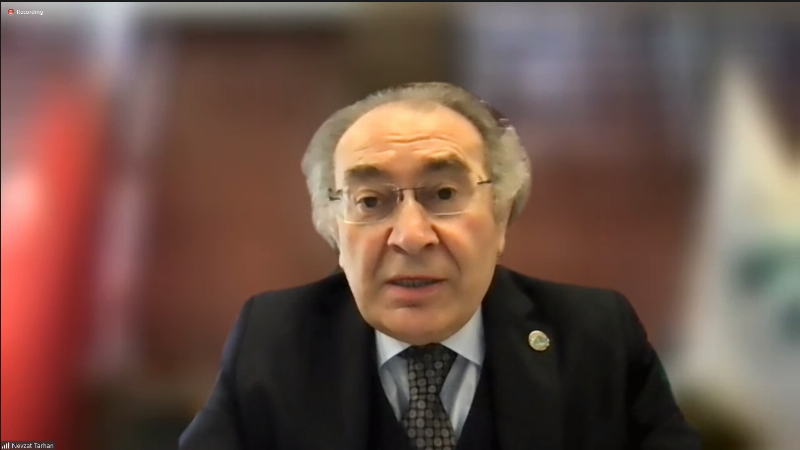
Prof. Dr. Nevzat Tarhan: "Societies that build civilizations are lagging behind in reading."
Prof. Dr. Nevzat Tarhan, Founding Rector of Üsküdar University and psychiatrist, stated in his speech at the ceremony that he believed the project would be very beneficial, saying, "'Why is it necessary to read?' and 'How can we develop a reading habit?' are very important questions. A root cause analysis must definitely be carried out in this regard. Why does our Turkish society rank so low in statistics related to book reading? We love to talk on the internet and social media, but we don't read. Yet we have built a civilization; we have established civilization in our history. We have produced tremendous works in our history. Why are we like this now? This is not the real Turkish nation. There are things that are not going well and need to be corrected."
Prof. Dr. Nevzat Tarhan: “Russians grow up with books”
Referring to a conversation he had in the past with a researcher-academic who knows Russia well, Prof. Dr. Nevzat Tarhan said, "The conversation turned to the topic of 'how to develop a habit of reading books'. Our professor said: Since famous writers like Tolstoy and Dostoyevsky came from Russia, he asked the Russians, 'How do you instill a reading habit in children and people?' The Russian literary figure there was surprised and replied, 'We don't have a method for instilling a reading habit; children are born into books. In Russia, when children are at home, everyone has a book in their hands; when they go somewhere, they see everyone with a book in their hands," he said.
Prof. Dr. Nevzat Tarhan: "There have been fractures in our culture."
Noting that reading habits are also fundamental to our culture but that some fractures have occurred, Prof. Dr. Nevzat Tarhan said, "In our culture, a 'kıraathane' means a reading house. That's how it used to be, but somehow our culture has experienced fractures, and reading rooms have become coffee houses. Nowadays, science houses are being built, and research is being encouraged, but we have become lazy. There are fractures in our culture. We definitely need to give importance to this issue of reading, along with its justifications."
Prof. Dr. Nevzat Tarhan: “What a person understands from what they read is important.”
Asking "Why is reading important?" Prof. Dr. Nevzat Tarhan said, "For a person, understanding what they hear and understanding what they read are separate mental skills. In Anatolia, there is a saying: 'Don't believe what you hear, believe half of what you see. The thing that causes people to make the most mistakes is misinterpretation and misperception. Mevlana has a saying: 'It is not what you say to a person that matters, but what they understand.' What they understand when they read and when they listen is important."
Prof. Dr. Nevzat Tarhan: "We lack the habit of deep thinking and analysis"
Emphasizing that the ability to understand what one reads is the most important skill that makes a person human, Prof. Dr. Nevzat Tarhan said, "When you read a text, you will understand it and express it. For example, when we ask each other, 'What kind of person is your mother?', we give a short answer like 'She's good'. But when you ask the same question to societies that read a lot, like the UK, they describe her characteristics for at least 3-5 minutes. We just say 'she's good' and move on. This means we lack the habit of deep thinking and deep analysis. This is achieved through the active learning method of experiencing. Our education system is trying to renew itself. With the rote learning method, deep thinking, causal analysis, root-cause analysis, and other types of analysis cannot be done. The rote learning method does not encourage analytical thinking. It is done in a learn-and-transfer manner. However, it is necessary to understand, interpret, and analyze it before transferring it. The student will do the thesis-antithesis-synthesis. It is necessary to teach how to do this. The most important thing that dulls the habit of reading books in Turkey is the fact that the test system is the only measure. Thus, young people are growing up without using their ability to understand what they read, read long texts, think deeply, and interpret," he said.
Prof. Dr. Nevzat Tarhan: "Children are being raised as 'test children'"
"The most important system that needs to be changed here is our exam system," said Prof. Dr. Nevzat Tarhan. "In my opinion, the biggest obstacle is the exam system. Everyone is forced to take exams. In this situation, we cannot blame the mother or father. They say they have to get into university, and the child grows up as a 'test child'. The test system is poisoning us. America has the SAT education system. In this system, exams are held every three months, and in some states, exams are held every month. The child takes exams continuously, the grade they receive from that exam forms their main grade, and the child enters university with that. But it's not just one exam; exams are held every three months, every month. For some reason, we couldn't do that. If that were the case, the child would then read, explain what they read, and the teacher would see whether the child can express themselves and understand what they read. Those skills cannot be understood through tests. For example, a commission is set up in schools, and points are given based on whether the child understands what they read and can explain it. If that were the case, we would have people who think and question," he said.
Prof. Dr. Nevzat Tarhan: “The exam system is poisoning us”
“The current exam system has turned us into racehorses,” said Prof. Dr. Nevzat Tarhan, adding, “We are always in a results-oriented situation. This exam system is poisoning us, causing us to fall behind. We say let's teach young people 21st-century skills, but exams stand in our way. Our minister is also very diligent, working very hard, but he couldn't change this system. Whatever kind of system it is, he couldn't change it. Hopefully, it will change now; the circumstances are demanding it," he said.
Prof. Dr. Nevzat Tarhan: "We will donate books to schools in Üsküdar that lack books and libraries."
Noting that Üsküdar District National Education Director Sinan Aydın mentioned in his speech that some schools lack books and libraries, Prof. Dr. Nevzat Tarhan said, "With the support of our foundation, we will provide books to all schools and libraries in Üsküdar, starting with those that currently have no libraries. If you give me the list of names, professor, we will provide all of our university publications and my personal publications free of charge. We will give our books to all schools, and this will also be a donation from the İDER Foundation to this project. It's a wonderful project; let's include this reading issue in the final report as well. Let's also write in the report that we believe the reason for the low reading comprehension scores in Pisa is related to the exam system," he said.
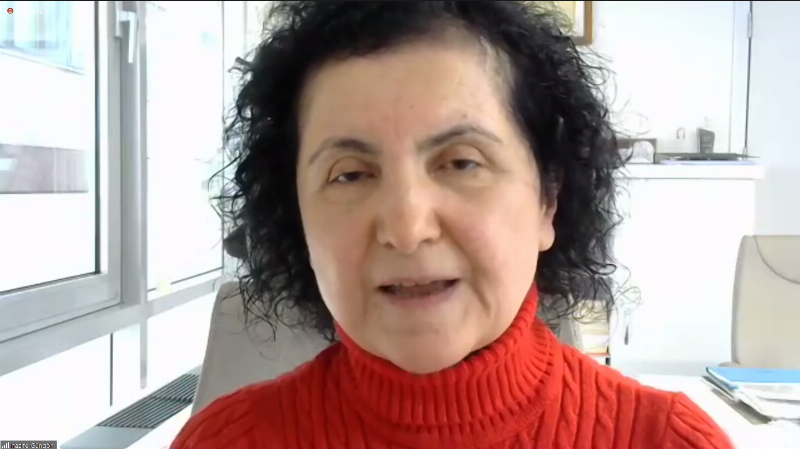
Prof. Dr. Nazife Güngör: "An important project for the development of written culture"
Prof. Dr. Nazife Güngör, Dean of the Faculty of Communication at Üsküdar University, said that the Reading University-Reading High School Project is the first project officially coordinated by the Faculty of Communication, which makes it particularly important to them. Prof. Dr. Nazife Güngör said, "We are proud of this. The second dimension is that universities are institutions that produce science, but this science production is not only to reinforce and strengthen education and training, and it is not just science for science's sake; the more this science production is carried out within the framework of social responsibility and public service, the more valuable it becomes.
In this sense, we need to attribute significant value to this project because one of its pillars is entirely society, and there is a very important issue here. The project started by emphasizing this issue, and the goal was set very correctly. The third dimension, if we are to speak based on the data emphasized by Professor Nebiye, is that as a society, we are a society located within Eastern societies. Therefore, an important characteristic we possess is that we have not yet fully embraced written culture. The path to written culture also passes through reading. The more we read, the more we become familiar with writing and begin to think in writing. We acquire the habit of thinking in writing. The development and establishment of written culture in our society is also a very important project in terms of intellectual progress based on writing," she said.
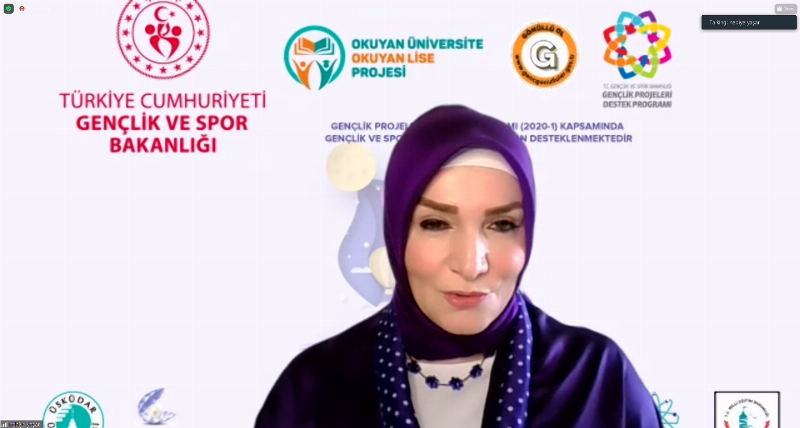
Dr. Lecturer Nebiye Yaşar: “We only allocate 1 minute to reading books”
Project Advisor, Director of the Young Minds Academy at Üsküdar University, Dr. Nebiye Yaşar, Associate Professor and Vice President of the Haydi Tut Elimi Rehabilitation Education and Assistance Association, said in her opening speech, "In today's world, where information is rapidly updated and the flow of information is continuous, we want to help young people reach their full potential, keep pace with the speed of change, follow new information and ideas, discover themselves, and contribute to their personal development." With the advancement of technology, information has become easily accessible. However, the time allocated for research and self-improvement has been completely channeled into areas that require a lot of time, such as television and the internet. According to recent data published by the Turkish Statistical Institute (TÜİK), which also reveals book reading habits, reading books ranks 235th on the list of needs of the Turkish people, with only 4 out of 100 people reading books. Our people, who watch 3 hours of television and use the internet for 7 hours a day, spend only one minute reading books. In our country, where growth and development depend on our children reading more, the data released by TÜİK is truly very sad," he said. Yaşar said that the project aims to develop young people's book reading habits.
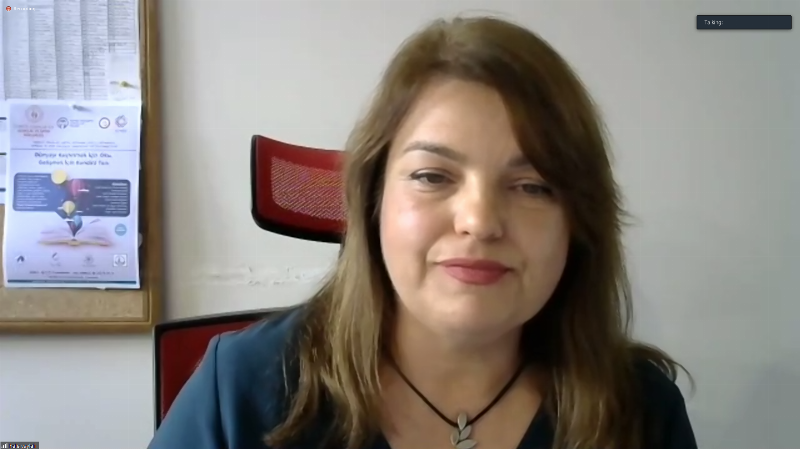
Dr. Hale Yaylalı, Assistant Professor, provided information about the project
Project Coordinator Dr. Hale Yaylalı, an Assistant Professor at the Faculty of Communication at Üsküdar University, also provided information about the project. Dr. Hale Yaylalı stated that, in addition to reading books, the project will include conferences, training sessions on personal development and success, seminars, creative drama, volunteerism, and nature activities. She noted that these activities will also include numerous training sessions on positive psychology, recognizing and being aware of one's own emotions, happiness strategies, and relationship management.
Share
Request a Call
Other News
- The book that read today's digital threats in 2014: Being a Conscious Family
- Experts warn: 'Instead of memorizing letters, teach pencil grip, scissor use, and coloring'
- School fear and school love both start in the family!
- Family is not merely transforming, it is being battered under a serious assault
- Artificial intelligence opens the door to early diagnosis in autism!