

Üsküdar University Founding Rector, Psychiatrist Prof. Dr. Nevzat Tarhan, met with guidance counselors working within the Presidency of Religious Affairs in Ankara, upon their invitation. In the program on "Psychology of Values and Humanity," held via Zoom, Tarhan said: "Values do not show themselves; they show individuals where to go."
Content
Prof. Dr. Tarhan: "Values Show Individuals Their Path"
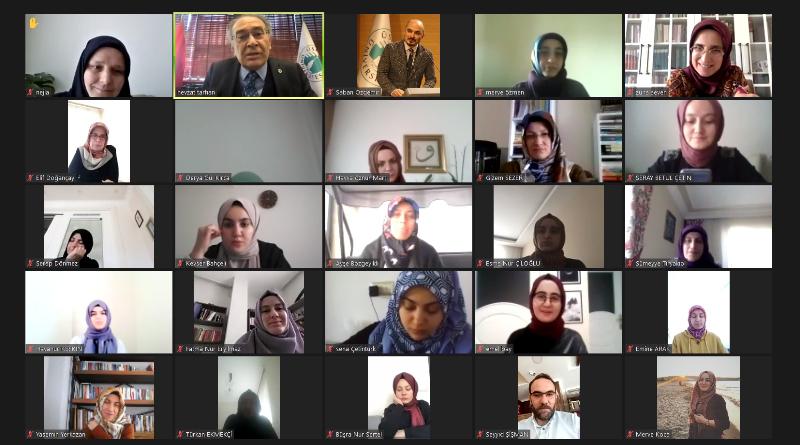
“Values Show Individuals Their Path”
Prof. Dr. Nevzat Tarhan, who met with guidance counselors who read his book "Psychology of Values and Humanity, The Beautiful Human Model," stated that values in human life are based on a cultural situation. Tarhan said: "The minds of science philosophers are currently in a complete mess. What do traffic signs show? Traffic signs do not show themselves; they show you where you are going. Values are like that too. They do not show themselves; they show people where to go. Therefore, values are our cultural standards that show us what kind of person we will be in life, and they are not innate; they are learned later. Values are a cultural standard. Humans are also born with a genetic tendency to learn values. In the past, they used to say humans are born as a blank slate, but they are not born like a blank slate. They are born completely innocent. They can develop their values in a positive way, or in a negative way. The existence of values indicates that humans have a genetic need to learn values."
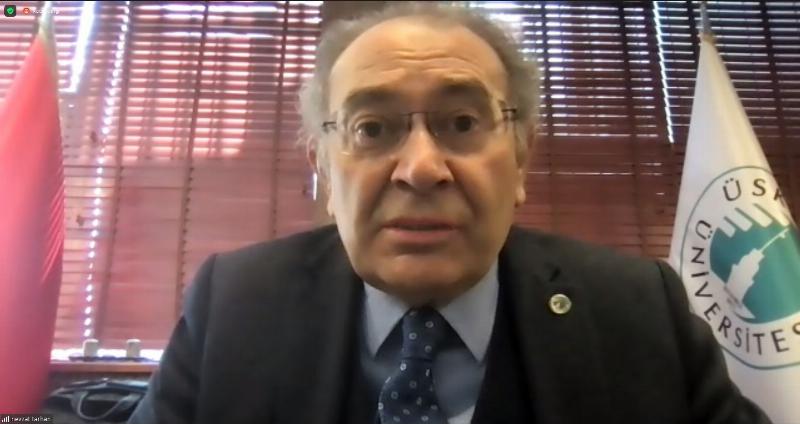
“Humans Have a Quest for Meaning and a Need for Consolation”
Speaking about the objectives of Tawhid belief, Tarhan said: "Allah has placed these feelings in humans, but we express them by worshipping nature religions. You cannot satisfy today's youth with this. They say, 'The God you will offer me must be all-powerful, all-existent, all-knowing, all-wise, and possess absolute will, dominant and powerful over everything.' This is also Tawhid. We will find God intellectually, through methods of reasoning. This is called rational belief. Rational belief is the belief in Tawhid, not religious belief. That's why I named the book 'Psychology of Belief' instead of 'Psychology of Religion.' Without the belief in Tawhid, the truth in people cannot be found. When asked 'What is religion?', those who think of traditional Islam say; religion is a social structure, it is beneficial, it teaches morality. Religion is primarily an existential institution; it explains the meaning of life. Humans also have a quest for meaning and a need for consolation."
“Values Education is Not Possible, Value-Oriented Assignments Are”
Emphasizing value contents with examples, Tarhan said: "Values education should be given within physics and chemistry. For example, when explaining physics and chemistry, we need to explain through reasoning methods whether it's more rational to believe that it's a book of the universe, how perfect its creator is, and whether its existence is coincidental or designed. We have accumulated enough data to explain this. In 2014, we established the Sufism Research Institute; we didn't have a Faculty of Theology at that time, but there is moral consensus. I believe the source of the Sufism Institute will be correct. Sufi moral teachings are against Mevlana, against Yunus. There's a bit of a Salafi element. When this happens, young people and society don't believe, saying, 'This is how Islamic scholars think.' There are some views that take a mistake of Mevlana and call him an infidel, or a deviant. They loudly defend these. Therefore, making this synthesis is important. Our country needs the synthesis of Mektep (school), Medrese (madrasa), and Tekke (dervish lodge). When we achieve these three syntheses, the right generation will be raised in Turkey. This is a medium and long-term plan. At least, we can do this in our own homes, we can do this for our own students. Values education is not possible; value-oriented assignments are."
“There Has Never Been an Era Where Egoism Rose So Much”
Emphasizing the importance of being conscious youth and families, Prof. Dr. Tarhan said: "In 2013, as Üsküdar University, we introduced Positive Psychology as a course. We conduct pre and post-tests in Positive Psychology. We observed that students' emotional intelligence increased by 20 percent over a 14-week credit course. As course outcomes, we have students saying, 'My relationship with my father improved, my relationship with myself improved, I forgave my friend.' Talking for hours about the wrongness of lying won't help. If you explain lying as an opportunity for education, I tried to explain these in the books 'Being a Conscious Family - Being a Conscious Youth.' We need to be this open with young people. Secondly, adolescents initially act in an authoritarian manner and then reverse roles. Therefore, we should not confront our child or the class leadership we are responsible for; we should not take them as adversaries, but walk alongside them. There has never been another era where egoism has risen so much."
Share
Update Date: February 27, 2026
Creation Date: April 27, 2021
Request a Call
Other News
- The book that read today's digital threats in 2014: Being a Conscious Family
- Experts warn: 'Instead of memorizing letters, teach pencil grip, scissor use, and coloring'
- School fear and school love both start in the family!
- Family is not merely transforming, it is being battered under a serious assault
- Artificial intelligence opens the door to early diagnosis in autism!