

Üsküdar Üniversitesi hosted the 2nd National Occupational Health and Safety Student Congress, bringing together expert names in the field. Üsküdar Üniversitesi Founding Rector Prof. Dr. Nevzat Tarhan, in his opening speech at the congress, emphasized the place and importance of occupational health and safety in life, stating, “Currently, the most important capital for a person and a workplace is trust capital. In institutions with weak trust capital, productivity decreases, health expenditures increase, and if there is no safe working environment, personnel turnover is high.” Prof. Dr. Nevzat Tarhan also pointed out the importance of Occupational Health and Safety training, underlining that OHS training cannot be conducted through open education.
Content
Prof. Dr. Tarhan: “The most important capital for a workplace is trust”

At the 2nd National Occupational Health and Safety Student Congress, hosted by Üsküdar Üniversitesi Occupational Safety, Health and Environmental Health Application and Research Center (ÜSGÜMER) and organized by Beykoz Üniversitesi, Niğde Ömer Halisdemir Üniversitesi, Health Sciences University, and MESKA Foundation, experts in the field made presentations on various topics related to occupational health and safety. The congress was held online under pandemic conditions.
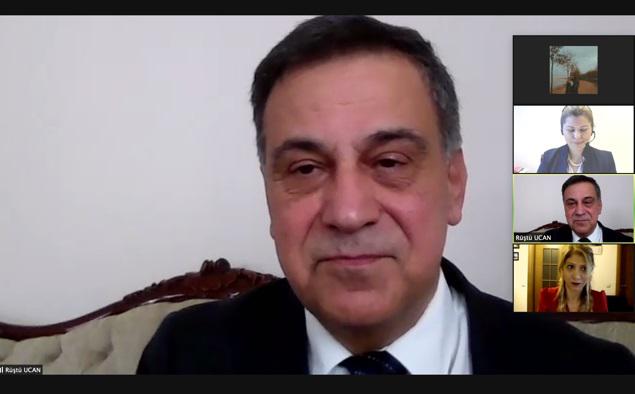
Assist. Prof. Dr. Rüştü Uçan: “These congresses should be held more frequently”
Üsküdar Üniversitesi Faculty of Health Sciences Occupational Health and Safety Lecturer, Head of OHS Department, ÜSGÜMER Director, and MESKA Foundation President Assist. Prof. Dr. Rüştü Uçan stated in his opening speech that the first congress was held on May 21-22, 2015, at Bingöl Üniversitesi. Expressing their pleasure to host the congress, Uçan said that such congresses should be held more frequently than every 5 years. Uçan noted his belief that the congress would be productive and also emphasized the importance for students studying in this field to learn article writing.
Assist. Prof. Dr. Rüştü Uçan: “We are investing in our students”
Assist. Prof. Dr. Rüştü Uçan, who also thanked the Ministry of Family, Labor and Social Services officials for their participation and support in the congress, noted that unlike the first one, this year had the effects of Covid-19, stating, “The pandemic has had effects on many issues. We also have articles from some of our students on this topic, and we will listen to them. The knowledge our valuable students, who will be among future occupational health and safety professionals, have gained in industrial subjects constitutes today's resource. We are actually investing in people, investing in our students, and their future success in a healthy and good environment will always make us happy.”
Prof. Dr. Şefik Dursun: “Sufficient personnel need to be trained in the field of Occupational Health and Safety”
Prof. Dr. Şefik Dursun, Dean of Üsküdar Üniversitesi Faculty of Health Sciences and Head of the Biophysics Department of the Faculty of Medicine, stated that undergraduate education in occupational health and safety in Turkey is not even as many as the fingers on one hand, adding, “As a Faculty of Health Sciences within foundation universities, I am happy to run all departments recognized by YÖK. Currently, the importance of occupational health and safety in Turkey is in a better position because it is approached more consciously compared to the past. Technology affects various areas of life. Therefore, we need to academically evaluate some risks brought by technology in terms of protecting human health and safety, and train sufficient personnel.”
Prof. Dr. Şefik Dursun also pointed out the importance of face-to-face training in the field of Occupational Health and Safety, saying, “I believe there are some problems in this area. For example, I hear about practices like giving certificates and training occupational health and safety personnel through distance education. As an academician, I see the work my colleagues are doing. I do not think this field can be handled with distance education. I believe this training cannot be done without entering a laboratory and without practical application.”
Prof. Dr. Nevzat Tarhan: “First, treatment safety must be ensured”
Üsküdar Üniversitesi Founding Rector and Psychiatrist Prof. Dr. Nevzat Tarhan stated in his opening speech that occupational health and safety has a very important place in all areas of life. Prof. Dr. Nevzat Tarhan noted that he understood the importance of occupational health and safety through an incident he experienced during his early career at a military hospital in Erzincan, where a soldier was given nitrogen gas instead of oxygen during an operation, causing the young man to suffer many significant health problems.
Prof. Dr. Nevzat Tarhan: “Safety culture should not just be words, it must be implemented”
Prof. Dr. Nevzat Tarhan, pointing out that treatment safety is the most important issue in the healthcare safety chain and quality management, said, “If treatment safety cannot be ensured, all efforts are in vain. In all workshops in military institutions, it is written everywhere: ‘Safety first, then service.’ Our military institutions are establishments with an established culture. Because it is one of the few institutions in the Ottoman Empire that never closed. We have written this principle everywhere in our hospital. We insistently emphasize these safety practices. When a safety incident occurs, sometimes even near-miss incidents happen. In a full danger situation, a patient might be about to commit suicide or escape, and it is immediately noticed. We even record near-miss incidents as cases. We have a software system for safety quality management. There, we take them as corrective and developmental activities and ensure that newcomers read and learn from them. In this way, we are trying to create a safety culture, applying our principle. Safety culture is not just a matter of words. It must definitely be implemented.”
Prof. Dr. Nevzat Tarhan: “Employees feel safe where occupational safety is provided”
Prof. Dr. Nevzat Tarhan, stating that Üsküdar Üniversitesi Occupational Health and Safety Department Head Assist. Prof. Dr. Rüştü Uçan confronted the congress participants with a very bitter truth, said, “In Turkey, there are 10 times more fatal work accidents than in the world. This does not suit Turkey; we are a nation that knows how to value people and has established a civilization of love. Such harshness is not fitting for such a civilization; it should not happen. Some employers initially view occupational safety investment as an expense. However, it is like someone investing and buying a weapon. They may never use it in their lifetime, but it is incredibly useful when needed. Occupational safety is similar. Fire extinguishers and fire escapes are also like that. All of these are not just for the benefit of employees or to create a safe working environment. Employees feel safe when accidents and illnesses decrease. Currently, the most important capital for a person and a workplace is trust capital. In institutions with weak trust capital, productivity decreases, health expenditures increase, and if there is no safe working environment, personnel turnover is high. People come to work every morning feeling scared because they don't feel safe, and as a result, more accidents happen.”
Prof. Dr. Nevzat Tarhan: “If empathy is practiced, work accidents decrease”
Prof. Dr. Nevzat Tarhan, who observed as someone interested in human psychology that those who cause the most accidents are individuals lacking empathy, said, “If a workplace owner, while working, thinks, ‘If this employee were my child, sibling, or relative, what should I do to prevent an accident from happening to them?’ they would be practicing empathy. If a person can empathize, the likelihood of an accident decreases further. That's why in medicine, we surgeons are taught a safety culture as follows: Just like a mother holds her child, gently and compassionately but protectively. We need to hold and approach a patient in this way. We must approach them protectively and with compassion, but this, of course, does not mean saying yes to everything they say. We are also able to do what is right and say no when necessary.”
Prof. Dr. Nevzat Tarhan: “Occupational health and safety training cannot be remote”
“We know that safety is a culture,” Prof. Dr. Nevzat Tarhan continued, saying:
“In our culture, as seen in Turkish films, the police finally arrive with flashing lights after everything is over. Our safety culture is somewhat similar to scenes in Yeşilçam films. Although it also happens in American films. Unfortunately, it is also the case in occupational safety. Although it has decreased compared to the past. The increase in occupational health and safety units and the formation of this awareness and culture are important. Especially, I have a complaint here. I have said this in many places. Occupational health and safety cannot be done with open education. Bomb training, fire training, work accident training cannot be done remotely. We have laboratories established in our own university. There can be remote learning, but not training. Occupational health and safety training is a vast practical field. How can they sign the diplomas of those who do not go to practice without feeling conscience-stricken? An OHS specialist who does not know practical application should not exist. Due to this, the ministry sets certain standards for certificates for everyone, including those coming through open learning, regardless of where they come from. Both the experienced and the inexperienced are accepted equally. Unfortunately, such a system also exists.”
Prof. Dr. Nevzat Tarhan: “Leadership in OHS is very important”
Stating that a safety culture has not been established in Turkey, Prof. Dr. Nevzat Tarhan said, “Safety culture is not actually a reactive culture. We will approach it with a firefighter model, not by solving the incident immediately when it happens. We will immediately extinguish the incident, cool it down, and then investigate the root cause. Whose negligence is it, who didn't do what and why? These will be examined, and lessons will be learned. It is necessary to be proactive based on the lessons learned. Leadership is also very important in occupational health and safety. Leaders must act with a sense of this responsibility. I tried to share my experiences regarding the existence of a safe working environment and the wider spread of a safety culture. I thank all participants and congratulate them. It is very important for our young colleagues to embrace this issue. The knowledge you learn here today could prevent a major disaster one day. Therefore, knowledge is our greatest guide. There should be a measure of acting with knowledge and thinking.”
Prof. Dr. Muhsin Kar: “Significant efforts are being made to prevent work accidents and occupational diseases”
Niğde Ömer Halisdemir Üniversitesi Rector Prof. Dr. Muhsin Kar, in his opening speech, emphasized that occupational health and safety is a field whose importance is increasing day by day in our country, as it is worldwide. Prof. Dr. Muhsin Kar stated, “The neglect of this field, which essentially aims to protect the employee, leads to many problems and prevents the effective, efficient, and healthy use of resources in businesses and national economies, which in turn causes very large losses. Today, as in the world, significant efforts are being made in our country to prevent work accidents and occupational diseases, and we are pleased that universities, relevant institutions, and non-governmental organizations, especially our general directorate operating under the Ministry of Family, Labor and Social Services, are carrying out new and scientifically based activities. I would like to specifically state that the inclusion of academic knowledge in policy-making processes is very important.”
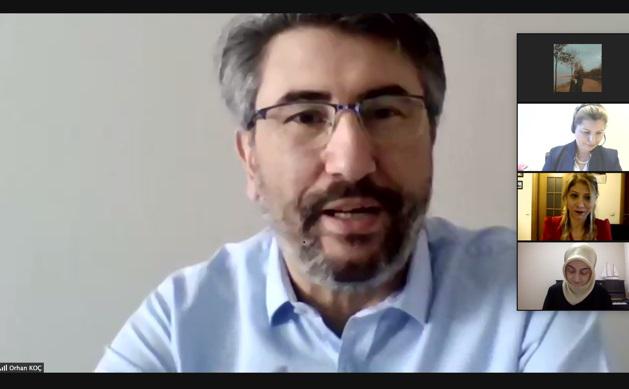
General Director of Services for Persons with Disabilities and the Elderly, Dr. Orhan Koç: “The elderly population is increasing in working life”
Dr. Orhan Koç, General Director of Services for Persons with Disabilities and the Elderly at the Ministry of Family, Labor and Social Services, addressed the relationship between the disabled and elderly issue and occupational health in his opening speech. Dr. Orhan Koç stated that although this topic might seem somewhat distant from occupational health, it is important, saying, “But the world is aging. Today, in developed countries like Japan, one in three people is elderly, and in our country, one in ten is elderly. In working life, the elderly population, which we can define as over 55, is increasing; the retirement age has become 65. In about 10 years, there will be a significant number of elderly workers and civil servants working in the public and private sectors. Of course, from the perspective of occupational health and safety for the elderly, and occupational diseases, it is very important to be able to explain new developments and new measures to them, develop behavioral changes in them, and adapt them to new technology.”
Dr. Orhan Koç noted that as the General Directorate of Services for Persons with Disabilities and the Elderly, they have created a national disability database based on diagnosis and reports, stating, “Today, there are 2 million 888 thousand registered disabled individuals. Most of these have received reports and are individuals with over 40% disability,” adding that they are carrying out studies to ensure disabled individuals participate more in working life. Dr. Orhan Koç said, “As a result of studies conducted in our country in recent years, while the employment of disabled individuals in the public sector was around 10 thousand in 2007, now 60 thousand of our disabled citizens work in the public sector. This means they work in workplaces. They work in courthouses, in the Ministry of Health, in our university, and we have things we need to do according to the disability status of these disabled citizens. Likewise, over 100 thousand of our disabled citizens work in the private sector.”
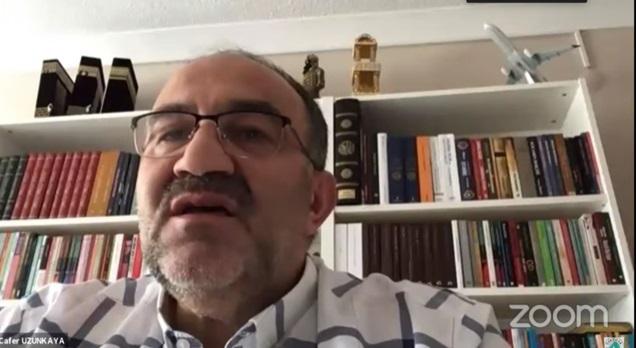
Cafer Uzunkaya: “More lives are lost in occupational health than in the pandemic”
Cafer Uzunkaya, General Director of Occupational Health and Safety at the Ministry of Family, Labor and Social Services, stated that during the current pandemic, all states mobilized with their nations, and 2.5 million people lost their lives in this process. Pointing out that according to International Labor Organization (ILO) figures, 3 million people die annually due to work accidents and occupational diseases when looking at occupational health and safety statistics, Cafer Uzunkaya said, “Also, when we look at these figures, and at the issue of occupational diseases whose statistics are not even properly kept, we must not forget the fact that 200 million of the 3 billion global workforce face occupational diseases. What we mean is that, as a world, we are actually experiencing a pandemic and an alarm situation with occupational health and safety.”
Cafer Uzunkaya noted that Turkey's Occupational Health and Safety Law, enacted in 2012, was revolutionary for working life.
The congress will last two days
The first session of the afternoon section of the 2nd National Occupational Health and Safety Student Congress was chaired by Turkcell Occupational Safety Manager Dr. Selkan Alkan.
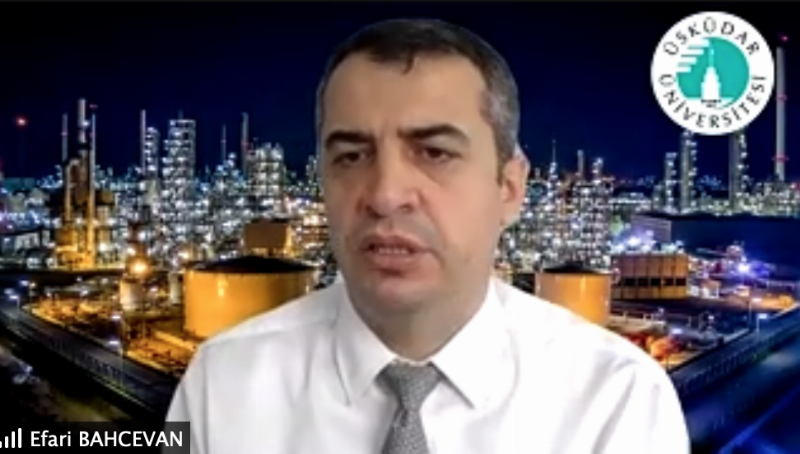
“A leader should consult their surroundings but make the final decision themselves”
Üsküdar Üniversitesi Occupational Health and Safety Lecturer Efari Bahçevan, who gave a presentation titled “Leadership in Occupational Safety” in the session where she participated as a speaker, said: “A leader is a responsible person who benefits their environment, makes fundamental changes, manages their surroundings, and can make decisions based on intuition, intelligence, and knowledge. A leader consults their environment but must make the final decision themselves. When we talk about leadership in occupational health and safety, we must never forget this: it is necessary to carry out activities ranging from toolbox trainings to writing work instructions so that a good leader can fulfill their responsibility towards upper management and carry out their related work. Unfortunately, in businesses, we do not have enough leaders who can lead in occupational health and safety and whom we can keep up with.”
Bahçevan, addressing the adequacy and importance of occupational health and safety, said: “In workplaces with areas where explosive atmospheres may form, it must be proven that the entire workplace is safe from explosion before operations begin. All conditions must be met to ensure protection from explosions. The proof of safety against explosion is provided by competent persons who have been trained or have experience in explosion protection.”
Sena Şülekoğlu from Beykoz Üniversitesi, Şeymanur Aksöz and Nagehan Demir, Merve Karamustafa, Miray Mutaf and Nuray Özen from Üsküdar Üniversitesi participated as speakers in the sessions titled “Health Safety Security”, “Scenario-Based OHS Practices”, “Quality of First Aid Training Provided According to the First Aid Regulation and Measurement of Its Impact on Employees”, “Approach of Higher Education Institutions to the COVID-19 Process, Istanbul Example”, “Impact of Covid-19 Work Environment on Employees’ Job Stress and Quality of Life”, “Investigation of Transmission Routes of Covid-19 Virus as a Biological Risk Factor”.
In the second session held on the first day of the congress, chaired by İSGAM Board Chairman Dr. Ömer Volkan Gök, important views on various topics were shared. Gülçer Özcan, Ayşin Güncü, Tuğba Taşkın, and Mehmet Dede shared their presentations on “Evaluation of Environmental Exposures in Ozone Disinfection Process from the Perspective of Occupational Health and Safety”, “Investigation of Sectors with the Most Work Accidents in Turkey and Solution Proposals”, “Occupational Health and Safety Measures in Asbestos Exposure”, “Occupational Health and Safety in Marble Processing”.
In the last session of the day, chaired by Üsküdar Üniversitesi Assist. Prof. Dr. Müge Ensari, Şeyma Nur Sarı, Gülşah Küçüksavcı, Nagihan Demir, Mustafa Gençtürk, and Hülya Aytar participated as speakers. In this session, the following topics were discussed: “Communication Problems Between Occupational Health and Safety Specialists and Employees and Solution Proposals”, “Integration of Machine Risk Assessment into Working Life”, “Lockout/Tagout”, “Human-Centric Lighting”, “Sectoral Analysis of Work Accidents and Occupational Diseases”.
Comprehensive topics will also be discussed on the second day of the congress
The sessions of the two-day congress, which will take place on Sunday, April 4, 2021, will be chaired by Üsküdar Üniversitesi Assist. Prof. Dr. Rüştü Uçan, Health Sciences University Assist. Prof. Dr. Serap Tepe, Niğde Ömer Halisdemir Üniversitesi Lecturer Dr. Serenay Çalış, and Semin Inc. Board Chairman Yasemin Öymez Semin.
The following topics will be discussed in tomorrow's sessions: “Approach to Occupational Health and Safety in Higher Education Institutions, Istanbul Example”, “Adaptation to Global Climate Change: Smart Agriculture Practices and Occupational Health and Safety”, “Evaluation of Wellbeing from the Perspective of Occupational Health and Safety”, “Evaluation of Risks Encountered in Industrial Kitchens and Examination of Three Different Accidents Using Root Cause Analysis Method”, “Determining Proactive and Reactive Measures Using the Bowtie Model Risk Assessment Method, Warehouse Example”, “Comparison of Occupational Health and Safety Department Undergraduate Program Curricula: Contribution to the Accreditation Process”, “Problems in the Implementation of Emergency Plans in Workplaces”, “Occupational Health and Safety at Home”, “Occupational Health & Safety and Ethics”, “Effects of Mobbing on Occupational Health and Safety”, “Impact of Occupational Health and Safety on Process Improvement in Chemical Production”, “Impact of Occupational Health and Safety on Product Safety in Chemical Production”, “Analysis of Anatomy Theses on Formaldehyde as a Chemical Risk Factor in Anatomy Laboratories”, “Occupational Health and Safety and Risk Assessment in the Textile Sector”, “Approaches, Task Performance, and Problems of Employees Exposed to Mobbing in the Work Environment within the Scope of Psychosocial Risks” “Disaster and Emergency Management Plan Preparation Studies for Higher Education Institutions: Bursa Uludağ Üniversitesi Example”, “Evaluation of Hospital Environments in Terms of Occupational Health and Safety During the Covid-19 Pandemic”, “Comparative Analysis of Occupational Health and Safety Practices Before and After Covid-19 in the Healthcare Sector: Ankara Example”, “Delivery of Basic Occupational Health and Safety Training Through Distance Education: Uludağ Üniversitesi Example”, “Investigation of Work Accidents and Near Miss Incidents Encountered in a Factory Producing Automobile Sound and Heat Insulation Parts”, “Research on the Importance Given by Construction Sector Employees to Personal Protective Equipment”, “Occupational Health and Safety in the Mining Sector”, “Analytical Analysis of Nano Materials”, “Occupational Health and Safety in Wastewater Treatment Plants”.
Share
Request a Call
Other News
- The book that read today's digital threats in 2014: Being a Conscious Family
- Experts warn: 'Instead of memorizing letters, teach pencil grip, scissor use, and coloring'
- School fear and school love both start in the family!
- Family is not merely transforming, it is being battered under a serious assault
- Artificial intelligence opens the door to early diagnosis in autism!