

Üsküdar Üniversitesi Founding Rector, Psychiatrist Prof. Dr. Nevzat Tarhan, made evaluations regarding people's sense of self-worth and self-feeling. Referring to the concepts of “unrequited goodness” and “silent goodness” present in our social and cultural structure, Tarhan stated that silent goodness increases self-strength.
Content
Prof. Dr. Tarhan: “Silent Goodness Boosts Self-Power”
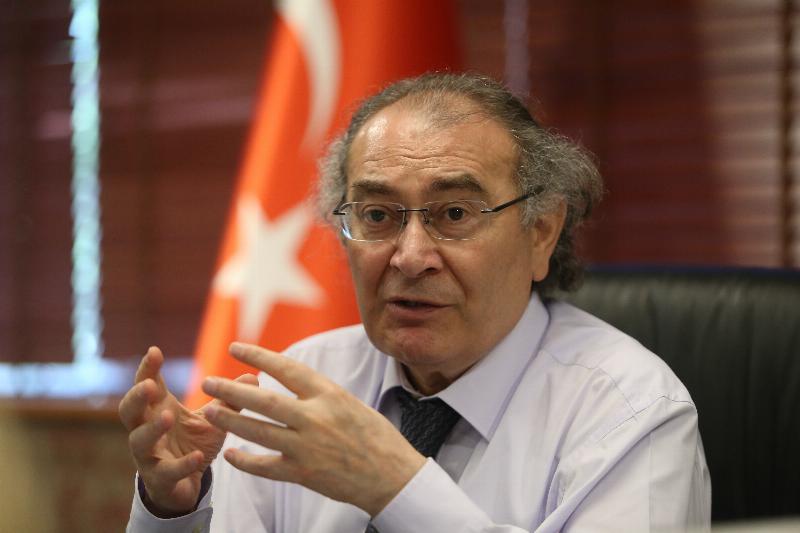
Prof. Dr. Nevzat Tarhan, who made important evaluations in the TRT Radio 1 program, stated that there are concepts of “unrequited goodness” and “silent goodness” in our social and cultural structure. Tarhan said; “For example, making eye contact with someone passing by, or greeting them when you make eye contact, are very important values. Such behaviors are considered charity in our belief system. When such good deeds are done, the world becomes a more livable place. They ask Mother Teresa, ‘How does the world become more livable?’ She says, ‘By doing good deeds one-on-one.’ When people do good, they rejoice,” he said.
“The giver, not the receiver, is happier”
Referring to experiments conducted on goodness, Tarhan said; “The Happiness Scoring Test is one of them. They give a group of subjects $25. They administer a test, telling them, ‘Take this $25 and spend it only on yourself. Come back a day later and write down what you felt.’ To the same group, the same people, they give $25 and say, ‘Spend this only on others.’ But there’s a condition for the test; these people must be strangers. Then these people are asked to fill out a test to measure what they felt. According to the results of this test, people who give money to others become happier. In other words, the giver, not the receiver, is actually happy. Giving activates areas in the brain related to happiness. Gratitude, the feeling of thankfulness, does the same thing. For example, you give thanks. What is this thankfulness? Actually, the Creator does not need our thankfulness. We merely express our gratitude and thankfulness towards Him. When this happens, that feeling makes us feel good. It is beneficial for us. There is a motto like 'succeeding in being happy with small things'. Being able to find happiness in ordinary, small things used in the philosophy of life is one of its methods for happiness. There is a very beautiful saying: ‘We went to space but forgot how to live with a brother.’ Unfortunately, our philosophy of life has changed,” he said.
“Authentic happiness equals peace”
Stating that humanity's current purpose and nature have changed, now pursuing pleasure, Tarhan said; “However, the pleasure principle is related to concrete pleasures. The feeling of happiness is separate, the feeling of peace is separate. For example, you eat your fill, you are happy, but when hunger strikes, that feeling passes again. But when there is peace, a person can be happy in any situation. Authentic happiness equals peace. Authentic happiness is pure, genuine happiness; that is, being able to be happy in a dungeon, being able to be happy in a palace, being able to succeed in any environment is necessary. For this, one of the methods is to be generous with goodness,” he said.
“The self is different from the ego”
“The ‘self’ means a person realizing that they are a separate individual from other people,” said Tarhan, continuing his words as follows: “It is a person saying, ‘I am a separate individual.’ The self is different from the ego. It encompasses both our conscious and all our unconscious actions. A person knows that they are different from other people. Other living beings apart from humans do not have a sense of self. There is only a concrete self. In humans, there is both a concrete self and an abstract self. The concrete self is related to our basic physiological functions common to other living beings, such as eating, drinking, and reproducing. In animals, the concrete self satisfies its hunger; a lion sleeps 15 hours, hunts for two to three hours, and takes care of its cubs for two to three hours. It sleeps for the rest. This is its life, but humans are different. The time a human spends eating generally does not exceed one or two hours. Humans have abstract goals and purposes. In other words, the human self is different. There are not only concrete goals, but also abstract goals. Humans have an abstract self. It is important for humans to become aware of this abstract self.”
“Decrease in self-worth is one of the main symptoms of depression”
Emphasizing that humans have a sense of self-worth, Tarhan said; “A person's social self, ideal self, real self… The self-worth between these three, these three points, must be close to each other. If a person's self-worth, self-perception is low, if they feel more worthless, insignificant, useless than they are, then their self-worth is low. Thoughts like ‘I’m useless, I’m worthless, nobody loves me, living is empty, meaningless, it’s better to die’ occur in a state of depression. A decrease in self-worth is one of the main symptoms of depression. It is the person seeing themselves as more uncertain than their true self. For example, someone who sees themselves as worthless, when walking down the street and not being greeted, thinks, ‘Nobody even deems me worthy of a greeting.’ Therefore, people with low self-worth are nourished five times more by feelings of appreciation, praise, and approval from others. Their insatiable need for love, their constant expectation of praise, is actually due to low self-worth,” he stated.
“People with high self-worth are at peace with themselves”
Noting that a person who is at peace with themselves has their real self, self-worth, and ideal self close to each other, Tarhan said; “Such individuals are at peace within themselves, so they are not affected even if someone insults or criticizes them. However, a person with low self-worth, when praised by someone, first doesn't believe it, they test it. They say, ‘That's just how it seems to you, I'm useless.’ Well-intentioned people bring out their self-worth by emphasizing their positive aspects. We try to do that in therapies too. We analyze the person with personality tests, looking at their strengths, weaknesses, psychological defenses, ego strength, psychological resources, and psychological dynamics. We try to understand the person's true self. We try to understand the self as perceived by that person. After that, we look at what their ideal self is, and what their perceived self is. When the disconnect between these selves is resolved, it means the person is undergoing a process of self-discovery on an inner journey of exploration. This inner journey of exploration is like searching for treasure in the depths of the ocean. It's like going to Mars in space. The inner journey of exploration is not easy at all. It requires effort, labor, and deep contemplation. If a person has these, they embark on an inner journey of exploration,” he said.
“Yunus Emre wonderfully undertook the journey of self”
Reminding that this year was declared the Year of Yunus Emre, Tarhan said; “Yunus Emre wonderfully undertook that journey of self. When Yunus says, ‘There is a self within me,’ he actually meant self-discovery, recognizing one’s self in life. This is called the concept of selfhood. This is different from the ego. It is a concept that encompasses not only oneself but also one's relationships. For example, what are the patterns in all these relationships: a person’s relationship with existence, with creation, social relationships, professional relationships? With what personality patterns does one act? He says, ‘I took on flesh and bone, and appeared as Yunus.’ Actually, this means flesh and bone are concrete. And he also says, ‘There is a separate self called Yunus.’ He begins to discover himself from there. He says, ‘Man is born twice. One is born from the mother’s womb, and one is born when they find the truth.’ Yunus Emre sets humanity on this journey in this way. Again, Yunus has a beautiful saying: ‘I stepped aside, and the Creator came.’ He wants to explain that his self was an intermediary. Being able to say this shows that he emerged from an arduous inner journey. That is why they embark on an inner journey. When he says, ‘Knowledge is to know knowledge. Knowledge is to know oneself,’ Yunus Emre here discovers himself within the concept of the self. Thus, since he sees himself as the interlocutor of the Creator, he no longer needs feelings of worthlessness. Everything in the world becomes insignificant for him. Finding the Creator of the universe, and establishing a heartfelt connection with Him, no torture affects such a person. Nothing affects them. Their spirit is exalted. Their body may be on the ground, but their spirit is elevated,” he stated.
A person with a free heart does not suffer
Tarhan continued his speech with topics he examined in his book Mesnevi Therapy; “A dervish goes to a mental hospital. He sees someone whose hands, arms, and feet are tied, singing a song, a folk song. He asks, ‘Your hands and feet are tied, you are like you're being tortured, but how are you singing a song, a folk song?’ The mental patient there laughs. He says, ‘My hands and feet are tied, but my heart is not.’ Rumi (Mevlana) actually drew a lesson from that. What is important is for a person’s heart to be at peace. A person with a free heart does not suffer. Because that person has transcended themselves. A person who knows their self-worth, a person who knows their existential self in real life, does not fall into despair even in the worst conditions. The biggest enemy of self-worth is when it combines with hopelessness and pessimism, causing a person’s self-confidence to disappear. In such situations, they say life has no meaning. They ask, ‘Why should I live?’ They say, ‘If I’m going to live for another ten years and then die anyway, I might as well die now and get it over with’,” he said.
“Humans are very diverse in terms of abstract values”
“Being a good person is the rent for our existence,” said Tarhan; “Being a good person for our existence is always a virtue, a merit, but virtue is much more important than merit. We live in this world, having come from eternity, going to eternity. And here we are undergoing a certain test. We are travelers here. In this journey, we, and other living beings, come and go in this world. In living beings, the material dimension of the 'self' feeling is very diverse. If we look at insects, there are 40 types of eyes, 40 types of legs. But if you look at humans, physically all people are almost the same. However, when you look at people spiritually, none of them resemble each other. Their personalities don't resemble. In terms of abstract values, humans are very diverse. You can attain perfection, or you can be cruel like Nero or Hitler. Humans can vary between two extremes. And this happens with the decisions and choices they make. Humans choose these with their own free will,” he continued.
“One who knows the true meaning of existence never loses hope”
Stating that the second concept that makes a human being human, apart from the self, is free will, Tarhan said; “Humans also have the freedom to defy the Creator. He has also given that to humans. The Creator has given them the freedom to say no to Him. This also needs to be considered. In such situations, a person who feels worthless disrupts their proportion, relationship, and connection with existence. One who knows the true meaning of existence never loses hope in any environment, under any circumstances. In fact, there is an example of this. Mandela, the leader of South Africa, was imprisoned for more than 10 years. While in prison, there was also an Indian Muslim in the cell next to him. Mandela said, ‘I’ve given up the struggle, I have no hope of being freed.’ The Indian Muslim says, ‘Don’t ever say that. We have a holy book. In it, losing hope in Allah’s mercy is considered a great sin. If a person believes in Allah, everything has a meaning, a wisdom. Despair is forbidden to us,’ he says. These words encouraged Mandela,” he said.
“A person who feels worthless can think that being alive has no meaning”
Stating that when a person focuses on the negative and fails to see the blessings and values they possess, they are doing an injustice to themselves, Tarhan said; “A person who feels worthless can think that being alive has no meaning. Giving exaggerated value to temporary things one has in life can also be very exhausting at times. If you value transient, mortal things as if they were permanent and immortal, you will suffer. If you treat something you cannot control as if it belongs to you, if you forget that you are a guest in this world and try to stay as a host, you will experience an intellectual crisis when faced with issues related to death. Currently, intellectual distress has increased. They see themselves as worthless. Therefore, the philosophy of life is very important here. We need to return to our essence, contemplate our inner journey, our inner reckoning, and why we exist. Let's not do ourselves an injustice. For one, we are lucky to be human. Therefore, someone who perceives themselves as worthless is looking at themselves with dark glasses, with foggy glasses. That person must change their perspective. Let them assign new meaning to themselves. Let them assign the correct meaning. If they assign meaning to their self, they will realize the aspects where they are valuable and positive,” he concluded his speech.
Share
Update Date: February 27, 2026
Creation Date: April 04, 2021
Request a Call
Other News
- The book that read today's digital threats in 2014: Being a Conscious Family
- Experts warn: 'Instead of memorizing letters, teach pencil grip, scissor use, and coloring'
- School fear and school love both start in the family!
- Family is not merely transforming, it is being battered under a serious assault
- Artificial intelligence opens the door to early diagnosis in autism!