

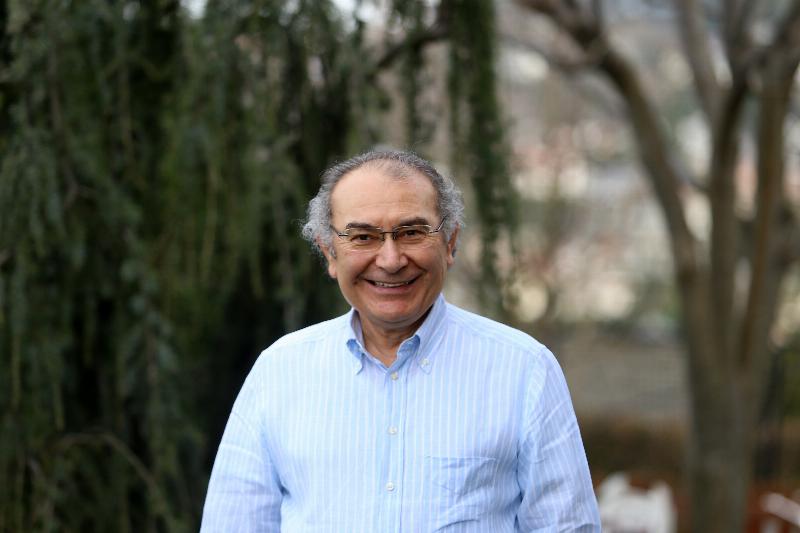
Üsküdar Üniversitesi Founding Rector Prof. Dr. Nevzat Tarhan was a guest on the “Çocuğa Dair” program broadcast on TRT Radyo 1. Tarhan made evaluations regarding the topic of “Secrets to Being a Happy Family.” Prof. Dr. Nevzat Tarhan; “Suffering is a part of growing up. Therefore, saying 'May my child not suffer' is the greatest evil that can be done to a child. However, for their development, they need to learn to overcome some problems on their own. The responsibility of parents is not to make the child happy, but to prepare them for life. That's why we said suffering is a part of growing up, there is such a law in life. Life gives its reward to those who endure difficulties.” he said.
Content
Prof. Dr. Tarhan: “Saying 'May My Child Not Suffer' Is The Greatest Evil”
“The family is the smallest ecosystem”
Prof. Dr. Nevzat Tarhan, explaining how the twenty-item formula emerged, said: “In child psychiatry, we deal with problematic children. In seventy to eighty percent of cases, we set the child aside and deal with the parents. A twenty-item formula emerged while seeking an answer to the question 'How would the child not be ill if the parents were different?' This is a synthesis suitable for our culture. Our social structure and cultural values are different from many countries in the world. Based on this, we tried to derive this formula. For example, in the first item, we stated that a child's greatest chance is to grow up in a peaceful environment with compassionate and principled parents. When we look at children with addiction or OCD, there is a constant atmosphere of tension in the child's home; they are not happy at home. Both sides love each other, they live together, but there is a constant war between the parents. Or, you look at the mothering and fathering model, and they always paint a negative profile. Always critical. The child or spouse feels like they are coming to court when they come home. A home where one is judged and blamed is not a warm, peaceful environment. Therefore, it is very important for a child to grow up with compassionate and principled parents. The family is the smallest ecosystem. If there is sun, water, and everything beautiful in this ecosystem, good plants will grow. In summary, we need to be compassionate, principled, and trustworthy parents.”
Love is used like a stick!
Prof. Dr. Tarhan also emphasized that while parents should guide their children, they should also grant them freedom; “Let the child live their childhood. Parents should neither do everything the child wants nor do things for them that they should do themselves. From this perspective, the second point is freedom. It is natural for parents to try to know everything about their child. They see the child as an extension of themselves. However, a child is a separate individual. They should feel both belonging to the home and free. This balance needs to be provided. Letting the child do what they can, and parents intervening in things they cannot do. Like tying their shoes. They can do it, let them do it, but parents don't do this. They do it for them. In such situations, the child becomes the small ruler of the house with this freedom. Another point is when parents say, 'I sacrificed everything for you, I never denied you anything.' If a mother who sacrifices her own happiness for her child's happiness is unhappy, the child cannot be happy. Therefore, parents should not be unfair to themselves. The moment they say, 'Let my child be happy, no matter what happens to me,' they become giving, but that giving becomes a pressure factor on the child, unconsciously used as a method of dominating the child. They use love like a stick, saying, 'I gave you everything, and you will do everything I say. Otherwise, I won't love you.' In such cases, the child grows up with a feeling of not being loved, even though they are. This is also not healthy,” he stated.
“It is necessary to teach how to overcome difficulties together”
Prof. Dr. Nevzat Tarhan underlined that love and trust are effective together on a child; “The responsibility of parents is not to protect children from all kinds of difficulties and hardships. It is necessary to teach them to overcome difficulties together. If parents do what the child should do, when something happens, the child doesn't know what to do and constantly asks the parents. Also, if you notice, I don't just say 'mother,' I say 'parents.' Between 0-3 years old, nothing can replace motherhood, but the mother is a source of love for the child, and the father is a source of trust. Both need to be together; neither is sufficient on its own. Love is like water, and the feeling of trust comes with the feeling of love. They must be one. There is a motherhood hormone, but no fatherhood hormone. By her biological nature, the mother takes more care of the child, and all responsibility falls on her. Our traditional structure also says that the mother embroiders the child like lace, and the father looks outside. However, these two are a team; they must be together. Neither the mother alone nor the father alone can be dominant in everything,” he said.
“Suffering is a part of growing up”
Prof. Dr. Tarhan emphasized that because Generation Z grew up in abundance, their psychological maturation does not occur in its natural course, and young people need to be taught how to overcome problems. Tarhan said, “Past generations grew up learning to live through difficulties and scarcities. Generation Z, however, grows up and matures in abundance. Because they mature in abundance, they cannot achieve many psychological maturational milestones in their natural course. Therefore, it is necessary to teach them in modular forms. For this, as a university, we are launching a project called 'Generation Z at University.' We need to teach them wisdom. Otherwise, they become selfish and conformist. They think the world revolves around them. But these children are very lovely. If this continues, we will lose these children. Suffering is a part of growing up. Therefore, saying 'May my child not suffer' is the greatest evil that can be done to a child. However, for their development, they need to learn to overcome some problems on their own. The responsibility of parents is not to make the child happy, but to prepare them for life. That's why we said suffering is a part of growing up, there is such a law in life. Life gives its reward to those who endure difficulties,” he stated.
Children should learn to be happy by overcoming difficulties!
Tarhan noted; “In our traditional structure, when a child starts walking, there's an immediate instinct to hold them so they don't fall. Western culture, however, lets them go, saying 'let them fall if they do' and doesn't intervene. The child falls, gets up, and learns by trial and error. But this also weakens the mother-child bond. The ideal here is for the mother to stand by the child and say, 'Come on, my child, you walk, I'll catch you if something happens,' but not actually help. When the child walks, they rejoice like a victorious commander. When we do this, the child will learn to be happy by overcoming difficulties. They will learn life this way. This applies to everything. When they get a low grade, argue with a friend, or siblings fight, parents shouldn't immediately interfere with everything. They should establish a horizontal relationship between siblings.”
Here are the rules:
1- The first step in raising a child is for the child to be raised in a peaceful environment with compassionate and principled parents.
2- It is natural for parents to see their child as an extension of themselves and try to know everything about their life, but the child's individuality should also be respected, and they should be given the opportunity to feel free.
3- A child's happiness should not supersede a parent's happiness. However, a healthy balance must be established between the two.
4- Instead of protecting their child from all difficulties, parents should teach them a sense of responsibility and how to overcome challenges together.
5- Instead of one parent carrying the family's burden alone, a team should be formed including the mother, father, and child, and responsibilities and life should be shared.
6- Parents should undertake the duty of preparing their child for life, instead of shielding them from tiring, difficult tasks.
7- Parents should listen to their children's problems and seek solutions together with the child.
8- Parents should expect their children to obey the rules they set, but it should not be forgotten that children also have the right to object to rules. It should be known that offering options is the most effective command.
9- Parents should listen to their children's words as if they were adults, but should not expect them to act like adults.
10- It should not be forgotten that discipline and advice are effective when gentle and continuous, and that being a role model in advice is also important.
11- Children's friends and social life should be closely monitored, but there should be no excessive interference.
12- Parents should know that instead of carrying their child across the bridge of life, they should teach them how to cross that bridge themselves.
13- A mother may feel trapped and confined at home while caring for her children. This is natural. However, parents should remember that only those who manage to enjoy ordinary events and establish a balance between freedom and responsibility can be happy.
14- Parents should live all their roles – mother, father, spouse, businessperson – according to their own conditions. They should live their different roles in different areas.
15- Parents do not have a duty to know their child's secret thoughts. They should leave an autonomous space for the child and allow them to be the captain of their own ship.
16- Parents may occasionally get angry and frustrated with their child, but the important thing is that they should be able to self-critique afterwards and apologize to their child when they are wrong.
17- Even if too busy to answer a child's sudden questions, time should be allocated to them later, and they should be given the attention they deserve.
18- It should not be forgotten that love, interest, respect, patience, and trust are magical words in child education. It should be known that by making your child feel that you care about what they think and by encouraging them to express themselves, you activate these magical words.
19- Patience should be goal-oriented; it should not be forgotten that a child who gets everything they want becomes selfish, and a child to whom everything is said “no” becomes stubborn.
20- Most importantly, teaching human values and empathy to the child. It should be known that the ideal person starts changing the world by changing themselves.
Share
Update Date: February 27, 2026
Creation Date: December 21, 2020
Request a Call
Other News
- Social responsibility courses moved to the field
- Erasmus+ Orientation Week completed at Üsküdar
- Prof. Nevzat Tarhan: “Brain secretes ‘dark glue’ in social media lynchers!”
- Prof. Nevzat Tarhan: “Every segment of society should be able to say, ‘This constitution is my constitution!’”
- OHS releases guide for safe operation of industrial robots