

To share the joy and culture of Ramadan, the “Niyetliyiz” program, hosting valuable guests, meets viewers on Diyanet TV throughout the month of Ramadan. Üsküdar University Founding Rector, Psychiatrist Prof. Dr. Nevzat Tarhan, who was a guest on the program, made striking statements about the importance of the month of Ramadan. Tarhan stated that skills such as delayed gratification and resilience training, acquired through psychological education, are naturally gained by fasting during Ramadan, and noted that Anatolian wisdom and the religion of Islam offer these skills combined with worship.
Content
Prof. Dr. Tarhan: "In Ramadan, the skill of delaying gratification and resilience training are naturally acquired"
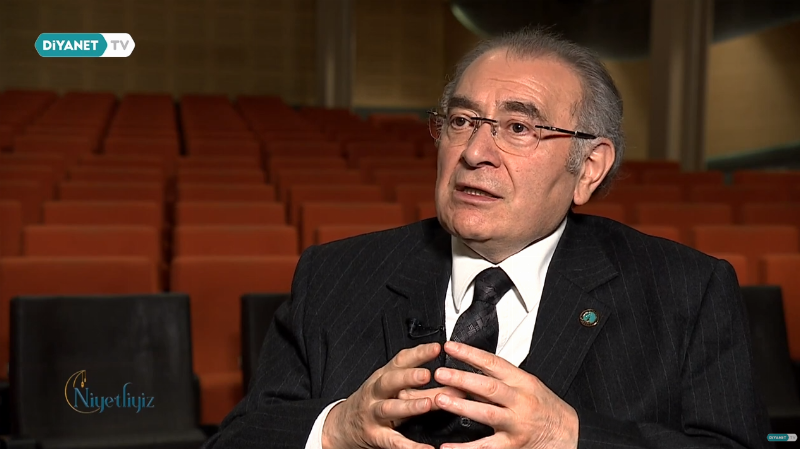
“Good faith is the principle, ill will is the exception”
Emphasizing the importance of acting with good faith in life, Tarhan stated that great transformations would occur from the combination of good faith and good intentions. Tarhan said; “The feeling of doing random acts of kindness is very important, it's an indicator of good intention. Being well-intentioned and ill-intentioned is also somewhat related to being paranoid. Paranoid, i.e., suspicious, doubtful people are often ill-intentioned. For example, let's say a paranoid father, his child brought him a gift, and the father says; ‘Why did you bring it, what do you want from me?’ approaching suspiciously, doubtfully. In this case, the child won't bring a gift again, the child gets hurt, experiences trauma, and starts to act coldly towards the father. However, if the father had acted with the rule of good faith, he would have acted with suspicion, bad faith there. Whereas, good faith is the principle, ill will is the exception in life. Well-intentioned people look at events with good faith. In first-degree, close relationships, good faith is essential. If you have constantly seen evil in a person and are sure that you know they are hostile, you approach them with ill will. Therefore, the rule of good faith also forms the basis of good intention. When good faith combines with good intention, a fascinating and different transformation, a transformative effect emerges. I have actually experienced examples related to this, so we can say that in such situations, it's as if an invisible hand helps.” he stated.
“Our intentions enable us to perceive events and take the right stance”
Emphasizing the importance of intention regarding Ramadan, Tarhan said, “A fasted intention and an unfasted intention are different. When an intention is made, the brain prepares itself to fast all day and be hungry. The brain secretes chemicals related to hunger and satiety. For the first 2-3 days, the body struggles to adapt. After 2-3 days, thinking 'I am fasting' at noon, it does not secrete hunger hormones. What happens is, after a while, once the body adapts, you can comfortably reach the evening without feeling hungry. However, if you are fasting due to societal influence, or for the sake of others, that fast affects you negatively. If you fast sincerely, you will go through it very comfortably. That's why intention is very effective in guiding human behavior and self-development; intention has a huge equivalent in neuroscience. Intentional behavior also creates persuasive power. Our intentions enable us to correctly perceive events, take the right stance, and establish correct connections. If our intention is bad, we take the wrong stance. We form wrong associations, give wrong reactions, and drive the other party away from us. It is intention that evokes good faith and ill will. Therefore, let's pay attention to our intentions.” he commented.
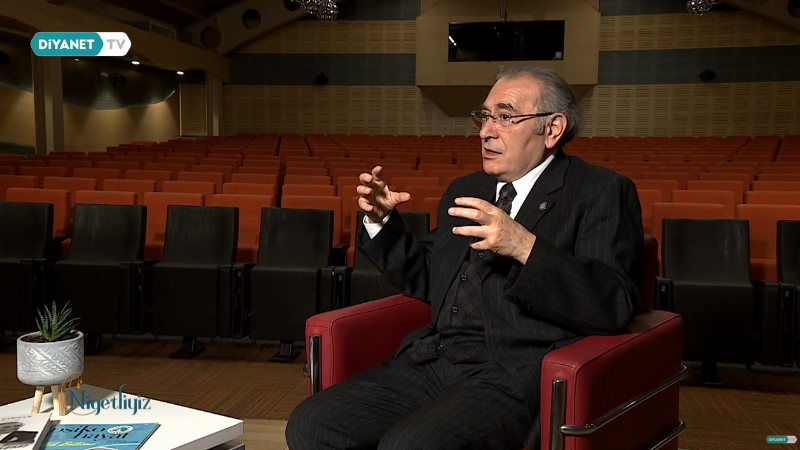
“We miss the Ramadan atmosphere of our childhood because evils diminished”
Sharing his experiences during Ramadans in his childhood, Tarhan drew attention to the impact of neighborhood and family culture on children. Tarhan said; “Ramadans during my childhood often coincided with winter periods. During Ramadans, all the children in the neighborhood would gather. Every evening we would go to a mosque for Tarawih prayers. We wandered all over Merzifon, there were over 30 mosques. As the children of the neighborhood, we would go to the mosque without our parents' guidance. This neighborhood culture influenced me greatly. The effect of this culture on children, and now the family is also very important here. In our house during Ramadan, for example, my father would come home immediately after finishing work. He would never think of going to a coffee shop afterwards. There was such a warm family environment, warm relationships. There was contact with our elders, which made these Ramadans more pleasant and warm. People always say, 'Oh, old Ramadans,' but when they say 'old Ramadan,' they are not referring to the Ramadan of old times, but to the Ramadan of their own childhood. We miss the Ramadan atmosphere. When Ramadan comes, everyone at home, in the family, says 'patience' because we are fasting. The mother says it, the father says it, the environment says it. Thus, the house becomes more pleasant. Therefore, the reason why the month of Ramadan is loved in childhood is the decrease in malevolence during Ramadan. The tone of voice in the house not being raised so much. The increase in warm relationships, the increase in helpfulness, in short, there is a spiritual atmosphere created by Ramadan. Due to that atmosphere, we love the Ramadan of our childhood, but this depends on the family. If we don't have a warm family environment that influences our children now, our children will be lost. Currently, culture is not transmitted by the family, but by social media. Social media can be used positively during Ramadan. Social media is a technology; if used positively, it leads to good things, if used negatively, it leads to bad things. Social media is inherently neutral. It is not right to judge or blame it like that. It is important to be able to use it for good purposes.” he said.
“Transmitting spiritual and high values to the young generation happens through representation, not preaching”
Emphasizing the necessity of being good role models to make the young generation love Ramadan, spiritual, and high values, Tarhan underlined the need to use the method of representation, not preaching. Tarhan said; “On the day of the earthquake, all university students and student clubs, that Generation Z that we questioned so much, worked so wonderfully, day and night they collected boxes, they went with their pocket money and bought water, bought diapers, they collected and taped boxes, all worked and sent them to that region. So, I said it was wrong to approach young people critically then. Young people do what their youth requires, but later, when they see the truth, it continues to live in their nature to accept it. Therefore, it is necessary not to approach this young generation with prejudice. Turkey passed a test with the earthquake, but it was primarily the youth who passed that test. They rushed to that area. We have students who went to that area, they went to the region spontaneously. If we want to make the youth love Ramadan, we must first live according to its meaning. In Ramadan, let's be more benevolent, speak more beautifully, and be better examples. If we can be good role models, this will develop and activate the good within the other person. Bad behaviors activate the evils in the other person. For children to approach Ramadan with love, it is important for us to make our home a warm, relaxing, safe environment, a safe space, suitable for Ramadan. If we do this, the child will love Ramadan, will love the home. When they love the home, they will love what happens in the home. They will love Ramadan; giving a 3-hour conference on Ramadan wouldn't work. Through unspoken language, through the language of behavior, that is, by observing the beauties of Ramadan, young people will love Ramadan. People need solace. It is spiritual and high values that will meet all these needs. The young generation needs these values. It is necessary to transmit them, and that happens through representation, not preaching.” he said.
“In Ramadan, you acquire the skill of delaying gratification and resilience training”
Tarhan stated that some skills acquired through numerous modules in psychological training are naturally gained by fasting during Ramadan, and noted that Anatolian wisdom and the religion of Islam offer these skills combined with worship. Tarhan said; “The Ramadan period is naturally a period of spiritual trade, like periods with profitable trade, fairs, and discounts. Ramadan is like a spiritual fair, there are discounts, all spiritual trade emerges, but this is an an investment for the afterlife. During this period, people gain the skill of managing emotions. For example, the most important thing is that in Ramadan, you acquire the skill of delaying gratification. There is food in front of you, but you cannot eat, you postpone your pleasures, and not just that, you postpone many other pleasures. Secondly, resilience training. Psychological resilience training is provided for resilience. There are modules for resilience training, and many sessions are held to teach these modules. A young person who fasts during Ramadan undergoes a kind of resilience training. For a certain, high purpose, they postpone some of their pleasures and develop the power to endure this. These are the most important social and emotional skills in a person's life. A young person who does not learn these skills acts impulsively, driven by their feelings, acts without thinking of the consequences, makes sudden decisions, and always makes mistakes. However, a person needs to act by thinking of the consequences, to be aware of harm, to perceive harm, and to learn to perform a cost-benefit analysis in their work. These are essentially a form of self-discipline in our culture. True freedom is not living as one pleases, but being free from desires and impulses. Being able to control one's inner urges. The true champion is not one who defeats others, but one who defeats himself, isn't that right? Ramadan is a good opportunity to teach this. Anatolian wisdom and our religion provide this by combining it with worship. It offers it as spiritual trade. The month of Ramadan is a month of spiritual long-term investment. It is a month of spiritual trade, an investment made for the afterlife. Life is not only about this worldly life; the world is a parenthesis opened in a person's life. We are going through a test, and when it comes to an end, we will go with whatever we have filled our satchel with; we must not forget this.” he stated.
Share
Update Date: March 01, 2026
Creation Date: March 30, 2023