

Prof. Dr. Tarhan said, "The earthquake disaster is actually like a minor apocalypse. It affected 11 provinces. We can call it the longest fault line and the biggest natural disaster we have seen in our history. Such a situation caused a psychological trauma effect in society."
Content
Prof. Dr. Tarhan Emphasizes the Importance of Sports in Overcoming the Traumatic Effects of the Earthquake
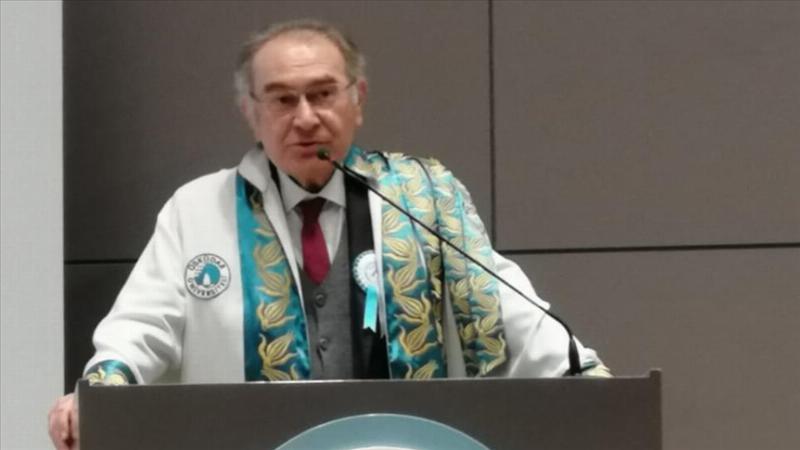
Prof. Dr. Nevzat Tarhan, Founding Rector of Üsküdar Üniversitesi, drew attention to a one-month period for overcoming the traumatic effect of the earthquake, which he described as a "minor apocalypse," emphasizing the need to return to normalization, including sports activities, to prevent the trauma from becoming chronic.
The Kahramanmaraş-centered earthquakes, which shook all of Turkey and affected 11 provinces, caused not only material and moral damage but also psychological trauma among earthquake victims and society.
An AA reporter interviewed Prof. Dr. Nevzat Tarhan, Founding Rector of Üsküdar Üniversitesi, psychiatrist and neuropsychologist, regarding the benefit of sports activities in overcoming trauma.
Referring to the psychological impact of the earthquake disaster on both the earthquake victims and the entire society, Tarhan said, "The earthquake disaster is actually like a minor apocalypse. It affected 11 provinces. We can call it the longest fault line and the biggest natural disaster we have seen in our history. Such a situation caused a psychological trauma effect in society. A social trauma. It caused both individual trauma and social trauma. It also appears to cause cultural trauma. Our lives are now likely to change to 'before the earthquake, after the earthquake'."
Underlining the necessity to restructure many things after this earthquake, Tarhan stated, "Life, existence... Lessons will be learned from this earthquake. Currently, the critical period for the earthquake is two weeks. If the period of intense grief exceeds 6 weeks, it is already considered pathological grief. It is considered complicated grief. It has been approximately three weeks since the earthquake occurred. Therefore, we need to make sense of the earthquake now and look forward with the lessons we will learn from it."
"Returning to normalization is also scientifically recommended"
Prof. Dr. Nevzat Tarhan reminded the Turkish society's particular interest in football and evaluated the restart of postponed league matches on March 3-4 after the earthquake.
Stating that this timing coincides with one month after the earthquake, Tarhan continued as follows:
"I think there might be a six-week period for that region, but starting after four weeks is reasonable. Because returning to normalization after two weeks is also scientifically recommended. If society, as a social life, does not return to normalization, grief turns into complicated grief. That is, it turns into pathological grief. Because that mourning reaction is continuously kept alive in life, it causes impairment. That is, it negatively affects people's work efficiency, socialization, and family lives. For example, I think it was accurate to start education in primary and secondary schools after two weeks. However, since sports also have an entertainment dimension, it understandably evokes a sense of guilt in people, thinking, 'How can we do sports when so many people are affected?' Therefore, before starting sports, in these first matches, it is especially important to express condolences with a banner. It is important, for example, to recite a Fatiha for the deceased, which is part of our culture. This can be done in matches. You would enable thousands of people to pray for them. Also, teams can donate a portion of their revenues. With such gestures, the transition to normalization can be made. Therefore, it is no longer necessary to postpone further. Otherwise, we will chronicize the trauma. We always say; trauma should be reduced, its memory should be kept alive but not mummified. It should not be kept alive as it is. This even applies to that region. That is, let alone the rest of Turkey, which has been exposed to chain trauma, it also applies to that region. There are things in life that a person cannot control, cannot overpower, and cannot change. Natural disasters are like this. They are events that we cannot overpower, cannot change, and cannot control. We need to accept such an event and continue life. We will accept it. The questions of why and why not are separate, of course."
The healing effect of football
Tarhan explained that the league was started at a reasonable time and that the Turkish Football Federation's (TFF) decision for March 3-4 was appropriate, emphasizing the healing effect of football on the psychological devastation caused by the earthquake, stating, "For example, a child emerged from under the rubble in a Fenerbahçe jersey after the earthquake. After all, life goes on. There are still people living the earthquake 24 hours a day. Here, televisions are continuously giving new news, day and night. There is new information. People are looking for culprits. They judge, they ask, 'Why?' This situation is an opportunity for people to say, 'Stop, think, restart'." he assessed.
Regarding whether sports have a healing power in such disasters, Nevzat Tarhan explained, "In such a situation, if a person feels that sports will relax them, they should engage in sports during the normal process. If a loved one has passed away now, and they feel guilty, it may take a little longer. There is a period of up to eight weeks for normalization. Between four and eight weeks. But after eight weeks, that person also needs to normalize. That is, people even forbid themselves from hugging their child, with the thought, 'How can I do this while they are under the ground?' This situation should not exceed eight weeks. Sports are the same way. Four weeks; if a person is very affected, you extend this to eight weeks. After eight weeks, life should return to normal."
Tarhan argued that Turkey's belief system sees the earthquake not as a punishment but as a divine warning, stating, "There is an example of Mevlana. If a sheep strays from the flock while the shepherd is moving the flock, he throws a stone at it. The reason for throwing the stone is not to hurt or injure the sheep. He does it so that wolves don't catch it, it doesn't stray from the flock, and it doesn't go off the path. Is there such a divine warning in this event? Let them ask this question. That is, just as Mevlana warned the straying sheep by throwing a stone, everyone should see this as a divine warning and evaluate it in that way. That is, seeing it as a punishment is not among the teachings of our religion. Christianity sees these events as punishment; we see them as warnings. That's how we should see it."
Tarhan explained that everyone would draw their own conclusions regarding this earthquake, sharing his view, "One does not live with the earthquake. Some say, 'Live with the earthquake.' That is, one does not live as if an earthquake will happen at any moment. You take precautions regarding the earthquake, and then, after taking precautions against the negative, you aim for the positive and live that way. In other words, we will take precautions as if an earthquake will happen, and live as if it won't. If we don't do this, our lives will be turned upside down. We will fall into depression, and our health will deteriorate."
Nevzat Tarhan also touched upon the aid activities of large sports clubs for earthquake victims, concluding his words by saying, "Everyone did something within their means. Since sports clubs are in the public eye, society expects greater sacrifice."
Share
Update Date: March 01, 2026
Creation Date: February 24, 2023
Request a Call
Other News
- The book that read today's digital threats in 2014: Being a Conscious Family
- Experts warn: 'Instead of memorizing letters, teach pencil grip, scissor use, and coloring'
- School fear and school love both start in the family!
- Family is not merely transforming, it is being battered under a serious assault
- Artificial intelligence opens the door to early diagnosis in autism!