

Üsküdar Üniversitesi Founding Rector, Psychiatrist Prof. Dr. Nevzat Tarhan was a live broadcast guest on Kanal 7's “Sahur Vakti Programı,” presented by Prof. Dr. Mustafa Karataş. Tarhan, drawing attention to the gains obtained from acts of worship performed during the month of Ramadan, stated that fasting is a long-term investment. Tarhan; “Ramadan fasting has a devotional aspect, but on the one hand, while Allah entrusts us with a responsibility like fasting, He wants us to gain the ability to manage our desires and impulses. We gain qualities such as the ability to remain calm under stress and the ability to delay gratification. Fasting is a long-term investment, a spiritual trade.” he said.
Content
Prof. Dr. Tarhan: “Fasting is a long-term investment, a spiritual trade”
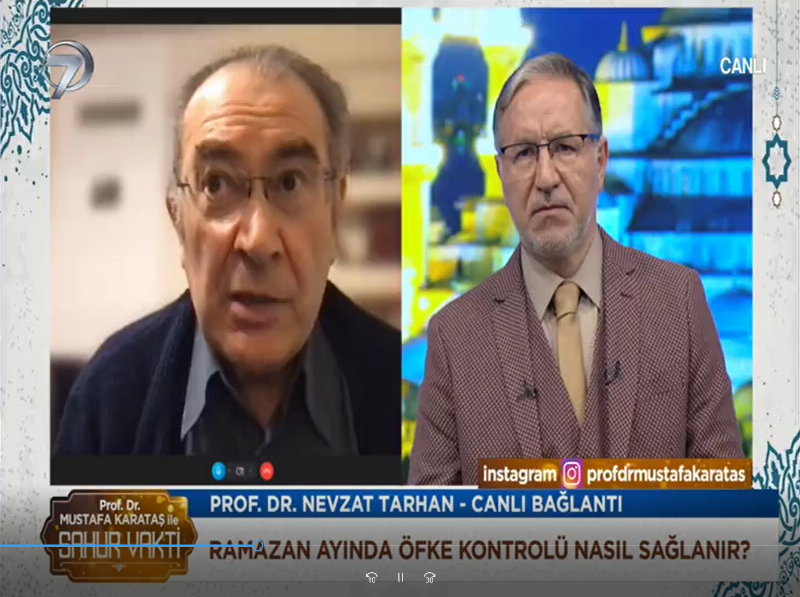
“Impulse control is learned through the acts of worship during the Month of Ramadan”
Tarhan, drawing attention to the use of the concept of stress and the importance of acts of worship performed during Ramadan in getting rid of the negative traits observed in modern humans as a result, underlined that the greatest freedom is a person's ability to manage their own desires. Tarhan; “The state of stress has shown a serious increase not only in Turkey but also worldwide. This word 'stress' did not exist before, it entered medical literature in the 1960s. Modernism brought us a fast-paced life. It raised the level of fast living and expectations among people. We became extremely secularized. In philosophical terms, secularism, or worldliness, came to the forefront. People, due to these characteristics, became worldly and selfish. Selfish and narcissistic people desire a master-slave relationship. When they cannot establish this relationship, they try to pressure and crush the other party. Some individuals experience impulse control disorder. They cannot control their anger, desires, urges, and wishes. Our Prophet (PBUH) said after the Battle of Tabuk, ‘The small jihad is over, the great jihad begins.’ When they asked, ‘What is the great jihad, O Messenger of Allah?’ Our Prophet said, ‘It is the jihad against the self.’ It is truly difficult. There are desires and impulses that must be fought. True freedom is for a person to be free from their own desires and impulses.” he said.
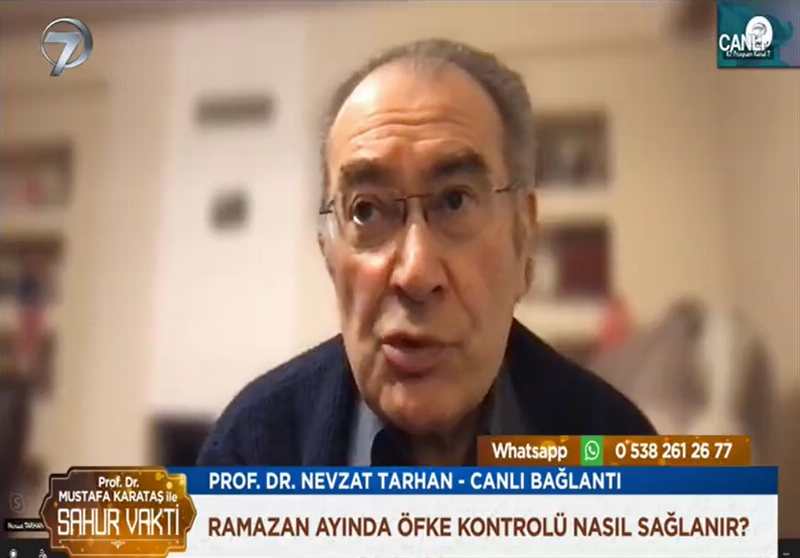
“Fasting provides resilience skills”
Tarhan, stating that Ramadan fasting is an important training in impulse control, conveyed that this situation is expressed as 'nefis terbiyesi' (self-discipline/training of the ego) in religious terminology. Tarhan; “Fasting is a tremendous training in providing resilience education, and hunger and eating control. In such cases, we teach the skills of remaining calm under stress. Through simulation, a person is put under stress. When entering stress, there are scenarios in the game related to the skill of remaining calm. For a person to learn certain things in life, they need to enter the scenario and train themselves. Ramadan fasting puts a person into a 'hunger cure'; they have food in front of them but do not eat, controlling their impulses. This is self-discipline ('nefis terbiyesi'). Self-discipline, being able to control one's desires and impulses, is a state that a person must achieve in their maturation process. We call this resilience skill. When a person properly observes Ramadan fasting, while controlling the impulse to eat, they actually learn to control their other impulses as well, because the impulse to eat is the root of all impulses.” he stated.
“Fasting is a long-term investment, a spiritual trade”
Tarhan, drawing attention to the gains resulting from the act of fasting, stated that fasting is a long-term investment. Tarhan; “Ramadan fasting has a devotional aspect, but on the one hand, while Allah entrusts us with a responsibility like fasting, He actually wants us to gain the skills to manage our desires and impulses. We gain qualities such as the ability to remain calm under stress and the ability to delay gratification. All these provide training in patience and endurance. There is also a spiritual counterpart to this. Fasting is a long-term investment, a spiritual trade. It is an investment made for death and the afterlife. A wise person does not make short-term investments. They make medium and long-term investments, thinking strategically. Fasting is for a person to think strategically and make a spiritual investment concerning death and the afterlife. Therefore, the acts of worship performed during the month of Ramadan are a very profitable trade. We need to know its value. When we know its value, the brain convinces itself.” he said.
Share
Update Date: February 28, 2026
Creation Date: April 06, 2022
Request a Call
Other News
- The book that read today's digital threats in 2014: Being a Conscious Family
- Experts warn: 'Instead of memorizing letters, teach pencil grip, scissor use, and coloring'
- School fear and school love both start in the family!
- Family is not merely transforming, it is being battered under a serious assault
- Artificial intelligence opens the door to early diagnosis in autism!