

Speaking about how earthquake victims and society can overcome the psychological problems experienced after two major earthquakes, rarely seen in the world, Prof. Dr. Nevzat Tarhan stated that the shock of the suffering should be overcome quickly to achieve normalization, and that if the trauma persists for a long time, social order could be disrupted.
Content
Prof. Dr. Tarhan explained: How to overcome the psychological effects of the earthquake?
On February 6, 2023, at 04:17, a 7.7 magnitude earthquake occurred in Pazarcık district of Kahramanmaraş. Before its shock could be overcome, just 9 hours later, at 13:24, a new earthquake of 7.6 magnitude struck this time in Elbistan.
The earthquake was severely felt in a total of 10 provinces, including Kahramanmaraş, causing thousands of buildings to collapse and tens of thousands of casualties in Kahramanmaraş, Hatay, Malatya, Adıyaman, and Gaziantep, which were at the epicenter. Simultaneously, in Osmaniye, Adana, Diyarbakır, Şanlıurfa, and Kilis, where the earthquake was strongly felt, dozens of buildings collapsed, leading to hundreds of deaths. In the earthquake disaster that directly affected 13.5 million people, some families perished completely, while only one person, a child, or a baby remained from others.
"Turkey will experience the shock of this for a long time"
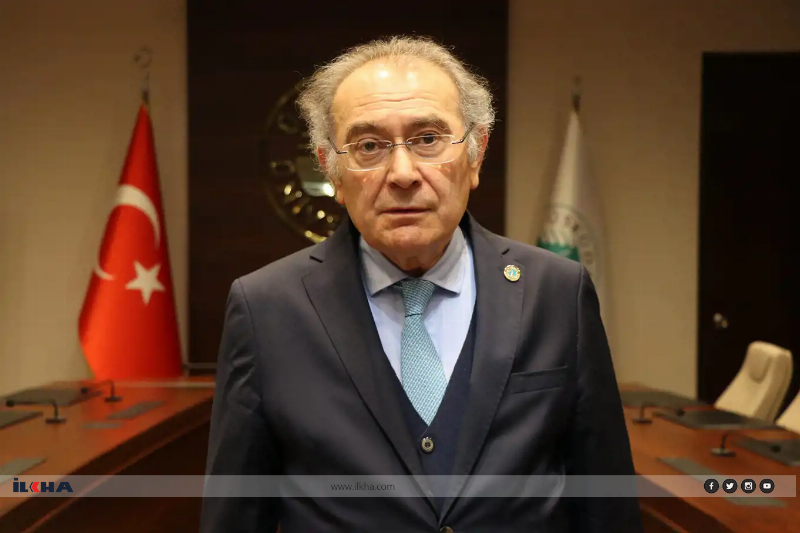
Prof. Dr. Nevzat Tarhan, Rector of Üsküdar Üniversitesi and Psychiatrist, explained to an İLKHA reporter how to overcome the suffering experienced after the disaster of the century, which psychologically affected both those who directly experienced the earthquake and witnessed great pain, and 85 million people across the country. He said, "This earthquake is truly one of the most severe earthquakes with the longest fault line in Anatolia, and even in world history. Furthermore, the occurrence of two earthquakes 9 hours apart caused immense destruction and great losses. There are missing children and buildings that are still unreachable. This earthquake had a shock effect on people. It caused primary trauma in the people living in that region and secondary trauma throughout Turkey. Turkey will experience the shock of this for a long time. It is important to know this. During this period, in disasters and shock experiences, the method recommended by psychiatry is rapid normalization after the acute (grief) period has passed. To continue rapid normalization, the trauma needs to be minimized. Within 4-6 weeks, the trauma should be reduced, keeping the memory of the losses and the shock experienced alive, and then moving forward."
"If trauma prolongs, social order is disrupted"
Tarhan said, "The shock experienced there cannot be forgotten, but you also cannot bear it if you relive an event that happened two months ago as if it happened yesterday. The biggest mistake here is to 'mummify' the trauma. If situations arise where one relives all events as they were, re-experiences the event upon closing their eyes, and cannot sleep at night, or if there are startled reactions to a mere click sound, the trauma then turns into a stress disorder. The first 7-14 days constitute the shock period. During the shock period, people's greatest need is generally to meet their basic needs and feel safe. During this process, children should not be left alone; they should be kept close when going somewhere. Because a child looks at their parents and acts as they do. Distancing the child is not correct. This approach pushes the child into more uncertainty. If trauma prolongs, it disrupts social order."
"Leaders must provide proper leadership! A wrong word can lead to social explosions"
Reminding that crimes can begin to be committed and serious social breakdowns can occur when hope runs out, Tarhan said, "Therefore, it is very important for leaders to exercise proper leadership. Even if the public acts angrily, they must remain calm. Some words here act as a spark. If a spark occurs, there will be an explosion. Currently, a wrong word, a wrong action will lead to social explosions. Therefore, leaders must speak very carefully; if they thought three times before speaking, they should now think nine times. The most important thing for this is to understand that emotions are shared. In such a situation, to entirely attribute blame to divine will without self-criticism means not empathizing (fellow feeling) with people at all."
"One should not panic by saying events are out of control"
Addressing the stress and anxieties in society due to the disaster, Tarhan continued his speech as follows:
"Mild stress is beneficial. From kindergarten and primary school, this stress pushes us towards education, towards being alert. Carelessness, which leads to indifference, is more harmful. Controllable stress is beneficial. Uncontrollable stress harms the person. We call this toxic stress. In this situation, the person's brain functions are impaired. Because the brain secretes excessive stress hormones, stomach, intestines, shoulder, and back muscles contract, and all energy stores are pumped into the blood. Sugar, glucose, and blood pressure rise. This causes many diseases. Therefore, it is important not to panic by saying events are out of control. In the face of natural disasters, there are things within human power and things beyond human power. In such situations, there are methods we call third-wave psychotherapy. There is a 12-step treatment there. One of these is for the person to take refuge in a mental sanctuary, to trust a higher power."
"Those with the belief in Tawhid overcome the process more easily"
Emphasizing that people need to take refuge in a power to overcome the process, and that in this sense, the belief in Tawhid (oneness of God) is the strongest and most rational, Tarhan concluded his remarks with the following statements:
"If you don't trust the pilot when flying in a plane or traveling on a bus, you cannot sleep or be at ease. At that moment, you worry, 'What if they fall asleep, what if there's an accident?' That's why you have to trust. Is this world-ship in the universe wandering aimlessly? For millions of years, it has been rotating with a tilt of 23 degrees and 27 minutes. It's impossible for it to do this on its own without external control. Our mathematical reasoning indicates the existence of an external intelligence, an external will. Here, the strongest belief, the most rational belief, is the belief in Tawhid. Individuals who hold this belief, finding a mental sanctuary in such situations, take every precaution within their power and then surrender. We will do everything to prevent these events, but after an earthquake occurs, understanding people and easing their emotions, it is more appropriate to emphasize the dimension of 'tevekkül' (trust in God's divine plan). Some people become passive during this shock period and don't talk to anyone. Some become aggressive and hostile. Some also freeze, speaking aimlessly. If this condition lasts for more than 3 days, professional help is required. If a person does not engage in problem-solving behavior after a disaster, it means they have not overcome the shock of the disaster. This situation should be considered acute stress disorder, and intervention is necessary. In therapy, instead of talking about problems, it is necessary to listen to the person and make them feel safe. In such situations, the person should postpone discussing these things until after the acute period, saying, 'This is something beyond my power, something I cannot control. Instead of saying 'I wish' now, we will talk about these later.' Those with strong faith are more fortunate here. By taking refuge in their strong beliefs, they can control events better."
Share
Update Date: March 01, 2026
Creation Date: February 16, 2023
Request a Call
Other News
- The book that read today's digital threats in 2014: Being a Conscious Family
- Experts warn: 'Instead of memorizing letters, teach pencil grip, scissor use, and coloring'
- School fear and school love both start in the family!
- Family is not merely transforming, it is being battered under a serious assault
- Artificial intelligence opens the door to early diagnosis in autism!