

Üsküdar Üniversitesi Founding Rector Prof. Dr. Nevzat Tarhan, was a guest on the program titled “New Truths in Education and 21st Century Skills,” organized by Haydarpaşa Vocational and Technical Anatolian High School and moderated by Şule Çakar. At the event, Tarhan touched upon the effects of the pandemic on education; “This process can be compensated for, but neither our students nor our educators should fall into the ‘what’s done is done’ mentality in such situations. Life is like a chain; its strongest link is its weakest link.” he said.
Content
Prof. Dr. Tarhan: “Let’s not fall into the ‘what’s done is done’ mentality during the pandemic…”
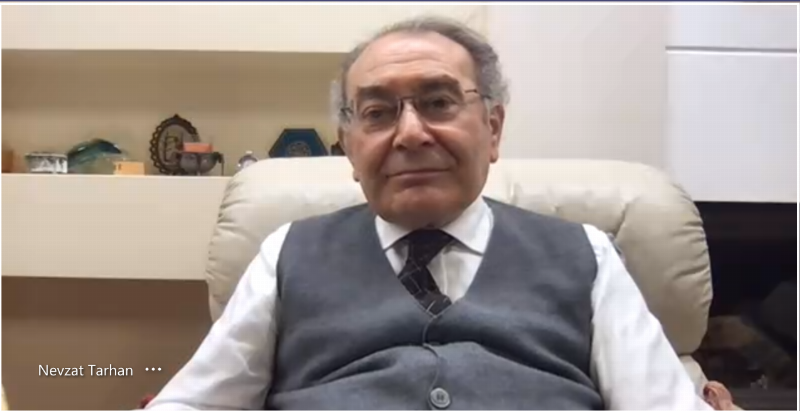
“The world is being reset.”
Expressing his views on education post-pandemic, Tarhan said; “As science philosophers say, the great reset means the world is being reset, zeroed out. The pandemic is forcing our entire planet to reset. Education is one of the biggest stakeholders here. Because schools are not just places of education, but also spaces for socialization. They are where social skills are gained and motor skills are learned. For example, there were certain skills we were looking for. Students have started to be unable to use many skills such as fine motor, gross motor, language skills, social skills, and emotional skills during the education period. Therefore, we are facing an obstacle in education. Instead of trying to overcome the problem, we need to accept and manage it. This is a problem that transcends human power. The pandemic has affected every area of human life individually, socially, educationally, and culturally. It was not expected to last this long. Generally, it was said, ‘The wave came, it will affect for 5-6 months, then immunity will develop, and it will get better.’ However, the second wave came, and the third wave came. There is no need to be pessimistic. Our children will learn the difficulties of this life. We are in a difficult period of our lives; we will accept and manage it.”
“We cannot educate children by frightening or angering them.”
Speaking about a loneliness study, Tarhan said; “In 2018, a loneliness study was conducted in the UK. Young people aged 16-24 were found to be lonelier than those aged 75 and over. We also observe this in our students. When they all get together, they always have their phones in their hands. Unfortunately, these children are lonely. When asked, ‘Do you want to get married?’ they say, ‘I won’t get married.’ When asked why, they say they see marriage as a burden. These children question everything, but they are very lovely. Because they need a good guide. We cannot educate children by frightening or angering them. The learning model of this generation is different. We need to approach this generation with digital models.” he stated.
“Life is like a chain; its strongest link is its weakest link.”
Tarhan also touched upon how educational compensation can be made; “If the school and family take the right position on this, children can close this gap. Although we struggled with practical lessons during the pandemic, theoretical lessons were quite well established. We conducted live lessons from the beginning. We saw great benefits of this for students. This can be compensated for, but neither our students nor our educators should fall into the ‘what’s done is done’ mentality in such situations. Life is like a chain; its strongest link is its weakest link. If the economy is weak, we will break there; if education is weak, we will break there; if our family life is weak, we will break there. Among the weak ones, the side with strong education will win. That is, they will turn the crisis into an opportunity. Those with weak education will fall behind. Therefore, we want to provide education to our students as much as possible, without creating income injustice or income inequality.” he said.
Share
Update Date: February 27, 2026
Creation Date: April 07, 2021
Request a Call
Other News
- Social responsibility courses moved to the field
- Erasmus+ Orientation Week completed at Üsküdar
- Prof. Nevzat Tarhan: “Brain secretes ‘dark glue’ in social media lynchers!”
- Prof. Nevzat Tarhan: “Every segment of society should be able to say, ‘This constitution is my constitution!’”
- OHS releases guide for safe operation of industrial robots