

Psychiatrist Prof. Dr. Nevzat Tarhan stated that traumatic events experienced during childhood, such as neglect and abuse, can have significant effects on a child's future life, and said that parents must show love to their child. Prof. Dr. Nevzat Tarhan noted that in situations where love is not expressed to the child, the child will feel worthless. He warned, “If you don't value the child, if you don't share with them, the child feels worthless. A child with low self-confidence grows up, becoming a candidate for mental illnesses in the future.”
Content
Prof. Dr. Tarhan: 'Childhood traumas can lead to mental illnesses in adulthood'
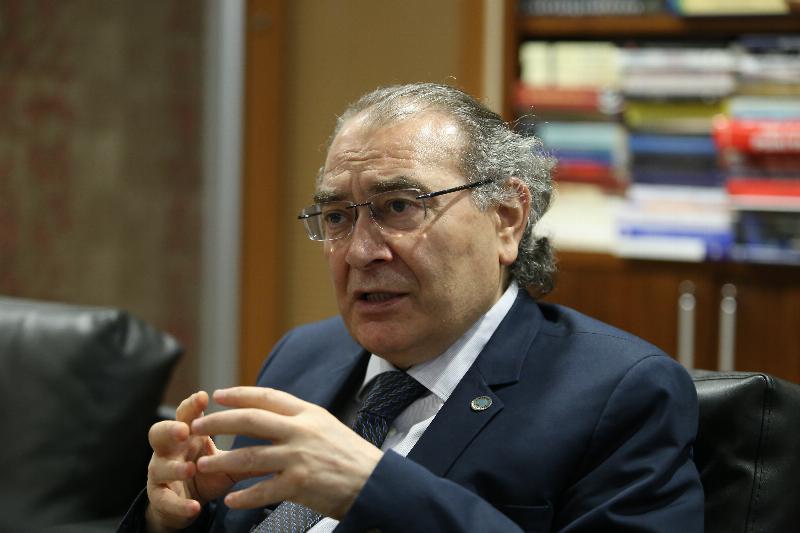
Üsküdar Üniversitesi Founding Rector, Psychiatrist Prof. Dr. Nevzat Tarhan, made evaluations regarding November 20th Children's Rights Day.
Prof. Dr. Nevzat Tarhan stated that November 20th was declared Children's Rights Day by a United Nations resolution in 1989, and said, “The Declaration of the Rights of the Child was announced. Why did it become necessary to discuss children's rights here? One of the problems brought by globalization is the unconscious oppression and injustice inflicted on children. Some parents may see their children not as children but as objects. Some parents perceive inflicting torment and injustice as a right for themselves. When such examples increased, Children's Rights Day was declared.”
Leaving a child hungry and not loving them are both neglect
Prof. Dr. Nevzat Tarhan pointed out that traumas experienced during childhood lead to significant issues such as lack of self-confidence in the future, and stated that a childhood trauma was found in 80-90% of patients based on the childhood trauma scale applied to their clients. Tarhan said, “There are equally important main criteria in the childhood trauma scale. For example, there is physical abuse. Beating with a stick or a belt constitutes physical abuse. Physical neglect occurs, for instance, leaving a child hungry. Not taking care of their needs constitutes physical neglect. There is no abuse, no beating, no violence, but when you leave them hungry, the child comes home and is left at the door. In this case, physical neglect also emerges. Emotional abuse can also occur. That is, telling a child, ‘If you don't do what I say, I won't love you,’ is emotional abuse. If an older person says, ‘No one loved me in my childhood, I grew up unloved,’ they have been subjected to emotional neglect. Just as we need food, drink, and protein, we also need love and respect. Loving, valuing, and sharing are among the greatest duties of parents. If you don't express your love to the child, if you don't value them, if you don't share with them, the child feels worthless. A child with low self-confidence grows up, becoming a candidate for mental illnesses in the future. These are considered childhood traumas.”
Love for children should be shown and made to be felt
Tarhan stated that love for a child must be expressed and shown to them, saying, “Sometimes we hear sentences from some people like, ‘I don't remember my father ever holding me in his lap, he never sat me on his knee.’ If a person thinks this way, there is emotional neglect. In fact, this is something that does not align with our belief system. When we look at the life of Prophet Muhammad, he openly expressed his emotions. For example, literature says, ‘Tell those you love that you love them.’ Hiding love is not a skill. This is a wrong foundation created by our traditions. Moreover, we think it comes from Islam, but it has no relation. Applying violence, beating a child, or using violence in any incident is not in the Islamic tradition.
A child needs protection
Tarhan stated that child neglect and abuse are prevalent in cultures that approve of violence, and said, “A child needs protection until they become an adult. Parents are obliged to protect their rights.” Prof. Dr. Nevzat Tarhan noted that children today are aware of their rights and emphasized the importance of parents acting as role models when raising their children.
Parents should be good role models for children
Prof. Dr. Nevzat Tarhan noted that valuing a child and making them feel valued is also important, and said, “Certainly, valuing a child enables them to know themselves correctly. Self-confidence develops. Self-confidence and self-admiration are often confused. Self-admiration is seeing things in yourself that are not there, but with self-confidence, you succeed in confronting your flaws. Being able to see your shortcomings and flaws, and despite this, being able to move forward in life with joy and energy. Trying to do things positively requires self-confidence. Children learn this from their mother, father, and environment. For them to learn this, we need to be good role models for the child. Therefore, what is more important than giving advice to our child is to be a correct example for them. It is for parents to be a role model for their child. If we raise a child who neglects children's rights, torments, or abuses animals, the fault lies with the parents.”
Balanced approach crucial in raising children
Prof. Dr. Nevzat Tarhan also emphasized the importance of balanced attitudes in raising children, and warned, “Sometimes we do certain things unconsciously. For example, giving things to a child while begging also means neglecting the child, or pressuring and intimidating a child is also a kind of neglect. Of course, granting every wish of the child and saying yes to everything they say is also wrong. In that case, it becomes a child-centric family. The child is raised like a small ruler of the house. This is also veering to the other extreme in children's rights.”
Children have responsibilities as well as rights
Prof. Dr. Nevzat Tarhan stated that children have responsibilities as well as rights, and said, “We need to explain this to the child. Yes, you have rights, but you also have responsibilities in this house. They need to learn the balance of rights and responsibilities, freedom and responsibility. That is, their duties and responsibilities should be explained to them, such as ‘you need to help out with tasks in this house. For example, you need to study for this many hours. You need to help your parents during summer holidays.’ But it is important to do this by offering options, not in an authoritarian manner or by giving commands.”
Budget management should be taught by age 10
Prof. Dr. Nevzat Tarhan emphasized that children should also be taught budget management, and said, “A child needs to learn budget management by the time they turn 10. They need to learn financial literacy. They need to learn what to spend where. Sometimes parents give pocket money to children like a bribe. They give it if the child does what they're told, and not if they don't. This creates a begging child model. This child is always focused on receiving. However, children need to be taught resource management. Children should be given weekly pocket money. Giving it daily is not correct. If they spend it all in one day, no more money should be given, and if they save it, that money is theirs, and no one should interfere. If they save their money and want to go somewhere on the weekend, they should be given the freedom to do so.”
Every home should have rules
Prof. Dr. Nevzat Tarhan pointed out the importance of having rules at home and adhering to them, and said, “Every home must have rules. We need to make the home a rule-bound environment. A parenting style that allows everything makes that child selfish in the future. It raises a personality that never gives but always takes. This person also ends up alone in the future. The worst aspect of selfishness is that it isolates a person.”
Prof. Dr. Nevzat Tarhan noted that lessons should be learned from negative life events, and said, “Sometimes trauma can also lead to a person's development. For example, Covid trauma can improve a person's psychological well-being. Or an illness that emerges in a family can lead to increased spiritual psychological maturity, psychosocial maturity. Every life event is a teacher. It is a lesson, and it is important to learn from it. Therefore, let's not view life events that suddenly appear before us as enemies. Of course, we need to take precautions against events like earthquakes, but sometimes even if we take precautions, we cannot escape certain things. If we approach life events this way, childhood traumas will not remain with us. We will turn them into gains. One should think, ‘I have experienced something like this, but I must have needed to experience it.’”
A child's behavior and efforts should be loved
Prof. Dr. Nevzat Tarhan warned, “When loving a child, let's love their behavior and efforts, not their personality.” He added, “For example, the child tidied their room, helped their mother. These are opportunities to show love to the child. Opportunities to use love languages. When you use these opportunities well, love becomes a reward. Love becomes a love that develops behavior. Of course, we will also love our child because they are our child, but if we only rely on that, the child cannot learn to develop behavior. They think, ‘My mother loves me whether I do well or badly.’ We need to say, ‘I love you, but you also have responsibilities.’ When you say, ‘If you help me, I will love you more, I will be happier,’ the child also learns to manage love. Especially when rewarding a child, their behavior and efforts should be rewarded. Saying yes to everything a child says is the greatest harm that can be done to them.”
Share
Update Date: February 26, 2026
Creation Date: November 20, 2020
Request a Call
Other News
- Social responsibility courses moved to the field
- Erasmus+ Orientation Week completed at Üsküdar
- Prof. Nevzat Tarhan: “Brain secretes ‘dark glue’ in social media lynchers!”
- Prof. Nevzat Tarhan: “Every segment of society should be able to say, ‘This constitution is my constitution!’”
- OHS releases guide for safe operation of industrial robots