

Historical sources indicate that war journalism gained importance during the Crimean War. Prof. Dr. Süleyman İrvan stated that wars are big news, and for that reason, reporters want to go where everyone else is fleeing, emphasizing that journalists must prioritize their safety and heed the warnings in the guidelines published for them. İrvan said, “Reporters in the war zone generally remained dependent on Ukrainian sources. The lack of peace journalism was felt. Turkish media could have focused on peace efforts.”
Content
Prof. Dr. Süleyman İrvan: “The lack of peace journalism was felt.”
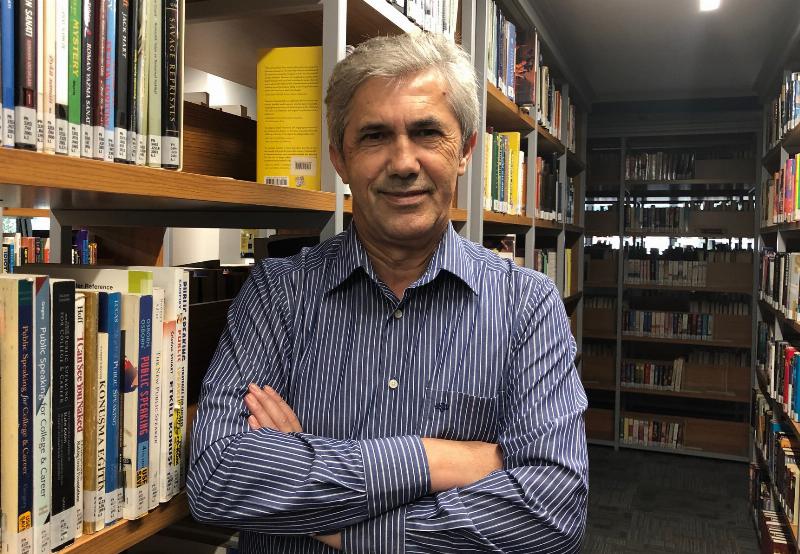
“Reporting from Kyiv, dependent on Ukrainian sources”
Prof. Dr. Süleyman İrvan, Head of the New Media and Journalism Department at Üsküdar University Faculty of Communication, made evaluations and shared his recommendations on war journalism, touching upon the war between Russia and Ukraine.
War journalism gained importance in the Crimean War
Prof. Dr. Süleyman İrvan said, ‘Historical sources state that war journalism gained importance in the Crimean War, which took place between the Ottoman Empire and Russia between 1853-1856,’ and continued his words as follows:
“William Howard Russell, a reporter for the British newspaper The Times, is also considered the first war correspondent to report on this war. Since that day, war correspondents have served in all wars. Wars are events with high news value. Indeed, the famous journalistic saying 'If it bleeds, it leads' is most applicable to wars. War is big news, which is why many reporters want to report from a war zone, to be in a war zone, to go where everyone else is fleeing.”
Accurate and reliable news expected from reporters
Emphasizing that it is not possible to evaluate war journalism in a single dimension, Prof. Dr. Süleyman İrvan said, “For example, when we consider the Russia-Ukraine war, Russian, Ukrainian, and Turkish media reporters covering this war are not in the same position. The Russian media reporter is reporting for the attacking, occupying country’s media, while the Ukrainian media reporter is in a position defending their country against invasion. Turkish media or reporters from other countries' media are mostly in an observer position. What we expect from reporters is to provide accurate, verified, and reliable news regarding the war.”
Social media became a field for war propaganda
Prof. Dr. Süleyman İrvan pointed out that people can instantly record and transmit their experiences, significant moments they witnessed, conflicts, or bombings in the Russia-Ukraine war with their mobile phones on social media, and continued his words as follows:
“We can call this citizen journalism or witness journalism. Journalists on the ground rarely remain in the midst of hot conflicts, yet at every moment of hot conflict, someone there can record these moments. I had stated that this was the first war broadcast live on social media. In this situation, what is important is whether the images shared on social media are real and up-to-date. Social media is, of course, also an area for war propaganda. The warring parties are trying to use social media in their favor. Of course, social media is also an important source of information for journalists on the ground. However, every piece of information, every image, photograph, and video coming from social media must be verified before use. What journalists report from the war zone can also be manipulative, just like those on social media. Because official sources can also transmit misleading information to journalists during wartime, or reporters can consciously and deliberately produce false news. In the face of all this, readers and viewers need to be careful.”
Reporting dependent on Ukrainian sources was conducted
Emphasizing that Turkish media gave more importance to this war from the beginning, Prof. Dr. Süleyman İrvan said, “Almost every television organization and major newspaper sent their reporters to Ukraine or countries bordering Ukraine. The media did not show the same interest when the Taliban took over the administration in Afghanistan; only a few reporters could go to Afghanistan. Undoubtedly, the proximity factor contributed to this, but it can also be said that Ukraine being seen as a European country contributed. Generally, reporters conducted journalism from the capital Kyiv and were largely dependent on Ukrainian sources. This was a significant deficiency. There is also the other side of the war, but we did not see the other side in the news; perhaps it was not possible for us to see it, but the media did not try.”
Turkish media could have strived for peace journalism
Stating that the lack of peace journalism was felt, Prof. Dr. Süleyman İrvan said, “There could have been a journalistic approach that prioritized peace initiatives rather than conflicts, focusing on the traumas that war creates in the lives of ordinary people. In this war, Turkish media could have focused more on peace efforts and put more effort into implementing the practice of peace journalism.”
War reporters must pay attention to their safety
Stating that war journalism is the most dangerous form of journalism, Prof. Dr. Süleyman İrvan said, “According to a news report by Anadolu Agency in 2020, for example, 707 media professionals were killed in the Syrian civil war that began in 2011. According to another news report published in Cumhuriyet newspaper in 2009, 295 journalists were killed during the Iraq invasion that began in 2003 until 2009. In almost every war, it is not only the facts that are killed but also the journalists trying to convey those facts. In the war in Ukraine, so far 1 Ukrainian reporter has been killed, and many journalists in the war zone have been caught in the crossfire or attacked. For this reason, reporters working in war zones must exercise utmost care regarding their personal safety and remember that their personal safety is more important than the news to be reported.”
War is not a medium for heroic displays!
Prof. Dr. Süleyman İrvan stated that reporters should undergo safety journalism training before going to war zones, and said, “However, we see that these were not done in the recent Ukraine war. We even see some content creators who have nothing to do with journalism trying to go to the war zone and report. This is not right, at least for their personal safety. We need to be able to explain that war is not a medium for heroic displays.”
Comprehensive guides published for reporters
Prof. Dr. Süleyman İrvan stated that Reporters Without Borders (RSF), together with UNESCO, prepared a comprehensive ‘Safety Guide for Journalists’ on what reporters should do in war zones, and concluded his words as follows:
“This guide details the rules that reporters in war zones must follow. In addition, the International Federation of Journalists also issued warnings for reporters covering the war in Ukraine from the field. These warnings include vital advisories such as using encrypted devices for communication, avoiding shares that facilitate location detection, staying away from military and strategic targets, and not traveling alone. It is important for reporters covering the war zone to act in accordance with these warnings, especially for their personal safety. War is not a situation that can be dismissed by saying that theory and practice are very different.”
Share
Update Date: February 28, 2026
Creation Date: March 10, 2022
Request a Call
Other News
- Social responsibility courses moved to the field
- Erasmus+ Orientation Week completed at Üsküdar
- Prof. Nevzat Tarhan: “Brain secretes ‘dark glue’ in social media lynchers!”
- Prof. Nevzat Tarhan: “Every segment of society should be able to say, ‘This constitution is my constitution!’”
- OHS releases guide for safe operation of industrial robots