

Experts point out that broadcast bans imposed immediately after terrorist attacks can pave the way for gossip and rumors, emphasizing the importance of informing the media quickly and accurately in such situations. Noting that a significant portion of misinformation in the media stems from the difficulties journalists face in accessing accurate information, Prof. Dr. Süleyman İrvan underlined the necessity for reliable verification platforms to be activated in extraordinary circumstances.
Content
Prof. Dr. Süleyman İrvan: “Reliable verification platforms should be activated in extraordinary situations”
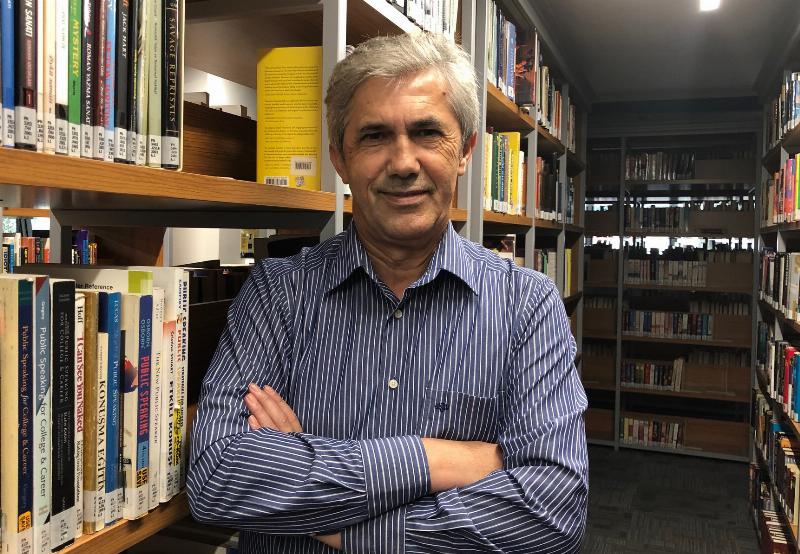
Prof. Dr. Süleyman İrvan, Head of the Department of Journalism, Faculty of Communication at Üsküdar Üniversitesi, stated that imposing a broadcast ban on the media during terrorist attacks is not the right choice.
First and foremost, principled journalism should be practiced
Prof. Dr. Süleyman İrvan pointed out that reporting during terrorist incidents is also a subject of debate and continued his words as follows:
“Frankly, there are well-established journalistic ethical principles on this matter. Journalists should first internalize their professional principles and practice principled journalism. For example, in the Declaration of Rights and Responsibilities of the Journalists' Association of Turkey (Türkiye Gazeteciler Cemiyeti), it is stated that ‘Journalists observe the distinction between the right to inform the public accurately and terrorist propaganda.’ This means that while a journalist should certainly report on a terrorist incident accurately, they should not sensationalize it in a way that could be perceived as propaganda for a terrorist organization, nor should they report in a manner that creates fear and panic among the public. A good journalist is one who can make this distinction. The TGC Declaration also sets the standard for good journalism. The declaration includes the statements: ‘In news reports regarding deaths, sensational language that exacerbates suffering cannot be used. It does not include photographs depicting blood and violence that would traumatize people, nor does it exaggerate the consequences of the attack in a way that creates fear and despair.’ ”
Broadcast Ban Leads to Conspiracy Theories
Stating that broadcast bans are a wrong choice, Prof. Dr. Süleyman İrvan said, “Because broadcast bans actually pave the way for more dangerous gossip and rumors. People start to think, ‘So, something very bad is happening, something is being hidden from us.’ Conspiracy theories come into play. Moreover, it is quite debatable whether there is a legal basis for imposing broadcast bans in existing laws. Only Article 7 of the RTÜK Law defines the conditions for imposing a broadcast ban. The relevant article states: ‘During times of crisis caused by wars, terrorist attacks, natural disasters, and similar extraordinary situations, freedom of expression and access to information are fundamental, and broadcasting services cannot be pre-censored or suspended, without prejudice to judicial decisions. However, in cases where national security explicitly necessitates it, or where public order is highly likely to be severely disrupted, the Prime Minister or the minister he/she designates may impose a temporary broadcast ban.’ If noted, according to this article, a broadcast ban can only be imposed in very extraordinary situations.”
Media should be informed quickly and accurately
Emphasizing that what needs to be done during terrorist incidents or similar events is to inform the media quickly and accurately, Prof. Dr. Süleyman İrvan said, “If a crisis center is immediately established and a regular and healthy flow of information is provided to the media through this center, misinformation can be prevented. Thus, inaccuracies can be corrected instantly. If a journalist can easily reach officials and obtain information while reporting, they will be able to do their job faster and more accurately. A significant portion of misinformation in the media stems from the difficulties journalists face in accessing accurate information.”
“Reliable verification platforms should be rapidly activated in extraordinary situations”
First and foremost, Prof. Dr. Süleyman İrvan stated that he does not believe any journalist would deliberately attempt to create false news that would lead to information pollution, saying, “Information pollution is mostly a problem that arises when an accurate flow of information is not provided. Transparency and accurate information sharing are always the healthiest methods. If authorized institutions manage crises well and fulfill their duty to inform the public effectively, information pollution will quickly lose its impact. In extraordinary situations such as terrorist incidents, the rapid activation of reliable verification platforms and the identification and sharing of false news by these platforms with the public would be a good measure. However, the first condition is that verification platforms must be impartial and reliable.”
Access Ban is Not a Correct Approach
Prof. Dr. Süleyman İrvan stated that imposing a complete access ban on a social media platform cannot be an acceptable measure in a democratic society and concluded his words as follows:
“An access ban can be imposed, for example, on accounts that constantly spread false news or engage in terrorist propaganda, but we can say that imposing a complete access ban on an entire platform is not a correct approach. This approach obstructs the public’s freedom to access information. Article 10 of the European Convention on Human Rights clearly outlines under what circumstances and how freedom of the press can be restricted. The limit is that the measure must be proportionate. An disproportionate measure harms freedom of expression and the press. Imposing a complete access ban on a social media platform or rendering it inoperable through bandwidth throttling is not a proportionate measure.”
Share
Update Date: February 26, 2026
Creation Date: November 17, 2022
Request a Call
Other News
- Prof. Nevzat Tarhan: “Those with a mental filter are not afraid of the digital”
- Artificial intelligence doesn't eliminate the translator, it transforms their expertise!
- Social responsibility courses moved to the field
- Erasmus+ Orientation Week completed at Üsküdar
- Prof. Nevzat Tarhan: “Brain secretes ‘dark glue’ in social media lynchers!”