

Üsküdar Üniversitesi's 2nd Multidisciplinary Neurodegeneration Congress brought together scientists conducting worldwide studies in the field of neuroscience. Neurologist Prof. Dr. Oğuz Tanrıdağ pointed out that Primary Progressive Aphasia (PPA) syndrome, an important neurological disease also known as Mesulam Syndrome because it was defined by Prof. Marsel Mesulam in modern literature, starts before the age of 65, not during old age. Prof. Dr. Tanrıdağ said, “PPA syndrome, characterized by impairments such as hesitant speech and difficulty finding words, slowly evolves into a general dementia syndrome.”
Content
Prof. Dr. Oğuz Tanrıdağ: “Mesulam Syndrome can start before the age of 65”

The 2nd Multidisciplinary Neurodegeneration Congress, organized by Üsküdar Üniversitesi, began with the participation of researchers in the fields of neurology, psychiatry, pharmacology, physiology, anatomy, molecular biology and genetics, bioinformatics, and bioengineering.
Opening conference by Prof. Dr. Marek-Marsel Mesulam and Prof. Dr. Scott Brady
The opening conference speeches of the congress were delivered by Prof. Dr. Marek-Marsel Mesulam from Northwestern University and Prof. Dr. Scott T. Brady from the University of Illinois College of Medicine in Chicago, moderated by Prof. Dr. Oğuz Tanrıdağ, Head of the Neurology Department at Üsküdar Üniversitesi Üsküdar Faculty of Medicine, and Neurologist at NPİSTANBUL Brain Hospital.
Prof. Dr. Oğuz Tanrıdağ: “Primary Progressive Aphasia is known as Mesulam Syndrome”
Prof. Dr. Oğuz Tanrıdağ, Head of the Neurology Department at Üsküdar Üniversitesi Üsküdar Faculty of Medicine, and Neurologist at NPİSTANBUL Brain Hospital, stated that Primary Progressive Aphasia (PPA) syndrome, which was the subject of today's discussion, was defined with completely different criteria in the early 1980s, even though it had similarities in medical history. Tanrıdağ noted that Primary Progressive Aphasia syndrome is therefore named after its discoverer, and like other examples in medical history, it is known as Mesulam Syndrome.
Prof. Dr. Oğuz Tanrıdağ: “It starts with neurodegeneration of the left hemisphere of the brain”
Prof. Dr. Oğuz Tanrıdağ stated that PPA is a specific brain disease: “It begins with the neurodegeneration of the left hemisphere of the brain, which is particularly dominant in language functions, and then genetic factors and some molecular biological factors were identified. It is a special brain disease syndrome that starts and progresses. It has agrammatic, logopenic, and semantic subtypes based on differences in language involvement. In the 159-year brain aphasia literature since Broca's well-known autopsy in 1861, the earliest report resembling Mesulam Syndrome is a case report in 1893 by Serieux P. Sur concerning a 47-year-old female patient. Apart from that, we do not see similar instances or repetitions in the literature.”
Prof. Dr. Oğuz Tanrıdağ: “It can appear before the age of 65”
Prof. Dr. Oğuz Tanrıdağ noted that PPA syndrome was first reported in modern literature in 1982 by Prof. Mesulam with brain biopsy findings, stating, “Unlike some syndromes that end in dementia, it usually begins before the age of 65, not in old age. After presenting with language disorder symptoms in the first one or two years, with other neurological and demential symptoms being faint, these language disorders can initially manifest as hesitant speech and difficulty finding words. And depending on the patients, it slowly evolves into a general dementia syndrome within 2-10 years. It has not been reported with different frequencies between genders; it is seen with similar frequency. Brain examinations show perisylvian cortical atrophy, hypoperfusion, and hypometabolism, with asymmetrical involvement on the left being greater than on the right. PPA may share genetic and pathological features with a group of diseases, including Alzheimer's disease and frontotemporal lobar degeneration.”
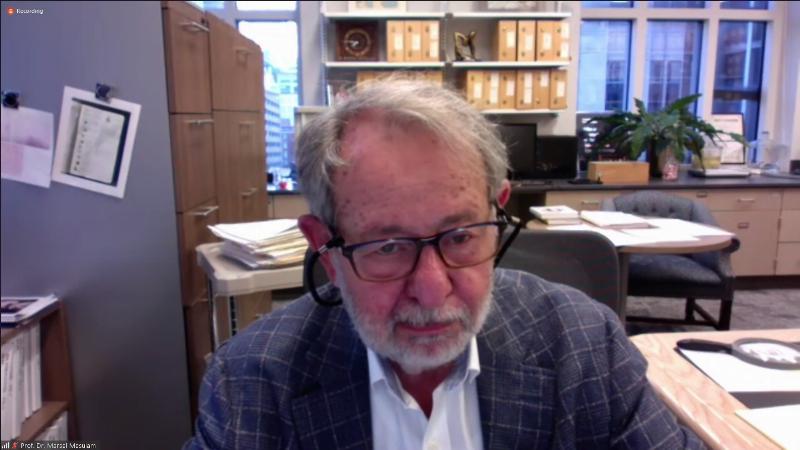
Prof. Dr. Marek-Marsel Mesulam: “Depression observed in PPA syndrome should be treated”
Prof. Dr. Marek-Marsel Mesulam, Director of the Mesulam Center for Cognitive Neurology and Alzheimer's Disease at Northwestern University, offered recommendations regarding PPA syndrome treatment methods in his presentation titled “Primary Progressive Aphasia, Dementia Heterogeneity, and Language Neuroanatomy.” Prof. Dr. Mesulam stated: “If the patient has Alzheimer's, various inhibitors can be used. If the patient does not have Alzheimer's, FTLD-Tau or FTLD-TDP should be investigated. A more detailed image should be captured by looking at PET modalities. After making this differential diagnosis, the patient needs to be directed to appropriate clinical trials using biomarkers. Depression is frequently observed in these patients and needs to be treated. For non-pharmacological treatment, speech therapy is extremely important, and Transcranial Magnetic Stimulation is recommended to activate the right side of the brain.”

Prof. Dr. Scott T. Brady, Professor of Anatomy and Cell Biology at the University of Illinois College of Medicine in Chicago, gave his presentations titled “Axonal Transport, Motor Neuron Disease, and Neuronal Signaling.” Prof. Dr. Scott T. Brady discussed his work and research on neurodegeneration, providing evaluations on the effects of these diseases on the brain.
Share
Update Date: February 26, 2026
Creation Date: November 06, 2020
Request a Call
Other News
- Erasmus+ Orientation Week Completed at Üsküdar
- Prof. Nevzat Tarhan: “Brain Secretes ‘Dark Glue’ in Social Media Lynchers!”
- Prof. Nevzat Tarhan: “Every segment of society should be able to say, ‘This constitution is my constitution!’”
- OHS Releases Guide for Safe Operation of Industrial Robots
- Prof. Nevzat Tarhan: “Social media is digital fast food”