

Stating that difficult personalities are generally aggressive, objecting to everything, and causing difficulties in both personal and social relationships, especially within the family, Psychiatrist Prof. Dr. Nevzat Tarhan said that it is necessary to communicate with these individuals without excluding them from the system. Tarhan noted that one should avoid accusatory and judgmental attitudes when listening to these individuals and stated that the person's thinking brain should be activated instead of their feeling brain.
Content
Prof. Dr. Nevzat Tarhan's advice on living with difficult personalities
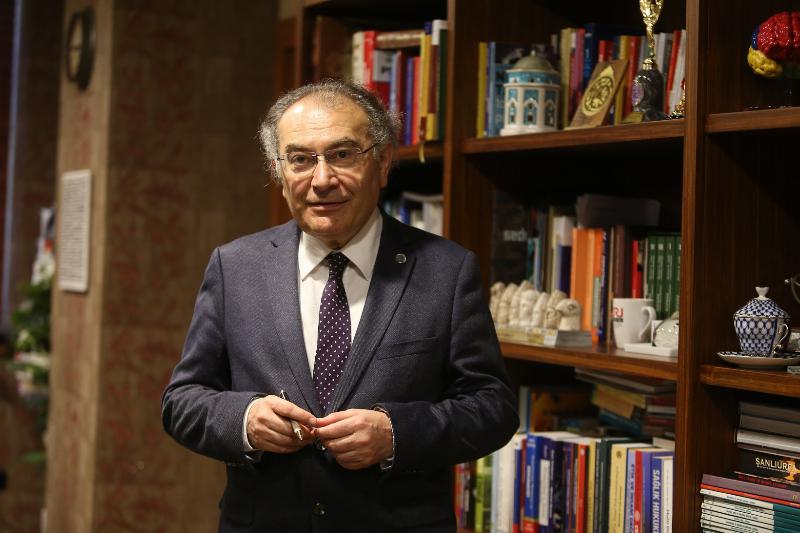
The thinking brain should be activated instead of the feeling brain
Üsküdar Üniversitesi Founding Rector, Psychiatrist Prof. Dr. Nevzat Tarhan, offered advice on difficult personalities and how to make living with them easier.
They are aggressive and object to everything
Prof. Dr. Nevzat Tarhan stated that difficult personalities often cause difficulties in both personal and social relationships, especially within the family. He said, 'These individuals can be encountered everywhere from time to time. They are generally aggressive and object to everything. You can never solve a problem with these individuals; you cannot make progress with them. They are always people who create tension. Everyone avoids them; such difficult personalities exist. Some difficult personalities are aggressive, some are obsessive, some are very grandiose, and some appear very good but are very passive. However, they solve nothing. They are two-faced personalities, excessively modest individuals; they are also difficult personalities.'
It is necessary not to exclude them from the system
Noting that learning to live with these personalities requires a special technique and method, Prof. Dr. Nevzat Tarhan said, 'These types of people might be married, they might have children. Someone might be talented at work but also have a difficult personality. This person is talented, skillful, excellent in one area, but has a difficult personality. The leader in that workplace needs to consider how to keep these types of individuals within the system. Instead of throwing this person out of the system and removing them, an appropriate approach should be determined. These individuals are also talented, innovative, and unconventional types. Therefore, if the leader at work keeps these personalities within the system, their talents can also be utilized.'
A way to connect with difficult personalities must be found
Prof. Dr. Nevzat Tarhan stated that it is impossible to push these types of personalities out of the family, especially within the family. He said, 'Sometimes your children are difficult personalities. There is definitely a way to establish a relationship with all the personalities we call 'difficult personalities.' We can liken a person to a palace with 100 doors, a large building. If 99 doors are closed, but one door is open, that palace can be entered. Difficult personalities are also like that. Most of their doors are closed, but by finding their open door, one can enter that person's world, connect with them, and collaborate. This requires some effort, some ability to generate alternative thoughts. Nothing in life is easy anyway. There is a very good saying: Every task is difficult before it is easy.'
May show their true face at home
Prof. Dr. Nevzat Tarhan stated that difficult personalities sometimes do not get along with other family members within the family, yet may not experience problems in their social relationships outside. He said, 'These types of individuals, for example, might argue with their spouses over trivial things, using various excuses. They get angry saying, 'You chopped the tomatoes too big,' or 'You moved the sofa,' but they might not experience any problems in their relationships with friends outside. Such personalities are difficult personalities. They play a good role outside but reveal their true personality at home. Generally, these individuals are two-faced and have low self-confidence.'
They try to appear strong and satisfy their ego
Tarhan noted that the characteristics of difficult personalities can also be perceived as their personalities. 'If they are an aggressive and hurtful type, they can hurt the people they live with. These types of individuals have harsh, aggressive attitudes. Behind their harsh, aggressive, and aggressive appearance is the desire to evoke the feeling and impression of 'I am strong.' This situation actually shows that these individuals have feelings of inadequacy, deficiency, and worthlessness. They satisfy their ego by crushing others and making themselves appear strong. In fact, one should pity these individuals, not be angry with them.'
Difficult personalities feed on oppression
Prof. Dr. Nevzat Tarhan noted that difficult personality types feed on oppression. He said, 'There is a beautiful saying by our ancestors: A person or a society is governed either by knowledge or by oppression.
In a person or society governed by knowledge, you get to know them, you put effort into understanding how they will behave, you find methods, and you govern them that way. This governance is lasting governance. Or you govern by shouting, intimidating, suppressing, and oppressing. Individuals or societies governed in this way temporarily remain silent, but when they first gain their freedom, especially children after adolescence, for example, they become enemies. This is very common in cultures of fear. Governance by oppression, governance by intimidation. What is there in cultures of trust? There is mutual negotiation, mutual cooperation, and an environment for free discussion.'
Prof. Dr. Nevzat Tarhan stated that our ancestors had another beautiful saying: 'During the Constitutional Monarchy period, while discussing the compatibility of the constitutional system with Islamic jurisprudence, a saying was uttered 100 years ago: 'Opposition is the balance of justice.' That is, opposition ensures the scale of justice, it ensures the balance of justice.'
Democracy is humanity's discovery
Prof. Dr. Nevzat Tarhan stated that the culture of democracy developed over a few centuries in the West and is only now beginning to emerge in our country. He said, 'Being able to talk without sitting down and arguing, being able to come together with difficult people, and being able to solve problems without fighting, resorting to violence, or quarreling with difficult people is important and necessary. This happens between countries as well as within families. If there's a problem, instead of immediately going to war, trying to solve it through diplomatic means – that is, to overcome difficult situations, it is necessary to produce solutions, to produce diplomatic solutions. Therefore, democracy is humanity's discovery. Within democracy, there is criticality, libertarianism, and participation.'
Praise should be given as deserved and to the extent deserved
Prof. Dr. Nevzat Tarhan noted that they are working on the skill of saying 'no' to someone who has to live with a difficult personality. He said, 'The biggest characteristic of these individuals is their narcissistic traits. They are intolerant; they see themselves as special, important, and superior. These individuals are always fed by praise. We are working on how to say 'no' to such people. We are practicing exercises for both praising and criticizing these individuals. There are methods for praising and criticizing these individuals. Since these individuals feed on praise, giving praise in a way and to an extent they do not deserve causes their ego to inflate. If they are not nourished on what they do deserve, they might see you as an enemy. Therefore, it is necessary to give the praise they deserve but absolutely not to give praise they do not deserve. Doing so causes that person to make mistakes.'
Their mistakes affect everyone
Prof. Dr. Nevzat Tarhan emphasized that difficult personalities start making mistakes after a while because they try to manage by criticizing, intimidating, and suppressing people. He said, 'The mistakes these individuals make affect the entire family, the entire relationship, and the company they work for. For this reason, companies now work with independent auditors to prevent this. They say, 'Criticize us so we can correct any mistakes we have.' These are part of companies' quality initiatives; there are auditors.'
The right approach is important
Prof. Dr. Nevzat Tarhan noted that attitudes towards these individuals must also be determined correctly. He said, 'In approaching these individuals, it is essential for close ones to have the skill of saying 'no.' When this person does or asks for something wrong, one should say, 'What you said is wrong. I don't approve of this behavior, but for the future of our family, I am not reacting to it right now, but I do not approve.' If one remains silent about a mistaken behavior or word and internalizes it, the person thinks, 'I was right,' and does not see their mistake.
The thinking brain should be engaged
Prof. Dr. Nevzat Tarhan also pointed out the importance of listening to these difficult personalities by the person opposite them, stating that the person's thinking brain should be engaged instead of their feeling brain. Prof. Dr. Nevzat Tarhan said the following:
'It is necessary to listen to these types of individuals to the end. When listening to these individuals, one should avoid judgments. With accusatory and judgmental attitudes such as 'What kind of person are you, why are you talking like that,' they will go on the defensive. You cannot establish a relationship. When communicating with these individuals, it is necessary to avoid judgmental, accusatory words that evoke a sense of defense in them. One should approach these individuals by saying, 'I want to understand you, why did you want this?' When this is done, you engage their thinking brain instead of their feeling brain. Difficult people try to silence others by shouting and yelling to get results. These individuals use their feeling brains with anger and aggression. If you also use your feeling brain in reaction to them, if you shout back because they shouted, if you raise your voice because they raised yours, you will be crushed because you cannot be as bad as them. Therefore, it is necessary to engage this person's thinking brain, not their feeling brain.'
Instead of building walls, one should try to establish a relationship
Prof. Dr. Nevzat Tarhan noted that when these angry or loud-shouting individuals are told, 'Could you speak a little slower, I want to understand you,' the thinking brain is engaged instead of the feeling brain. He said, 'The person then thinks, 'So they want to understand me,' and engages their thinking brain. They lower their voice. Therefore, you should not build walls with these people; it is important to have a relationship and a bridge between you. By engaging the person's thinking brain, it is necessary to establish healthy communication with them, acting with an inclination to seek the truth and convey good intentions, rather than engaging in reactive communication.'
Body language is also important in communication
Prof. Dr. Nevzat Tarhan noted that in relationships with such individuals, one should not make hasty decisions or try to solve problems immediately. He said, 'It might be desirable to look at events from another perspective. Body language is also very important in human relationships. In verbal communication, 80% of the relationship is sensory transmission, body language, subconscious emotions, tone of voice, and chosen words. Communication should be established in this manner.'
Share
Update Date: March 01, 2026
Creation Date: October 24, 2022
Request a Call
Other News
- Social responsibility courses moved to the field
- Erasmus+ Orientation Week completed at Üsküdar
- Prof. Nevzat Tarhan: “Brain secretes ‘dark glue’ in social media lynchers!”
- Prof. Nevzat Tarhan: “Every segment of society should be able to say, ‘This constitution is my constitution!’”
- OHS releases guide for safe operation of industrial robots