

While 2021 was decided to be celebrated as 'Yunus Emre and Turkish Language Year' with a circular issued by President Recep Tayyip Erdoğan, the great folk poet was commemorated with an international symposium held at Üsküdar University. Speaking at the Yunus Emre and Turkish World International Symposium, Üsküdar University Founding Rector, Psychiatrist Prof. Dr. Nevzat Tarhan, drew attention to the 'narcissism pandemic' in the age of secularism, stating, “The result of narcissism is loneliness and suicide. This is the case all over the world. One of the reasons for this increase is that the genetics of our life philosophy have been tampered with. Without correcting this genetic makeup, we cannot be beneficial to young people and society. Yunus Emre realized this even then. People are becoming selfish, only thinking of themselves out of security concerns. In such situations, he uses the path of divine love.” Prof. Dr. Tarhan also stated that selfish people cannot see Yunus Emre, adding, “Yunus is talked about, but his philosophy is not explained. People who want to discipline their ego, who want to mature and refine themselves, will find many clues, many treasures in Yunus.”
Content
Prof. Dr. Nevzat Tarhan: “Yunus Emre Uses the Path of Divine Love Against Selfishness”
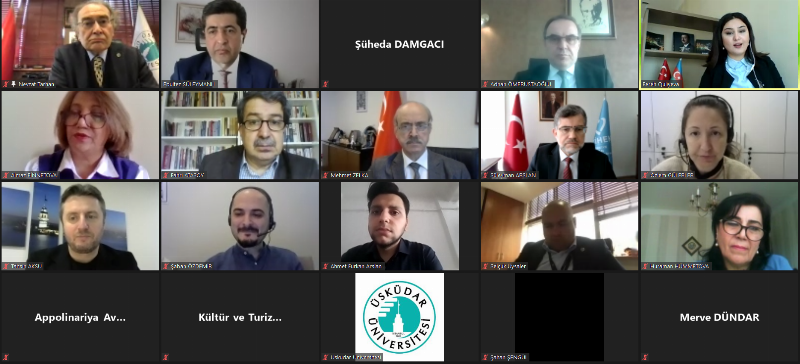
Speakers from Azerbaijan also participated in the symposium held online due to the pandemic. Üsküdar University Head of Sociology Department and Symposium Organizing Committee Chairman Prof. Dr. Ebulfez Süleymanlı stated in his opening and greeting speech that they organized the symposium in line with President Recep Tayyip Erdoğan's declaration of 2021 as the Year of Yunus Emre and the Turkish Language, adding that Yunus Emre holds a very important place in the Turkish geography. Prof. Dr. Ebulfez Süleymanlı noted that Yunus Emre was a great man of thought and action who represented the resistance of Turkish Islamic civilization against the political, economic, and social turmoil caused by the Eastern Roman, Mongol, and Mamluk Empires in 13th and 14th century Anatolia, where he lived. He said, “Thus, Yunus Emre, who spread the ancient values of ghazis, akhis, and abdals such as peace, prosperity, and justice to every corner of Anatolia, also became a symbol of a position above class, status, and communities. Undoubtedly, a large part of the formation of this position is due to Yunus Emre's development of a clear language and dynamic form of action, integrating it with intellect, experience, and the self, allowing him to reach the hearts of different segments of society. Today, our world needs efforts to commemorate, understand, and transcend Yunus Emre more than ever.”
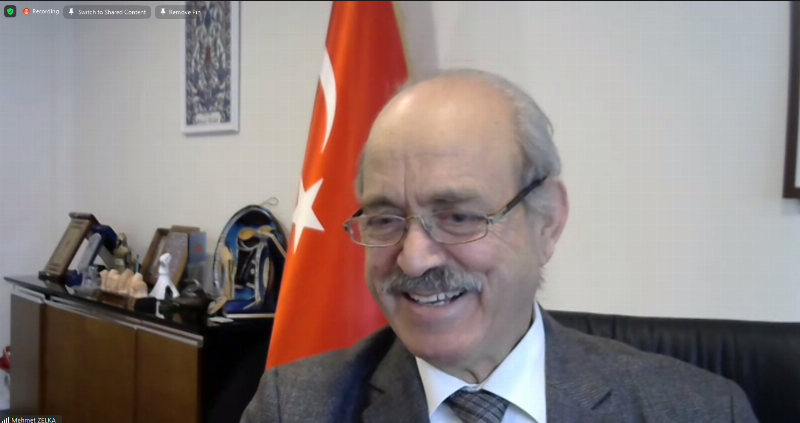
Prof. Dr. Mehmet Zelka: “Yunus Emre is in pursuit of the secret of Truth.”
Üsküdar University Acting Rector Prof. Dr. Mehmet Zelka, in his opening speech, which began with Yunus Emre’s poem “Come, let us go, oh heart, to the friend,” stated that Yunus Emre was a sage educated in the school of wisdom, a friend of God who transformed words into states, and the master of a language that revealed the secrets of those who hold secrets. Prof. Dr. Mehmet Zelka said, “Yunus Emre explains many Sufi secrets in beautiful ghazal and divine hymn style using Turkish expressions. It is possible to see traces of social events and local life in his poems. Yunus's art does not obscure the art of contemplation. Thoughts do not get lost within the limited structure of poetry. The didacticism in his poems does not tire people. Yunus, who experiences various states of love, has no intention of proving his poetic prowess. For he is in pursuit of the secret of Truth. He found what he sought with patience, drank the sherbet from Truth, and offered it to the people. I express that in our age, there is a great need for such dervishes, for such Yunuses.”
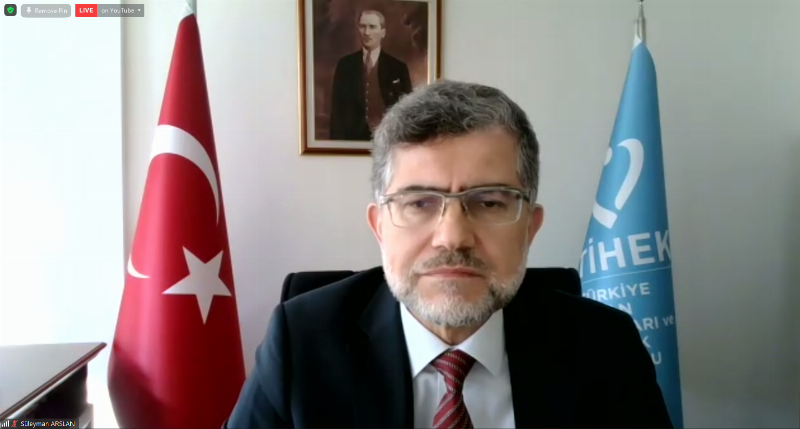
TİHEK Chairman Süleyman Arslan: “Yunus Emre tried to explain the heart to people.”
Süleyman Arslan, Chairman of the Human Rights and Equality Institution of Turkey (TİHEK), stated in his greeting speech that Yunus Emre, commemorated on the 700th anniversary of his passing, was actually a member of the army of hearts, saying, “Yunus Emre is one of the people who came with dervishes when we opened up to Anatolia with the Battle of Manzikert in 1071. We are talking about people who brought the Ahmet Yesevi tradition to this country, to this land, to the Turkish world, and then took it as far as Bosnia, as far as Europe. Among them, of course, Yunus has a special place; it needs to be emphasized. His common feature, the aspect of Yunus that is loved and stands out among us all, was that he was a man of heart. Man has a heart. Yunus was aware of this; he knew that man ascended in the realm of humanity with his heart. He was among the noble-hearted people. He tried to explain the heart to people, talked about the importance and value of the heart.”
Prof. Dr. Nevzat Tarhan: “Understanding Yunus Emre’s centuries-old messages in this era is very important.”
Üsküdar University Founding Rector, Psychiatrist Prof. Dr. Nevzat Tarhan, in his opening and greeting speech, highlighted the importance of bringing Yunus Emre's messages from centuries past to the present, discussing them, and understanding them in this era. Prof. Dr. Nevzat Tarhan said, “I hope we realize the value of our civilization's roots extending from Central Asia to the heart of Europe, and the value of our geography. I believe we will see that Yunus Emre is one of the fundamental sources of Anatolian wisdom culture.”
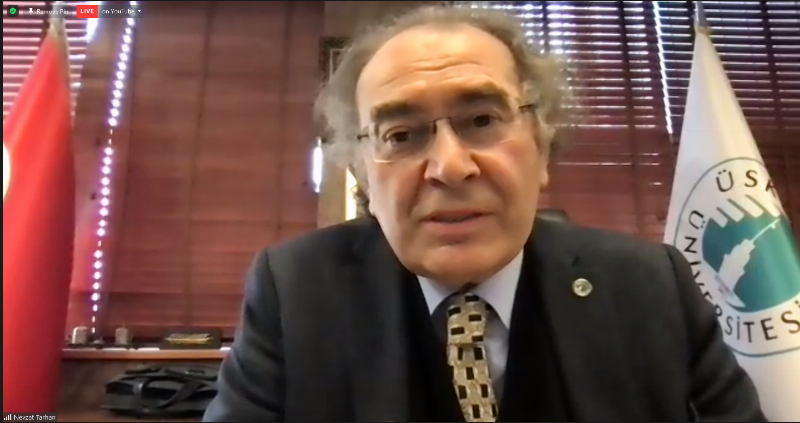
Prof. Dr. Nevzat Tarhan: “Yunus Emre traveled throughout Anatolia…”
Prof. Dr. Tarhan stated that Anatolia was in complete chaos during Yunus Emre’s time, saying, “There was no state authority. A serious crisis of trust was experienced. There was an Anatolia like in an interregnum period. In such an Anatolia, Yunus Emre was someone who took this as his concern. In an environment where people were being wasted, he worried for both himself and others. That is why Yunus Emre, like Rumi, did not stay in one place but traveled all over Anatolia. Because he touched and contacted every side, he has a shrine everywhere.”
Prof. Dr. Nevzat Tarhan: “Presenting Yunus Emre merely as a poet is to oversimplify him.”
Prof. Dr. Nevzat Tarhan noted that Yunus Emre’s most beautiful aspect was his great service to the Turkish language, stating, “He created a significant resource for expressing our traditions and beliefs in our own language. I also observed this while working on my book, Yunus Therapy. For example, the hymn ‘Sarı Çiçek’ (Yellow Flower), which is ingrained in our culture, was written by Yunus Emre. He expressed his feelings in poetic language in his search for divine love. Presenting Yunus Emre merely as a poet is to greatly oversimplify him. Yunus, with his poems, takes us from where to where. When we look at Yunus Emre, he operates within a framework that expresses the transience of the world.”
Prof. Dr. Nevzat Tarhan: “We are imitating Western civilization.”
Prof. Dr. Nevzat Tarhan noted that we live in an age of secularism, saying, “We are in an age where we have become so worldly that people live as if there is no Creator. There are words from philosophers who shaped this era. For example, Freud says, 'The source of creative activity is the pursuit of pleasure.' This forms the theoretical basis of hedonism. Adler also says, 'The source of creative activity is man's striving for a sense of superiority.' Existentialist philosophers, from Nietzsche to Sartre and Kierkegaard, say, 'The source of creative activity in man is to be selfish.' Western philosophy has taught humanity that selfishness is a civilization. We are in such an age, and we are imitating Western civilization.”
Prof. Dr. Nevzat Tarhan: “The genetics of our life philosophy have been tampered with”
Prof. Dr. Nevzat Tarhan stated that Yunus Emre also realized that people were becoming selfish in his time, and said: “Currently, books are being written in America about the ‘scourge of narcissism.’ They talk about a pandemic of narcissism. The result of narcissism is loneliness and suicide. We need to address the issue of suicide together with our university’s Psychology department. Suicides in Finland have increased by 15 percent. Statistics cannot be disclosed in Turkey, but suicides are increasing. This is the case all over the world. One of the reasons for this increase is that the genetics of our life philosophy have been tampered with. Without correcting this genetic makeup, we cannot be beneficial to young people and society. Yunus Emre realized this even then. He saw that people were becoming selfish, only thinking of themselves out of security concerns. In such situations, he uses the path of divine love. Perhaps we cannot use the path of love in this era because when emotions rise, human beings can easily lose control. We deal with individuals who have problems due to excessive impossible love; it is not such a path of love, but the effort to reach true love is important. Along with Rumi, Yunus is also a living example for us.”
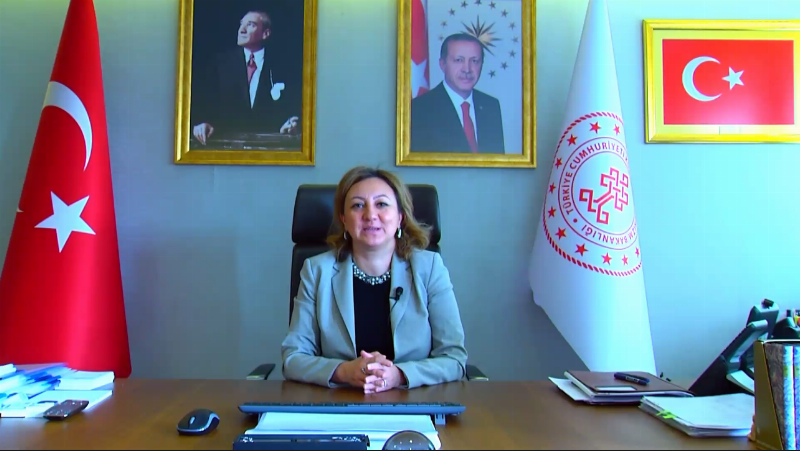
Özgül Özkan Yavuz: “We took root in these lands thanks to unique Sufi master like Yunus Emre”
T.C. Deputy Minister of Culture and Tourism Özgül Özkan Yavuz, in her video message, expressed her pleasure in delivering the opening speech of the symposium organized by Üsküdar University. Yavuz stated, “In our history, sages, as valuable representatives of our wisdom tradition, have been among the most important elements forming our ancient civilization. Their unbiased approach towards different cultures facilitated and accelerated the transfer of the universal and inclusive message of our religion and culture to all humanity. As we all know very well, there are many valuable figures of knowledge in our ancient civilization and deep-rooted history, and thankfully, thanks to the light they have held from the past to the present, our spiritual future is also enlightened. We took root in these lands, which we made our homeland a thousand years ago, never to leave again, thanks to our unique Sufi master and folk poet Yunus Emre. Our ancestors spiritually sealed our beautiful homeland, which they revived with works, many of which have survived to this day, with the guidance of Yunus and those who followed his path and ideas regarding human love, divine love, and tolerance.”
Prof. Dr. Nevzat Tarhan evaluated Yunus Emre through the eyes of a “social psychologist”
Following the opening and greeting speeches, the symposium continued with panels. The first session of the symposium featured important speakers from both Turkey and abroad. In the first session, chaired by Prof. Dr. Adnan Ömeroğlu from Biruni University, Prof. Dr. Nevzat Tarhan delivered a speech titled “Yunus Emre as a Social Psychologist.”
Prof. Dr. Nevzat Tarhan: “Yunus, speaking with the narcissus, teaches humility”
Prof. Dr. Nevzat Tarhan contrasted Yunus Emre's reading of nature with the perspective of Greek philosophy. Prof. Dr. Nevzat Tarhan stated that Yunus Emre, speaking with the narcissus, teaches a lesson in humility, saying: “Since I deal with human psychology, I want to give an example from my perspective regarding Yunus's reading of nature. I will share the Greek philosophical perspective on a narcissus flower versus Yunus Emre's perspective. You decide which is more beneficial. The word narcissism comes from the narcissus flower. According to Greek philosophy of that period, there was a very handsome young man named Narcissus. A young girl named Echo falls in love with this young man. She falls so deeply in love that she cannot find reciprocation for her love; she wastes away thinking of his beauty and dies. Because he did not reciprocate, the gods on Mount Olympus punish Narcissus. They say, ‘You will pay the price for the wrong you did to Echo.’ One day, Narcissus comes to the edge of the water. When he bends down to drink, he sees himself in the water and falls in love with his own beauty, admiring himself. This is the love of narcissism. He falls in love to the point of worshipping himself, sanctifying himself, constantly looking at himself. According to Greek philosophy, Narcissus dies in that manner and turns into a narcissus flower. Greek philosophy ends love with punishment. Yunus Emre, while wandering in the mountains, sees a yellow narcissus flower. Yunus begins to speak with the narcissus flower. He asks the narcissus flower, ‘Who sent you?’ The narcissus flower, in an internal dialogue, answers, ‘The one who sent you sent me.’ Then it talks about the realm of existence. The narcissus flower says to Yunus Emre, ‘You have an indispensable value.’ When Yunus Emre asks, ‘Did you get this beauty from the dark soil?’ the narcissus flower replies, ‘I got it from the light of the moon and the sun.’ When Yunus Emre asks, ‘Why is your neck bent?’ the narcissus flower says, ‘The crookedness of my neck is due to the uprightness of my heart towards Truth.’ Here, Yunus Emre teaches humility, instructing that arrogance is wrong. In essence, he says, ‘There is beauty in you, but this beauty does not originate from you; it comes from the light of the moon, the light of the sun, it comes from Truth.’ Yunus has made a different analysis of the narcissus flower here. This is our civilization. If we are to imitate Western civilization, which we currently admire, it contains punishment, violence, narcissism, and the ruthlessness that narcissism brings. It contains the savage capitalism of narcissism and the transformation of marriage into wars between women and men. It contains a system where the strong are always right, given by narcissism.”
Prof. Dr. Nevzat Tarhan: “Yunus is talked about, but his philosophy is not explained…”
“In our current education system, Yunus is talked about, but unfortunately, Yunus’s philosophy is not explained,” said Prof. Dr. Nevzat Tarhan, adding, “This is Yunus’s philosophy. Yunus’s perspective on a flower is different, and a Greek philosophical perspective is different. In such a situation, I say shame on those who make us admire Greek philosophy. That is, we must even adopt the correct way of looking at a flower.”
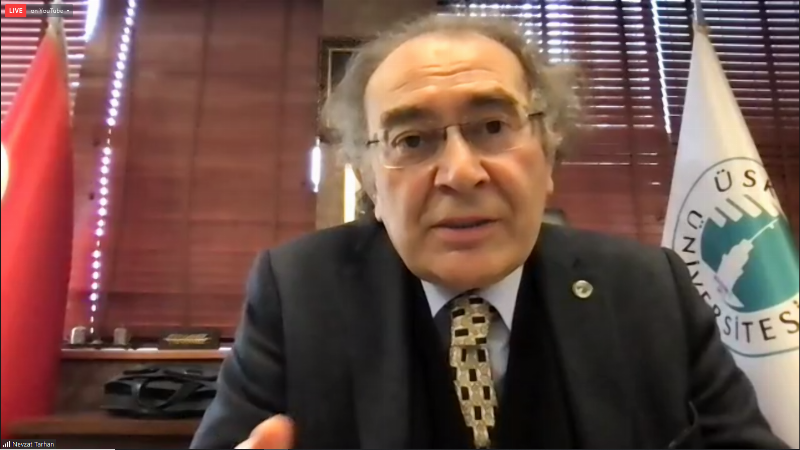
Prof. Dr. Nevzat Tarhan: “Yunus Emre used a method that treated trauma”
Prof. Dr. Nevzat Tarhan likened the interregnum period to an “Age of Trauma,” stating that Yunus Emre used methods employed in third-generation psychotherapies: “For example, another characteristic of Yunus is that he conducted trauma treatment in that period. There are third-generation psychotherapies. In third-generation psychotherapies, a person who experienced trauma in their past is addressed for trauma treatment. For instance, someone lost their mother at the age of 12, and since then, they cannot love anyone anymore because they lost their deeply loved mother. We conduct an analysis and find that the reason for their inability to love is, ‘I lost my mother whom I loved so much, now if I love someone else, I will lose them too. It’s best not to love anyone at all,’ thus constantly keeping the trauma alive. We saw that this was behind the trauma. There are third-generation psychotherapies applied here. We call them ‘Acceptance and Commitment Therapy.’ There is a technique called EMDR, which uses the right and left parts of the brain to address childhood traumas affecting a person's daily life, bringing them to the present, resolving them, assigning new meaning, and attempting to treat that trauma. Yunus Emre, in the method he used, actually treated trauma. That is, he brought various life events to life, had people narrate them. Then he had them assign a new meaning to these events. For example, like the meaning he assigned to the narcissus flower. He makes them assign a meaning of contemplation. He says, ‘Fall in love, but connect with divine love.’ When you think that everything is mortal and temporary, when you know the true owner of everything, when you know you are a guest in this world, then you will see that you are giving too much value to the loves here. He also makes them realize that they are trying to keep that love alive by assuming it is eternal. In other words, he gives such examples in his poems.”
Prof. Dr. Nevzat Tarhan: “Yunus Emre says, ‘I am gone, the Creator remains’”
Tarhan noted that Yunus Emre gave messages to all segments of society, saying, “For example, what example does he give to scholars: He says, ‘Knowledge is to know knowledge, knowledge is to know yourself.’ He says, ‘I need you, only you.’ While saying this, he tries to solve it by connecting those who use knowledge, and knowledge itself, to such a high creator. On another matter, he says, ‘I am gone, the Creator remains.’ It is so short and concise, yet so beautiful. He says, ‘My aim is to unite you with the Creator.’ At that time, the language of madrasahs was Arabic. To those who asked, ‘Why didn't you write in Arabic?’ he replies, ‘People don't understand Arabic. They understand Rabic (language of the Lord).’ Can you imagine? He takes out the ‘A’ from Arabic and says people understand Rabic. And it is so concise, beautiful, such a great meaning beautifully, meaning that people don't necessarily need such a language to reach Allah. He speaks the language of the heart.”
Prof. Dr. Nevzat Tarhan stated that Yunus Emre's era and today are not very different, saying, “Perhaps there are no wars today, but we are under the influence of cultural imperialism. The threat of global imperialism is more dangerous than monetary, financial, and economic imperialism. And within the next 50 years, the world's only culture will be popular culture, Hollywood culture. Unless we keep our own civilization values alive in our civilization's geography.”
Prof. Dr. Nevzat Tarhan: “Selfish people cannot see Yunus”
Prof. Dr. Nevzat Tarhan stated that many valuable individuals like Hacı Bektaş and Hacı Bayram were the compass of society, saying, “They were the suns and stars that illuminated that era. Therefore, to introduce Yunus Emre and these values to young people, to talk about him, and to explain him in a language they can understand, I want to conclude with this quote: He says, ‘Where there is ‘you’ and ‘I’, there is no Allah.’ He says, ‘Enter the heart, and you will find the Light, roll up the scroll of saying ‘you’ and ‘I’.’ Therefore, if people say ‘you’ and ‘I’, if there are ego wars, Allah will not be there, Allah will move away from the heart. So let’s not engage in ego wars. Saying ‘I, I’, selfish people, cannot see or understand Yunus. But people who want to discipline their ego, who want to mature and refine themselves, will find many clues, many treasures in Yunus.”
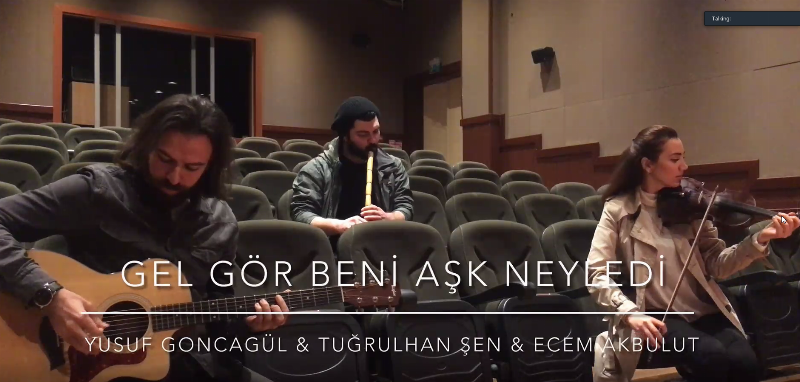
A music recital consisting of Yunus Emre’s poems was also presented at the symposium, which was broadcast live on Üsküdar University’s YouTube channels. In the first session of the symposium, Prof. Dr. Almaz Binnetova from Azerbaijan National Academy of Sciences presented 'Yunus Emre’s Love', Dr. Fahri Atasoy from Kırıkkale University presented 'Yunus Emre’s Human Sufism That Left Its Mark on Turkish Culture', and Asif Bayramov from Azerbaijan National Academy of Sciences delivered his speech titled 'Yunus Emre in the Context of Turkish Philosophical Worldview'.
The second session of the symposium was chaired by Prof. Dr. Hayati Develi from Istanbul University. Prof. Dr. Mehmet Aça from Marmara University presented 'The Search for Meaning in Yunus Emre', Prof. Dr. Huraman Hümmetova from Azerbaijan National Academy of Sciences presented 'The Manifestation of Images in Yunus Emre’s Poetry', and Dr. Orhan Aras from the Germany – Turkey Writers' Union delivered his speech titled 'Turkish Language from Ahmet Yesevi to Yunus Emre'. The symposium also saw participation from universities in Russia and Turkmenistan. Prof. Dr. Appolinariya Avrutina from St. Petersburg State University participated with her speech titled 'Translations of Yunus Emre’s Poems in Russia' and Şahnaz Kamalova with 'Parallels Between Göktürk Literature and Yunus Emre’s Creativity'. Assoc. Prof. Dr. Döletmırat Rahimov and Assoc. Prof. Dr. Amannepes Şıhnepesov from Mahtamgulu Turkmen State University also shared their views on 'The Language of Yunus Emre’s Works and Contemporary Central Asian Turkmen Language'.