

Psychiatrist Prof. Dr. Nevzat Tarhan noted that national holidays are ceremonies and symbols where a society's culture is rebuilt, adding that these holidays, which are values that keep society together, create areas where society feels safe. Emphasizing that national holidays keep social memory fresh, Tarhan stated that raising children who embrace national values is also important. Tarhan particularly underlined the need to strengthen the family for a child's psychological resilience, adding that the weakening of the family is the greatest harm that can be done to child mental health.
Content
Prof. Dr. Nevzat Tarhan: “The weakening of the family is the greatest harm that can be done to child mental health”
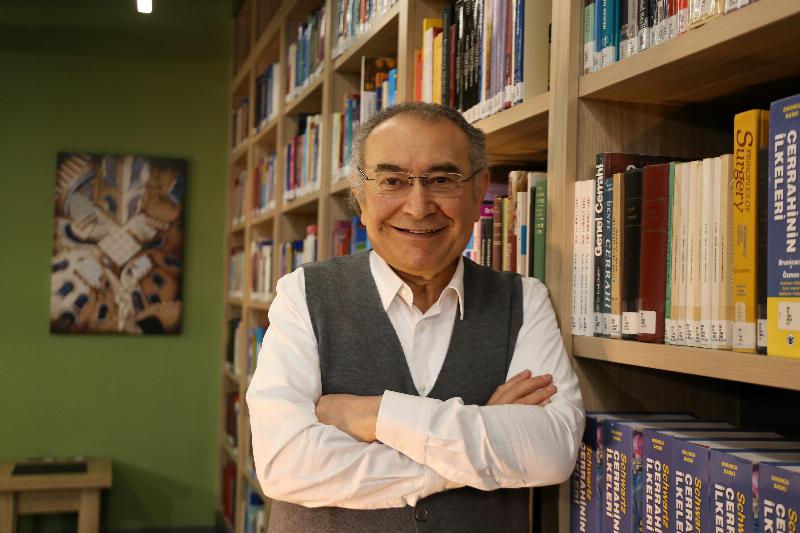
Üsküdar Üniversitesi Founding Rector, Psychiatrist Prof. Dr. Nevzat Tarhan made evaluations regarding April 23 National Sovereignty and Children's Day, and April 23 World Infant, Child and Adolescent Mental Health Day, which was declared by international non-governmental organizations formed by scientists working in the field of child mental health worldwide.
Tarhan noted that April 23 National Sovereignty and Children's Day was initially adopted as the National Sovereignty (Hakimiyet-i Milliye) holiday, institutionalizing the joy related to the opening of the Grand National Assembly of Turkey (TBMM) on April 23, 1920, with cheer and applause. He added that the name of the holiday was changed to National Sovereignty and Children's Day in 1981.
Prof. Dr. Nevzat Tarhan noted that a positive development also occurred this year on April 23, stating, “With the recommendation of important associations working on child mental health worldwide, April 23 was globally declared as World Infant, Child and Adolescent Mental Health Day. Celebrating this special day is important.” Prof. Dr. Nevzat Tarhan also underlined that significant work on maternal and infant mental health is carried out at Üsküdar Üniversitesi Mother and Infant Mental Health Application and Research Center.
Keeping social memory fresh is important
Prof. Dr. Nevzat Tarhan emphasized the importance of national holidays in keeping social memory fresh, saying, “Religious holidays are as important as national holidays. These are a set of values that hold societies together. These are ceremonies and symbols. They are the most important elements of social memory. Just as individual memory is very important, so is social memory. In individual memory, there is a person's recollection. When applying for a job, we take and examine a person's CV. We look at their resume, that is, their story. Then we look at what they have done. We also look at their future projection and evaluate and decide: 'This person is suitable for this job or not,' we say.”
Prof. Dr. Nevzat Tarhan stated that the same applies to social memory as it does to individual memory, saying, “What is the past, the resume, of a society? For example, the establishment date of our Land Forces goes back 2500 years. The establishment date of the Police Department goes back to 1700. We have a very deep-rooted history. In fact, it has existed with its institutions for a very long time. It is maturing. One should think this way.”
Values that hold society together create a safe space
Prof. Dr. Nevzat Tarhan noted that national holidays are occasions where a society's cultures are rebuilt through ceremonies and symbols, stating, “If national holidays embrace the entire society, they serve their purpose. There are values that hold society together. This is called a safe space. It creates an area where society feels secure. This is a situation where there are shared symbols, ceremonies, and common pleasures.”
Cultural memory connects with our past
Prof. Dr. Nevzat Tarhan noted that, like individual and social memory, there is also cultural memory, stating, “Social memory is the working memory that all of us experience in daily life, but cultural memory is the memory that connects with our past. We take scenarios from our past. We also take today's experienced social memories and develop our own culture. Therefore, memory is an organic whole. Just as in an individual, social memory is also organic. Cultural memory is also a part of that organic whole. That is why cultural memory does not instantly improve from top to bottom with a revolution. It changes through evolution. Trying to change a society's culture through revolution leads to polarization in society. It causes lifestyle differences. Moreover, those close to the power that imposes it support it. Those who are distant develop an opposite identity. For example, imagine in a family, if parents impose something new on their children, and two children accept it but others do not, there will be no peace at home. Therefore, it is important for this to be a day that embraces everyone, and this should be the goal. For this, there will be common rituals. There will be common ceremonies. There will be common experiences.”
Prof. Dr. Nevzat Tarhan noted that one of the holidays that form our cultural memory, having become a tradition through such shared experiences, is Nevruz Bayram, stating, “We all know from childhood on March 21st. Fires were lit and jumped over. For example, onions and eggs were cooked. These are traditions coming from Central Asia. Holidays are also among these ceremonies. Kaşgarlı Mahmud provides information in his work about what the word 'Bayram' means among Turks. He uses the word 'Bedhrem' as a counterpart to 'Bayram'. It means a joyful day. So, in fact, a national holiday is not something related to concrete space and time. It is also related to an abstract concept.”
We must adapt life scenarios from the past to the present
Prof. Dr. Nevzat Tarhan noted that holidays are also related to identity building, stating, “Two people get married. Both have life scenarios related to the family environment they lived in. Both have scenarios related to their mother, father, and siblings. When they come together, they become a new family. A safe space is formed. A new abstract identity is formed. If we don't take our life scenarios from the past and adapt them to today, if we insist 'It will be the same. My father was such a person, you behave like that. My mother was such a person, you behave like that,' that marriage won't work. So what will happen? Just as in our individual memory, we need to take our past scenarios and change them as we live them in today's life because the actors have changed. A mother-in-law came in place of the mother. A father-in-law came. Siblings changed. In fact, if you see this as enrichment, you can create a common identity.”
Prof. Dr. Nevzat Tarhan noted that if a person has mental flexibility, they can bring their past cultural accumulations and rewrite a life scenario according to the present situation, stating, “This situation is also related to the person's level of development and maturity. If so, they actually create a common safe space, a common identity. When we disregard our past, we feel the need to search for it. If you take a person to a deserted island and say, 'We are erasing all your past,' that person has to invent a past for themselves. They invent legends, stories, etc., and build a past for themselves. If they do not build a past, they cannot create the present.”
Cultural memory is alive and dynamic
Prof. Dr. Nevzat Tarhan stated that cultural memory is alive and dynamic, saying, “It needs to be left to sociological stages and sociological phases. Sociological phases are in periods like 30, 60, 90 years. Policies trying to change a society's culture by removing its language, destroying gravestones, or demolishing them have never succeeded in history. It happened with us too. It caused divisions in society. Therefore, for the rebuilding of society, we need to find the formula for building these holidays on unifying, inclusive common cultural values. As a society and as policymakers, it is necessary not to link this solely to concrete space-time relationships. It should also be seen as important in abstract identity construction. For example, the Japanese tell younger generations about Hiroshima. They take primary school children there. They say, 'Our ancestors made sacrifices for us.' They use this in identity construction to make young people work harder and take more responsibility.”
The importance of history and past consciousness has been understood
Prof. Dr. Nevzat Tarhan noted that even the name Çanakkale was not properly mentioned during his student years, stating, “As a military doctor in the 70s, I know. It was only in military schools. At Kuleli Military High School during that period, there was a famous singer who sang the National Anthem in Çanakkale. The school commander had brought him. Being soldiers, they recognized that spirit more. Soldiers better know and understand how important it is to keep the spirit of Çanakkale alive. Now, thankfully, that awareness has formed. That spirit is being revived and narrated. The cultural construction of our children is much, much more important. The most important transition of the War of Independence is the March 18 Çanakkale Victory. Without the Çanakkale Victory, society could not have fought the War of Independence. With the motivation it provided, there was a kind of revival. The Çanakkale Victory is a critical turning point, and keeping it alive is very important.”
Children and adolescents were most affected by the pandemic process
Prof. Dr. Nevzat Tarhan also pointed to the importance of April 23 World Infant, Child and Adolescent Mental Health Day, declared this year, stating, “We owe this important day somewhat to the Covid pandemic. When the Covid pandemic first began, based on our tests and research, we expected people over 65 to be more affected. However, that was not the case. Interestingly, children and adolescents were more affected. Of course, it also affected those over 65, and Alzheimer's increased, but somehow they were able to cope with their cultural accumulations. However, the social isolation, lack of social contact, intense engagement with the internet, and immersion in virtual reality among children and adolescents made them vulnerable to trauma. It made them fragile. Therefore, it was necessary to prioritize post-pandemic maturation and post-pandemic growth processes for them. For this reason, organizations working in the field of child mental health worldwide felt such a need and chose this day. The selection of April 23 for this special day is, of course, a praiseworthy situation for Turkey. It is something to be happy about.”
Interaction of the child with the mother in early childhood is very important
Prof. Dr. Nevzat Tarhan emphasized that the 0-3 or 0-6 age period is very important in infant and child mental health, stating, “During this period, the child's interaction with the mother, father, or a mother-figure is very important. While trying to learn life, making decisions, dreaming, or doing things, the child looks sideways at the mother and father. After this, the child begins to make investments in life, takes steps, and tries to learn things.”
It is necessary to teach how to be a global citizen while preserving national identity
Prof. Dr. Nevzat Tarhan noted that it is also important for April 23 World Infant, Child and Adolescent Mental Health Day to coincide with such an important national day, stating, “Learning social and cultural values during a child's growth process is also important. It is very important for us to raise children in accordance with our own cultural values. To be 'us' by remaining 'me' – that is, we need to teach our children how to be a global citizen while preserving their national identity. If you try to be a global citizen without preserving your national identity, we raise them, and they go to Germany, to America. They serve that economy. We cause brain drain. To avoid brain drain, we need to raise national children. We need to raise children who embrace national values. We need to instill our own cultural values, the values that the republic has added and brought to us, and a future vision into the child's developing and working memory. Our children should have national values in one hand and computers and technology in the other.”
Family should be strengthened for children's psychological resilience
Prof. Dr. Nevzat Tarhan also gave recommendations for strengthening psychological resilience in children, stating, “Child mental health has become the most important and priority issue for the entire world. Because violence among children has increased. Violence in schools has increased. Many cases of school refusal have increased. In combating all these, strengthening the mother, who is the child's first teacher, and the family, which is the first home where those children are raised, comes to the forefront. The weakening of the family is the greatest harm that can be done to child mental health.”
An atmosphere to raise happy children should be created in the family
Prof. Dr. Nevzat Tarhan noted the importance of addressing the concept of family and making recommendations to strengthen it on this important day, stating, “A child cannot be happy in an environment where the family is not a safe space. What happens to a child in a world where they are not happy and peaceful? The child seeks happiness and peace in the internet world, in wrong friendships, in substances. That's why, no matter what, we need to succeed in providing a peaceful and happy environment for the child at home. Just as we want beautiful flowers to grow in our garden, we need to create a good infrastructure. We need to pay attention to its sun and water. That is, we need to create its climate. In a family, too, an atmosphere to raise happy children needs to be created. A mother can be a good businesswoman, or a father can be a good businessman, but raising a good child is not less important than these. All mothers and fathers should consider raising a good child as the greatest investment.”
Share
Update Date: February 28, 2026
Creation Date: April 23, 2022
Request a Call
Other News
- Prof. Nevzat Tarhan: “Those with a mental filter are not afraid of the digital”
- Artificial intelligence doesn't eliminate the translator, it transforms their expertise!
- Social responsibility courses moved to the field
- Erasmus+ Orientation Week completed at Üsküdar
- Prof. Nevzat Tarhan: “Brain secretes ‘dark glue’ in social media lynchers!”