

Psychiatrist Prof. Dr. Nevzat Tarhan, stating that the ongoing global coronavirus crisis is delivering important messages to humanity, notes that the pandemic is changing global trends. Tarhan, who observed that humanity's harsh treatment of nature played a significant role in the current crisis, said that everyone must consider the environment from now on. Prof. Dr. Nevzat Tarhan said, “Everyone must be an environmentalist now,” and added, “Everyone must take global pollution and climate change seriously. If we do not change global norms, we will have committed a crime against humanity.”
Content
Prof. Dr. Nevzat Tarhan: “We Need to Change Global Norms”
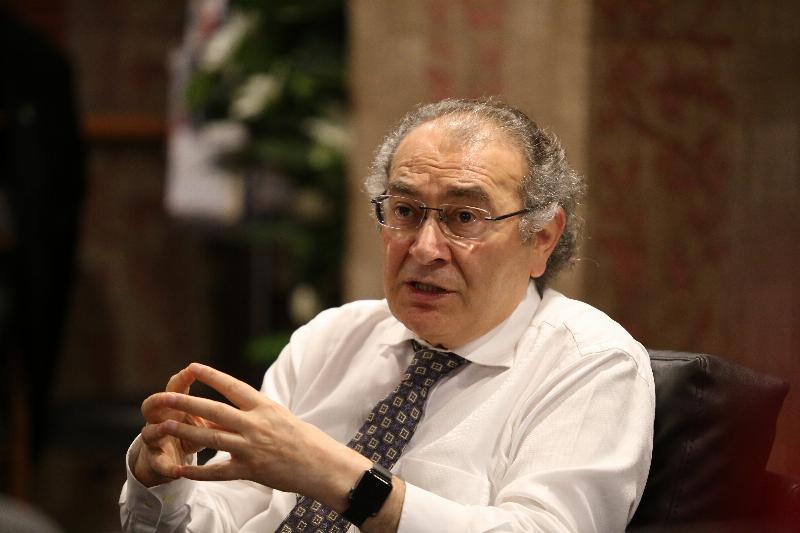
Üsküdar Üniversitesi Founding Rector, Psychiatrist Prof. Dr. Nevzat Tarhan, drew attention to the significant impacts of the coronavirus pandemic, whose effects are felt worldwide, particularly psychological problems. Prof. Dr. Nevzat Tarhan stated that the psychological effects of the coronavirus are felt quite widely, saying, “There are two processes here: first, the difficulties experienced by those who contract the coronavirus infection and have a severe course. The other is the anxieties and fears related to contracting the pandemic.”
50% of Society Matured, 50% Felt Fear and Anxiety
Prof. Dr. Nevzat Tarhan drew attention to the Coronaphobia research conducted by Üsküdar Üniversitesi across Turkey in April last year, after the pandemic began, saying, “6,318 people participated in this study. We addressed perceptions, anxieties, fears, and the maturation process related to the coronavirus. Six questions from the post-traumatic growth scale were suitable for the group we studied. Approximately 50% of the participants, who were positively affected by the pandemic, answered questions such as ‘I appreciate the things I have,’ ‘My priorities in life have changed,’ and ‘I treat my loved ones differently; I can develop myself better in terms of empathy.’ However, we observed that fear and panic persisted in 50% of the group. This is a significant figure in society. 50% had achieved maturation in terms of post-traumatic growth.”
We Need Cautious Optimism
Prof. Dr. Nevzat Tarhan noted that the e-coronaphobia website, prepared by Üsküdar Üniversitesi and NPİSTANBUL Beyin Hastanesi, is the most visited web page related to coronaphobia after the Ministry of Health. He stated, “Visits to this page have started to decrease in the last two months. We see this as a positive development. People’s anxiety and fear about this issue have begun to lessen. This is particularly related to the emergence of hope after the vaccine. Such a decrease also occurred last summer, but it had a negative impact. People had relaxed their precautions, and the second wave hit us more severely. Therefore, we currently need cautious optimism against this decrease.”
Prof. Dr. Nevzat Tarhan stated that the pandemic process has negatively affected psychiatric patients in particular, saying, “There are no long queues in front of psychiatric clinics yet, but they have started. Currently, many inpatients, especially those with Alzheimer’s and bipolar disorder, who had been stabilized with treatment, have decompensated. Their illnesses recurred, and hospitalizations for these conditions increased. Despite fears of coming to the hospital, we see an increase in visits to psychiatric clinics. This is actually a situation observed not only in Turkey but all over the world. The World Health Organization also issued a warning stating that the post-pandemic psychiatric disease epidemic should be taken into consideration.”
No Room for Despair
Prof. Dr. Nevzat Tarhan, noting that there is absolutely no room for despair in the fight against the pandemic, said, “The light at the end of the tunnel is visible. With the vaccine, this will be resolved one way or another. Perhaps it will be slow, perhaps late, but it will be resolved sooner or later. Therefore, there is absolutely no need for despair. Looking at world history, there have been such epidemics. Later, over the years, when the majority of society gained immunity, the situation returned to normal. The pandemic will eventually reach the status of influenza; this disease is like flu viruses. But this is a much more interesting disease. It mutates frequently, and it’s unclear who it will affect from where. It’s a disease that surprises the immune system.”
It Should Be Physical, Not Emotional Distance
Prof. Dr. Nevzat Tarhan, noting that precautions and warnings must be followed while combating the pandemic, said, “The most important issue against the virus is definitely masks. The concept of social distance was misunderstood as not having social contact. It was understood as psychological distance rather than social distance. People distanced themselves from each other. We can maintain social and physical distance while preserving our emotional and psychological closeness. Therefore, we don’t need to avoid calling our loved ones. We can call them digitally, by phone, or inquire about the well-being of our elders. This process does not prevent us from taking care of our children. It does not prevent us from speaking kind words to them or giving them a loving gaze.”
We Will Not Live Recklessly Like Before
Prof. Dr. Nevzat Tarhan stated that paying attention to three points while combating the pandemic will reduce fear and anxiety: “First, the absence of despair; second, increasing psychological contact even if we maintain physical distance; and third, continuing with classic precautions. Someone who pays attention to precautions does not need to be afraid. We say there is stress, but no fear. Controllable stress is beneficial. We will control stress, but we will change our lifestyle compared to before. We will not be able to live recklessly like before, we will not chase pleasure and speed, we will change our lifestyle. Those with an entertainment-focused life philosophy are currently at great risk.”
All Humanity Must Take Global Pollution Seriously
Stating that the pandemic is changing global trends, Prof. Dr. Nevzat Tarhan noted that after this process, all humanity must take climate change and environmental problems seriously and produce solutions, adding:
“Globally, supply and demand will seriously affect the economy. The pandemic will affect our relationship with nature. People need to accept their helplessness, weaknesses, and powerlessness in the face of the pandemic. Medicine has advanced so much but couldn’t find a cure for everything. This virus ends, another one begins. Because we treated nature very harshly, badly. There is no guarantee that another virus won’t emerge from another animal. Therefore, everyone must be an environmentalist now. Everyone will respect the environment. Everyone must take global pollution and climate change seriously. We will see those who do not accept these as individuals harming society. Perhaps in the coming decades, those who are not environmentally friendly will be considered criminals. This needs to be done now. Currently, anyone who is not environmentally friendly is committing a global crime, a crime against humanity. We need to think like this. For this, we need to learn this lesson. If we do not change global norms, we will have committed a crime against humanity. The matter is that serious.”
We Will Try to Manage Covid-19
Prof. Dr. Nevzat Tarhan emphasized the importance of psychological resilience in combating the pandemic and concluded his remarks by stating that adaptation to the new era will be effective in navigating this process easily:
“We will not see Covid-19 as an enemy; we will not confront Covid. We will not take it as an opponent, but we will try to manage it. In psychiatry, there are third-generation treatments. Treatments that involve accepting and managing the problem or illness. We will accept this problem. This is now our companion. It will live with us. If we can control it, we will live our lives with better quality and greater productivity. This is our choice. If we make the right lifestyle choices, and accept the new lifestyle, the new normal, it will be to our benefit. A short-sighted person who says, ‘If I can’t have fun today, I’ll live as I please,’ will contract Covid in some way, but at least will pay the price for a loved one. A smart person is one who thinks in the medium and long term. People, please develop your long-term thinking skills.”
Share
Update Date: February 27, 2026
Creation Date: January 29, 2021
Request a Call
Other News
- The book that read today's digital threats in 2014: Being a Conscious Family
- Experts warn: 'Instead of memorizing letters, teach pencil grip, scissor use, and coloring'
- School fear and school love both start in the family!
- Family is not merely transforming, it is being battered under a serious assault
- Artificial intelligence opens the door to early diagnosis in autism!