

Stating that believing in the importance of teamwork is one of the necessities in positive leadership, Psychiatrist Prof. Dr. Nevzat Tarhan said, “The leadership of this era must also possess 21st Century skills. 21st century skills have changed the concept of leadership. One of these skills is an aptitude for teamwork. Teamwork is very important in this era. This era is not the age of individual genius, but the age of team genius.” Prof. Dr. Nevzat Tarhan also stated that positive leadership includes features such as building trust, establishing good relationships, and being open to criticism.
Content
Prof. Dr. Nevzat Tarhan: “This era is not the age of individual genius, but the age of team genius”
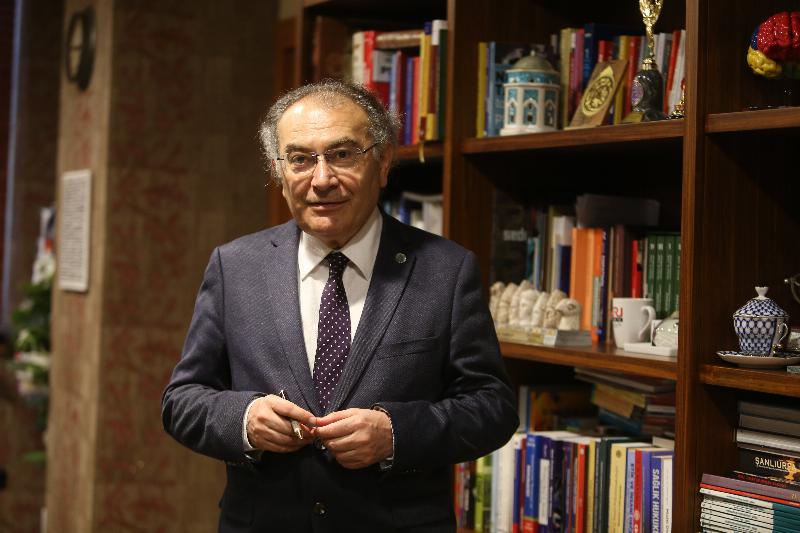
“21st century skills have changed the concept of leadership”
Üsküdar Üniversitesi Founding Rector Psychiatrist Prof. Dr. Nevzat Tarhan evaluated the concept of positive leadership.
Stating that the concept of “positive leadership” actually overlaps greatly with the concept called “scientific leadership”, Prof. Dr. Nevzat Tarhan said, “In leadership, there is typically what is known as classical leadership. There are classical leaders who run an existing business very well, but those kinds of leaders cannot think outside the box. They are quite successful in managing the existing situation in the best way. They cannot manage new situations or crises. In a crisis, the reason many family businesses usually disintegrate is the classical leadership approach. Companies operating with classical leadership can fall apart in crises. ” he said.
Positive leadership has developed foresight
Prof. Dr. Nevzat Tarhan noted that while some companies had excellent leadership at their inception, they faced problems such as inability to predict the future during their continuation, and said that similar examples exist globally. Prof. Dr. Nevzat Tarhan said, “Companies lost many opportunities due to leadership errors. The greatest characteristic of positive leadership is its developed foresight. Leaders manage the present very well. Charismatic leaders emerge very well from storms, but true leaders, scientific leaders, i.e., positive leaders, manage not to get caught in the storm. Instead of managing the crisis, they act to prevent it or catch its precursors and act accordingly.” he stated.
Prof. Dr. Nevzat Tarhan noted that in negative leadership, the mind works focused on correcting errors, and said, “When a crisis arises, it focuses on managing the crisis. However, it is very important to take precautions to prevent a crisis, to perform crisis analysis, to make a crisis plan, to analyze the future, and to be able to do crisis analysis before crisis preparedness. Analysis of future needs is essential.”
A scientific leader builds good relationships
Prof. Dr. Nevzat Tarhan stated that in scientific leadership, a person would not act with the feeling of “I know everything”, and said, “This type of leader tries to get help from someone experienced. They first build good relationships with themselves and then with their employees. These types of leaders are open to external auditors and criticism. Being open to criticism is important. People who are not open to criticism cannot be positive leaders. Being open to criticism is not easy. Classical leaders cannot do this, and charismatic leaders are very uncomfortable with criticism.” he said.
In positive leadership, criticism is seen as a gift
Tarhan said, “True leadership is being our own leader,” adding, “We call this neuro-leadership, meaning it is important to be able to manage our brain chemistry, our anger, our impulses, our desires, and to be able to self-criticize, to achieve these. Here, the person looks at the other party’s criticism from a positive perspective. They think ‘if it's valid, it's helping me,’ a positive leader sees criticism as a gift and examines it; if it's useful, they use it, if not, they move on. People who cannot accept criticism cannot progress and remain in the same place.” he said.
Trust is essential in positive leadership
Prof. Dr. Nevzat Tarhan stated that in positive, or scientific, leadership, trust is fundamental and doubt is an exception, noting, “There is a study conducted in 2009 on over 54,000 people. Participants in the study were asked, ‘How would you like your leader or manager to be?’ First, it is stated that they should be trustworthy and honest. Second, human-centered, and third, expected to be open to communication. In other words, an open, transparent, and honesty-focused perspective is important in leadership. At the center of the leadership circle is trust. Surrounding it are competence, values, and social intelligence. When love increases, trust also increases. When love decreases, trust also decreases. There is a causal relationship between them. When love decreases, fear increases. When fear increases, trust weakens. Love, fear, and trust are all within a cycle.” he said.
Negative leadership cannot succeed
Prof. Dr. Nevzat Tarhan pointed out that the leadership style has changed in the current era, stating, “In this era, negative leadership cannot succeed. In ancient times, in traditional systems, there was a leadership approach that frightened, threatened, and quickly achieved results to get swift and definitive outcomes. When that leader lost power, they became unable to walk the streets. There are examples of this in history. Napoleon and Hitler are such leaders. They govern through fear. Positive leadership is a difficult task. It requires patience, thinking talent-focused, and finding, capturing, and bringing out the good qualities of people.” he said.
A child looks at what is done, not what is said
Prof. Dr. Nevzat Tarhan, stating “Leadership is also important in the family,” drew attention to attitudinal errors in the family and said the following: “Children generally look at what their parents do, not what they say. If what parents say and do is consistent, the child tries to model it. But if what they say is one thing and what they do is another, the child tries to model whatever suits them at that moment. Therefore, it is important for parents to be consistent with themselves. Inconsistent discipline is harmful. What they say yes to one day, they say no to the next. These types of inconsistencies lead to divisions in the child's mind. The good cop-bad cop method applied at home is also flawed. There is no good cop, bad cop in child education. This is an interrogation technique, not a family management technique. Such manipulative approaches will result in a manipulative personality in the child later on.”
A liar's candle doesn't last until bedtime…
Prof. Dr. Nevzat Tarhan stated that in our culture, a culture of pressure and fear sometimes emerges, saying, “Under the influence of a culture of fear, we try to achieve results by intimidating. However, in this era, we are moving towards a world where not a culture of fear, but a culture of trust is important, because there is open, transparent communication. It used to be said that a liar’s candle burns until the evening prayer; now a liar’s candle burns until it hits the internet, not waiting for the evening prayer. Therefore, we should not lie to our children, even as a joke. Trust-based leadership is important. For this, a person must first not lie to themselves and be honest with themselves.” he said.
21st century skills have changed the concept of leadership
Prof. Dr. Nevzat Tarhan stated that one of the requirements in positive leadership is believing in the importance of teamwork, saying, “The leadership of this era must also possess 21st Century skills. 21st century skills have changed the concept of leadership. One of these skills is an aptitude for teamwork. Teamwork is very important in this era. This era is not the age of individual genius, but the age of team genius. Therefore, a positive leader mobilizes the team for the ship to advance. They give employees the opportunity to say ‘I did it’. Leadership in a football game is charismatic leadership. It is a leadership style of ‘Always keep the ball with me, always be in the midfield, always score goals myself’. However, even in football, collective play is now fundamental, meaning team leadership is essential.” he said.
Humans are relational beings, we learn everything from society
Tarhan stated that there is talk of an erosion of empathy today, saying, “What caused the change in leadership brought about by this era is connectivity, it is connectivism. Currently, everyone is connected, and everything is relational. Humans are also relational beings. They are not encrypted or coded to live alone. Humans cannot achieve happiness alone. Of course, there are chosen solitudes, that's different. After reaching a certain level, a person can choose this, but it is a special situation. We actually learn everything in life later, we learn from society.” he said.
Share
Update Date: February 28, 2026
Creation Date: October 04, 2021
Request a Call
Other News
- The book that read today's digital threats in 2014: Being a Conscious Family
- Experts warn: 'Instead of memorizing letters, teach pencil grip, scissor use, and coloring'
- School fear and school love both start in the family!
- Family is not merely transforming, it is being battered under a serious assault
- Artificial intelligence opens the door to early diagnosis in autism!