

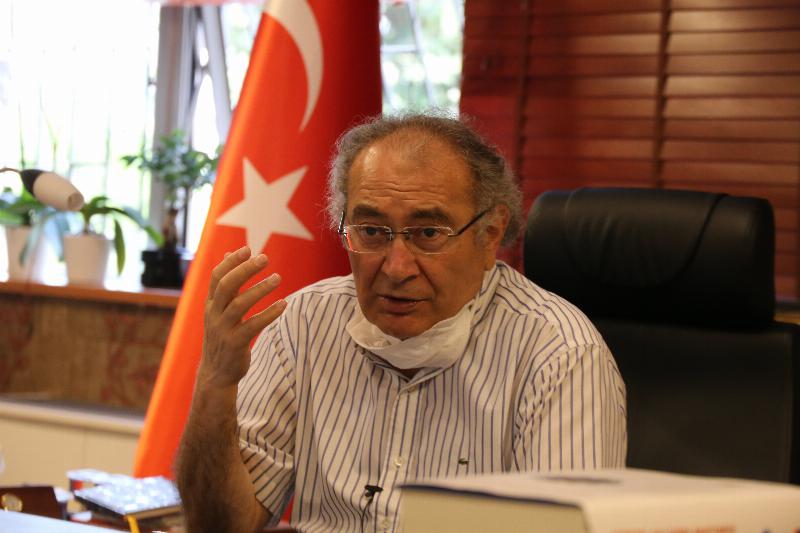
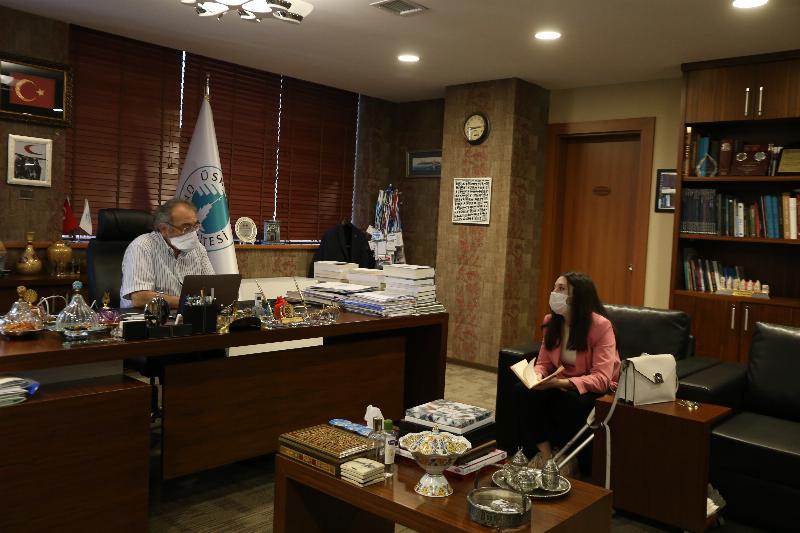
I directed questions to Prof. Dr. Nevzat Tarhan, Founding Rector of Üsküdar Üniversitesi, regarding the psychological dimensions of the confusion brought by the pandemic period. Here are Nevzat Tarhan's assessments on Turkey's psychological outlook in the new era and ways to cope with the new way of life..
Content
Prof. Dr. Nevzat Tarhan: ''There are 3 Types of People Who Take the Epidemic Seriously''
How can we adapt to the new way of life brought about by the Covid-19 epidemic, and in what situations does psychological support become essential?
After the Covid-19 pandemic emerged, everyone in the world experienced a shock. Then, adaptation slowly occurred. Recently, there are those who have adapted in many ways, and those who haven't. Everyone's hope now is the discovery of a vaccine. If a vaccine is found, it is very likely to affect the foreign exchange market, the gold market, all of them, but the vaccines currently available are effective for 3-4 months. It has individually affected people psychologically and psychiatrically. It has led to the emergence of many diseases. There are social effects. Problems related to human life philosophy, existence, and spiritual dimension have begun to emerge. This process is currently ongoing. It is predicted to continue for about 2 years. Even if a vaccine is released, its protective widespread distribution will take time... We are facing a different process. Whether we accept it or not is important. Currently, there are 3 types of reactions in society: those who accept it and shape their lives accordingly, those who do not accept it and see it as an enemy, and those who don't care. Those who don't care are mostly from younger groups or overly libertarian, rule-breaking personalities. They choose a lifestyle that defies the disease, saying, 'Freedom is sacred to me, I cannot sacrifice it.' There is also a significant group, mostly in the USA, who say 'Nothing will happen' or 'Whatever happens, I cannot live so restricted.' During this period, people experienced loneliness created by social isolation and social distancing. This loneliness began to affect older people much more. Those who lost loved ones experienced feelings of helplessness. Loneliness, helplessness, inadequacy—all these feelings raised anxiety levels in people. The rate of depression increased. What we call post-traumatic stress disorder, those who experienced trauma are still experiencing it. A group of people has also formed who still cannot leave their homes, having cut off their ties with the world. Divorces increased globally. When we look at it in this context, humanity before the pandemic and now will be different. In such situations, humanity will either progress with psychological maturity, depending on the position it takes, or continue its life with passive immunity, saying, 'Nothing will happen to me.' This is like living by chance. In such cases, psychological support is provided to those who ask for help, and it is beneficial to provide it.
''WE ENCOUNTERED ANTIDEPRESSANT USE IN AN INDIVIDUAL AGED 70 FOR THE FIRST TIME''
What path should be followed to minimize the negativities brought by the epidemic process?
Actually, it's called social distance, but we should say physical distance. People can love their loved ones socially from a distance without physical proximity. They can maintain their relationships remotely. Currently, there is a digitalization that we are compulsorily involved in, and it is important for us to adapt to this digitalization process. Of course, the reactions of all middle-aged and older age groups can vary during this process, but we need to know that our chances of emerging from this process with gains are high. Not seeing the process as an enemy is the critical concept here. To minimize the negativities, we need to manage stress and accept the situation. Covid-19 caused psychological trauma on humanity. This trauma brought negativities. If people confront this correctly, reduce the negativities and turn them into positives, transform them into opportunities, they can adapt to the new situation. We now need to create a new way of life; we will most likely forget living fast, living clingy, living without limits or questions for many years. In this regard, an era without the old freedoms has begun worldwide. We are living in an era called the post-Corona era. We are facing a situation beyond our control… In people who lament with "Why did this happen?" or "Why can't I travel as much as before?", stress recurs, affecting their immune systems, and increasing their chances of contracting the disease. The magic word here is acceptance; this is the best path to be scientifically recommended. How do we cope with this situation in family and social relationships, how do we overcome it? By upholding and elevating two values in the family: one is compassion, the other is kindness. In close relationships, we have to act more compassionately than before because we are forced to live together; everyone is currently a victim. Compassion means love with empathy. Love without empathy means loving someone for your own benefit. You love their physical appearance, money, position, or fame; this is conditional love. But love with empathy means a love that involves sacrifice, like the love a mother feels for her child, or people for each other. The spread of this love and the implementation of rules of kindness are necessary. If a person can say, "I will act more compassionately and kindly in my home," family relationships will become more livable. In this way, individuals can make their lives even better. Because of Covid, we have to keep this as a value. People who do not believe in these values will find it harder to adapt now. Rude, assertive, shouting at everything, and seeing anger as an emotion will likely become isolated during this process.
Does the epidemic process trigger or lead to the progression of any obsessive-compulsive disorder?
We are in a period where everyone needs to scientifically raise their hygiene standards. If a person used to wash their hands 1-2 times a day, now they will wash them 5-10 times. Washing hands, believe it or not, is more important than masks, but with plenty of water, not just disinfectant. At the same time, because it can be transmitted through the air, it spreads through droplets, not just large drops, found in the environment. It can also be transmitted through the eyes and nose. People who have the habit of washing their eyes and face are luckier in this situation. This is not obsessive-compulsive disorder (OCD); it will return to normal when conditions improve. We have seen cases where the obsessions of individuals prone to cleanliness and contamination increased. OCD cases increased, and recovered OCD cases relapsed. Stress has an effect; they also cannot manage stress well, especially more common in individuals with lower IQs. Individuals with high IQs can find solutions and develop alternatives, but in individuals with limited intelligence, if there is an unsafe environment, depression and psychosis can be seen; if there is a safe environment, there is no problem. Rest assured, approximately 20% of patients currently hospitalized consist of those whose illnesses were triggered by the pandemic. One of the most common psychiatric problems we encountered during this process is depression in older age. For the first time, we encountered a 70-year-old using antidepressants. Older people used to go out to the garden, go to the park. This provided them with psychological satisfaction. When confined to home, we encountered people whose internal diseases like rheumatism, diabetes, high blood pressure went out of control due to lack of movement. There are discussions about confining older people back home again. This is very problematic. They should not be discriminated against under the guise of protection. While OCD cases increased, so did depression in older age.
During the epidemic process, we encountered various scenarios in society. There were those who fled quarantine despite testing positive, those who denied the existence of the epidemic, and those who accepted the epidemic but resisted precautions. How do you evaluate these situations psychologically?
There are 3 types of people here who don't take the epidemic seriously. The first group: Childlike individuals, those with an immature temperament, as we call them. They don't understand the seriousness of the situation. They act without thinking about the consequences. The second group: Those with impulse control disorder; their logic tells them 'I shouldn't do something foolish,' but they cannot stop themselves. The third group: Antisocial individuals, people who already dislike and do not want to comply with social norms. The only things they understand are pressure, threat, and authority. All three of these groups will step back when they realize they will lose things they value. They lack what we call consequence awareness, acting without thinking about the end. They do the first thing that comes to mind. They believe the last thing they hear. These are people used and managed by others. It is a psychologically immature personality structure. For such people, either they will be explained that they will lose something they highly value, or authoritative, punitive, corrective methods will be applied. For example, Germany did this very well. It said no more than 10 people should gather. Why don't we do this? They applied this rule to the letter. They were able to take precautions without disrupting social relationships. For individuals, repeated warnings should now be given – first verbal, then written, and then more concrete actions. If necessary, special quarantine centers under prison conditions should be opened for such individuals, especially in large cities like Ankara, Istanbul, and Izmir. Here, their freedoms will be restricted by court order. No one has the right to harm others; you can be free, but you cannot be irresponsible. The current punishment system is not yielding results. A stronger sanction is needed.
''THE PANDEMIC PROCESS CAUSES SPEECH DELAY IN CHILDREN''
How can we adapt children to the new way of life? How do loneliness and constantly being at home affect them?
It varies according to the children's age group. Preschool is separate, up to adolescence is separate, and post-adolescence is separate. Preschool children generally look to their parents here. If the parents are relaxed, can find solutions, and are calm, children do not experience a big problem. But if the parents cannot establish a common leadership or use a common language, children in such situations act according to their childlike interests or fears. It is very important for parents to use a common language. Extended families are luckier in this regard; social support is very important in these situations. If parents go somewhere, there is a grandmother or grandfather, an uncle or aunt. Support can be provided in some way. Parents are important for both preschool children and school-age children, but in such situations, it is necessary not to completely isolate them from social life. For example, if you are in the same apartment, in the same city, and know the history of people for at least 7-15 days, one should not be afraid of the child getting together with them. It is not right to put their entire life under quarantine. Those children get depressed at home. The most common cases we encounter in children at the hospital are speech delay cases. Because they stay at home, the only things they listen to are television, tablets, smartphones; they don't speak. They don't produce words, so they come with delayed speech. It is thought to be autism. This is one of the effects of the pandemic on children: it has a speech-delaying effect. On the other hand, because children cannot understand this very well, we see an increase in irritability, nervousness, crises, and temper tantrums. If parents are anxious, there is a possibility of unhappy children emerging. For school-age children, friends become important as they start to socialize. In adolescence, friendship becomes important as they move away from their parents. Adolescents grow physically, but because they have not yet matured emotionally, they are more likely to make mistakes. Their chances of being asymptomatic carriers are very high. Talking without masks with adolescents we don't know in schools, whose history we don't know for 7-14 days, puts us at great risk. But if both parties wear masks, the risk of transmission drops to 5%, even if there is a risk.
What path should parents follow in the new education process? What can be done to prevent the parents' anxiety about adaptation from being reflected in children?
This anxiety about adaptation inevitably reflects on the child. The child understands from the parents' facial expressions and posture. Therefore, parents should resolve this issue between themselves, but if they cannot, they can tell the child, ''There is a problem like this, we are trying to solve it, and we will solve it together.'' It is important not to create a sense of pessimism or hopelessness in the child. A child without hope lives in fear because they cannot feel secure about their future. Because they live in fear, they cannot be entrepreneurial, cannot be assertive, and cannot learn new things. Their mind is always at home, they are not comfortable. For this reason, it is very important for parents to remain calm to give hope to the child.
''PARENTS' ANXIETY CAN LEAD TO BEHAVIORAL DISORDERS''
The education process was divided into remote and blended learning. Minister of National Education Ziya Selçuk shared information that there is no mandatory attendance. How does this situation affect children starting primary school?
I think children adapt more easily than adults in this regard. Let's not be afraid; if there is a warm, peaceful environment at home, children will certainly adapt. When this process returns to normal, they will recover quickly. Their role models are their parents. If parents can be good examples, children do not have problems. However, if parents are anxious, it can lead to many behavioral disorders such as hair pulling, tics, bedwetting, and nail-biting. But it also has the positive effect of increasing time spent together. Children were able to be with their parents more than ever during this process. I believe the greatest contribution of the Covid process was the forced increase in time spent together.
Will the continuation of education in this manner for some time affect academic success?
As Üsküdar Üniversitesi, we held a focus group meeting. A vision meeting. We created a common concept called 'Phygital'. Remote instruction is possible, but remote education is not; some laboratory courses need to be face-to-face. Therefore, face-to-face education and remote education must be simultaneous, and we did not disrupt the academic calendar at all during the second semester of the pandemic period. We restarted the same academic calendar with a two-week effort and gave online lessons synchronously at the academic calendar's scheduled time. All courses were taken. Special videos were shot for applied courses. This year, we will intensively provide applied courses with a system called 'S grade,' and they will make up for the applied courses within this year. We had already aimed for 30% digitalization, our infrastructure was ready, and we did not experience difficulties. Many universities think that remote education means sending slides and assignments, but that is not the case; this year, we will use the Perculus system, which is better than Zoom. Everything is recorded, a certain duration is set for the lesson, and if it's below that duration, it's not counted as a lesson. Exams will be conducted with a more secure system; the screen will freeze if you move your head left or right. We will implement this system in the best possible way. We already conducted a survey, and because it's a hybrid system, those who want to attend face-to-face classes can select that option. Those who want to take all classes online can also do so, but we made 40% mandatory online, for theoretical courses that can be delivered online. We created a hybrid system by combining face-to-face and digital for the others. In the education system, both at university and high school, education cannot be solely remote. Many universities closed their campuses, but we did not; as academic and administrative staff, we always worked actively, and videos were shot. We will now open the campus to students, but to reduce classroom density, if there are 90 students, it will drop to 30; if 60, it will drop to 20. We purchased additional computers. We prioritized 1st and 2nd-year students, creating spaces in the campus for those with limited internet access to attend classes.
How can a young person currently preparing for the university entrance exam motivate themselves during this process?
There are always misleading, tempting negative emotions within a person. Everyone has a wild horse inside that wants to go its own way, but if you say 'I'm the boss' and train the wild horse, you can take it wherever you want. If a person sets their goal and can establish inner discipline, they will not fall into traps.
Source:
Sariye Dönmez
https://sariyedonmez.blogspot.com/2020/09/prof-dr-nevzat-tarhan-salgini.html?m=1
Share
Update Date: February 26, 2026
Creation Date: September 30, 2020
Request a Call
Other News
- The book that read today's digital threats in 2014: Being a Conscious Family
- Experts warn: 'Instead of memorizing letters, teach pencil grip, scissor use, and coloring'
- School fear and school love both start in the family!
- Family is not merely transforming, it is being battered under a serious assault
- Artificial intelligence opens the door to early diagnosis in autism!