

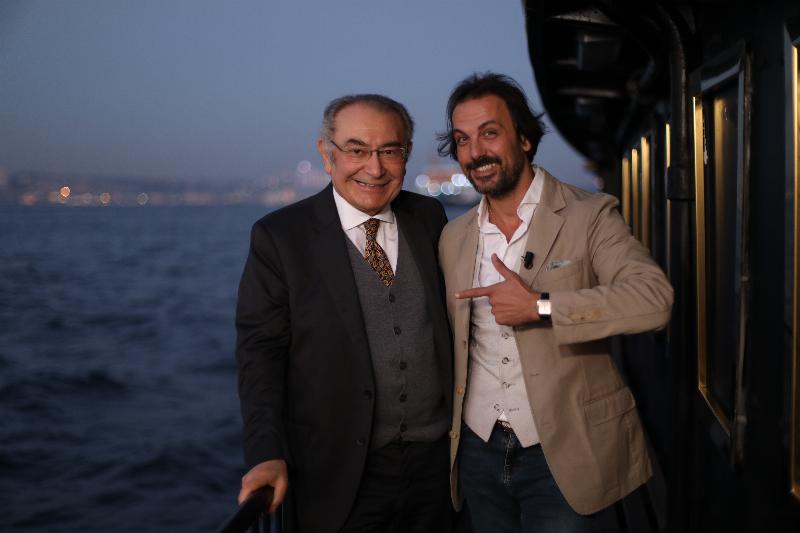
Üsküdar Üniversitesi Founding Rector, Psychiatrist Prof. Dr. Nevzat Tarhan was a guest on the popular TV program “Vapurda Çay Simit Sohbet”. Prof. Dr. Tarhan was the latest guest on the program, which has been meeting its audience on TRT Haber screens every Sunday for over 10 years with its valuable guests. Tarhan made sincere statements to Ömer Öztürk, who produces and hosts the program. Sharing insights on the science of psychiatry, the meaning of life, and leadership, Tarhan emphasized that psychiatry is not just a science but also an art. Tarhan said; “It is necessary to guide clients with the right questions. This requires some experience and mastery. Therefore, therapy also has an artistic side. Therapy is not just science, it is art.”
Content
Prof. Dr. Nevzat Tarhan: “Therapy is not just science, but also an art”
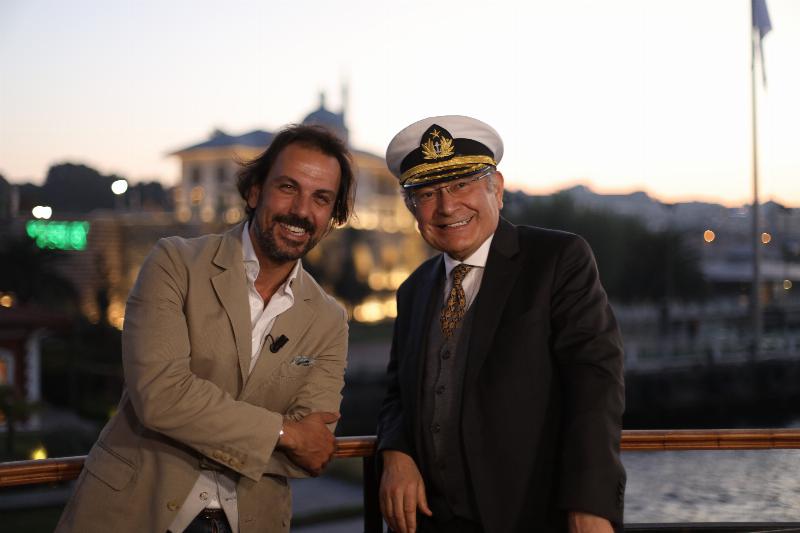
“Seeing and developing a child’s positive side motivates them better”
Tarhan stated that the greatest compliment in human life is the compliment one gives to oneself; “A person’s ability to rejoice in their small successes is what motivates them. A lifestyle focused on the compliments of others can lead a person in the wrong direction. Feeding on such compliments is a narcissistic discourse. Narcissistic individuals thrive on praise and compliments. Compliments are beneficial and motivation-boosting when given appropriately. Some people praise everything unnecessarily, in which case the compliment loses all effect. In our culture, it is also very common for some not to utter words of compliment, but to criticize a lot. In fact, a worldwide study selected the words 'yes' and 'no' used by parents to their children; the word 'no' was used 432 times, while the word 'yes' was used 30 times. As a result, the child sees the parents as an oppressive factor. However, more important than correcting a child’s negative side is seeing and developing their positive side. This motivates the child better. Because we live in a time when egos are very high, the new generation perceives criticism as a threat. This is something that misleads people and prevents them from seeing their mistakes.”
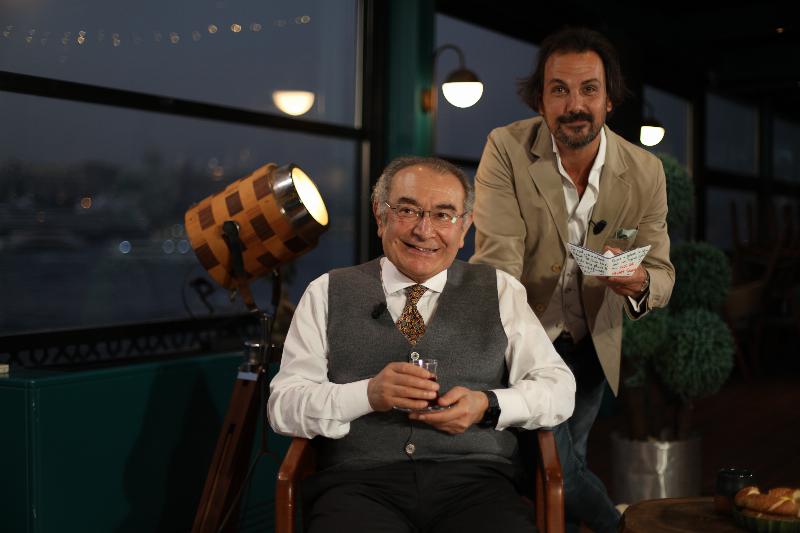
“Love is the emotion that turns the universe”
Tarhan stated that the meaning of life emerges with the feeling of love, emphasizing the need to be the captain of the ship of life. Tarhan; “Love is the emotion that turns the universe, love is the feeling of attraction. The object of love is more important than love itself; what you love is more important. For example, when a child is born, they first feel fear, their initial reaction is to cry. Then they seek someone to take refuge in, the feeling of love is activated, they take refuge with their mother, and a relationship of trust begins. A child first invests love in their mother. As they grow, they invest love in their father, siblings, toys, objects, and life. Later, as the person grows, they invest love in society, their homeland, humanity, their Creator, and can distribute that love correctly. Mevlâna says; ‘Man is like a ship in the sea. The sea is the world; if you take the sea into yourself, you will sink. But if you do not take the sea, that is, material things, into yourself and sail upon it, it will take you to your destination.’ One needs to embrace the meaning of existence within oneself. If a person ponders the questions ‘What is life, what is death, what is life after death?’, they will take it into themselves. They will take the journey of life into themselves, seeing life as a ship. We are also traveling on a ship, in fact. A person who cannot be the captain of their own ship cannot be the captain of a family.”
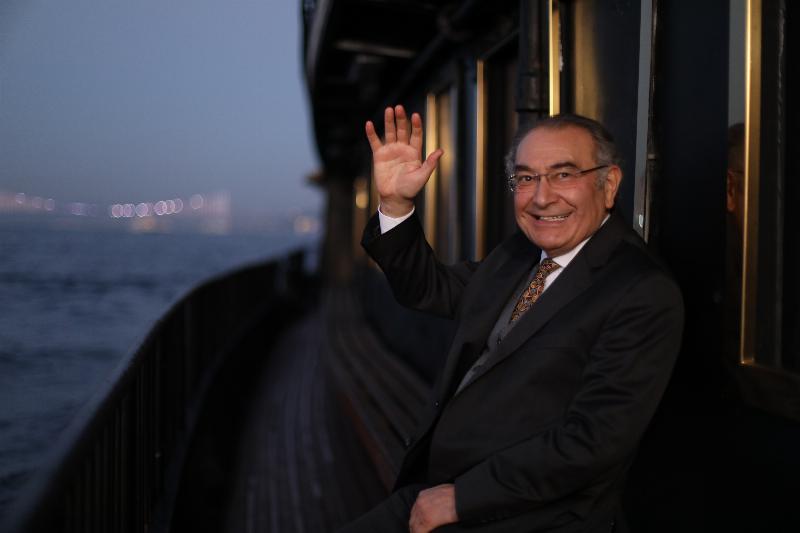
“What is said is forgotten, what is seen is remembered, but one does not forget what they have done”
Tarhan stated that the most lasting learning in the learning pyramid is teaching others, drawing attention to the importance of emotions in lasting learning. Tarhan; “What is said is forgotten, what is seen is remembered, but one does not forget what they have done. At the top of the learning pyramid comes what a person teaches others. In the second stage, understood information also does not stay in mind; however, if you have feelings and emotions related to it, if you have a story, a life scenario, and experiences, it remains in the brain and is not forgotten. Knowledge is something that increases as you give and share with people. In this respect, knowledge is the opposite of money.”
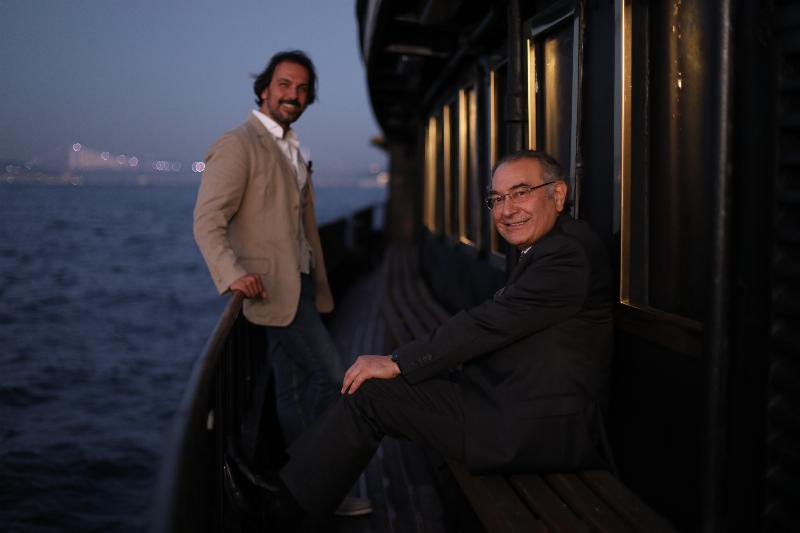
“Visionary leadership is thinking about your thoughts, doing self-analysis”
Tarhan also made evaluations regarding the concepts of free time management and self-analysis, emphasizing the importance of thinking about actions. Tarhan; “According to corporate loyalty studies, the first reason for a person’s attachment to their job is loving the job they do, the second is feeling secure, and the third is the salary received. One should set their goals correctly and love the work they do. Either they will do the job they love or they will love the job they do. If this happens, work ceases to be work, it is not tiring, and it becomes happiness. Currently, we use the term ‘free time’ instead of ‘empty time’. Because a person should use their free time according to their own methodology. Free time needs to be planned. In innovation and entrepreneurship, there is a 15% rule. If a person wants to discover something new and does not want to do it in the classic way, that is, if you are a visionary leader and entrepreneur, you should apply the 15% rule. If you work for 10 hours, dedicate 1.5 hours to thinking about the work you do. Think about your thoughts, about what you have done. Here, there is a kind of self-criticism, self-questioning, and self-analysis. It is a great skill that is acquired through special training.”
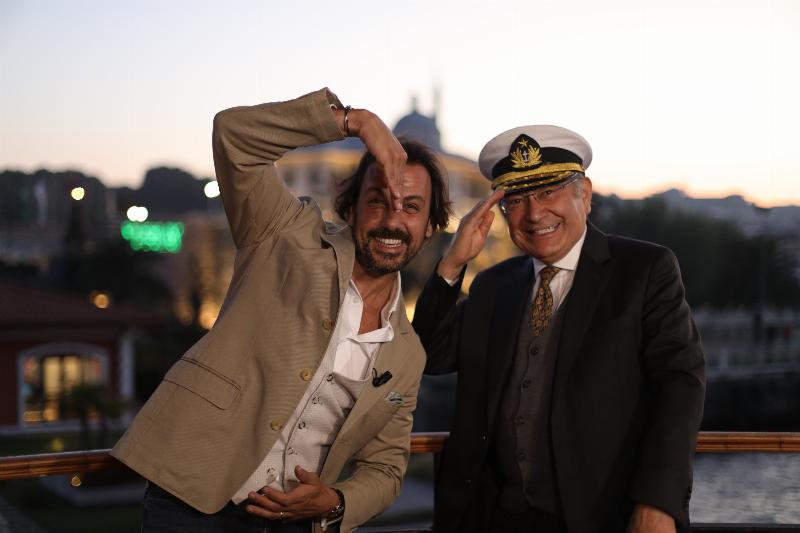
“Philanthropy is not one-sided but two-sided”
Tarhan stated that doing good is not one-sided but benefits both the giver and the recipient, and shared insights on the concept of ‘silent goodness’. Tarhan; “If a person has to live with narcissists, for example, a spouse, they must succeed in drawing their boundaries. One must draw social and relational boundaries. A narcissist always wants to gain ground and dominate. They want to expand their own space by using their economic, emotional, and sometimes cultural power. They create an area of dominance and control for themselves. To such people, it is necessary to say ‘no’ with justifications. It is necessary to set boundaries for narcissistic individuals with justifications. We give narcissistic individuals the task of ‘silent goodness’. We ask them to do good without expecting anything in return. Narcissists never like such situations; they want everyone to know when they do good. I am from GATA, and our professor there used to say that if a child is happy when he helps them, he is twice as happy. He used to say he did good just for this reason. Doing good, philanthropy is not one-sided but two-sided. Our ancestors said that the giver, not the taker, gains. When the giver does good, happiness hormones are released in the brain. Happiness hormones are released in the brain with the feeling of compassion. People with high emotional intelligence are happier, and thus society also becomes happy. The capitalist system, which claimed that happiness comes from taking, is now trying to teach that happiness comes from giving; ‘mindfulness training’ is even taught in elementary schools in America. We started teaching mindfulness techniques under the name ‘Positive Psychology’ at the University in 2013. Harvard started in 2015, and Yale University in 2018. I don’t like to speak assertively, but I think I have the right to speak on this matter. Positive psychology is actually the science of happiness.”
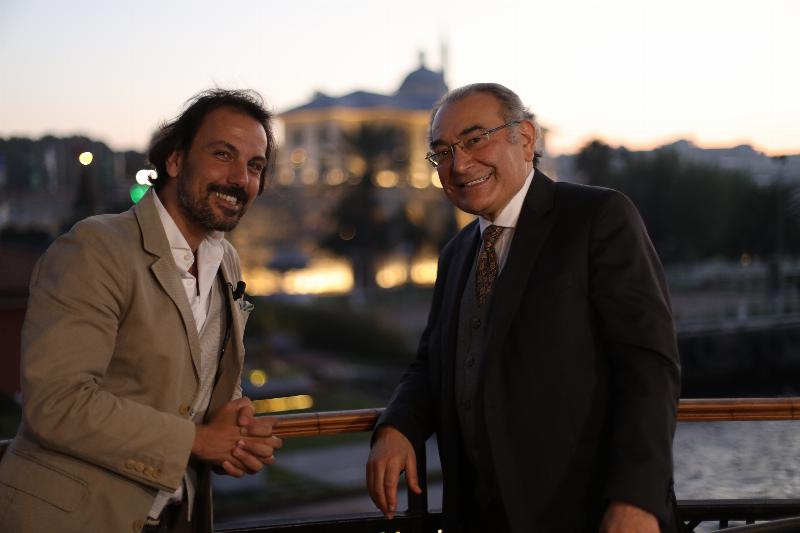
“I liken aphorisms to road signs in traffic”
Tarhan stated that aphorisms guide like traffic signs, emerging after an incubation period. Tarhan; “Beautiful words have a period of emergence, an incubation period. A person focuses on a topic in their brain, dreams, and then, during that incubation period, it suddenly comes to mind at an unexpected moment. Pieces come together, and many aphorisms and poems have emerged in the same way. Aphorisms are actually rational intuitions resulting from accumulation, a reasonable intuition. For example, there was an aphorism my father often said that I never forget. He used to say, ‘I have never seen anyone full from the crooked path, or hungry from the straight path.’ For example, this saying is deeply embedded in our Anatolian wisdom. I liken aphorisms to road signs in traffic. Road signs are not there for themselves, but to show where to go. When I look at an aphorism, I ask what it means. Understanding aphorisms requires abstract thinking ability. For example, children aged 6-7 do not develop abstract thinking ability, and it is also lost in Alzheimer’s disease. For instance, if you ask an Alzheimer's patient what ‘drop by drop makes a lake’ means, they will say water accumulates. Abstract thinking is a function of the frontal lobe of the brain, and no living creature other than humans possesses it.”
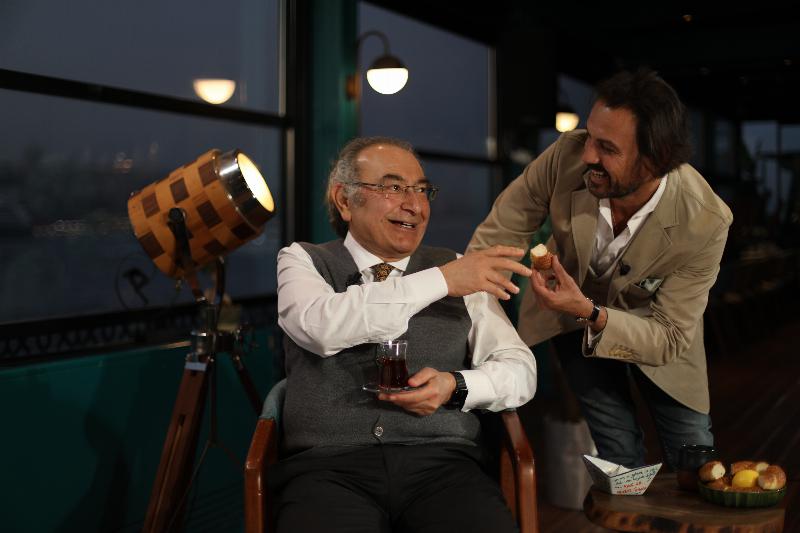
“Therapy is not just science, but an art”
In response to host Ömer Öztürk’s question about psychiatric treatment, ‘Does the patient always choose the doctor, or is there no situation where the doctor chooses the client?’, Tarhan stated that he has not yet experienced such a situation; “It hasn’t happened to me so far. Due to my continuous professional experience in the field, I haven’t had time for such a thing. However, I have tried to develop myself, there is even a ‘magic chair’ method. With this method, you sit the person you have a problem with on a chair, ask them questions, and answer the questions by putting yourself in that person’s shoes. It is a psychodrama method, and I have tried to improve myself by applying this method. In the patient-therapist relationship, there is a therapeutic alliance. That is, in treatment, the relationship of trust, alliance, and cooperation are important. Some patients come and say, ‘I talked to the psychiatrist, I said whatever came to my mind, and I influenced him as I wanted and left.’ When I sense that clients come with such intentions and oppose whatever you say, we say, ‘We agreed that we couldn’t agree on anything, right?’ That is, we only agree on not agreeing. Then they come again. There, we send the message ‘I want to agree with you.’ Here, I have a knowledge set, and you don’t have that knowledge set. I want to transfer my knowledge set to you in a suitable way according to your needs. So, it is necessary to be an active listener. Sometimes clients come and say, ‘I went to the doctor, he didn’t say anything, he just listened.’ That was in the past; now, clients need to be managed with the right questions. This requires some experience and mastery. Therefore, therapy also has an artistic side. It is not just science, it is art.”
Share
Request a Call
Other News
- Experts warn: 'Instead of memorizing letters, teach pencil grip, scissor use, and coloring'
- School fear and school love both start in the family!
- Family is not merely transforming, it is being battered under a serious assault
- Artificial intelligence opens the door to early diagnosis in autism!
- Artificial intelligence doesn't end engineering, it transforms it!