

Psychiatrist Prof. Dr. Nevzat Tarhan stated that “labeling” is the biggest obstacle faced by individuals with disabilities in society, saying, “In society, labeling, in particular, poses the greatest barrier for these individuals. People withdraw, saying, ‘I am disabled.’ There are occasionally overly protective approaches towards these individuals in society, such as ‘Oh, you're disabled, stay at home,’ or ‘You're disabled, don't do that.’ Because of this, their existing talents do not develop.” Tarhan emphasized the importance of bringing out the strong aspects of individuals with disabilities, stating that their psychological needs, especially feeling safe and belonging, must be met.
Content
Prof. Dr. Nevzat Tarhan: “Their biggest obstacle is ‘labeling’ ”
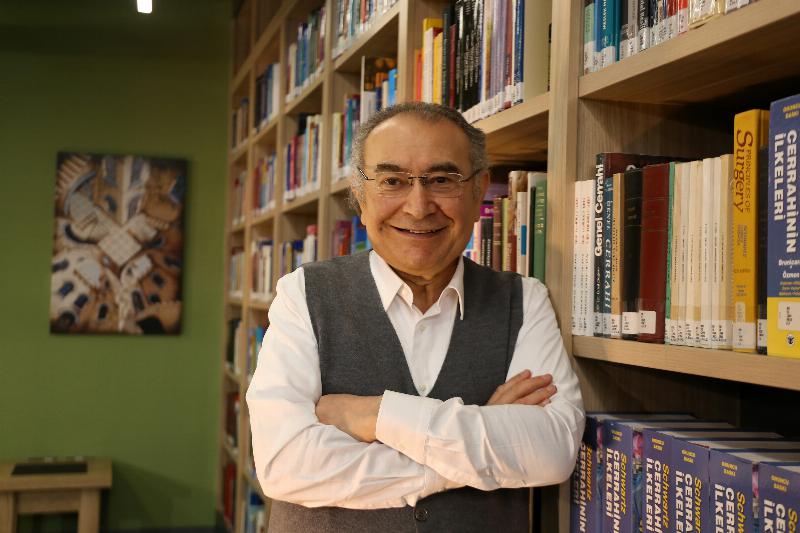
Üsküdar Üniversitesi Founding Rector, Psychiatrist Prof. Dr. Nevzat Tarhan, made evaluations on being disabled and psychological disability on the occasion of December 3rd International Day of Persons with Disabilities.
A well-defined purpose motivates a person
Prof. Dr. Nevzat Tarhan noted that individuals with excellent mental performance, who have set a goal for themselves, identified their strengths and weaknesses, and clung to a purpose by focusing on their strong points, are always successful and happy. He said, “What motivates a person is purpose, and the correct definition of that purpose. People referred to as psychologically disabled are those who say, ‘I can’t do it.’ Learned helplessness means ‘I can’t manage it, I don’t know how.’ Our brain has such a system that it’s a self-programming organ. When you say, ‘I can’t do it,’ it sees negative connections, makes perceptions, shifts into a negative position, and leads to avoidance behavior. But when a person says, ‘I can do it, this is my strong point, I can achieve this, I can develop this,’ opportunities related to it emerge. They use these opportunities and succeed.”
“Labeling” is the biggest obstacle
Prof. Dr. Nevzat Tarhan stated that “labeling” is the biggest obstacle faced by individuals with disabilities in society. He said, “In society, labeling, in particular, poses the greatest barrier for these individuals. People withdraw, saying, ‘I am disabled.’ There are occasionally overly protective approaches towards these individuals in society, such as ‘Oh, you're disabled, stay at home,’ or ‘You're disabled, don't do that.’ Because of this, their existing talents do not develop. Therefore, the way we treat people with disabilities is very important. Excessive compassion also negatively affects people with disabilities. They feel pitiable. In such situations, they also become depressed.”
A person with an open mind succeeds despite everything
Prof. Dr. Nevzat Tarhan stated that even if a person is born with a disability, if their mind is open, many obstacles can be overcome. He said, “If a person's mind is working, they can think, dream, develop a theory, and then implement it. In this way, they can inspire many people. They become someone everyone points to. Therefore, increasing the inclusion of people with disabilities in social life is very important. 50% of society is actually disadvantaged, and 50% is advantaged.” Prof. Dr. Nevzat Tarhan stated that according to statistics published on International Day of Persons with Disabilities, the global disability rate is 15%, adding, “Unfortunately, 80% of these individuals with disabilities are in underdeveloped countries.”
Emotional blindness should be avoided
Prof. Dr. Nevzat Tarhan stated that there are very serious attitudinal errors in approaching people with disabilities, and especially that they are treated very incorrectly regarding their inclusion in the environment. He said, “Within the university, we developed a slogan: When you meet someone, we say, ‘Don’t interfere with their disability, their privacy, and their sacred.’ If one crosses a person’s boundaries in these three areas, conflict can arise. For example, you cannot know something about a person’s private life because you don't know that person. If the relationship progresses, that topic will naturally evolve later. Indeed, correct communication cannot be established with an opposing approach. For example, the moment you prejudicially say, ‘Oh dear, what happened to you?’ without knowing the person, communication with that person is cut off. The reason for a physical disability should not be asked immediately. As a society, we mostly fail to do this. It is often done with good intentions. Most of the time, people look with pity, saying 'Oh dear.' Looking in this manner is emotional stupidity. Not understanding the other person’s feelings at all is also called emotional deafness or emotional blindness.”
Approach to a person with disabilities determines adaptation
Prof. Dr. Nevzat Tarhan noted that individuals born with disabilities adapt better to life than those who acquire disabilities later, stating that those who acquire disabilities later adapt more slowly. Prof. Dr. Nevzat Tarhan emphasized the importance of conscious approaches regarding the adaptation of individuals with disabilities to society and life. He said, “The way these individuals are approached determines their adaptation. The most important factor distinguishing developed countries from underdeveloped countries regarding individuals with disabilities is their approach to disadvantaged people. If disadvantaged individuals are approached in a healthy and conscious manner, their adaptation is successful to that extent.”
The ‘accept and manage’ method should be applied
Prof. Dr. Nevzat Tarhan stated that another factor effective in individuals with disabilities being attached to life is accepting their current situation. He said, “The 'accept and manage' method used in psychotherapies is important. There are things a person has the power to do, and things they don't. A disabled person has something they don't have the power to do. In this situation, you will accept this and set a reason. This is the 'manage from acceptance' method. We often see the successes of individuals with disabilities who use this method in many areas. They have accepted everything they have, set a goal for themselves, not focused on that disability, and developed their minds by setting a new goal and working towards it.”
Focusing on one’s strengths is very important
Prof. Dr. Nevzat Tarhan stated that in the education of people with disabilities, the aim is to highlight their strong points. He said, “We are looking for a person’s strengths, not their disability or weaknesses. We try to enable them to focus on their strengths. When a person focuses on their strengths, after a while, they strengthen those aspects. As they achieve small successes, they hold onto life there. They gain social acceptance. This is also very important and effective in helping a person find meaning in life.”
Psychological needs must also be met
Prof. Dr. Nevzat Tarhan emphasized that a person’s psychological needs are as important as their physiological and biological needs. He said, “A person has needs such as loving, being loved, protection, and feeling safe. If a person does not feel safe or does not feel they belong, they feel bad and lonely. Currently, especially in developed societies, the biggest problem is people’s inability to meet their relationship needs. Loneliness is one of the most significant problems today. It has started to negatively affect older people, children, and young people.” Prof. Dr. Nevzat Tarhan pointed out the importance of socialization for individuals with disabilities.
Special education strengthens social aspects
Prof. Dr. Nevzat Tarhan noted that special education is also important for individuals with disabilities to adapt to social life. He said, “It is very important for disadvantaged individuals to receive education within groups. Social learning also provides great gains for these individuals. In non-verbal learning disability, a person knows mathematics very well but cannot sit and converse with someone. When everyone laughs, they cannot understand why they are laughing. They remain alone in the classroom. They lack emotional literacy. All these aspects develop within a classroom environment. These are referred to as sensory integration training. Each of human senses does not work alone. That is, they work in a great unity, and a balance is formed. For that balance, a person must constantly be in relationship and in trust.”
Prof. Dr. Nevzat Tarhan also pointed out the importance of a person feeling safe, saying, “The home will be a safe space. They will feel safe at work, meaning the feeling of trust is among a person’s most basic psychological needs.”
Share
Update Date: February 26, 2026
Creation Date: December 02, 2022
Request a Call
Other News
- Prof. Nevzat Tarhan: “Those with a mental filter are not afraid of the digital”
- Artificial intelligence doesn't eliminate the translator, it transforms their expertise!
- Social responsibility courses moved to the field
- Erasmus+ Orientation Week completed at Üsküdar
- Prof. Nevzat Tarhan: “Brain secretes ‘dark glue’ in social media lynchers!”