

‘Islamophobia and anti-Islam rhetoric’ were discussed at the panel organized by Üsküdar Üniversitesi. Üsküdar Üniversitesi Founding Rector Prof. Dr. Nevzat Tarhan stated that the best way to fight darkness is to light a candle, adding, “The most beautiful way to combat Islamophobia is to explain the beauties and truth of Islam.” Tarhan emphasized that the Atlanticist structure, the NATO pact, needed an enemy, stating, “They called the new enemy the green belt. Currently, the new enemy has become the Soviet Union. There is a need for a new enemy to establish world hegemony and to sustain the arms industry. In a way, Ukraine was made the new victim.”
Content
Prof. Dr. Nevzat Tarhan: “The most beautiful way to combat Islamophobia is to explain the beauties and truth of Islam.”

Tarhan: “Ukraine was made a victim to establish world hegemony and to feed the arms industry”
Bediüzzaman Said Nursi was commemorated at a panel organized by Üsküdar Üniversitesi on the 62nd anniversary of his passing. At the Islamophobia and Anti-Islam Rhetoric Panel, scientists from various universities around the world and from Turkey discussed Islamophobia from different perspectives. The panel, held online within the scope of pandemic measures, began with a recitation of the Holy Quran by Hafız Ahmed Kaya. Opening speeches were delivered at the panel moderated by Dr. Uygar Aydemir, Head of the Department of History, Faculty of Humanities and Social Sciences, Üsküdar Üniversitesi.
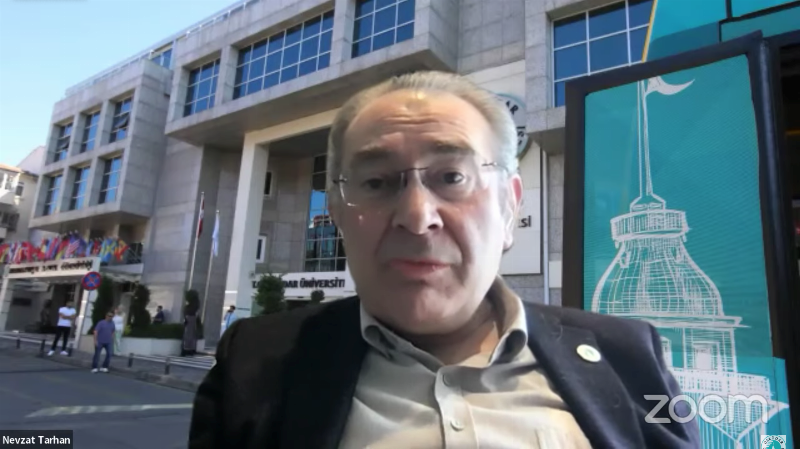
Prof. Dr. Nevzat Tarhan: “Bediüzzaman united 3 paths: madrasah, school, and dervish lodge”
Üsküdar Üniversitesi Founding Rector and Chairman of the Board of Trustees, Prof. Dr. Nevzat Tarhan, stated in his opening speech that they commemorated Bediüzzaman Said Nursi on the 62nd anniversary of his passing with the 9th Commemoration and Understanding Program. Prof. Dr. Nevzat Tarhan said, “The Risale-i Nur works are the rays, sparkles, and emanations of the Quranic sun, a light and interpretation of the Quran looking at this era. Bediüzzaman is also a person who united the madrasah, school, and dervish lodge in this era. He presents these three paths on the main street to our present day.”
Prof. Dr. Nevzat Tarhan: “Risale-i Nur is a reference for all humanity”
Emphasizing that a significant change is being experienced, especially among young people, as time passes, Prof. Dr. Nevzat Tarhan continued his words as follows: “Young people question existence greatly. They ask many questions such as ‘Why do I exist, what do I live for, what is life, what is the end of life, and what is eternity?’ These works provide beautiful answers to the questions in the minds of young people. The Risale-i Ihlas among these works is a serious Sufism lesson. Therefore, everyone needs Bediüzzaman Hazretleri. Bediüzzaman is not just a reference for the followers of Risale-i Nur and believers, but a reference for all humanity. It is very important to be able to look at it with this perspective and benefit from these sources. That is why we actually want to continue these commemoration programs more as programs of understanding.”
Prof. Dr. Nevzat Tarhan: “Ukraine was made a victim to establish world hegemony and to feed the arms industry”
Explaining why they chose the topic of Islamophobia for the Bediüzzaman Said Nursi Commemoration and Understanding Program, Prof. Dr. Nevzat Tarhan said, “The United Nations declared March 15 as the International Day to Combat Islamophobia. Victor Hugo has a saying, ‘No army can stop an idea whose time has come.’ We have indeed seen that this is true. The Atlanticist structure, the NATO pact, needs an enemy. After the Cold War ended, a meeting was held in Belgium in 1993. They were calling the new enemy the green belt. Currently, the new enemy has become the Soviet Union. Semi-synthetic structures like ISIS emerged in the world and then ended. But Islamophobia and the arms industry could not be fed. There is a need for a new enemy to establish world hegemony and to feed the arms industry. In a way, Ukraine was made the new victim. NATO will probably also change its enemy concept.”
Prof. Dr. Nevzat Tarhan: “While we should connect our hearts to Allah, we connected them to Islam”
Stating that we have come to a period where Islamophobia will decline in the world, Prof. Dr. Nevzat Tarhan said, “We are much luckier regarding Islamophobia. There is no need for those who fuel it anymore. Its fueling was also a mistake of Islamic culture. While we should connect our hearts to Allah, and establish an emotional and spiritual connection with Allah, we are more often connecting with a worldly Islam. Tradition has overtaken truth. This traditionalist perspective needs to be questioned very seriously. There is a big difference between Mevlevi Islam and Islam of this time. We can count this as one of the reasons for Islamophobia. The life of the Prophet, who emphasized mercy and compassion in the original emergence of Islam, is currently absent in traditional Islam.”
Prof. Dr. Nevzat Tarhan: “Most Islamophobia is in Turkey”
Emphasizing that the simultaneous display of religion and politics significantly increases Islamophobia, Prof. Dr. Nevzat Tarhan said, “It especially affects domestic, i.e., Muslim Islamophobia. The largest part of Islamophobia exists in Turkey. I am one of those who lived through the February 28 process firsthand. There are some people who act as if they have been electrocuted when they see a religious person. We know that some people would shoulder-barge veiled women. We have experienced such periods. Therefore, to prevent them from happening again, it is essential to fight against negativity. The most beautiful way to combat darkness is to light a candle. The most beautiful way to combat Islamophobia is to explain the beauties and truth of Islam. Such efforts are needed to raise public awareness.”
Prof. Dr. Nevzat Tarhan: “We can project the essence of the past onto today while preserving it”
Prof. Dr. Nevzat Tarhan said, ‘Bediüzzaman, Mehmet Akif, and Filibeli Hilmi wanted a transition from the period of despotism in the last periods of the Ottoman Empire to a libertarian era called "meşrutiyet-i meşrua" (legitimate constitutionalism),’ and continued his words as follows:
“In fact, what they wanted was an innovative approach. They tried to combine modernity with traditionalism while preserving tradition, but they were not understood at that time. A modernity that questioned traditionalism was thus created. We have become traditionalists. Currently, those who advocate this under the name of political Islam are entirely traditionalists. So to speak, there is Hamidism. Its psychological equivalent is anachronism. Anachronistic individuals get stuck in a past time. They want to live that time exactly as it was. We can project the essence of the past onto today while preserving it. For example, why shouldn't we see Mevlana, Yunus Emre in today’s attire? To understand them, it is not necessary to dress like them. We can take their essence and keep it alive today.”
Prof. Dr. Nevzat Tarhan: “Islam is a religion suitable for freedom and liberty”
Prof. Dr. Nevzat Tarhan stated that because we could not create modernity while preserving traditionalism and remained stuck in traditionalism, new generations who received Western education experience serious fear in such situations. He said, “An approach that defends the oppressive rule of the late Ottoman period evokes fear and increases Islamophobia. The modern equivalent of 'meşrutiyet-i meşrua' is liberal democracy. Bediüzzaman, Mehmet Akif, and Filibeli Ahmet Hilmi actually stated that Islam is a religion suitable for freedom and liberty, that autocratic regimes are not necessary for Islam to thrive, and that it is easier to live within freedom. To eliminate fear, we need to ensure there is no tissue incompatibility between liberal democracy and Islam.”
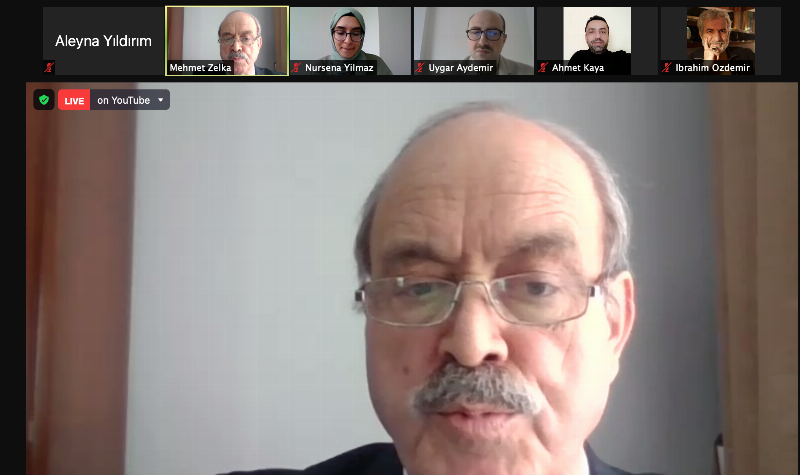
Prof. Dr. Mehmet Zelka: “The persecution experienced by Muslims is not adequately and properly explained”
Üsküdar Üniversitesi Acting Rector Prof. Dr. Mehmet Zelka stated that Islamophobia means fearing Islam, and that this fear has ceased to be mere fear and turned into hostility towards Islam. Prof. Dr. Mehmet Zelka noted that the roots of Islamophobia come from the struggle between the crescent and the cross, adding that the crusader mentality has never been forgotten. Prof. Dr. Mehmet Zelka recorded that Islamophobia consists of a broad system where prejudices, limitations, discrimination, and violence are applied against Muslims and Islam, saying, “It is possible to define it as the rejection of Muslims and the fear of their culture, political, and religious activities. These fears directly confront the belief system. Physical and/or psychological attacks against Muslims as a result of discrimination applied against Islam can be defined as Muslim hostility and anti-Muslim racism.” Prof. Dr. Mehmet Zelka also underlined the necessity of self-criticism, stating that the persecutions suffered by Muslims in various parts of the world today are not adequately and properly explained.
Prof. Dr. Mahmut Erol Kılıç: “Muslims must explain themselves correctly”
Üsküdar Üniversitesi Institute of Sufi Studies, Head of Sufi Culture and Literature Department faculty member, IRCICA Director General and Ambassador Prof. Dr. Mahmut Erol Kılıç said that opposition, exclusion, and othering targeting Muslims date back to ancient times and will continue to exist. Prof. Dr. Mahmut Erol Kılıç, stating that Muslims must explain themselves in the most accurate way, said, “What kind of religious philosophy do we have? What kind of worldview do we have? Let us present this with our art, our literature, our humanity. The verse says, ‘When truth comes, falsehood vanishes.’ It does not say falsehood vanishes on its own. When truth arrives, falsehood cannot stand in its wrong moment; it leaves that place. From that perspective, let us try to put forth the truth. I believe falsehood will disappear. We also need to be a bit self-critical. Put yourself in the shoes of a European or a Westerner with Al-Qaeda-like movements created by some external forces. If someone waits in fear, asking, ‘When will they cut off my head?’, then Islamophobia is also fueled by the contributions of some individuals who emerge from within us.”
Nursena Yılmaz, President of Üsküdar Üniversitesi Conscience of the Age Student Club, also stated that this year they held the 9th edition of the event held every year, and that this year they addressed the theme of Islamophobia and Anti-Islam Rhetoric. Yılmaz noted that the biggest reason for Islamophobia is not knowing or misunderstanding Islam, and said that they believe the panel will be beneficial.
Islamophobia discussed from many aspects
Following the opening speeches, a panel consisting of two sessions was held. The first session was moderated by Assoc. Prof. Dr. Asil Özdoğru, Vice Dean of the Faculty of Humanities and Social Sciences (İTBF), Üsküdar Üniversitesi. Prof. Dr. Ahmet Yıldız from Istanbul Fatih Sultan Mehmet University gave a presentation titled “Islamophobia as a Psycho-Political Instrumental Discourse”; Assoc. Prof. Dr. Enes Bayraklı from Istanbul Turkish-German University delivered a speech titled “The Dominant Ideology of the 21st Century: Islamophobia.” The first session concluded with a presentation by Prof. Dr. Özcan Hıdır from Istanbul Sabahattin Zaim University titled “The European Islam Project and Islamophobia: Does the West Fear Islam or Muslims?”
Examples of Islamophobia in India and Russia were explained
The second session of the panel was moderated by Prof. Dr. Sevim Işık from the Department of Molecular Biology and Genetics, Faculty of Engineering and Natural Sciences, Üsküdar Üniversitesi. Prof. Dr. Thameem Ushama from the International Islamic University of Malaysia participated with a presentation titled “A Brief History of Islamophobia in India and its Impact on Muslims.”
The panel, which included Doktorant Linda Hyökki from Istanbul Ibn-i Haldun University with her speech titled “Whiteness and Finnishness – Forms of Racialization in the Past and Present,” concluded with a speech by Assoc. Prof. Dr. Mustafa Tuna from Duke University, USA, titled “The Prohibition of Risale-i Nur in Russia in the Context of the Globalization of Anti-Muslim Rhetoric.” The panel was also broadcast on Üsküdar Üniversitesi’s official YouTube page.
Share
Update Date: February 28, 2026
Creation Date: March 28, 2022
Request a Call
Other News
- The book that read today's digital threats in 2014: Being a Conscious Family
- Experts warn: 'Instead of memorizing letters, teach pencil grip, scissor use, and coloring'
- School fear and school love both start in the family!
- Family is not merely transforming, it is being battered under a serious assault
- Artificial intelligence opens the door to early diagnosis in autism!