

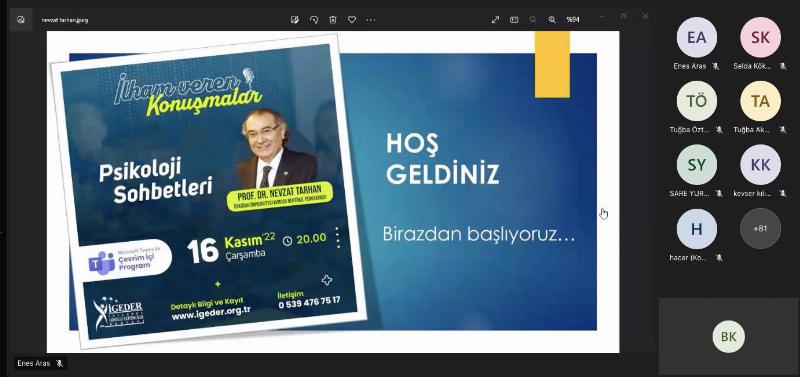
Üsküdar University Founding Rector, Psychiatrist Prof. Dr. Nevzat Tarhan made striking statements about new education methods in the light of 21st-century skills at the event organized by the Istanbul Volunteer Educators Association (İGEDER), which attracted great interest from educators. Tarhan stated that methods combining reason and emotion in learning provide permanent learning, and that a teacher entering the student's heart, not their mind, makes learning permanent. Tarhan said: 'The brain records permanently when emotions are involved. Educators, don't try to enter students' minds, their brains; try to enter their hearts. The ideal teacher doesn't enter the mind, but the heart.'
Content
Prof. Dr. Nevzat Tarhan: "The ideal teacher enters the heart, not the mind"
'Never before the pandemic have so many adolescents been hospitalized'
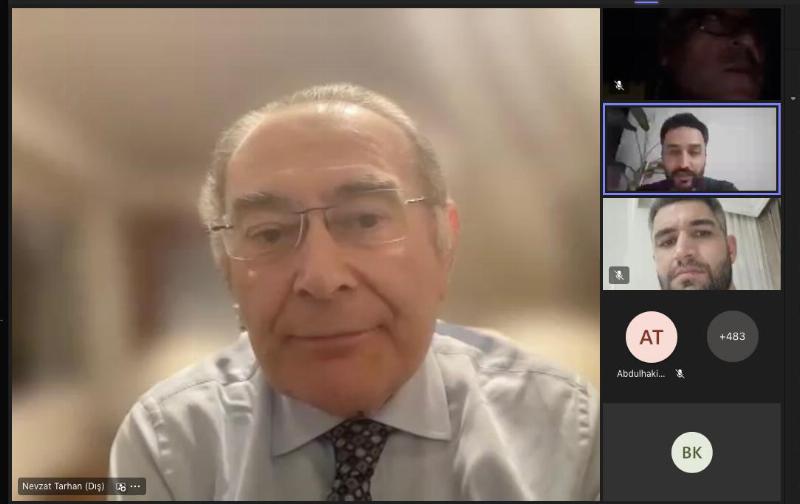
Tarhan stated that they predicted an increase in post-pandemic diseases after the pandemic, emphasizing that adolescents were the age group most affected by the pandemic globally. Tarhan said: 'During the pandemic, we always warned that post-pandemic psychiatric diseases might increase worldwide after the pandemic passed. Indeed, psychiatric diseases increased after the pandemic. Currently, there is a twenty-five percent increase in psychiatric illnesses globally, but the biggest impact was on adolescents. We expected the biggest impact on the elderly, but the elderly remained stronger and more resilient. We had never hospitalized so many adolescents in any period before the pandemic. Since the hospital opened, for the first time after the pandemic, almost an entire clinic is dedicated to adolescents; that's the extent of diseases that emerged in adolescents. I looked at the literature, and adolescent suicides have particularly increased in America. So, schools were affected here; it was exactly their socialization period. Adolescence is a period where questions like 'who am I, where should I head, why do I exist' are asked, and socialization and friends become more important than family. Especially for those with Covid-19 in early adolescence, smartphones became their only means of communication. Also, if there was no peace in their homes, the mental health of many of those children deteriorated. If they had a warm environment at home, healthy relationships, they were not affected much.'
'Teachers should act as pilot guides for students'
Emphasizing that teachers should act as pilot guides for young people to learn about life, Tarhan stated that mistakes made during adolescence should be viewed as normal. Tarhan said: 'While teaching is a profession for the teacher, for the student, the teacher is almost a life guide. Teaching in primary school is more important. In other levels, they listen to an expert in that field. Here, students emulate three things about the teacher. One is the lesson they teach, another is the characteristics of their personality, meaning their character, and finally, their social relationships. When the teacher enters the classroom, they are responsible for classroom management. The psychological superiority of the classroom lies with the teacher. Adolescence is the period when questions like 'who am I, what should I learn, for whom' are asked. In some of our books, it's even called a 'normal schizophrenic period.' Psychology schools refer to adolescence as a normal schizophrenic period. This means that adolescence will have sudden outbursts, actions, and many mistakes. They do this to experiment with life. Social skills are acquired that way. In fact, while I was defining this as a normal schizophrenic period, a friend told me a Hadith; the Prophet (PBUH) says, 'Puberty is a branch of madness.' It is so interesting that when it says this is literally a branch of mental illness, it means to tolerate the mistakes of these adolescents. The terms 'delikanlı' (young man, literally 'mad blood') and 'delişmen kız' (wild girl) also come from this. They will make mistakes, and then, based on the teacher's reaction, they will learn about life by observing their reactions in such situations. That's why we say it's not about confronting and correcting, but walking alongside them, and this is leadership. In other words, teachers should act as pilot guides. Parents should do the same. What is a 'pilot guide'? The captain navigates the ship and is responsible. The pilot guide teaches life by saying, 'if you do this, this will happen; if you do that, that will happen.' Parents or teachers will be pilot guides.'
'The ideal teacher enters the heart, not the mind'
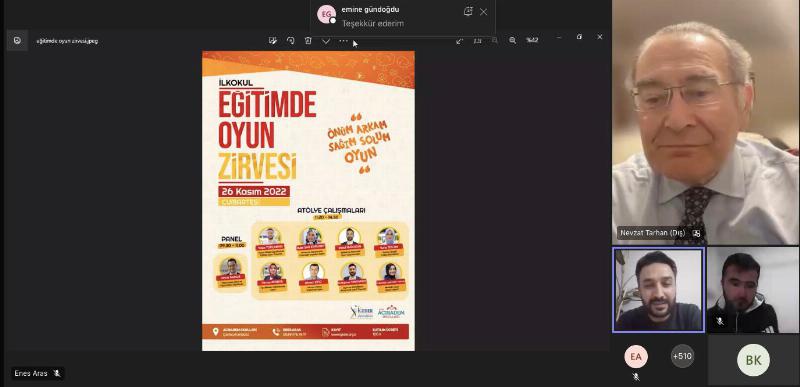
Tarhan stated that methods combining reason and emotion in learning provide permanent learning, and that a teacher entering the student's heart, not their mind, makes learning more permanent. Tarhan said: 'At the very top of the learning pyramid are only the things you hear. You hear them in class, you listen, and then you forget. Now, towards the middle of the second pyramid, there are things you understood from what you heard. What you understood becomes more permanent, but if you don't repeat them, you lose them too. But there are also things a person has experienced and felt. They never forget those. There's no need for repetition. The brain records permanently when emotions are involved. That's why educators, don't try to enter students' minds, their brains; try to enter their hearts. The ideal teacher doesn't enter the mind, but the heart. When a teacher enters the heart, that teacher becomes the student's hero. The student records everything they say. The best leadership is to set a good example. So, for the teacher to be a good example in class, the student needs to love them to learn the lesson. If they love the lesson, they learn well. So, what needs to be done for them to love the lesson? The child loving the teacher helps a lot. If the child loves the teacher, they also love the lesson. They learn more easily. What does the teacher need to do for the child to love the lesson? The teacher needs to love the student. When the teacher loves the student, the student loves the lesson and the teacher, and learns.'
'A teacher should be a trust-inspiring leader, not a fear-instilling one'
Advising educators to use a teaching method based on trust rather than fear, Tarhan emphasized that the methods of persuasion and instilling love are more suitable for the 21st century. Tarhan said: 'The teacher is the class leader. The best leadership will be emotional leadership. This is psychological superiority, not hierarchical, authoritarian leadership. It's not leadership that teaches by instilling fear, but leadership that teaches by inspiring trust. When love increases, fear decreases, and trust grows. Where there is fear, there is silent discipline. When the teacher is not there, everyone disperses. In old cultures, education was provided through pressure, threat, intimidation, and coercion. Currently, that method is neither an ideal method nor a method of our time. It is not a 21st-century skill either. In this day and age, you cannot teach anyone the truth by intimidation, except in savage tribes where force is applied to those who do not understand words. So, an educated person should now use methods of persuasion, convincing, and instilling love. The best learning method for students is Socratic questioning in the classroom. In Socratic questioning, a topic is put forward; it can be a social issue or a problem. Everyone discusses what they think about it. This is the best method. A mathematician receives a Nobel Prize. Of course, people ask, 'What do you owe your Nobel Prize to?' The mathematician says, 'I owe this mathematics Nobel I received to my mother.' They ask, 'What role did your mother play?' He says, 'All mothers ask their children when they come home from school, "What did the teacher ask you, and what did you answer?" My mother used to ask, "What did you ask the teacher today?"' He says, 'Because of this, I questioned myself to ask the right questions. This gave me the ability to question everything.' He says, 'After questioning, the brain enters an incubation period, catching and bringing forth new ideas. This happens in questioning brains, in dreaming brains.'
'We need to engage children's feeling brains, not just their thinking brains'
Therefore, be confident in young people, be an example, and be sure that the greatest investment made in those children is not the information imparted to them, but valuing them. It is understanding that they are loved. When children have problems, it is necessary to talk to them and learn the real reason. If a teacher throws a piece of chalk, or something at their head, saying 'why are you distracted,' the child will learn nothing, but if the teacher goes to them and says 'you weren't like this, why are you quiet, is there anything we can do,' the child will suddenly feel a sense of belonging. There is even leadership related to this. A true leader among shepherds would instantly understand which sheep were sick or weak when the flock approached. If there was a limping one, he would examine it and treat it. This is leadership. Since you have classroom management, when you do this, rest assured, this is the greatest beneficial investment for our youth. Preparing these young people entrusted to us for life is paramount. These are all emotional intelligence studies. The role of logical intelligence in success is 20 percent, but the role of other types of multiple intelligences is 80 percent. The role of social intelligence, especially emotional intelligence, is eighty percent. Twenty percent is just information transfer, but emotion transfer, behavior transfer, and setting an example is eighty percent. That's why we need to engage children's feeling brains, not just their thinking brains. Our ancestors called this the unity of mind and heart.”
'The concept of a genius or gifted child is wrong!'
The Science and Art Centers (BİLSEM) have very good activities. One of the 21st-century educational skills is teaching social and emotional skills to children, alongside technical and academic skills. Now, BİLSEM centers are paying attention to this. For example, in Ottoman Turkish, we use one word instead of four words. For example, discovery is separate, invention is separate, creation is separate, construction is separate. Very good studies are being conducted in these schools to find the discoverer features in humans. There is no need for artificial coercion to enter there. We no longer use the concept of 'superior intelligence' or 'gifted talent'; if anyone uses it, it means they are looking at this from a commercial perspective. We call them 'specially talented children'; some children are at one end of the bell curve, high-achieving. There are also those at the very bottom of the bell curve. And there are the top 2-3%, these are specially talented children. These specially talented children are wasted if they are educated incorrectly. Just as other children are wasted if they don't receive special education, these children feel uncomfortable among average students in the classroom, inflating their ego when one says 'my child is gifted.' As a result, they focus only on academic success, only on technical subjects. A 'mountain of genius' forms in the brain in this regard, but socially, they are terrible. For example, they can't have a good marriage, they make discoveries in the company, but if you give them 3-5 people to manage, they can't; they lack collaboration and social skills. That's why these children need an education that combines academic skills with emotional and social skills, otherwise, those intelligences go to waste. Because humans are relational beings; humans were not created to live alone. Humans have a need for psychological attachment; they feel secure by attaching somewhere and socializing. If you put a person on an island, they cannot live alone there.”
'Üsküdar University: Pioneer of Science Festivals in Turkey'
Emphasizing the importance of studies in science and culture, Tarhan said: 'When Üsküdar University launched the Science and Idea Festival, there was no such festival in any other university in Turkey. There was only one university doing it in the world. We are still collaborating with the Provincial Directorate of National Education, and we will hold the ninth one this year, God willing. This project idea later transformed into TEKNOFEST. That project idea is ours. We even wrote an official letter to the Ministry of National Education about this, stating that it should be done in all schools. When the TÜBİTAK President visited, we told him that they were doing a great job with TEKNOFEST, but we had started this in 2013 with the Istanbul Provincial Directorate of National Education. There's a tomato festival, but no science festival; the new learning model happens with these festivals. That's why we organized the Science and Idea Festival, which later turned into TEKNOFEST. We are not asking for royalties, but at least let us remind everyone on this occasion that it was our idea. These are excellent initiatives.'”
Share
Update Date: February 26, 2026
Creation Date: November 17, 2022
Request a Call
Other News
- The book that read today's digital threats in 2014: Being a Conscious Family
- Experts warn: 'Instead of memorizing letters, teach pencil grip, scissor use, and coloring'
- School fear and school love both start in the family!
- Family is not merely transforming, it is being battered under a serious assault
- Artificial intelligence opens the door to early diagnosis in autism!