

Emphasizing the importance of searching for the meaning and purpose of life, Psychiatrist Prof. Dr. Nevzat Tarhan stated that the effort to discover the meaning of existence keeps people going. Noting that humans are relational beings, Tarhan stated that family and social relationships are objects of attachment, adding “The human brain” works connectionally. That’s why one of the 21st-century skills is connectivity, or the ability to connect. Only if a person can think connectionally can they distinguish the importance and priorities of the future, past, present, and tomorrow. This connectivity is related to wisdom,” he said. Tarhan also added that managing one’s sense of attachment is essentially managing one’s life and self.
Content
Prof. Dr. Nevzat Tarhan: “The effort to discover the meaning of existence keeps people going”
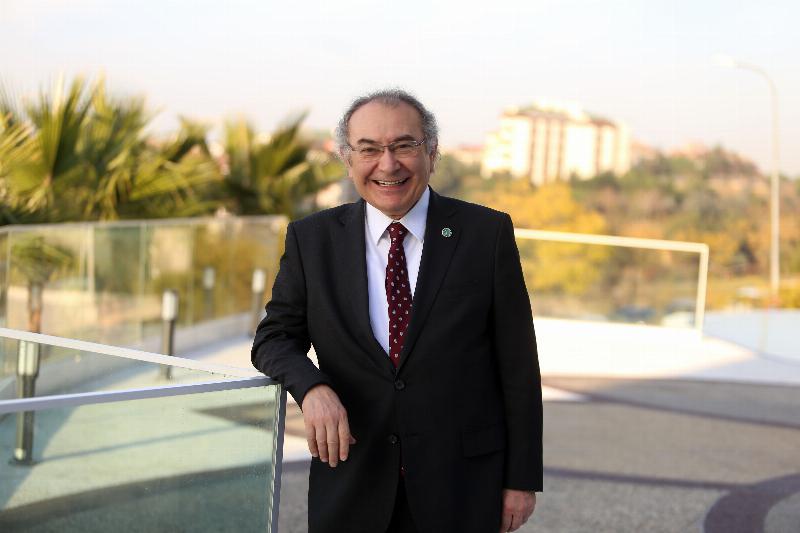
“Managing the feeling of attachment is managing oneself”
Üsküdar Üniversitesi Founding Rector, Psychiatrist Prof. Dr. Nevzat Tarhan, made evaluations regarding the search for meaning in close relationships.
Prof. Dr. Nevzat Tarhan noted that brain imaging methods have advanced significantly, especially since the 90s, and thanks to functional brain imaging devices, not only the anatomical structure but also the functioning of the brain can be visualized. He said, “Brain mapping techniques have progressed greatly. As a result, we measured not only the situational regulation of the brain but also its temporal regulation. By giving certain stimuli to the brain, we had the opportunity to observe how the brain works within 5-10 minutes. By giving cognitive, emotional, and didactic tasks to the brain, we obtained information about which regions of the brain are active, for example, how the brain produces words.”
There are three types of attachment
Prof. Dr. Nevzat Tarhan noted that a person's sense of attachment develops during infancy and said there are three types of attachment: secure, anxious, and avoidant. Prof. Dr. Nevzat Tarhan said, “As soon as a child is born, the first feeling of attachment is to the mother. What is the first reaction when born? They feel fear. They feel the need to attach and trust emotionally, and they attach to the mother, then relax.”
In secure attachment, the child continues to play
Prof. Dr. Nevzat Tarhan noted that the need for secure attachment begins to develop from infancy, stating, “For example, when a child’s mother or caregiver leaves the room, the child gets angry, sad, and restless but continues to play. When the caregiver returns, they relax, become happy, and continue to explore and play. If the child has anxious attachment, they cry and become restless when their mother or caregiver leaves the room. They get angry, sad, and cannot calm down. If a child has anxious attachment, they see the world as unsafe. When their caregiver or mother returns to the room, they both hug them and show resistance, being reluctant to explore the environment freely.”
In avoidant attachment, the child is withdrawn
Prof. Dr. Nevzat Tarhan stated that in avoidant attachment, when the child's mother or caregiver leaves the room, it does not upset them, and when the caregiver returns, the child does not accept them, indicating isolation from attachment. Tarhan said, “In such situations,
the child cannot be bothered whether the caregiver comes or not, and rejects the caregiver when they arrive. They are withdrawn and stagnant, do not engage in activities related to exploring the surroundings, avoid, and protest.”
The search for meaning connects a person to life
Prof. Dr. Nevzat Tarhan pointed to the importance of the search for meaning in relationships, saying, “The search for meaning gained importance especially after World War II. The Western world experienced immense devastation after such a major war in which 70 million people died. Viktor Frankl, a famous psychiatrist, managed to survive the Holocaust as a child of one of the Jewish families killed there. Almost all of his relatives died. How did he survive? He himself says he survived thanks to the search for meaning. He says it is the desire to discover the meaning of being human and existence. A person's search for the meaning and purpose of life and the effort to discover the meaning of existence keeps people going.”
Narcissistic individuals see close relationships as master-slave relationships
Prof. Dr. Nevzat Tarhan stated that selfishness is the disease of the age, saying, “It is very normal for a person to think of themselves first. As humans, we say ‘me first.’ A child says, ‘Me first, then my mother and father.’ Selfish people also say ‘me first,’ but narcissistic people say ‘only me.’ Narcissistic individuals see close relationships as master-slave relationships. Selfishness has now become a part of their personality. This is the disease of the age. These people cannot fall in love. Narcissistic individuals see the people they love as limbs. They see them as their own arm or leg and do not leave any freedom for that person.”
Narcissistic individuals direct the feeling of attachment towards themselves
Prof. Dr. Nevzat Tarhan noted that objects of attachment are also important, saying, “Narcissistic people attach to themselves. They expand their egos so much that they see themselves as gods on earth. They sanctify themselves. They have characteristics known as arrogance. They have directed the feeling of attachment towards themselves.”
Connectivity skill is one of the 21st-century skills
Prof. Dr. Nevzat Tarhan stated that another object of attachment is family, spouse, and children, saying, “Here there are relational attachments. This attachment also has scales. We are trying to measure this. There are family and attachment scales, attachment scales, and belonging scales. Another object of attachment is in social relationships. Humans are relational beings. It was previously thought that the human brain worked in a closed loop; now the brain works in an open loop. That is, the brain works connectionally. That's why one of the 21st-century skills is the skill of connectivity, or connectional thinking. Only if a person can think connectionally can they distinguish the importance and priorities of the future, past, present, and tomorrow. This connectivity is related to wisdom. It is about social relationships, meaning it will prioritize objects in order of importance. Cultural attachment is also important. A person needs to use a connectional, balanced, healthy connection with the culture they belong to. If they make decisions far removed from the society and culture they live in, and from the cultural context, they will suffer and pay a price.”
Managing the feeling of attachment is managing oneself
Prof. Dr. Nevzat Tarhan noted that managing one’s sense of attachment is essentially managing one’s life and self, saying, “This situation prevents many mental illnesses. Bipolar disorder is also essentially an attachment disorder. There is romantic attachment, erotic attachment. People with mood disorders cannot manage attachment.”
Attachment and addiction should not be confused
Emphasizing that attachment and addiction should not be confused, Prof. Dr. Nevzat Tarhan said, “In addiction, a person destroys their own identity and personality. In attachment, there is being ‘us’ while remaining ‘me.’ This balance needs to be established.”
Self-knowledge is important in the search for meaning
Prof. Dr. Nevzat Tarhan stated that self-knowledge is also important in the search for meaning. He noted that Avicenna (İbn-i Sina), one of the great geniuses of our world of science and culture, also pondered on the human feeling of attachment and the meaning of life. Tarhan said, “Avicenna was not only a physician but also a man of wisdom, a philosopher. He was a creator of concepts. Many of his books were read for 400-500 years. Al-Qanun fi't-Tıb (The Canon of Medicine) exists translated into Turkish. Several copies were found and translated.”
Share
Update Date: February 28, 2026
Creation Date: February 28, 2022
Request a Call
Other News
- Prof. Nevzat Tarhan: “Those with a mental filter are not afraid of the digital”
- Artificial intelligence doesn't eliminate the translator, it transforms their expertise!
- Social responsibility courses moved to the field
- Erasmus+ Orientation Week completed at Üsküdar
- Prof. Nevzat Tarhan: “Brain secretes ‘dark glue’ in social media lynchers!”