

Psychiatrist Prof. Dr. Nevzat Tarhan stated that nearly 15 million people were affected by the earthquakes in Kahramanmaraş and Hatay, becoming serious trauma victims, and that the rest of Turkey was also exposed to secondary trauma. Tarhan emphasized that lessons must be learned from the earthquake to reshape our lives accordingly. He said, “We will not live with this trauma, but we must draw a new roadmap for our lives by learning lessons without forgetting it. In other words, everyone should learn from this.”
Content
Prof. Dr. Nevzat Tarhan Suggests a Plan B for Post-Trauma
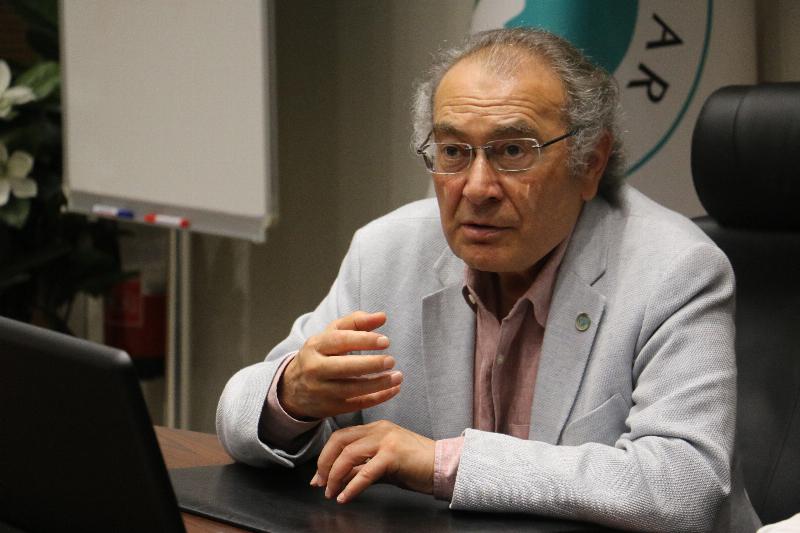
Üsküdar Üniversitesi Founding Rector, Psychiatrist Prof. Dr. Nevzat Tarhan, made evaluations regarding the effects of earthquake traumas on individuals and coping with these effects. Tarhan stated that psychological traumas emerge later, and initially there is a two-week period of what is called acute stress disorder.
It is Very Important to Be Able to Confront Trauma
Prof. Dr. Nevzat Tarhan stated that this period usually lasts between 7-14 days, during which excessive fear of earthquakes and avoidance behavior are observed. He added, “Currently, this behavior continues among those still in the region. People cannot enter their homes even if they are structurally sound. In some families, children have left the region and gone to other cities, but the elderly family members have remained there. We see many examples of this. This is actually a beneficial thing. It is important not to avoid trauma, but to be able to confront it, tolerate it, and survive, to accept it and survive despite it.” Prof. Dr. Nevzat Tarhan stated that after the acute shock period passes, normalization is expected, and he added, “When we talk about normalization here, it means that needs must be met.”
Tarhan stated that from now on, individuals should take steps by saying, “I have a safe haven, I am secure, I am meeting my basic needs.” He said, “In such situations, a person seeks a safe haven. For the people in that region, feeling that the state and society are with them, and personally witnessing and experiencing these supportive behaviors, has an impact. In this regard, we, as a society, have passed a good test. There is great self-sacrifice, and this topic has also been reported in the foreign press. This actually shows that the goodness of our society, the wisdom of Anatolia, and those cultural values and beauties are alive, revived, and mobilized. It is necessary to continue this. It has a tremendous benefit for the people there. It has such an indescribably beautiful effect on the people there that it makes them love those lands and want to stay permanently. It prevents them from abandoning it. This behavior of mutual aid and sharing…”
Prof. Dr. Nevzat Tarhan, also referring to previous research on earthquake traumas, said, “In the results of important research conducted in the region after the Kocaeli Gölcük earthquake, we see that symptoms of what is called acute traumatic stress disorder still continue at a rate of 25 percent after three years. Studies conducted after the 2011 earthquake in Japan also found that acute stress disorder continued at a rate of 12 percent. In post-traumatic stress disorder, the person experiences the earthquake as if it happened yesterday, not two or three years ago. They constantly live with that fear. The situation called re-experiencing, or flashback, emerges.”
Coping Methods Differ for Everyone
Tarhan stated that individuals use various coping methods in this situation, and some turn to alcohol or substance abuse. Tarhan noted that alcohol use is very common among soldiers experiencing post-war trauma in America, and also stated that religious coping methods are used, saying, “We also have such a situation. We tend to use religious coping methods more. Around the world, some people use religious coping methods, while others use passive coping methods. They try to forget it by dedicating themselves to work or other things. We recommend not forgetting the trauma, but miniaturizing it.”
Social Support is Crucial for Healing
Tarhan stated that while keeping the memory of trauma aside, one must return to normal life. He warned, “Some people embalm that trauma. They keep it alive. This renders the person dysfunctional. They experience disability. It disrupts all social communication, reduces productivity, leads to social withdrawal and introversion. To prevent these, social support is very important. Psychological tests and treatments are beneficial for individuals, but social support is even more crucial. Friendship groups and neighborhood relations are very valuable in this context. In close relationships, people feel stronger when they come together on this issue and overcome it better with social support. As a society, we are good at this. There is very serious spiritual support for those in the earthquake zone. Most importantly, moral support has a positive effect on all of these. The biggest risk here is for earthquake victims to feel alone. They should not feel alone. The biggest psychological trauma is feeling abandoned. This situation hurts people more than the material damage of the earthquake.”
We Will Learn Lessons and Draw a New Roadmap
Prof. Dr. Nevzat Tarhan stated that nearly 15 million people were affected by the earthquakes in Kahramanmaraş and Hatay, becoming serious trauma victims. He also said that the rest of Turkey was exposed to secondary trauma, meaning they experienced it as if they had witnessed the trauma. Therefore, Tarhan stated that we must certainly learn lessons from the earthquake and shape our lives accordingly from now on. He added, “As a society, we forgot the '99 earthquake and are currently experiencing the same thing. We will not forget this, but we will not live with it either. We will not constantly talk about it, but we need to draw a new roadmap for our lives by learning lessons without forgetting. This must be our Plan B. We must also learn our lessons from this so as not to experience something similar again.”
All of Turkey Must Learn Lessons
Prof. Dr. Nevzat Tarhan stated that situations like disasters, just like crises, have both a threat and an opportunity dimension. He said, “After the Kocaeli earthquake, I saw a statistic. The per capita income of people in that region increased much faster compared to the rest of Turkey. That trauma pushed them to restructure, work harder, and moved them away from idleness. It increased the level of development in that region, meaning that 20 years later, the Kocaeli region largely learned from it, but the rest of Turkey did not learn. Therefore, from this earthquake, not only the earthquake-affected regions like Kahramanmaraş, Hatay, and Adıyaman, but all of Turkey must learn lessons.”
Children Should Be Given a Sense of Hope and a New Path
Tarhan emphasized that after the recent earthquake disasters, the event must be accepted, but plans for the future must also be made. He said, “We must definitely make a Plan B and create innovation. It is especially important not to take away children’s sense of hope. If we take this away from children, if we speak hopelessly and pessimistically, this will cause the greatest harm to children and wound their developing souls. Trauma does not wound, but those negative situations do. When untrue things are told to a child, trust weakens. It is necessary not to tell white lies about death to a child. An approach like ‘They went on a long journey, a life journey in the afterlife. They won’t come back, but we will reunite with them in the future, we will go to them’ is important.” Tarhan also stated that children should be given the feeling that there are options, hope, a new path, and a new way out without falling into despair.
Share
Update Date: March 01, 2026
Creation Date: February 27, 2023
Request a Call
Other News
- Prof. Nevzat Tarhan: “Those with a mental filter are not afraid of the digital”
- Artificial intelligence doesn't eliminate the translator, it transforms their expertise!
- Social responsibility courses moved to the field
- Erasmus+ Orientation Week completed at Üsküdar
- Prof. Nevzat Tarhan: “Brain secretes ‘dark glue’ in social media lynchers!”