

Stating that neighborhood relations have weakened in modern city life today, Psychiatrist Prof. Dr. Nevzat Tarhan, draws attention to loneliness being the biggest nightmare. Prof. Dr. Nevzat Tarhan noted that neighborhood relations were developed as a solution to loneliness in our ancient tradition, emphasizing that neighborhood relations will sustain individuals and society. Tarhan added that the greatest enemy of neighborliness is increasing opportunism.
Content
Prof. Dr. Nevzat Tarhan: “Strong Neighborhood Relations Keep Society Alive”
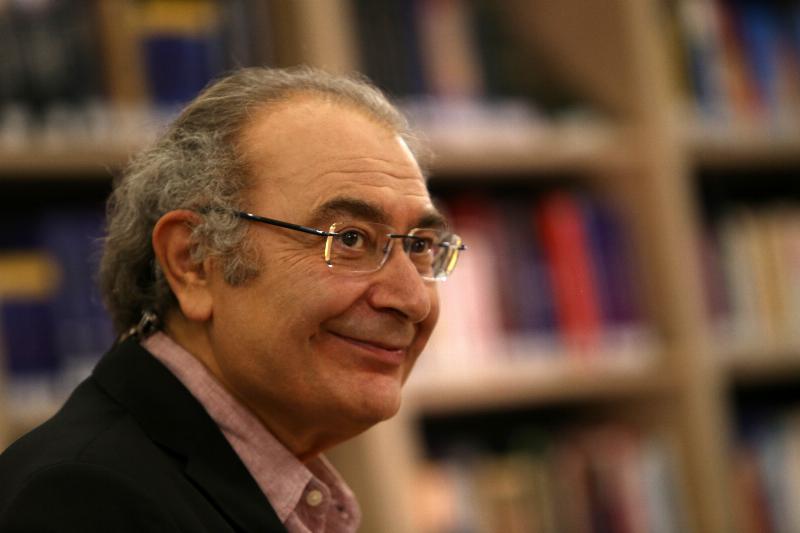
Üsküdar Üniversitesi Founding Rector, Psychiatrist Prof. Dr. Nevzat Tarhan, made evaluations on the importance of neighborhood relations.
Stating that great importance is given to neighborliness in our culture, Prof. Dr. Nevzat Tarhan expressed that humans are relational beings and said:
“Currently, neighborliness is important because neighbors are the closest people after family. Recent neuroscience studies have revealed some facts. Humans are relational beings; their genetic codes are not programmed for living alone. Therefore, when people are alone, they become unhappy. In fact, a dependency model is being developed related to this. There is an experiment with animals. Mice are made cocaine addicts. Cocaine water comes out when the mouse presses the pedal. They take a cocaine-addicted mouse and place it in its natural social environment. The animal stops drinking the cocaine water. This study created a tremendous revolution. There are examples of this in society as well. In fact, one of the reasons people become addicted is their inability to satisfy their need for attachment. People who are substance addicts have weak friendships, weak family relations, weak human relations, meaning they are alone. They don’t have a friend to call when they are bored. They find solace in relationships, in drugs. They experience temporary relief with it.”
Modernism's nightmare; loneliness
Stating that one of the nightmares of modernism today is loneliness, Prof. Dr. Nevzat Tarhan said, “Currently, this is the biggest social problem of the Western world. In 2018, the UK announced the establishment of the Prime Minister's Office for Loneliness. They appointed a minister. 8.5 million elderly Britons live alone at home, and there are sudden deaths. The state cannot provide enough social support. The ministry, as an institution, is trying to produce solutions.”
"Neighborliness" as a cure for loneliness
Stating that our traditional culture found the system of neighborliness as a solution to loneliness, Prof. Dr. Nevzat Tarhan said, “Our traditions had found the solution for this. The neighborhood and family system. Modernism, to encourage the consumer economy, pushed people into consumption-related competition within the earn-work cycle. When people entered non-peaceful competition, family and neighborhood ties weakened. Everyone started to see everyone else as an obstacle. First, they started saying ‘me.’ There has probably never been an era in human history where egos swelled so much. In this period, a result like loneliness emerges.”
We have beautiful neighborhood relations in our culture
Stating that there are examples of beautiful neighborhood relations in our society, Prof. Dr. Nevzat Tarhan said, “In Anatolia, there used to be a ‘neighbor's bowl.’ Like, what we cook, our neighbor also gets. Food cooked at home would be taken to neighbors. Mother Teresa has a famous saying. They ask, ‘How can the world become a good place?’ She says, ‘It happens by doing good one-on-one.’ The reason for the weakening of neighborliness is related to not doing good one-on-one. In our culture, there are beautiful examples of neighborliness, such as the Ashura tradition and Eid al-Adha. One-third of the sacrifice is the right of the neighbor. If there is someone in need of zakat among neighbors, it is not given to others. Hz. Ali has a very beautiful saying: ‘If someone builds their house next to mine, because they chose the spot next to my house, I accept them as family.’”
Neighborhood relations sustain society
Noting that neighborhood relations are important today, Prof. Dr. Nevzat Tarhan said, “Neighborhood relations are a very important factor that sustains us. Especially in small places, neighborliness is very important; it has decreased but not deteriorated. If your neighbor is in trouble and you are sleeping soundly, it means you are a selfish person. There are victims, oppressed, and disadvantaged people in the world. How humane is it for us to sit and enjoy ourselves while people are in this state? At least, we need to open a window in our mind map about what good we can do for our neighbor. We need to think about what we can do for victims and oppressed people. If we have 10 liras, spending one lira for the oppressed makes the world more livable. In the belief system, a smile is considered charity. Sweet words and a warm smile are valuable elements in human relations. We need to be generous in these. If we are generous in these, our social environment will consist of good people. We need to create human-focused social networks, not interest-focused socialization. People should call their friends to check on them, not for personal gain.”
The problem of our age is distrust
Stating that social relations have decreased, especially in big cities today, Prof. Dr. Nevzat Tarhan said, “There is a serious decrease in neighborliness. We are in an age of distrust. Trust has weakened so much that people get anxious even when they say ‘Hello’ to each other. In this age where selfishness and individualism have increased to such an extent, distrust emerged after a while. There is a greeting gesture, made by raising hands. The reason for this is that distrust was so widespread in the Middle Ages that people used to greet in this way to say ‘I have no weapon.’ With the Renaissance and Reformation, a serious transformation occurred in this situation. A relationship of trust had formed. The West is now losing that too. The level of material prosperity is high, but the level of spiritual well-being is not equally high. One of the reasons for this is the destruction of neighborhood relations.”
The biggest enemy of neighborliness is opportunism
Stating that neighborhood relations are not experienced in big cities, Prof. Dr. Nevzat Tarhan said:
“Someone dies at home, and they only find out three days later. There is such a degree of indifference. Unfortunately, the diseases of modern life have also affected us. Whoever protects themselves from this, makes the world more livable, and in fact, makes the biggest investment in themselves. If a person does these things, their children will also see and model this. But there is a cynical philosophy. Cynical philosophy is to see everyone as opportunistic. The biggest enemy of neighborliness in the world is the increase in opportunism. People are opportunistic. Society is made up of those who pursue self-interest. Nietzsche also defended this. Even the culture of charity is mocked. There is a selfish understanding that says, ‘Help and modesty increase operating costs. Let weak companies go bankrupt, don't help those who can't take care of themselves.’ Modernism gave birth to a culture that disparages helping others. The selfish shares that modernism made to increase production created such a negativity in human relations, and we are paying the price for it like this. Divorces and violence have increased. This age is called the age of distrust. If a neighbor doesn't trust a neighbor, how can one sleep peacefully? Just as someone who thinks their spouse might harm them at home cannot sleep peacefully, the same applies to neighborliness. The house must be a safe area. Safe relations must be established with neighbors. Currently, people see raising walls as a solution. No matter how high you raise the walls, neighborliness is important.”
Mental transformation must occur
Stating that architecture has effects on neighborliness, Prof. Dr. Nevzat Tarhan said, “Architecture represents an identity. In cultures where neighborhood ties are weak, houses are very far apart. As a society, we like close living, but modernism has accelerated even more after the coronavirus. Houses away from the city in the style of gardens and villas have started to gain popularity. It is not very difficult to greet and ask about well-being when encountering neighbors. We need to continue these in our culture. If we can bring warm relationships and close living into our lives, we will have a good life. In today's modern architectural system, human contact has decreased. This has both positive and negative sides. What is important here is human mental transformation. If there is no mental transformation, the shape of buildings is not very important. Living comfortably and easily is a human desire. Large houses are part of our culture. That's why we need to make our home a sanctuary. We cannot oppose the whole world, but we can strengthen human relations.”
Share
Update Date: February 26, 2026
Creation Date: October 26, 2020
Request a Call
Other News
- Prof. Nevzat Tarhan: “Those with a mental filter are not afraid of the digital”
- Artificial intelligence doesn't eliminate the translator, it transforms their expertise!
- Social responsibility courses moved to the field
- Erasmus+ Orientation Week completed at Üsküdar
- Prof. Nevzat Tarhan: “Brain secretes ‘dark glue’ in social media lynchers!”